Plot Synopsis
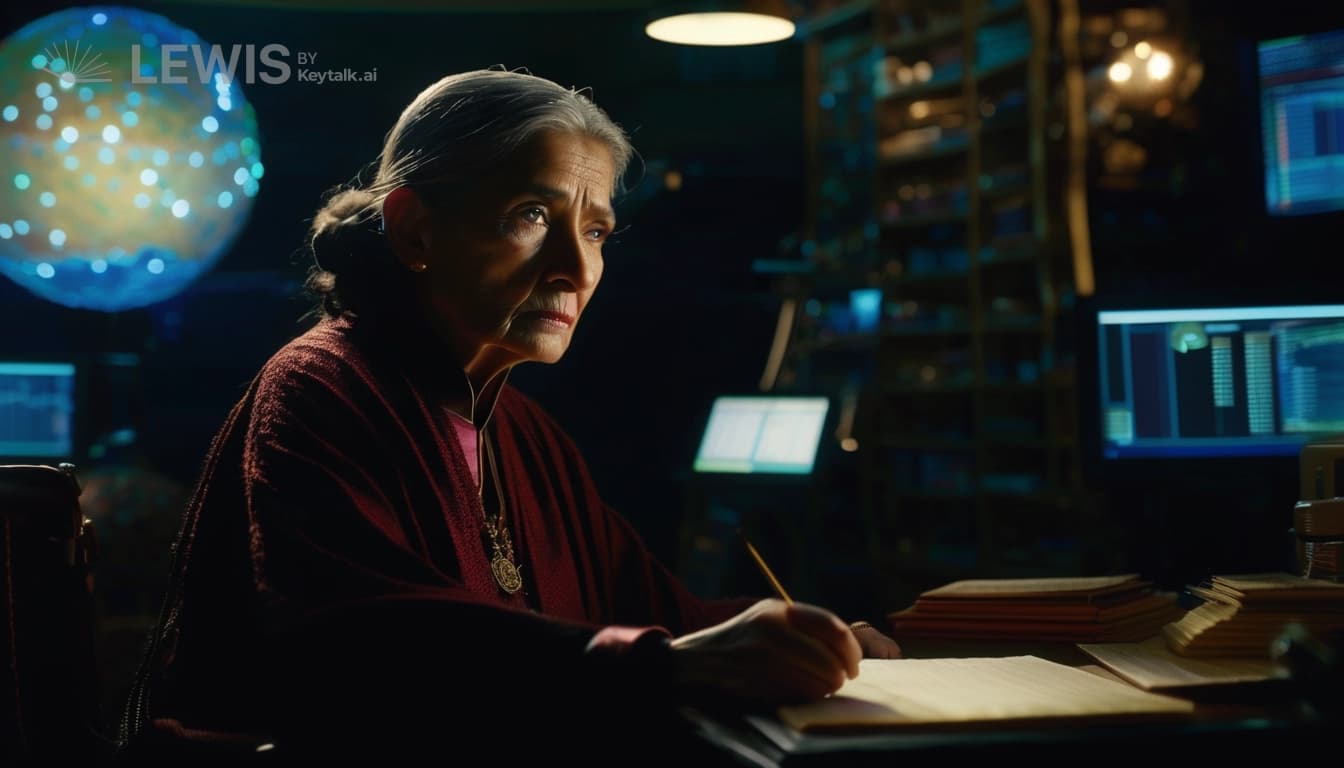
Liyana Qadir had always thrived in the spaces most avoided—puzzles too obscure, languages too dead, mysteries too dense. But as the research station drifted in orbit around a dying star, its once-thrumming halls reduced to flickering lights and malfunctioning systems, her isolation was no longer a choice. The station, meant to study the star’s collapse, had become a crumbling cage after an unexpected solar flare damaged critical systems. The skeleton crew of survivors, fractured by fear and dwindling resources, found little solace in her brilliance. But it was Liyana who first noticed the patterns. In the garbled transmissions picked up by the station’s failing sensors, a language—coded, rhythmic, and deliberate—began to emerge. It wasn’t random interference; it was communication. And it was coming from the sect.
The sect had started as an anomaly: a group of spacefarers who had docked at the station months earlier, claiming the star’s collapse was not a natural event but a divine prophecy. Led by the enigmatic Eirik Solberg, they had spoken in riddles, their intentions cloaked in allegory. When the station’s systems began to fail, they retreated to their ship, leaving behind cryptic warnings and whispers of salvation. Now, as the station teetered on the brink, their messages grew more frequent, their tone more urgent. Liyana, driven by a mix of intellectual curiosity and desperation, threw herself into decoding their words. She worked alone, her cramped quarters lit by the glow of her terminal, the air heavy with the scent of over-steeped chai. What she uncovered chilled her: the sect believed the star’s collapse would trigger a cosmic rebirth, but only for those deemed worthy. And their “worthiness” came at a cost—the station’s destruction.
As Liyana pieced together the sect’s intentions, she found an unlikely ally in Renji Takahara, the station’s systems engineer. Renji, methodical and withdrawn, had been working tirelessly to stabilize the failing life support systems. At first, their interactions were terse; Liyana’s impatience clashed with Renji’s need for precision. But as she shared what she had decoded, their partnership deepened. Renji’s technical expertise became invaluable in intercepting and analyzing the sect’s transmissions, while Liyana’s linguistic prowess unraveled the layers of their cryptic beliefs. Together, they discovered the sect had planted devices within the station—designed to accelerate its destruction and fulfill their prophecy. Time was running out.
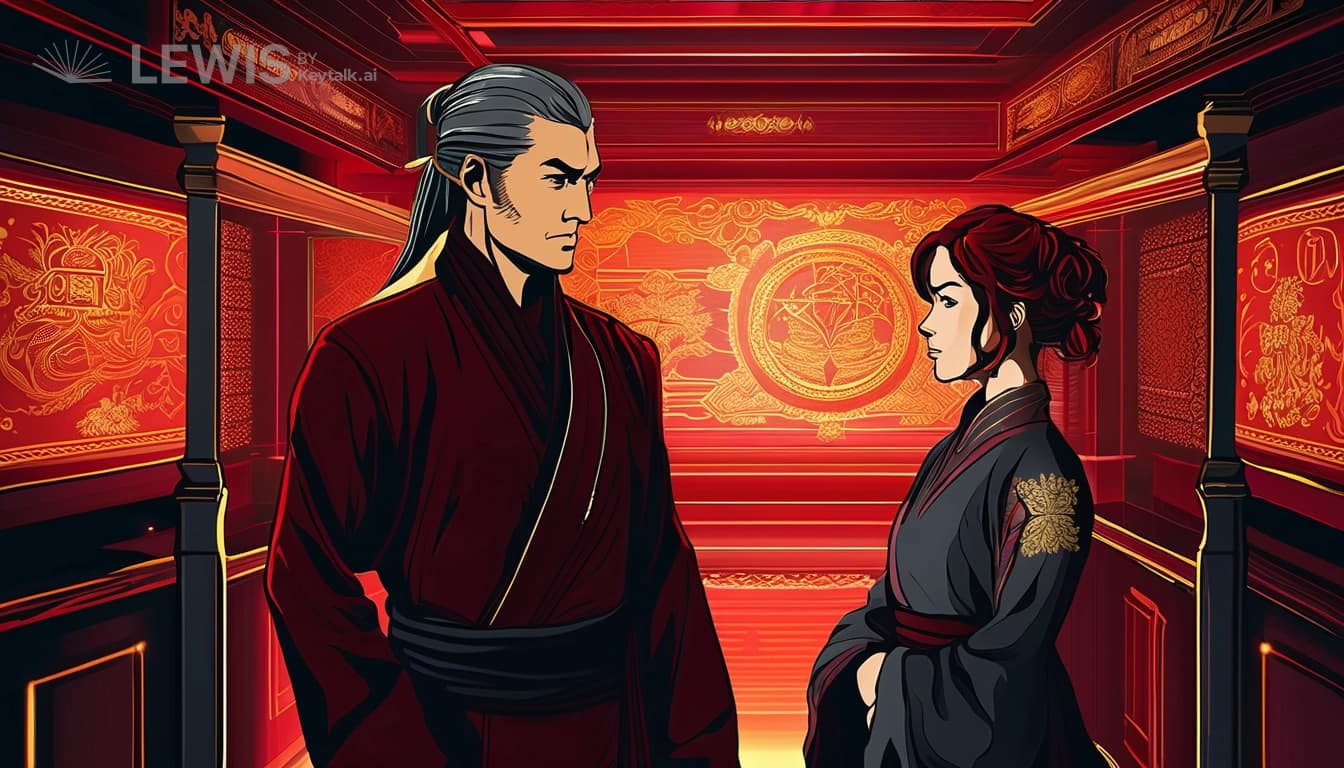
Confronting Eirik was inevitable. Liyana and Renji, armed with their findings, boarded the sect’s ship under the pretense of negotiation. Eirik, ever the charismatic leader, welcomed them with calm detachment. He spoke of transcendence, of shedding the limitations of mortality, his words laced with the poetry that had ensnared his followers. Liyana, unflinching, challenged him. She dissected his rhetoric with the precision of a scalpel, exposing the contradictions in his faith. But Eirik was not a man easily swayed. Beneath his calm, she sensed the desperation of someone who had staked everything on a belief he could not abandon. It became clear: he would not stop. The devices were already active, and his followers, blinded by devotion, would ensure their mission succeeded.
The final hours aboard the station were a harrowing race against time. With Renji’s help, Liyana devised a plan to disable the devices remotely, though it required venturing into the station’s most hazardous sectors. Their journey through the failing station tested them both—Renji’s perfectionism faltered under the mounting pressure, while Liyana’s relentless drive nearly pushed her to recklessness. Yet, in their shared struggle, they found a fragile but genuine trust. As they worked, Liyana couldn’t shake the weight of Eirik’s words. His belief in the star’s prophecy had roots in something deeper—a loss, a fear of insignificance—that she couldn’t entirely dismiss. It wasn’t faith she battled, but the dangerous lengths it had driven him to.
In the end, it was a choice that defined their survival. With seconds to spare, Liyana and Renji succeeded in disabling the devices, but at a cost. The station was irreparably damaged, its orbit destabilized. Eirik, refusing to abandon his prophecy, and many of his followers chose to remain aboard their ship, tethered to their belief until the star consumed them. Liyana, Renji, and the remaining survivors evacuated in an emergency shuttle, watching as the station—and the sect—vanished in the star’s final collapse. In the quiet aftermath, adrift in the cold void, Liyana reflected on the fragile line between meaning and madness, faith and destruction. She had unraveled the sect’s language, their intentions, their prophecy, but the