Plot Synopsis
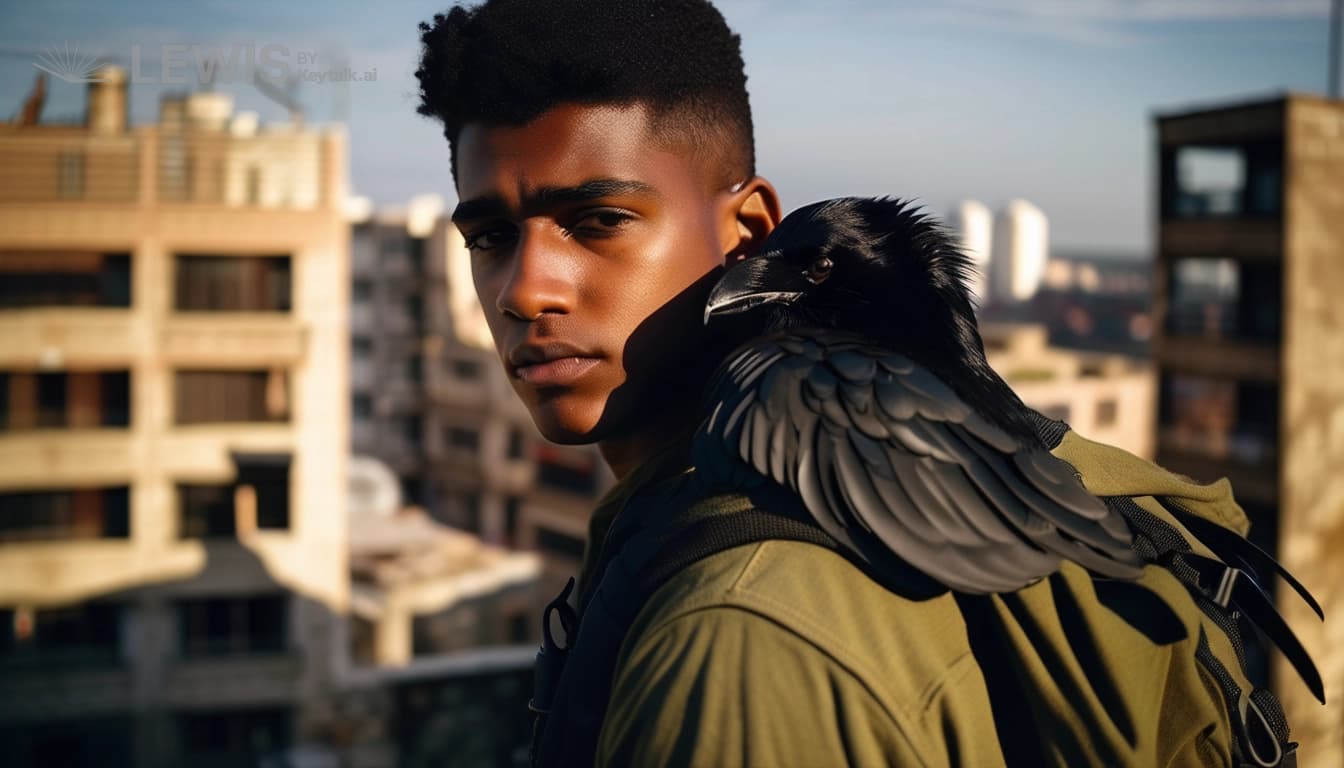
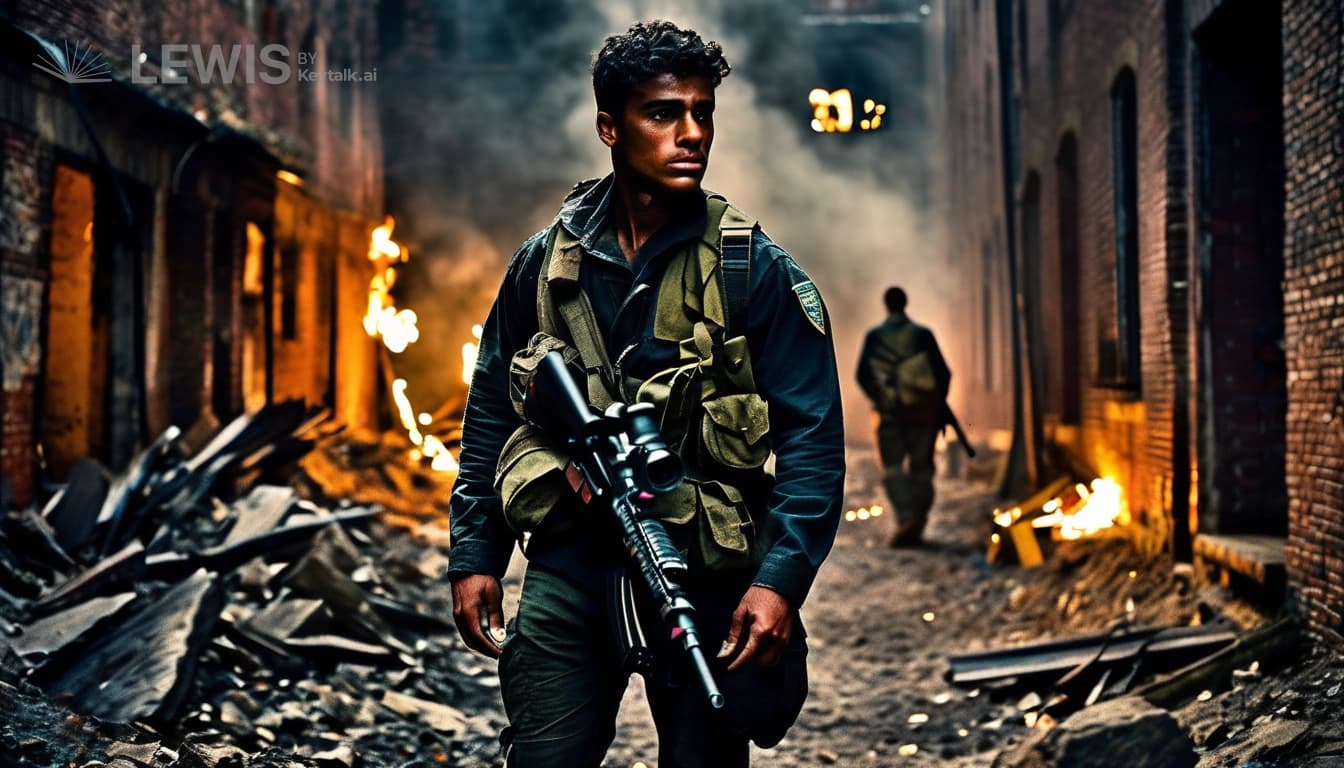
Elias Corbin’s world is a maze of shattered stone and flickering shadows—his orphanage, less a sanctuary than a fortress, sits at the edge of a city gnawed by war. The distant artillery is both lullaby and warning, echoing through his nights as he tallies dwindling supplies and plots vengeance against the faceless invaders who burned his childhood and scattered his makeshift family. Elias is seventeen, but the years have carved him into something older: his mind sharp as a razor, his body lean from hunger, his heart armored by betrayal. He commands the orphanage’s black-market lifelines with ruthless efficiency, trading contraband for medicine, food, and information. Each transaction is a test—of loyalty, of cunning, of survival. But beneath his cold exterior, Elias aches for the kind of connection he’s only tasted in fleeting moments of trust, the kind that always seems to slip away before it can take root.
When Hanael “Hani” Mavros arrives, disguised as a forgotten playmate from Elias’s earliest days, the orphanage’s fragile balance tilts. Hani’s mastery of mimicry and psychological manipulation is flawless; he slips into the children’s circle with effortless charm, his eyes wide with manufactured innocence. Elias’s instincts scream caution—something about Hani’s too-perfect recollections, his seamless accent, the way he watches Elias just a beat too long. Musa Chikondi, Elias’s wary ally and the orphanage’s underground medic, shares his suspicion. Musa has survived more betrayals than he can count; he knows the look of a spy even when the mask is convincing. Still, Musa sees the value in Hani’s resourcefulness, and the three form a tense alliance, each wary of the others’ motives but bound by necessity.
Hani’s orders are clear: infiltrate Elias’s network, unravel his secrets, and pave the way for the regime’s final purge. Yet as days bleed into nights of whispered strategy and shared danger, Hani’s resolve falters. He witnesses Elias’s nightly prayers for lost siblings, Musa’s desperate surgeries in candlelit corners, and the children’s laughter that persists despite the shelling. The façade begins to crack. Hani finds himself drawn to Elias’s cryptic humor, his moments of vulnerability, the stubborn hope that flickers behind every calculated risk. He records Elias’s quirks in his battered notebook, not for his superiors, but to remember them for himself. The mission becomes a crucible: Hani is forced to choose between duty and a growing sense of kinship that feels more real than any identity he’s ever worn.
The tension escalates when a catastrophic raid exposes the orphanage’s supply caches, shattering trust and scattering the children. Elias is convinced there’s a traitor—his anger sharp, his suspicion a blade pressed to Hani’s throat. Musa urges restraint, aware that a fractured alliance means death for them all. The trio is forced into the ruined undercity, hunted by regime operatives and desperate to recover what remains of their family. Elias’s leadership is tested as he must decide whether to trust Hani, whose every gesture could be a trap, or to abandon the only person who seems to understand the weight of his loneliness. Hani, torn between orders and conscience, sabotages his own mission to protect Elias and the children, tipping the balance in a gamble that could mean annihilation.
Their flight through the labyrinth of war-torn streets is a masterclass in tension—every alley a potential ambush, every whispered plan laden with betrayal. Musa’s pragmatism keeps them alive, bartering with smugglers and patching wounds while Elias orchestrates a counterstrike against the regime’s operatives. Hani, haunted by flashbacks to his own stolen childhood, begins to shed his professional mask, risking exposure for fleeting moments of honesty. The emotional stakes twist tighter: Elias must decide if vengeance is worth sacrificing the fragile trust he’s built, while Hani is forced to confront the possibility that the only way to save himself is to betray everything he’s ever known.
In the final confrontation, Elias sets a trap for the invaders, using the orphanage’s ruined corridors as a battleground. Hani confesses his true identity, offering Elias a choice: use him as leverage for the children’s escape, or condemn him as the traitor responsible for their suffering. Musa, standing between the two, demands an answer—what matters more, justice or survival? Elias, battered and bleeding, chooses neither. Instead, he engineers a plan that sacrifices his own chance at escape, sending Musa and the children to safety while he and Hani hold off the regime’s forces. The battle is brutal, desperate, and costly; Elias and Hani fight side by side, their kinship forged in shared pain and impossible choices.
The story ends not with triumph, but with ambiguity: Elias is