
본문으로 건너뛰기
Gray-Banded Champion cover image

Gray-Banded Champion

What if a tennis prodigy from Malawi, determined to challenge the world’s notion of power, lands in a technologically advanced Brazilian metropolis whose society is driven by biometric class codes? The spectacle of competition turns sinister as white and brown idols use microaggressions and social exclusion to undermine her spirit. Unexpectedly, a nationwide crisis makes her poverty-stricken homeland a scapegoat, and she faces brutal deportation. Will she wield her resilience to shatter both digital boundaries and systemic prejudice, reshaping her own identity in the process?

Weekly ranking

rank icon image
#2 inConcept
rank icon image
#3 inConcept
rank icon image
#10 inConcept
Scroll

Plot Synopsis

When Thandiwe Chikondi touches down in São Paulo’s technicolor sprawl, the city pulses with the hum of drones and the glow of biometric scanners. Her Malawian passport is barely worth the plastic it’s printed on, but her invitation to the World Youth Tennis Invitational is stamped with the digital seal of the Vasconcellos e Silva Foundation. In this city, every citizen’s worth is measured by a wrist-embedded biometric code—a glowing band visible under certain lights, color-coded for class and privilege. Thandiwe’s code, issued to foreign athletes, flashes a humiliating gray, marking her as both guest and suspect. She’s here to win, not just for herself or Malawi, but as a living rebuttal to every rule that says power belongs only to those whose veins run with privilege. The moment she steps onto the court—battered sneakers and a thrifted hoodie at odds with the shining white of her rivals—every camera turns, and so do the eyes of Bianca Vasconcellos e Silva.

Bianca is the city’s golden girl, her every gesture calculated for maximum effect. On the surface, she offers Thandiwe a chilly handshake and a photogenic smile, but backstage, her microaggressions are surgical: a pointed comment about “third-world grit,” a public correction of Thandiwe’s Portuguese, a subtle exclusion from the athletes’ elite lounge. Bianca’s entourage follows her lead, amplifying every slight. Thandiwe feels the old, familiar burn of being othered, but she refuses to show weakness. Instead, she hacks the hostel’s biometric locks to give herself and the other gray-banded athletes after-hours access to practice courts, and she befriends Rafael “Rafa” Okoye—a graffiti artist and digital saboteur who treats the city’s surveillance grid like an overcomplicated game. Rafa becomes her guide and accomplice, showing her the city’s hidden seams and teaching her how to bend the rules that bind her.

The tournament escalates quickly, each match a battleground not just of skill, but of narrative. Bianca’s family sponsors the event, and every victory she claims is celebrated as proof of the system’s meritocracy. Thandiwe, meanwhile, is painted by the media as a curiosity, her wins attributed to “natural athleticism” rather than intellect or training. Off the court, she exposes how the biometric system keeps even talented foreigners in social purgatory, and with Rafa’s help, she begins smuggling fake codes to gray-banded athletes—helping them experience brief tastes of privilege. But the city’s peace is shattered when a cyberattack hits the national grid, plunging São Paulo into darkness. The news blames “African hackers,” seizing on the presence of Malawian athletes as evidence. Suddenly, Thandiwe is not just an outsider—she’s a scapegoat, targeted for deportation along with her compatriots.

Bianca, desperate to preserve her family’s reputation and the tournament’s legitimacy, is pressured by her handlers to denounce Thandiwe publicly. But when she discovers evidence that the attack was orchestrated by her own family’s corporate rivals, hoping to discredit the Vasconcellos e Silva biometric monopoly, she faces a crisis of loyalty. Her entire life has been built on control—of her image, her game, her alliances. Now, to keep her crown, she must either betray an innocent girl or expose the rot beneath her family’s empire. For the first time, Bianca’s mask slips. She arranges a midnight meeting with Thandiwe, offering her a deal: throw the final match in exchange for a forged code that guarantees safe passage out of Brazil. Thandiwe refuses, her pride burning hotter than her fear, and instead proposes an alliance—if Bianca helps expose the truth, they can both reshape the narrative.

As the tournament’s final match unfolds beneath blinding spotlights, Bianca and Thandiwe play not just for the trophy, but for the soul of the city. Their rivalry is electric, each rally a coded exchange, every shot loaded with defiance and desperation. Off-court, Rafa hacks the stadium’s broadcast feed, replacing the propaganda with footage of Bianca’s family’s complicity and the real source of the cyberattack. The crowd erupts in chaos as the truth spreads, and the biometric scanners begin to malfunction—gray codes blinking to gold, gold to gray, hierarchy dissolving in a riot of digital confusion. Thandiwe wins the match, but victory is pyrrhic: riot police swarm the arena, and both girls are forced to run, united by necessity.

In the aftermath, São Paulo is changed. The biometric class system is suspended “for review,” and the scandal dismantles the Vasconcellos e Silva monopoly. Bianca, stripped of her dynasty’s protection, vanishes from the public eye; her final act is to smuggle Thandiwe
Model Used
GPT-4.1
text
Stable Diffusion
image

Story Details

Keytalk Prompts Used
See all Keytalks
no chosen prompts
no chosen prompts
no chosen prompts
no chosen prompts
no chosen prompts
no chosen prompts
Model Used
GPT-4.1
text
Stable Diffusion
image

Character

Protagonist Character

Thandiwe Chikondi

GenderFemale
OccupationTennis Prodigy / Underground Biometric Hacker

Profile

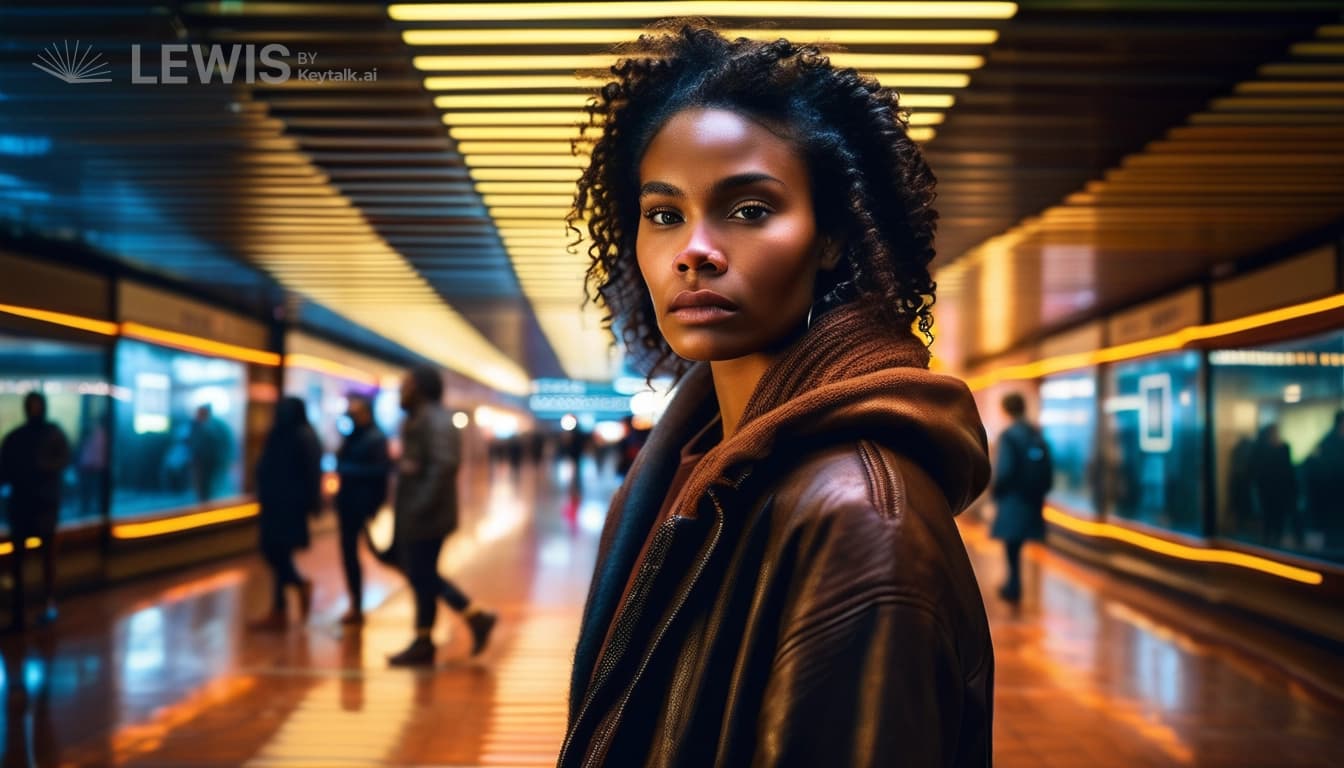
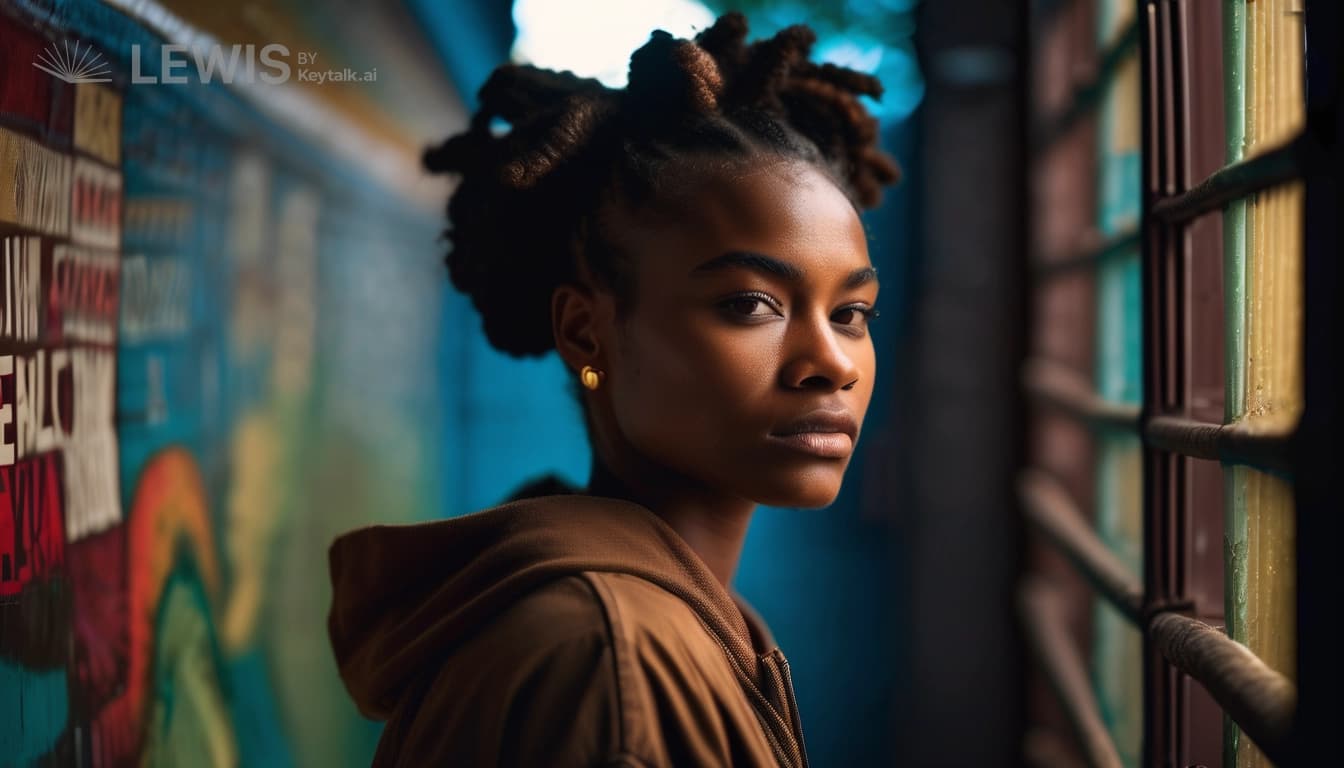
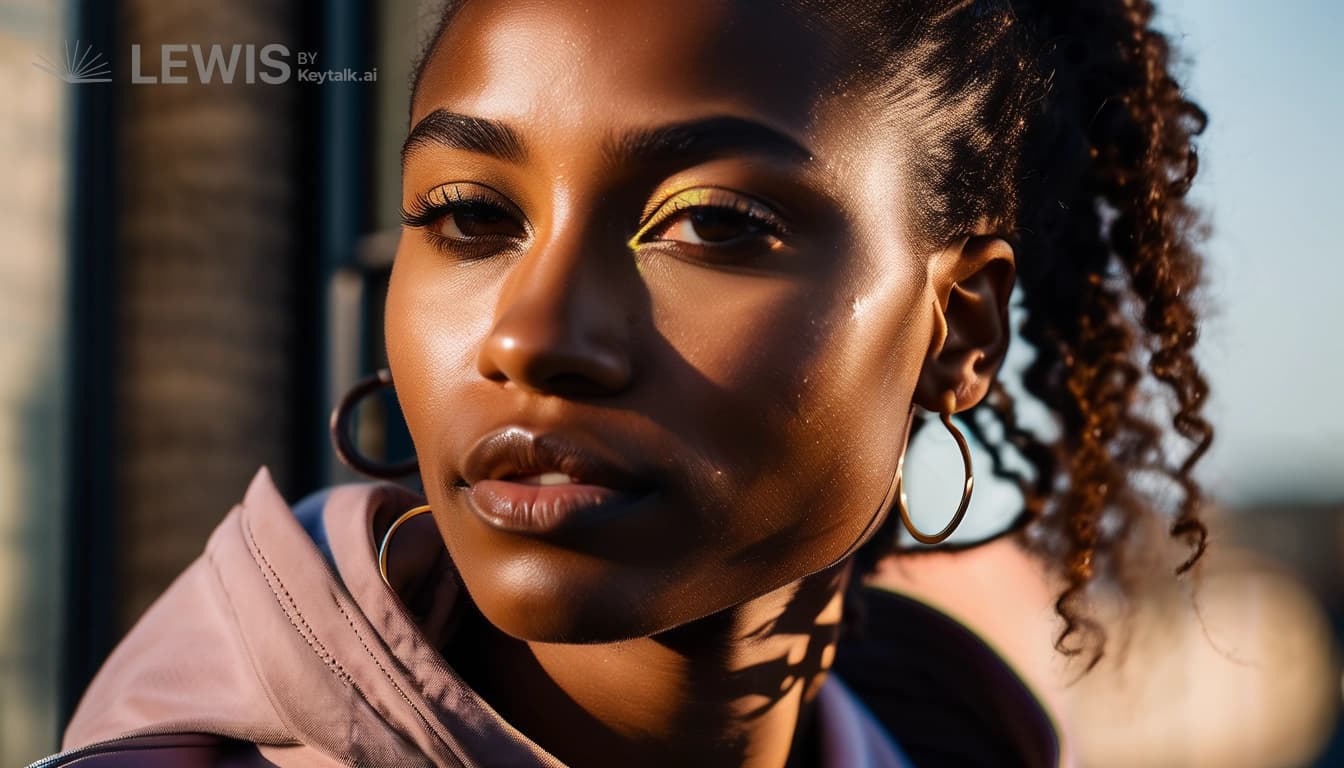
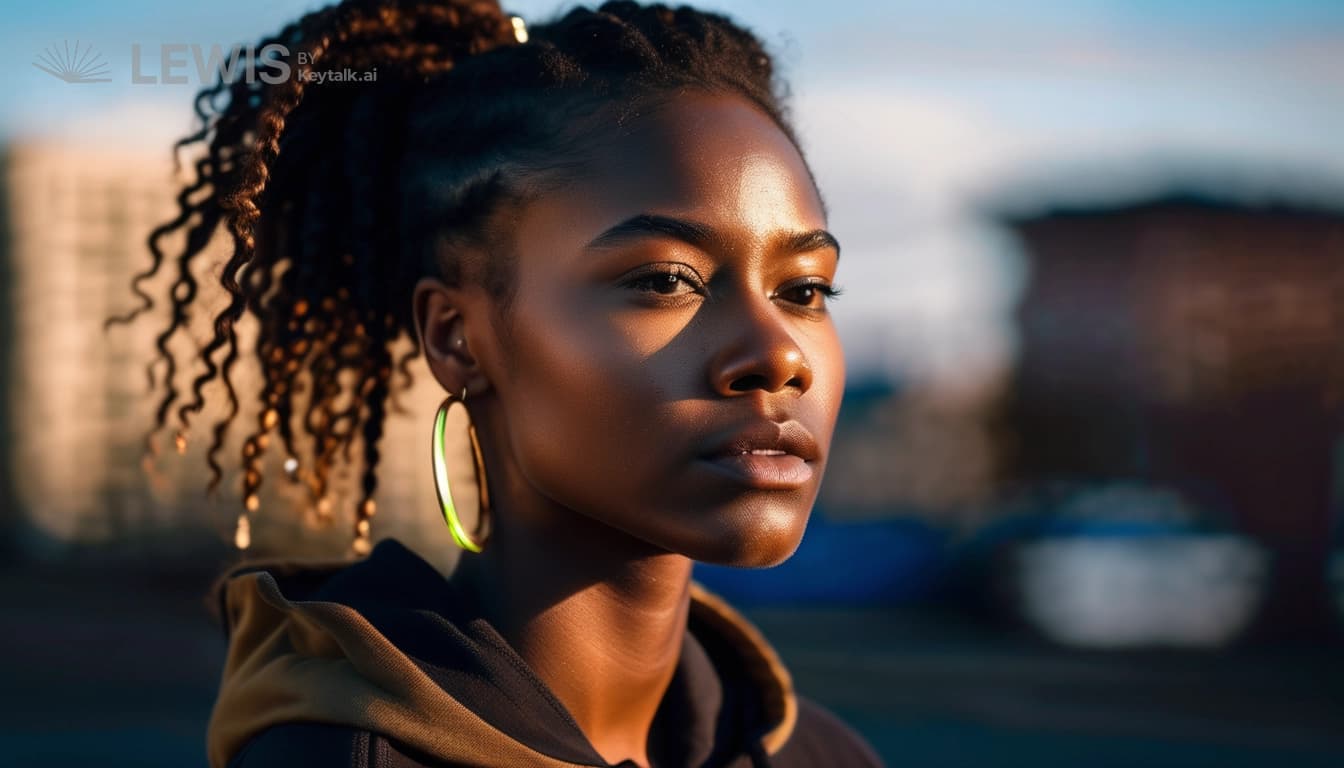
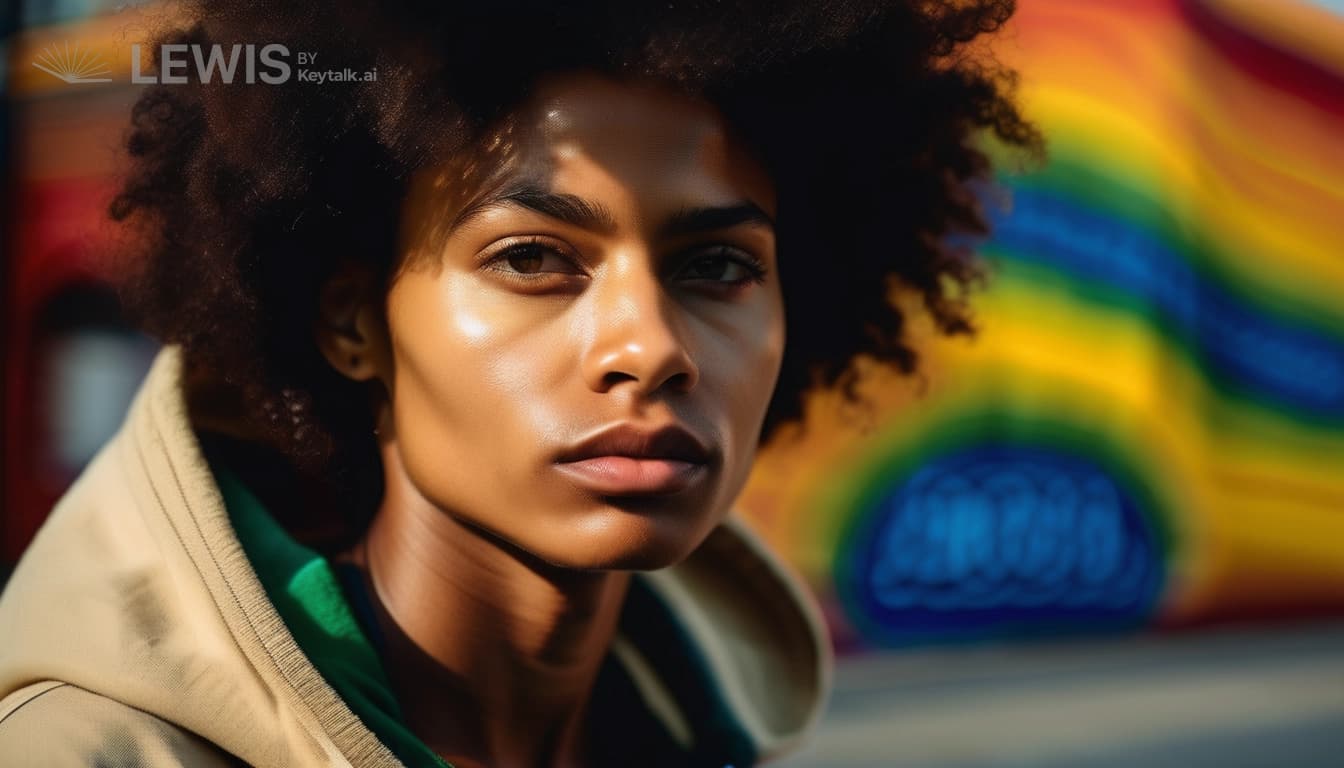
Thandiwe Chikondi is a 17-year-old Malawian tennis prodigy standing at 5’8”, with an athletic build honed by years of relentless training on cracked clay courts under the African sun. Her skin is a deep, burnished brown, a testament to both heritage and hardship, and her hair—tight coils cropped close on the sides with a wild, untamed crown—frames a sharply angular face marked by high cheekbones and a stubborn jaw. Her eyes, a startling onyx, are quick to narrow in skepticism or spark with mischief, revealing a mind always calculating angles—whether on the court or in the shadows of code. Thandiwe’s clothing is a deliberate collision of practicality and rebellion: battered sneakers, thrifted hoodies emblazoned with faded slogans in Chichewa, and a beaded bracelet from her late grandmother—a secret talisman she refuses to remove. Fluent in English, Chichewa, and the digital slang of underground hacker forums, she switches between clipped, formal speech in public and rapid-fire Malawian idioms with friends, her accent a stubborn remnant in the city’s cosmopolitan swirl. Raised in the outskirts of Lilongwe by a single mother and a revolving cast of aunties, Thandiwe’s worldview is shaped by scarcity, solidarity, and a fierce belief that systems are made to be reprogrammed. Her relentless drive to excel is matched only by her suspicion of authority and her tendency to challenge rules she finds unjust, which has cost her mentors and allies in the past. In Brazil’s neon-lit metropolis, she lives in a cramped hostel with other foreign athletes, navigating the city’s biometric caste system with a hacker’s ingenuity—her side hustle subverting digital boundaries for those who can’t pay. Thandiwe’s core motivation is raw, almost defiant: to prove that power is more than a barcode or a bank account, and to rewrite the narratives imposed on her by both her homeland’s poverty and her host country’s prejudice. Loyal to a fault, she struggles to trust, finding connection only with those who earn it through shared struggle or wit. Her greatest flaw is an abrasive independence that sometimes veers into isolation, but beneath it lies a deep well of empathy and a hunger for belonging. Whether wielding a racket or a keyboard, Thandiwe confronts every obstacle with unyielding resilience, her spirit forged by both the beauty and brutality of two worlds that never quite expected her to survive—let alone win. She exit out of Malawi because for the extreme poverty in entire África she need Will go for América in south part countries she go for brazil need more oportunities and she suffer very racism and offense when she approach in the emerging superpower country

Antagonist Character

Bianca Vasconcellos e Silva

GenderFemale
OccupationCelebrity Athlete & Biometric Technology Heiress

Profile

Bianca Vasconcellos e Silva stands at a statuesque 5'10", with an athletic, almost regal build honed by years of competitive sport and luxury fitness. Her skin is a warm olive that glows under stadium lights, and her sharply defined jaw is offset by plush lips often pursed in a sly half-smirk. Bianca’s eyes—hazel and flecked with gold—dart with calculating intensity, framed by thick, arching brows that lend her gaze an intimidating gravity. Her hair, a waist-length sheet of glossy chestnut, is usually swept back in a sleek ponytail, revealing a thin silver scar tracing her left temple: a remnant from a childhood accident that made headlines. She dresses in cutting-edge athleisure—tailored, logo-emblazoned, and always paired with high-tech biometric accessories that signal her elite status. Born to a powerful Euro-Brazilian dynasty that pioneered the city’s biometric class codes, Bianca is revered as both a tennis champion and the face of her family’s tech empire. She speaks with clipped Rio Portuguese laced with English idioms, her voice crisp, assertive, and almost performative, as if she’s perpetually on camera. Privately, she’s fiercely ambitious, driven by legacy and an unyielding need to remain at the pinnacle; her strengths lie in her strategic mind and ruthless self-discipline, but she’s prone to elitism and a cold detachment that borders on cruelty. Bianca’s formative years were shaped by cutthroat competition and relentless media scrutiny, forging her into a master of subtle psychological warfare—her microaggressions and exclusionary games are as precise as her serve. Despite adoration, she’s haunted by an anxiety that her worth is inseparable from her status, and she obsesses over maintaining control. Her relationships are transactional, defined by alliances and rivalries rather than genuine intimacy; her closest confidants are family advisors and corporate handlers. Bianca’s quirks include a compulsive habit of checking her biometric stats mid-conversation and a penchant for quoting obscure tennis statistics to assert dominance. As the story begins, she is poised atop Brazil’s glittering social hierarchy, yet simmering with the fear that any disruption—especially from outsiders—might expose the fragility beneath her flawless veneer, making her a dangerously reactive force in the city’s unfolding drama.
Sidekick Character

Rafael "Rafa" Okoye

GenderMale
OccupationStreet Artist / Biometric Graffiti Activist

Profile

Rafael “Rafa” Okoye stands at five foot ten, wiry but strong from years spent scaling city walls and sprinting from security drones, his skin a warm cocoa marked by a jagged white scar above his left eyebrow—a keepsake from a childhood altercation with a corrupt official in Lagos. Born to a Nigerian-Brazilian mother and Igbo father, Rafa grew up in the shadowed alleyways of São Paulo’s favelas, absorbing the city’s pulse from beneath the digital gaze of biometric surveillance. His eyes—mischievous, almond-shaped, and flecked with gold—seem to catalogue every hypocrisy with a knowing squint. Unapologetically flamboyant in his appearance, he favors hand-painted jackets layered with subversive slogans, baggy shorts smeared with neon spray paint, and a battered pair of high-tops covered in QR-code stickers—his wardrobe a walking manifesto against conformity. Rafa’s tongue is quick, unfiltered, and playfully sardonic, his Portuguese peppered with Yoruba slang and the odd English phrase—a blend that both disarms and unsettles. He doesn’t believe in heroes or lost causes, only pressure points: his activism is ruthless, tactical, and rooted in the conviction that systems only crack when you find the right seam. While Thandiwe’s drive is rooted in resilient hope, Rafa’s is more combustible—he’s motivated by a need to expose, disrupt, and outwit the city’s biometric caste system, not just for glory but to prove to himself that art can be weaponized as effectively as code or a tennis racket. He’s fiercely loyal but on his own terms, prone to disappear for days chasing rumors of police sweeps or new urban legends, yet always returns with a story, a map, or a critical link that only he could have unearthed. Rafa’s greatest flaw is his refusal to trust anyone fully—including Thandiwe—fearing that intimacy is a luxury for those who’ve never had to scramble for dignity. Yet beneath the bravado lies a longing to be recognized not just as a saboteur but as someone who can help shape a new narrative for a world intent on erasing difference. His dynamic presence challenges both the protagonist’s optimism and the antagonist’s entitlement, often serving as a gritty moral barometer and a living contrast to the clinical, privileged world of Bianca. Rafa’s quiet talent for reading the unspoken—whether in digital code or body language—makes him indispensable, but his restless spirit and sharp-edged humor ensure he never fades into anyone’s shadow.
Model Used
GPT-4.1
text
Stable Diffusion
image

World

Location/Time, Era:
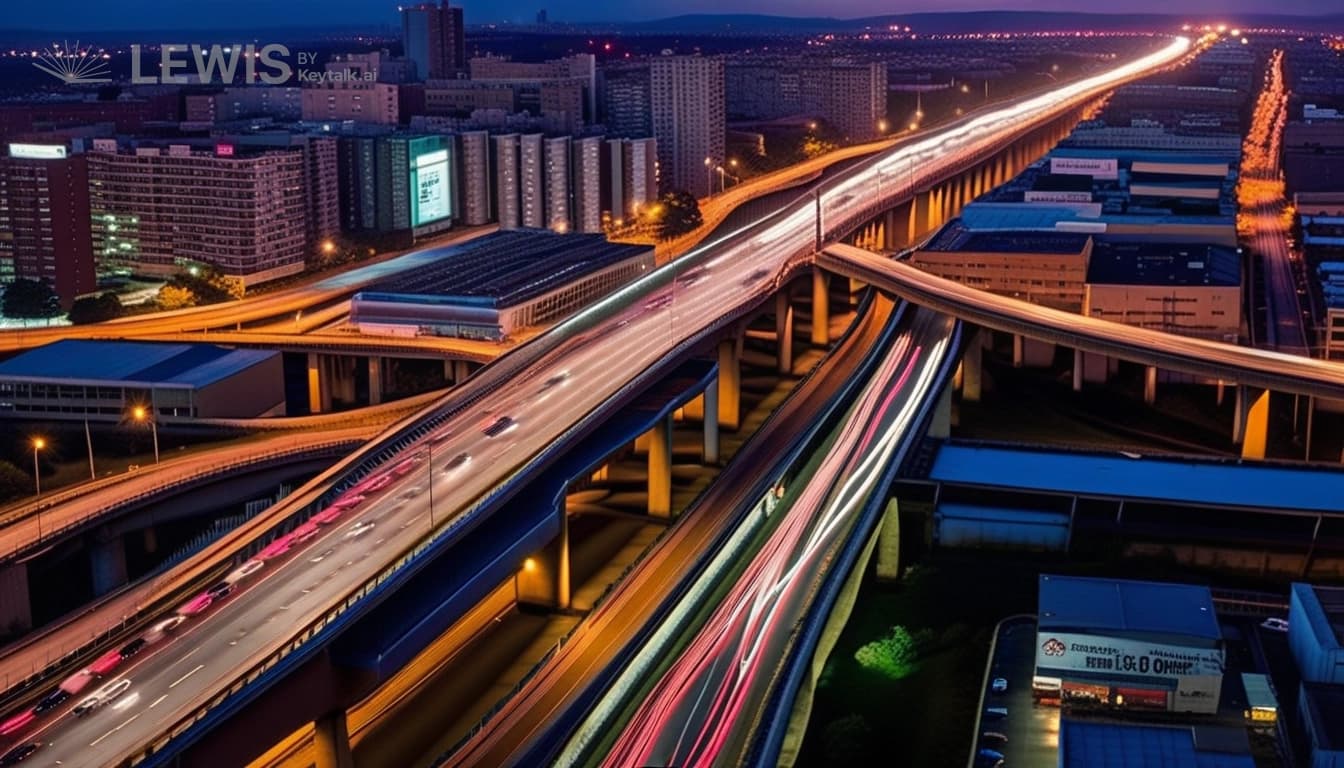
São Paulo, Brazil, a decade into the future—an emergent megacity rebranded as “Nova São Paulo.” The city sprawls across rainforest and ruin, a tangled neon tapestry where crumbling colonial facades jostle beside sky-piercing arcologies. The air is thick with heat, rain, and the ever-present hum of drone traffic, while digital billboards flicker in six languages above streets pulsing with samba, Yoruba, and trap beats. The World Youth Tennis Invitational, held at the hyper-modern Vasconcellos e Silva Arena, draws prodigies and power-brokers alike into a weeklong spectacle broadcast to billions. Beneath the spectacle, the city simmers with class tension and the threat of digital unrest—its surface order masking a society built on surveillance, exclusion, and the relentless contest for narrative control.

Key rules of the world and their impact on the story and beyond:
The city’s entire social fabric is woven around the “Código de Casta Biométrica”—a wrist-embedded chip that projects a color-coded band beneath the skin, instantly broadcasting one’s class, privileges, and even access to city spaces. Native elites glow gold, trusted foreign investors and athletes pulse blue, while “graybands”—temporary visitors, laborers, and refugees—are shunted into invisible, policed margins. Every transaction, from boarding a tram to buying street food, is filtered through these codes; even the tennis tournament’s entry system is algorithmically biased, granting prime slots and amenities to golds and blues, while graybands endure scrutiny and suspicion. Hacking or forging a code is a felony—punishable by instant expulsion or, for locals, biometric “downgrading,” a digital exile that erases one’s identity and rights. The system’s rigidity forges unlikely alliances and bitter enmities, turning every act of kindness or rebellion into a dangerous gamble.

Visual depiction of the world and its unique features:
Nova São Paulo is a city in visual contradiction—towering glass-and-steel “vertical barrios” thrust into the clouds, their edges traced with bioluminescent vines and solar banners, while below, labyrinthine favelas twist through tangled alleys lit by hacked LEDs and graffiti that pulses with AR tags. The streets throb with life: capoeira dancers and drone vendors, street artists layering digital murals over centuries-old walls, biometric checkpoints manned by stern-faced private security in mirrored visors. Tournament venues shimmer with holo-screens displaying real-time player stats and social feeds, but just outside the gated compounds, blackouts and code-blockades create flashpoints—zones where privilege evaporates and improvisation is law. The city’s rivers, once polluted and ignored, have been repurposed as neon-lit canals plied by “code ferries” that slip beneath the surveillance grid, ferrying outcasts and contraband between hidden strongholds.

Notable technology, philosophy, or cultural elements influencing the world and narrative:
Biometric technology is both the city’s religion and its weapon—worshipped by the privileged as proof of progress, despised by the marginalized as a digital yoke. The prevailing philosophy is “merit through metrics,” a cult of quantification where every gesture, movement, and even public sentiment is scored and analyzed by omnipresent AI. Yet beneath this surface, resistance flourishes: hacker collectives and artists like Rafa wield code and graffiti as tools of disruption, crafting viral AR protests and black-market “code scramblers” that flicker privilege on and off like a strobe. Culturally, the city is a battleground of narratives—media, sport, and street art all vying to define who belongs and who does not. The looming crisis—blamed on foreign “others”—exposes the fragility of this digital caste, forcing every character to confront what it means to be seen, counted, or erased in a world where identity is both currency and curse.
representative image
location 1 image

Location 1

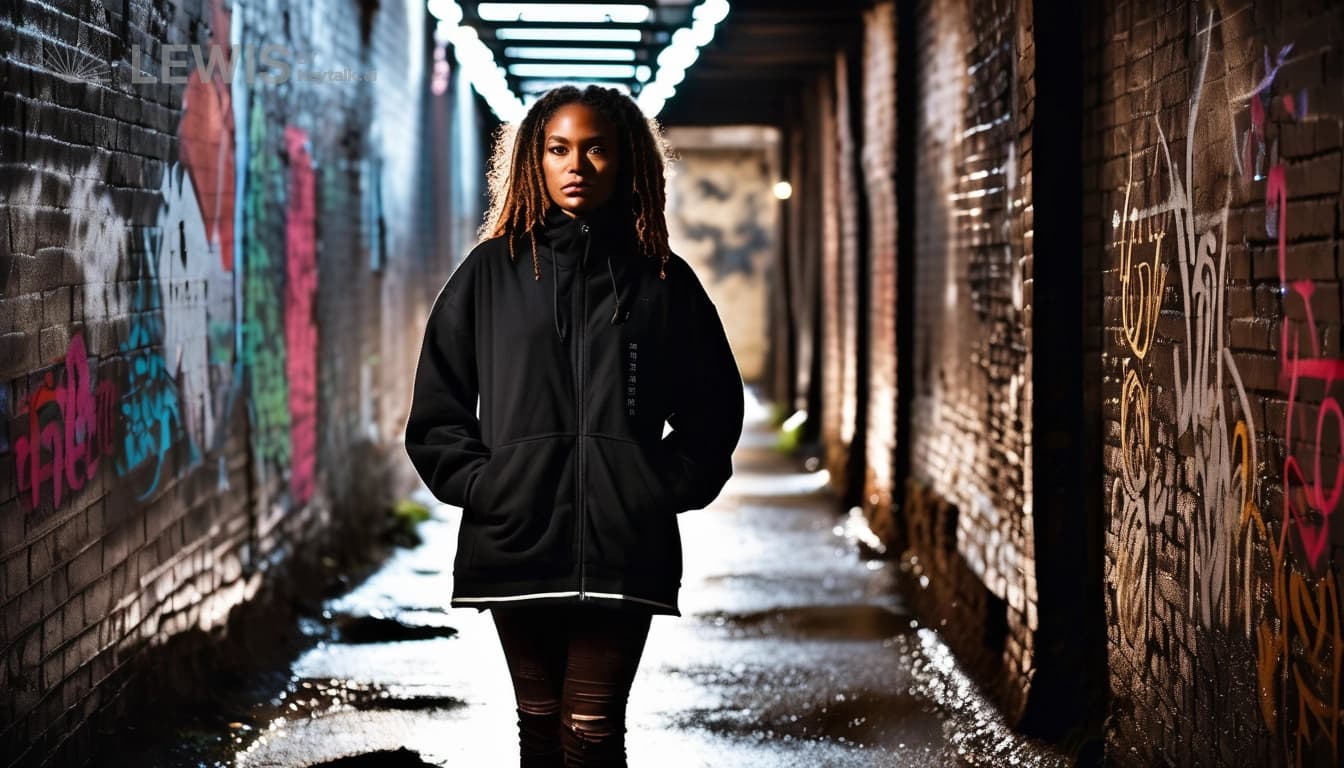
Title : The Grayline Market Underpass
Description : Beneath a snarl of elevated highways, the Grayline Market Underpass throbs with illicit life—vendors hawk hacked biometrics, counterfeit privilege bands, and bootleg tech from makeshift stalls lit by neon graffiti. The air is thick with sweat, fried cassava, and the ozone tang of charge packs, echoing with the polyglot patter of the city’s dispossessed. Here, Thandiwe and Rafa slip through crowds of gray-banded outsiders, plotting rebellion in the shadow of surveillance drones and the indifferent pulse of privilege overhead.
location 2 image

Location 2

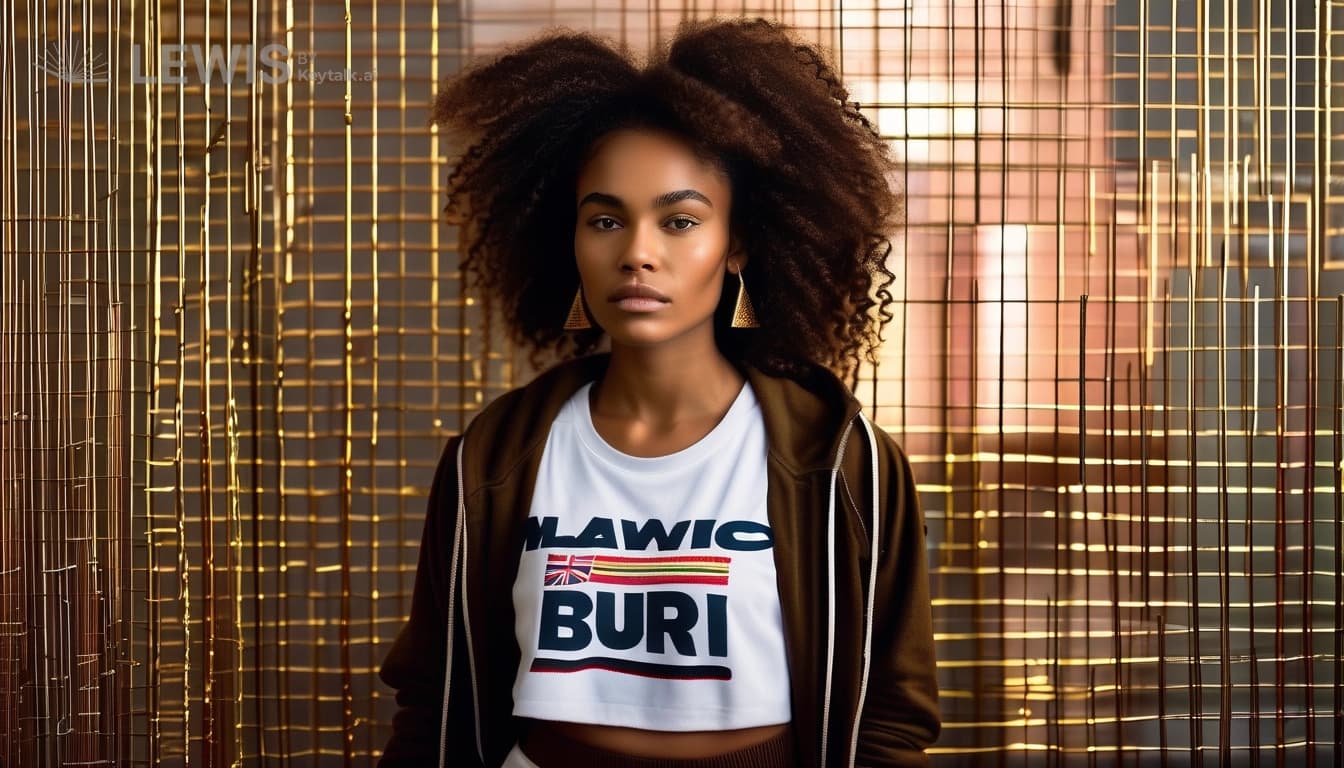
Title: The Golden Vaults of Ouro Esperança
Description: Beneath the glass-and-gold facade of São Paulo’s wealthiest district, the Golden Vaults yawn open—a series of subterranean lounges where privilege is currency, and biometric codes shimmer along the marble walls like a living stock ticker. Here, heirs and heiresses sip molecular cocktails under the eyes of AI security golems, their laughter echoing against vault doors that only open to the purest gold-coded wrists. For Thandiwe, smuggled in by Rafa’s deft hacking, every breath is a trespass; the air is perfumed with anxiety and luxury, and the knowledge that one scan could end her dreams pulses louder than the synth-jazz drifting through the gilded gloom.
location 3 image

Location 3

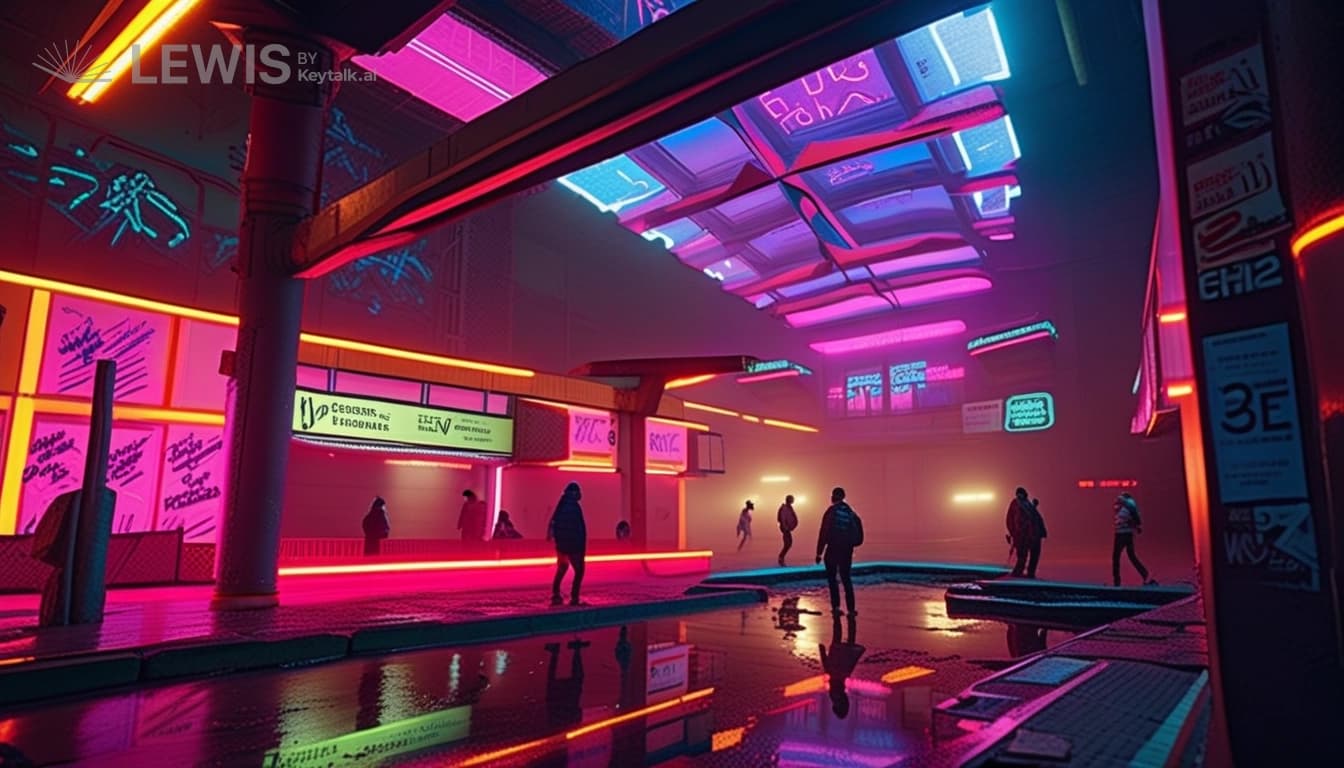
Title: The Forgotten Synapse—AR Commune of the Disappeared
Description: Hidden beneath a derelict transit hub, the Synapse is a labyrinth of flickering AR projections and scavenged tech, where those erased by the city’s biometric hierarchy reprogram their own reality. Neon graffiti pulses across concrete, avatars shimmer and glitch, and every corner buzzes with whispered secrets—here, identity is fluid, and exile breeds invention. It’s where Thandiwe and Rafa plot rebellion surrounded by the ghostly silhouettes of São Paulo’s outcasts, their laughter and code weaving a fragile haven out of digital ruins.
Model Used
GPT-4.1
text
Stable Diffusion
image

Scenes

scene 1 image
Scene 1
Arrival Under Neon: Thandiwe’s First Brush with the Code
[Place]
Guarulhos International Airport, São Paulo – Arrivals Hall and biometric checkpoint

[Time]
Late evening, city alive with flickering neon and thunderous rain just outside the terminal

[Action]
Thandiwe steps off the plane, her nerves jangling as she’s swept along by a crowd that seems to know exactly where it’s going. The arrivals hall is a blur of languages and color, but what catches her eye are the glowing bands on every wrist—some shining gold, others blue, a few green, but hers is unmistakably gray. Security officers scrutinize her, lingering a little too long on her Malawian passport and her gray code. The digital seal on her invitation is the only thing that saves her from being pulled aside. She’s acutely aware of every gaze—some curious, some suspicious, some hostile. As she’s processed, subtle microaggressions emerge: a customs officer asks her to repeat herself, a fellow athlete from Europe glances at her code and smirks. Thandiwe forces herself to stand tall, her pride wrestling with the urge to shrink. She glimpses Bianca Vasconcellos e Silva across the room, surrounded by journalists and handlers. Bianca’s code glows gold, her smile camera-ready as she looks straight through Thandiwe. The moment is taut—Thandiwe feels her outsider status as both burden and badge, determined not to be erased in the city’s glare. The scene ends with Thandiwe stepping into the rain-soaked São Paulo night, her code marking her as a guest and a threat.

[Impact on the story]
This scene establishes Thandiwe’s outsider status, the weight of the city’s biometric hierarchy, and the psychological toll of being marked as lesser. It sets up her determination to challenge the system, foreshadows her rivalry with Bianca, and introduces the tension between privilege and exclusion. The emotional resonance is immediate: Thandiwe’s vulnerability, pride, and defiance lay the groundwork for her journey.

[Description]
Thandiwe arrives in São Paulo and immediately confronts the city’s class-coded biometric system, experiencing both overt and subtle discrimination. The scene introduces Bianca as a symbol of privilege and sets the stage for Thandiwe’s struggle against the city’s rigid social order.
scene 2 image
Scene 2
Beneath the Surface: Hostel Alliances and the Ghosts of Home
[Place]
The dormitory-style hostel for foreign athletes, tucked in a crumbling Art Deco building just outside the city center; common room, shared kitchen, and the dimly lit hallways connecting them.

[Time]
Late night, a few hours after Thandiwe’s arrival, as rain thrums against cracked windowpanes and São Paulo’s neon glow leaks through mismatched curtains.

[Action]
Thandiwe drags her battered duffel through the echoing hallway, acutely aware of the way her gray code pulses in the low light—an ever-present reminder that she doesn’t belong. The hostel is a patchwork of languages and tired ambition: athletes from across the Global South, all marked by the same gray band, trying to carve out a sliver of comfort in an unfamiliar city. Thandiwe’s initial attempts to connect with her roommates are awkward; old insecurities surface as she fumbles with Portuguese and tries not to sound too desperate for belonging. She notices the subtle hierarchies even among the outsiders—some cling to their national teams, others retreat into silence, and a few veterans flaunt small privileges they’ve managed to wrangle.

In the common room, Thandiwe meets Rafael “Rafa” Okoye, a fellow gray-banded athlete with a mischievous edge and a backpack covered in spray-paint stains. Rafa is instantly curious about her—half-flirtatious, half-guarded—and teases her about the city’s obsession with codes. Through their tentative conversation, Thandiwe learns that Rafa is more than he seems: he’s a graffiti artist who moonlights as a digital saboteur, with a wry sense of humor and a deep distrust of the system. He offers to show her the city’s hidden seams, hinting at ways to bend the rules if she’s willing to take risks.

That night, unable to sleep, Thandiwe hacks the biometric lock on the practice courts—using a trick she learned back home, where improvisation is survival—and quietly lets herself and a few other gray-banded athletes onto the courts for after-hours training. There’s a sense of solidarity, a fragile camaraderie forming in the shadows as they play under flickering floodlights, trading stories about what home means when you’re always an outsider.

Amid this, Thandiwe is haunted by texts from her family in Malawi—proud, anxious, and reminding her of the stakes she carries. She steels herself, vowing to use every tool at her disposal—not just her athleticism, but her wits and her willingness to break the rules the city uses to bind her.

[Impact on the story]
This scene deepens Thandiwe’s sense of isolation but also plants the seeds of unlikely alliances. Her connection with Rafa introduces a vital subplot—learning to navigate and subvert the city’s digital controls. Thandiwe’s decision to hack the lock marks her first act of rebellion, showing her resourcefulness and unwillingness to be passive. The emotional weight of her family’s expectations and her own longing for community add layers to her motivation, driving her toward risk and defiance.

[Description]
Thandiwe struggles to find her place among fellow outsiders at the hostel, forging a tentative bond with Rafa and taking her first steps toward rebellion by hacking the practice courts. The scene establishes the beginnings of solidarity, hints at subversive possibilities, and grounds Thandiwe’s motivations in both personal and communal stakes.
scene 3 image
Scene 3
[Title]
The Lounge, the Lock, and the Line: Bianca’s Circle Closes In

[Place]
Athletes’ elite lounge inside the tournament stadium—a glass-walled, neon-lit sanctuary reserved for gold-coded competitors and their entourages, perched above the courts and humming with privilege. The adjoining locker rooms and biometric checkpoint form the borderland where gray codes are stopped.

[Time]
Late afternoon, on the eve of Thandiwe’s first televised match. Outside, the city shifts from day to dusk, the air thick with anticipation and the threat of rain.

[Action]
Thandiwe arrives at the stadium with Rafa, their nerves barely contained beneath practiced bravado. She’s determined to study her rivals up close, but the first barrier is literal—a biometric scanner that flashes gray and triggers a polite, public denial of entry to the lounge. Bianca, surrounded by her curated clique, spots Thandiwe’s attempt and orchestrates a scene: a casual invitation to “join us if you can,” followed by a round of laughter when Thandiwe is stopped at the door.

Bianca’s microaggressions escalate, with pointed remarks about Thandiwe’s “exotic” training methods and a public correction of her accent when she’s forced to speak Portuguese. Rafa, ever the subversive, hacks the lounge’s security system from his phone, quietly unlocking the door and allowing Thandiwe and two other gray-banded athletes inside. Tension crackles as Thandiwe crosses the threshold—every gesture scrutinized, every mistake amplified. Inside, she witnesses the stark difference in resources: gold-coded athletes receive custom nutrition, massages, and high-end gear, while gray bands are left to fend for scraps.

As the lounge empties for pre-match rituals, Thandiwe overhears Bianca’s handlers discussing her as a “useful foil” for the tournament narrative—a prop to highlight Bianca’s supposed superiority. The realization stings, but Thandiwe steels herself, vowing not just to compete, but to disrupt their expectations. She leaves with Rafa, more determined than ever to challenge the system, and quietly shares her plan to help other gray-banded athletes access the lounge in future rounds.

[Impact on the story]
This scene intensifies the rivalry between Thandiwe and Bianca, exposing the layers of exclusion that define the tournament. Thandiwe’s humiliation deepens her resolve, while Rafa’s intervention cements their growing partnership. The emotional stakes are heightened: Thandiwe’s desire for respect is sharpened by public rejection, and her rebellion shifts from personal to communal. Bianca’s calculated cruelty is revealed as both performance and insecurity, foreshadowing her own crisis of loyalty.

[Description]
Thandiwe faces open exclusion at the athletes’ elite lounge, triggering a public showdown with Bianca and forcing her to confront the tournament’s social hierarchy. Rafa’s subversive support empowers her, setting the stage for larger acts of resistance and driving the plot toward more direct conflict.
scene 4 image
Scene 4
[Title]
Privilege for Sale: Rafa’s Underground and the Price of Belonging

[Place]
A labyrinthine, graffiti-tagged basement beneath a shuttered electronics warehouse in downtown São Paulo—a secret nerve center for the city’s outcasts, pulsing with the hum of illegal servers and battered neon. Makeshift workbenches are strewn with biometric chips, soldering irons, and half-eaten pão de queijo. The air tastes like ozone and rebellion.

[Time]
Late night, a few hours after Thandiwe’s humiliation in the elite lounge. A storm is breaking overhead, thunder rattling the pipes as the city’s curfew approaches.

[Action]
Thandiwe, still burning from the day’s public rejection, follows Rafa through a maze of alleyways and hidden trapdoors to the underground lair where gray-banded athletes, hackers, and dreamers gather in secret. Rafa introduces her to his inner circle—a ragtag crew who’ve mastered the art of forging biometric codes, selling fleeting moments of privilege to those desperate enough to pay. Thandiwe watches as an anxious athlete trades her last cash for a counterfeit band, slipping it onto her wrist and gasping as the color shifts from gray to gold. The sense of possibility is intoxicating, but the risk is palpable; a single scanner malfunction means arrest or worse.

As Thandiwe navigates the crowded room, she’s pulled into heated debates about complicity and survival. Some see the fake codes as liberation, others as a dangerous game that only props up the system they despise. Rafa confides in Thandiwe, revealing his own past as the son of deported immigrants and his drive to topple the biometric hierarchy from within. Thandiwe, inspired but wary, proposes a new plan: rather than just selling codes, they should use their access to disrupt the tournament itself—granting gray-banded athletes access to resources and exposure, chipping away at the myth of meritocracy from the inside.

Tensions flare when a rival hacker accuses Thandiwe of being a liability, drawing attention that could bring the authorities down on them all. Rafa defends her, staking his reputation on her resolve. The scene ends with Thandiwe slipping a counterfeit band onto her own wrist, feeling the weight of both hope and betrayal as the gold glow flickers—an intoxicating taste of what’s always been denied.

[Impact on the story]
This scene marks Thandiwe’s full immersion into São Paulo’s underground resistance, solidifying her alliance with Rafa and introducing the moral ambiguities of rebellion. She’s forced to confront the costs of belonging—both the danger of being caught and the ethical gray zone of hacking a corrupt system. Her plan to empower other gray-banded athletes shifts her journey from individual revenge to collective action, raising the stakes and setting the stage for the cyberattack and scapegoating to come. Rafa’s backstory adds depth to his partnership with Thandiwe, while the underground’s internal tensions foreshadow the risks ahead.

[Description]
Thandiwe descends into the city’s digital underworld, where privilege is forged and sold. She forges new alliances, debates the price of rebellion, and takes her first step toward collective resistance—risking everything for a fleeting moment of power.
scene 5 image
Scene 5
[Title]
Blackout Blame Game: Scapegoats, Secrets, and the Midnight Bargain

[Place]
A shadowed rooftop terrace overlooking the chaotic city center, neon signs flickering in the distance. The stadium looms nearby, spotlights slicing through the darkness as emergency drones buzz overhead. Below, riot police patrol the streets, their presence amplified by the blackout’s tension.

[Time]
Midnight, hours after the citywide cyberattack has plunged São Paulo into a tense, uncertain darkness. The tournament is suspended, but the threat of deportation hangs heavy in the air.

[Action]
Thandiwe, shaken and hunted, waits anxiously on the rooftop, her counterfeit gold band now useless under the malfunctioning scanners. Bianca arrives, conflicted and alone, her usual entourage nowhere in sight. They are both fugitives in different ways—Thandiwe as a scapegoat, Bianca as the unwilling heir to a crumbling dynasty. Bianca’s handlers are pressuring her to publicly condemn Thandiwe, casting her as the face of the cyberattack. In a moment of vulnerability, Bianca admits she’s uncovered evidence that the attack was orchestrated by corporate rivals hoping to destroy her family’s biometric monopoly. The girls grapple with their fears and loyalties, weighing personal safety against the cost of complicity.

Bianca offers Thandiwe a deal: throw the upcoming final match and she’ll receive a forged code guaranteeing safe passage out of Brazil. Thandiwe’s pride and sense of justice flare; she refuses to be another pawn, instead proposing an alliance—if Bianca helps her expose the truth, they can rewrite the city’s narrative together. The tension peaks as they negotiate, each testing the other’s resolve, trust, and desperation. Rafa, monitoring the rooftop from below, delivers news that the authorities are closing in, forcing a decision before dawn.

[Impact on the story]
This scene deepens the stakes and fractures the established power dynamics. Bianca’s internal conflict is pushed to the breaking point as she must choose between family loyalty and exposing corruption. Thandiwe’s refusal to capitulate transforms her from victim to revolutionary, and their tentative alliance marks a turning point—both girls are forced to confront the cost of defiance and the possibility of real change. The blackout and rising scapegoat hysteria intensify the urgency, propelling the story toward its final confrontation.

[Description]
On a rooftop in a city gone dark, Thandiwe and Bianca negotiate loyalty, power, and survival. Their midnight bargain reshapes the stakes, setting them on a collision course with both the system and each other.
scene 6 image
Scene 6
[Title]
Match Point Uprising: Broken Codes, Broadcast Truths, and Escape into the Unknown

[Place]
World Youth Tennis Invitational Stadium—a labyrinth of concrete tunnels, blinding spotlights, and rows of biometric scanners flickering erratically. The stands are packed and restless, the air thick with anticipation and uncertainty. Riot police gather at the exits, visible from the court, while a makeshift command center buzzes with anxious organizers and media personnel.

[Time]
Morning after the blackout, final day of the tournament. The city is still reeling, power flickering in bursts, and the crowd is tense, charged with rumors and suspicion.

[Action]
The scene opens with Thandiwe and Bianca walking onto the court, each carrying the weight of the midnight bargain. Their rivalry is palpable—every serve and volley loaded with personal and political meaning, every glance across the net a test of their fragile alliance. The crowd’s reaction oscillates between suspicion and awe, fueled by news feeds and half-truths. As the match intensifies, Rafa quietly slips into the stadium’s control room, hacking into the broadcast system. Midway through a tense rally, the jumbotron flickers and switches from the match to raw footage: evidence of the Vasconcellos e Silva family’s complicity in the cyberattack and their manipulation of the biometric hierarchy. The crowd erupts in confusion and anger, the stadium’s scanners malfunctioning as codes flash and blur—gray bands flicker gold, security lines dissolve, hierarchy crumbles. Riot police surge onto the court as chaos spreads, forcing Thandiwe and Bianca to abandon the match and escape through the service tunnels. Rafa intercepts them, leading a desperate flight through the city’s underbelly, pursued by authorities. Bianca, stripped of her privilege, helps Thandiwe evade capture with a final act of defiance, smuggling her into the crowd as the city’s system collapses around them.

[Impact on the story]
This scene shatters the old order, transforming both Thandiwe and Bianca from competitors into co-conspirators. Thandiwe’s victory is bittersweet—she wins the match, but the real triumph is in exposing the system and sparking a city-wide upheaval. Bianca loses her dynasty’s protection but gains a measure of integrity, her choice to help Thandiwe marking a pivotal break from her family’s legacy. The chaos and escape leave both girls changed, united by their survival and the revolution they’ve ignited.

[Description]
The stadium becomes ground zero for a revolution as Thandiwe and Bianca’s final match turns into a public reckoning. Broadcast truths and broken codes spark a city-wide uprising, forcing both girls into exile as São Paulo’s old hierarchies collapse in real time.
'Gray-Banded Champion'Story Chat

Want to chat with the characters from this story?

'Gray-Banded Champion'Story Chat

Want to chat with the characters from this story?

story image
story image
story image

You might also like

Comments0

rank icon image
#1 inConcept
rank icon image
#2 inConcept
rank icon image
#2 inConcept
theme music