본문으로 건너뛰기
The Year Renewal Went Wrong cover image

The Year Renewal Went Wrong

Each year, an anonymous figure is appointed to infuse vitality into humanity’s tapestry—flowers bloom, illnesses recede, infants are born just as the creator dreams them. But as the seventh year erodes into rot and shadow, a quiet architect of decay bends the gift, unleashing subtle mutations and nightmares in secret. Amid timeless rituals in a labyrinthine city, one creator must uncover the saboteur among them, racing against disease and hallucinations consuming citizens, knowing the very essence of life's renewal now breeds terror—and failure means eternal stagnation for generations unborn.

Weekly ranking

rank icon image
#8 inGenre
rank icon image
#11 inGenre
rank icon image
#15 inGenre
Scroll

Plot Synopsis

Each year, the labyrinthine city of Carrowind hosts its ancient ritual: a figure, chosen by tradition and veiled in anonymity, is charged with infusing the city’s tapestry with renewal. Flowers erupt in impossible colors across rooftops, sicknesses vanish from beds, and the cries of newborns echo through the alleyways—life’s cycle, as the creator dreams it, is reborn. Elias Marrow, revered anatomist and chronicler of these rites, has never missed the silent pageantry, his ink-stained hands documenting every subtle shift in the city’s pulse. Haunted by the loss of his child to an inexplicable malady, Elias’s zeal for cataloguing the beautiful and the grotesque is relentless. Now, in the seventh year, the renewal sours: petals blacken, infants are born with eyes that see too much, and an epidemic of waking nightmares creeps through the city’s winding veins. Elias is driven by a need to restore balance—not simply out of duty, but from a deep-seated terror that the city’s cycle, if corrupted, will trap its denizens in perpetual decay, erasing hope for generations.

As Carrowind’s rituals unravel, Elias’s insomnia sharpens his senses. He notes a pattern: the afflictions are not random, but orchestrated, echoing motifs he’s seen only in the forbidden margins of the Night-Blooming Archives. It is there he seeks out Vasiliya Iremovna Greve, the enigmatic Custodian whose reputation for predicting decay is equal parts legend and heresy. Vasiliya’s cell-like quarters, lined with glass jars of wilted petals and bone fragments, are a sanctuary for the city’s outcasts and dying. Though their philosophies clash—Elias reveres renewal, Vasiliya venerates the dignity of endings—their shared skepticism of tradition binds them. Vasiliya, herself an outsider, recognizes the mutations as deliberate, not the wild entropy she respects but an engineered subversion of the ritual’s sacred balance. She offers Elias cryptic counsel and old records hinting at the presence of a saboteur embedded within the city’s cycles, a figure who manipulates both creation and rot.

Together, Elias and Vasiliya descend into the city’s shadowed arteries, unraveling clues that point toward Lucinda “Luce” Solberg—a solitary apothecary whose reputation is stained by whispers of unnatural experiments. Lucinda’s shop is a haven for the desperate, her remedies both miraculous and suspect; she catalogues the dreams of her fevered patients and cultivates rare, toxic blooms behind locked doors. Elias, recalling the epidemic that decimated Lucinda’s family, suspects bitterness and envy have driven her toward sabotage. Yet, as he confronts her, Lucinda’s motivations prove more complex: she is neither villain nor martyr, but a woman obsessed with exposing the fragility beneath surface renewal. Her sabotage is not born of malice, but a desperate bid to force the city to confront its own stagnation—a conviction that unchecked renewal breeds complacency, and that only through confronting rot can true vitality emerge.

The tension between the three becomes a psychological crucible. Elias, torn between his allegiance to tradition and his intellectual fascination with decay, finds himself both repulsed and compelled by Lucinda’s logic. Vasiliya, whose own rituals straddle the line between preservation and dissolution, sees in Lucinda a kindred spirit—a scholar of endings who refuses to let the city forget the beauty inherent in entropy. Yet, as the city succumbs to hallucinations and disease, time runs short: the citizens grow restless, infants’ cries grow silent, and the rituals threaten to collapse into chaos. Elias must choose: expose Lucinda and risk the city’s stagnation, or embrace the possibility that the ritual itself must evolve, even if it means accepting corruption as part of renewal.

In a harrowing confrontation beneath the city’s oldest shrine, the trio wrestle not just with each other, but with the philosophical boundaries of creation. Lucinda reveals her final act—a subtle mutation of the ritual’s core sigil, designed to force a rupture in the cycle. Vasiliya, torn by her own doubts, intervenes: she proposes a synthesis, a ritual that acknowledges both creation and decay, allowing the city to confront its mortality without succumbing to despair. Elias, haunted by memories of his lost child and his lifelong obsession with equilibrium, makes the ultimate decision. He chooses to let the new ritual unfold, trusting in the possibility that the city can be reborn not in purity, but in the acceptance of shadow as well as light.

The aftermath is neither triumph nor devastation, but a bitter, ambiguous renewal. The city’s nightmares fade, but scars remain—newborns bear unusual marks, flowers bloom in unsettling shades, and the citizens whisper of the year when life and rot danced together. Elias, forever changed by the ordeal
Model Used
GPT-4.1
text
Stable Diffusion
image

Story Details

Keytalk Prompts Used
See all Keytalks
no chosen prompts
no chosen prompts
no chosen prompts
no chosen prompts
no chosen prompts
no chosen prompts
Model Used
GPT-4.1
text
Stable Diffusion
image

Character

Protagonist Character

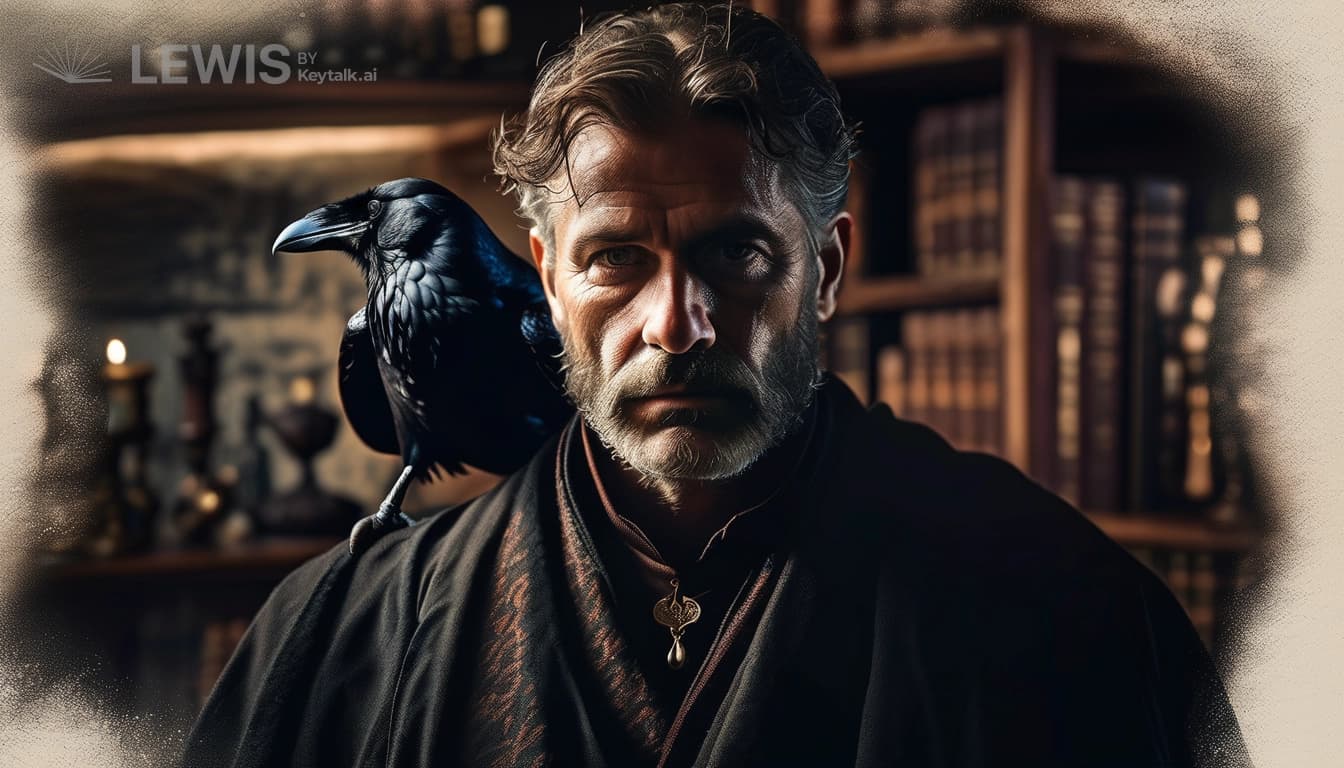
Elias Marrow

GenderMale
OccupationAnatomist and Ritual Chronicler

Profile

Elias Marrow, a 47-year-old male of Anglo-Dutch descent, inhabits the shadow-laced corridors of the labyrinthine city as its preeminent anatomist and ritual chronicler, his presence both respected and quietly feared by peers who sense the weight of his discernment. Tall and gaunt, Elias stands at six feet, his narrow shoulders and sinewy limbs sheathed in somber, ink-stained robes, always adorned with a faded copper amulet—a relic from his mentor that he compulsively fingers when deep in thought. His sallow complexion, sharply angular jawline, and piercing grey eyes lend him an air of perpetual vigilance, while a streak of white bisects his otherwise raven-black hair, a vestige of sleepless years spent cataloguing the city's ever-shifting maladies. Elias's hands, long-fingered and deft, bear the telltale stains of tinctures and ancient pigments, their nimbleness matched only by the meticulousness of his notes—written in an archaic, clipped dialect that betrays both scholarly formality and a penchant for biting wit. Haunted by the memory of a child lost to an inexplicable affliction years prior, Elias has cultivated a worldview where beauty and horror coexist: he reveres the fragile artistry of renewal yet remains obsessed with the hidden architecture of decay, seeing in every ritual both promise and peril. Socially, he is reclusive, his closest confidant a fellow chronicler whom he spars with over esoteric interpretations and the ethics of intervention. Elias’s core motivation lies in preserving the delicate equilibrium of life’s cycles, even as his skepticism of tradition renders him an outsider—his curiosity and analytical rigor driving him to question the city’s rituals when others cling to dogma. Prone to insomnia and plagued by fleeting hallucinations he documents obsessively, Elias’s speech is marked by deliberate pauses and sardonic asides, his voice low and resonant, echoing with centuries-old wisdom and the weight of unspoken dread. His knowledge of anatomy and ritual history positions him as both guardian and potential disruptor, his relentless pursuit of truth rendering him uniquely suited—and dangerously compelled—to confront the unseen saboteur threatening the city’s fate, even as it forces him to confront the shadowy boundaries of creation itself.
Antagonist Character

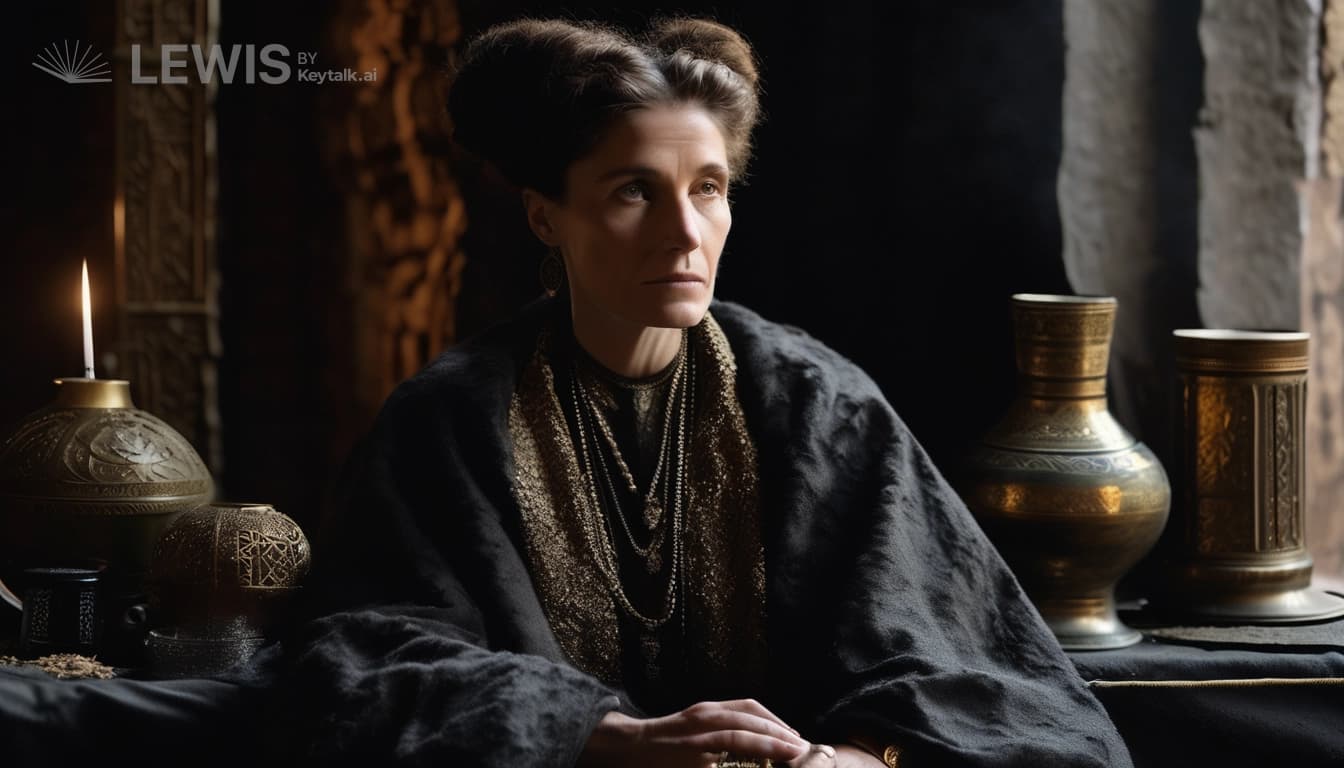
Vasiliya Iremovna Greve

GenderFemale
OccupationCustodian of Night-Blooming Archives (Architect of Decay)

Profile

Vasiliya Iremovna Greve, a woman of Russian-Jewish descent, stands at the crux of the city’s hidden rot as the enigmatic Custodian of Night-Blooming Archives—a post she has held in the shadowed underbelly of the labyrinthine metropolis for over three decades. At sixty-two, Vasiliya is slight but sinewy, her height unremarkable but her presence magnetic; her angular face is marked by a high Slavic cheekbone, a hawkish nose with a sharp downward bend, and eyes of unsettling pale gray, rimmed in perpetual bruised shadows as if she has not slept for decades. Wisps of iron-gray hair, always coiled in a severe bun, escape in tendrils that seem to move of their own accord, and a latticework of faint, ink-black tattoos crawls up the back of her long, veined hands—a remnant of ancient rites she keeps secret. Her clothing is a peculiar amalgamation of moth-eaten velvet robes and utilitarian wool, layered in hues of dusk and mildew, with a single tarnished silver key dangling from a leather thong at her throat. Vasiliya’s speech is measured and archaic, laced with guttural consonants and clipped vowels, her tone at once hypnotic and cold, betraying an education rooted in forgotten texts and the old dialects of the city’s founding. She is renowned among the city’s hidden circles for her encyclopedic knowledge of the cycles of life and entropy, yet shunned for her unsettling ability to predict—almost orchestrate—the patterns of decay. Beneath her cultivated reserve lies a mind honed by years of isolation and intellectual rigor, fiercely logical but prone to obsessive ritualism, finding comfort in painstaking order while quietly nurturing a fascination with the unpredictable beauty of rot. Haunted by a lifelong sense of exclusion from the city’s luminous rituals and a gnawing conviction that unchecked renewal breeds stagnation, Vasiliya has cultivated relationships only with the city’s lost and dying—those who, like her, find dignity in endings. Her aspirations are neither glory nor chaos, but a rebalancing: to remind the world of mortality’s necessity, even as she must navigate her own growing doubts about the cost of her methods. Vasiliya’s hands are always cold, and she has a peculiar habit of collecting fallen petals and broken things, storing them in glass jars throughout her cell-like quarters as grim talismans. She is both a scholar and a heretic, a figure whose devotion to the city’s secret histories and to the poetry of dissolution will shape the darkest year the city has ever known.
Sidekick Character

Lucinda "Luce" Solberg

GenderFemale
OccupationApothecary and Folkloric Herbalist

Profile

Lucinda “Luce” Solberg, cast in the role of antagonist through the lens of Korean archetypes—a quietly subversive “shadow agent”—is a woman whose presence lingers like the scent of bittersweet wormwood in the winding alleys of the labyrinthine city. Thirty-one years of life have etched into her a meticulous, almost obsessive devotion to the apothecary arts; she is tall and willowy, with pallid skin that betrays sleepless nights spent grinding roots and distilling tinctures, and hair the color of tarnished gold, always plaited with sprigs of native herbs. Her eyes—sharp, sepia-hued and perpetually scanning—reflect a mind shaped by both privilege and exile: born into a family revered for their folk wisdom, she was marked early by a haunting epidemic that claimed half her bloodline, leaving her with an unyielding skepticism toward both tradition and unchecked optimism. Lucinda’s speech is deliberate, laced with archaic phrasing and the clipped cadence of rural dialect, yet occasionally erupts into blunt profanity when patience frays. Her humble shop, nestled between decaying shrines and bustling markets, is both sanctuary and fortress; here, she toggles between tending to the sick and secretly cataloging subtle changes in flora and flesh, driven by a compulsion to harness nature’s duality—creation and corrosion—rather than simply heal. Unmarried and fiercely solitary, she is respected but not beloved, her reputation shadowed by whispered rumors of her “unnatural” experiments and unorthodox cures. Lucinda’s aspirations are tangled: she craves mastery over the invisible forces that govern life’s renewal, yet wrestles with an undercurrent of envy and bitterness at her exclusion from the city’s timeless rituals. Her core motivation—to expose the fragility beneath surface renewal—manifests in peculiar habits, such as recording the dreams of her fevered patients and cultivating rare, toxic blooms. Haunted by both personal loss and the specter of collective decay, Lucinda straddles the line between healer and corrupter, her every action hinting at a conflicted allegiance to the city’s fate—a complexity that will shape her as the arc’s quiet architect of sabotage.
Model Used
GPT-4.1
text
Stable Diffusion
image

World

Location/Time, Era:
Carrowind, a city whose serpentine alleys coil in impossible geometries, sprawls beneath a perpetual bruise of twilight—its era a fusion of late industrial revolution and ancient ritual, unmoored from linear history. The architecture is a latticework of weathered stone, copper-veined bridges, and spires crowned with glass hothouses where forbidden blooms pulse with bioluminescent light. Time in Carrowind is measured not by clocks, but by the cyclical rituals of renewal and decay, each year marked by a clandestine appointment of the city’s “creator,” whose identity remains shrouded until the cycle’s end. The seventh year, always shadowed by superstition, is believed to be a liminal passage—when the city’s fate teeters between blossoming and blight, its citizens haunted by the certainty that the boundaries between life and rot are thinnest. This era’s defining mood is one of uneasy anticipation; every alley hums with rumors, and every household prepares warding charms for the coming night.

Key rules of the world and their impact on the story and beyond:
The world of Carrowind is governed by two interlocking systems: the Law of Renewal, which decrees that life and health must be ritually restored each year, and the Doctrine of Equilibrium, a secretive counter-philosophy that insists unchecked renewal breeds corruption. Only the chosen “creator” may channel the city’s vital force—through sigils, incantations, and anatomical offerings—while all others are forbidden to alter the ritual’s design. However, the archives and shrines are riddled with loopholes, exploited by those adept in ritual history or clandestine apothecary arts, allowing subtle sabotage or reinterpretation of the rites. The tension between these rules generates conflict: characters must navigate a labyrinth of taboos, guarded secrets, and the threat of exile or worse for interference. This framework forces Elias, Vasiliya, and Lucinda into ethical dilemmas—whether to uphold tradition, challenge it, or bend it to avert a greater catastrophe, knowing that failure means the city’s cycle will ossify into perpetual decay.

Visual depiction of the world and its unique features:
Carrowind’s aesthetic is a chiaroscuro of lush vitality and creeping entropy. Rooftop gardens burst with impossible flowers whose petals shudder and sigh in the wind, while guttered streets are choked by black moss and twisted rootwork that pulse with a faint, sickly glow. Shrines and market stalls are festooned with talismans—bones etched with sigils, jars of luminous spores, and tapestries woven in patterns that echo both veins and fungus. The Night-Blooming Archives, Vasiliya’s domain, is carved deep into the bedrock: its walls lined with glass jars of preserved organs, wilted blossoms, and inked scrolls chronicling the city’s history of both renewal and ruin. The city’s oldest shrine, where the final confrontation unfolds, is a cathedral of decay—its marble floors veined with cracks, its altars littered with both offerings and the detritus of failed rituals, casting an atmosphere of reverent dread over every encounter.

Notable technology, philosophy, or cultural elements influencing the world and narrative:
Carrowind’s technological advancements are intertwined with its ritualistic culture: alchemical laboratories, anatomical theatres, and apothecary shops serve both healing and subversive ends, their apparatuses blending clockwork, glass, and living tissue. Philosophy in the city is dominated by two schools—the Renewalists, who preach purity and rebirth, and the Entropists, who argue for the necessity of death and disorder. This division seeps into every aspect of life: legal codes, family structures, and even dream interpretation hinge on one’s allegiance to creation or decay. Cultural memory is fiercely guarded by chroniclers and archivists, whose records can be weaponized to justify or undermine tradition. The city’s oral history is laced with cautionary tales—of creators who overreached, of saboteurs who forced evolution, and of cycles that faltered—ensuring that every action taken by Elias, Vasiliya, and Lucinda reverberates through the collective psyche, shaping not just their fates but the trajectory of Carrowind itself.
representative image
location 1 image

Location 1

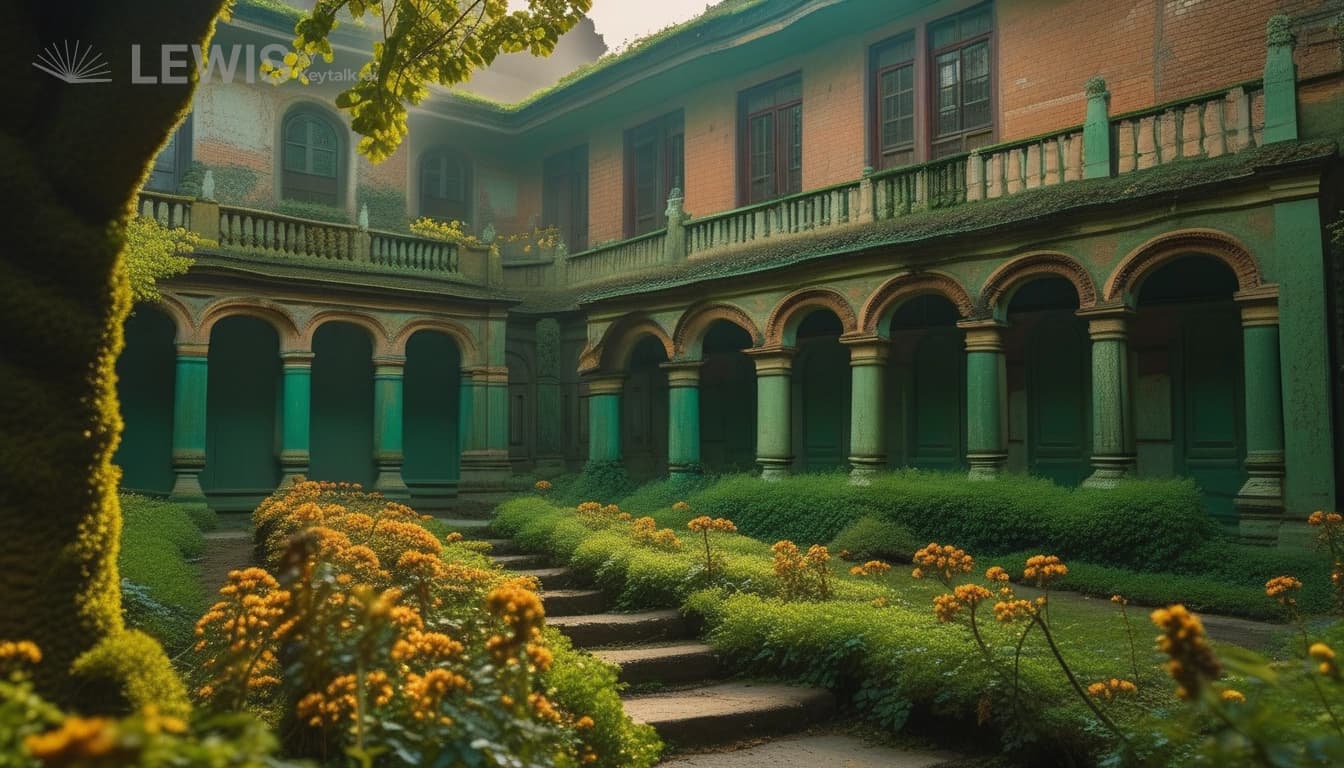
- Title : The Verdigris Spindle—Carrowind’s Forgotten Asylum
- Description : Cloaked in a perpetual haze of greenish mist, the Verdigris Spindle rises from the city’s neglected quarter—a labyrinth of corroded iron corridors and mildewed stone, its walls pulsing faintly with patterns reminiscent of diseased veins. Once a sanctuary for the city’s afflicted, now it houses the deranged and those touched by the ritual’s soured renewal; spectral cries echo from barred windows, while invasive blooms writhe through cracks in the mortar, twisting beauty and ruin into an uneasy embrace. Here, Elias first witnesses the new epidemic—a child, eyes glassy and unblinking, clutching a handful of blackened petals as if grasping the city’s decaying hope.
location 2 image

Location 2

- Title : The Sable Hollows Underbridge Market
- Description : Beneath Carrowind’s crumbling arches, the Sable Hollows seethe with feverish commerce—lanterns burn with violet flame, illuminating stalls piled with forbidden roots and vials of night-blooming essence. The air is pungent with the mingled scents of rot and rare spice, and desperate figures barter in whispers for Lucinda’s clandestine remedies, their hollow-eyed children clinging close. Here, the city’s festering wounds are laid bare: every transaction is a negotiation with decay, every shadow a hiding place for secrets that twist hope into something unrecognizable.
location 3 image

Location 3

- Title : The Clockwork Ossuary of the Unnamed Creators
- Description : Beneath the city’s oldest shrine, the ossuary sprawls—a labyrinth of bone-latticed chambers where ancient gears grind ceaselessly, animating skeletal effigies in a parody of resurrection. The air is thick with the copper tang of old blood and machine oil, and the walls pulse with phosphorescent moss that flickers in time with the ossuary’s heart: a colossal clockwork sigil, etched with the names of creators lost to history. Here, the living and dead are entwined in perpetual motion, and every whispered secret or shuddering footfall is carried to the hollow-eyed statues that bear silent witness to the city’s most dangerous transformation.
Model Used
GPT-4.1
text
Stable Diffusion
image

Scenes

scene 1 image
Scene 1
[The Veiled Parade and the Echoes of Grief]
[Place] - The winding streets and rooftops of Carrowind, culminating at the city’s central plaza
[Time] - Dusk, during the annual renewal ritual

[Action]
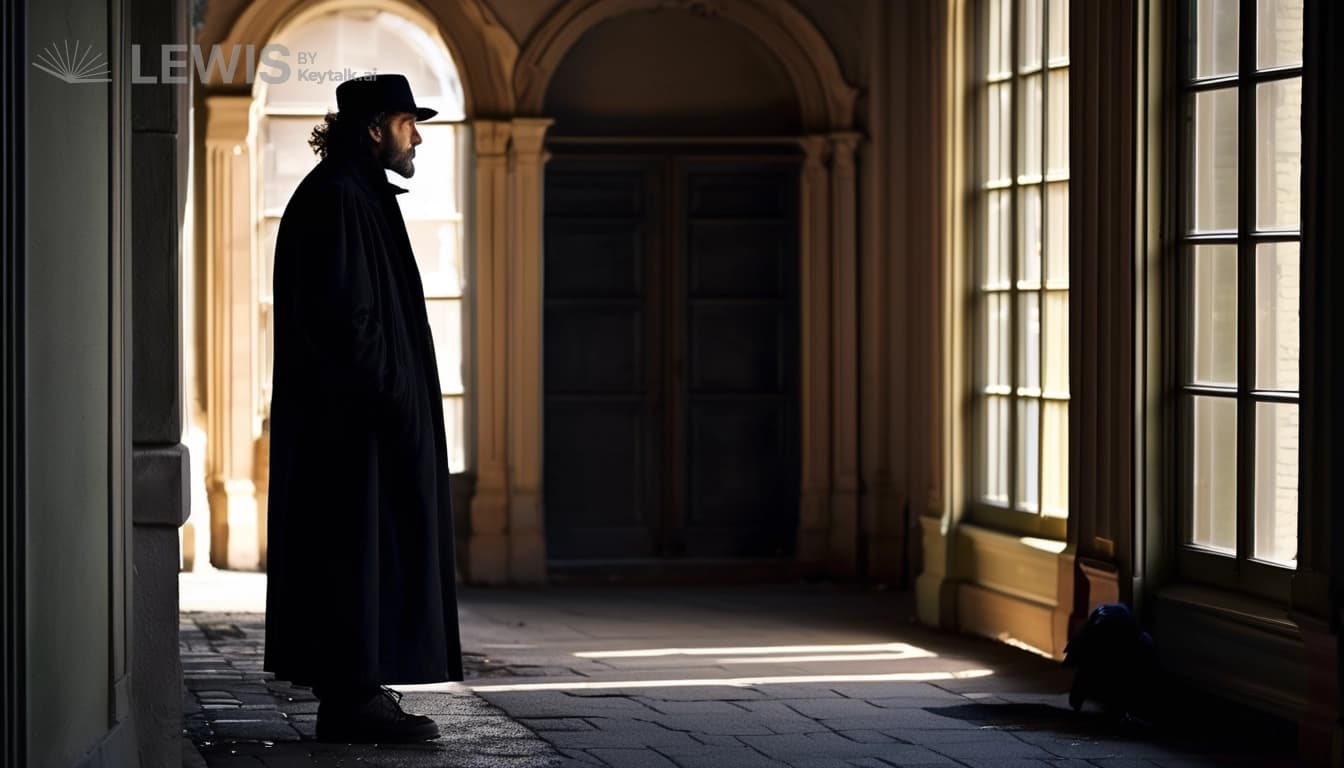
As dusk settles over Carrowind, the city’s labyrinthine avenues pulse with anticipation and unease. The veiled figure—anonymous and revered—proceeds through the twisting alleys, scattering vibrant petals that erupt in improbable colors atop weathered rooftops. Citizens gather, their faces a blend of reverence and suspicion, watching the silent pageantry unfold as the city’s cycle is meant to be reborn. Elias Marrow, ink-stained and exhausted, moves among the crowd, compulsively cataloguing every shift: the feverish glow of flowers, the sudden cessation of coughing from open windows, and the strange hush that falls over newborns’ cries. Beneath the surface, Elias’s grief simmers, haunted by memories of his lost child and consumed by the need to decipher the ritual’s true power. As the procession reaches its crescendo, he detects uncanny anomalies—petals blackening at their edges, children’s eyes reflecting unnatural depth, and a creeping dread that lingers in the air. The city’s renewal, once a promise, now teeters on the edge of corruption. Elias senses a pattern, his insomnia sharpening his perception as he observes the subtle fractures in tradition. The scene closes with Elias standing alone, enveloped by the city’s uneasy silence, already suspecting that something—someone—has tampered with the sacred cycle.

[Impact on the story]
This scene establishes the ritual’s significance and Elias’s emotional state, planting seeds of doubt and sorrow that drive his quest for answers. The city’s shift from hopeful renewal to ominous transformation heightens tension, while Elias’s grief and obsessive observation reveal both vulnerability and determination. The anomalies witnessed here catalyze his resolve to confront the unraveling tradition and seek out the true cause of the city’s suffering.

[Description]
The annual renewal ritual unfolds with unsettling beauty as Elias Marrow documents the ceremony’s subtle distortions, haunted by personal loss and growing suspicion. The city’s cycle, once a source of hope, now hints at sinister manipulation, setting Elias on a path to uncover the truth behind the corrupted tradition.
scene 2 image
Scene 2
[Title]
Night-Blooming Archives: Secrets Beneath Withered Petals

[Place]
The subterranean vaults of the Night-Blooming Archives, a candlelit maze of ancient manuscripts, preserved curiosities, and half-forgotten relics hidden beneath Carrowind’s oldest quarter.

[Time]
Late night, after the unsettling conclusion of the renewal ritual, as the city above settles into an uneasy, restless silence.

[Action]
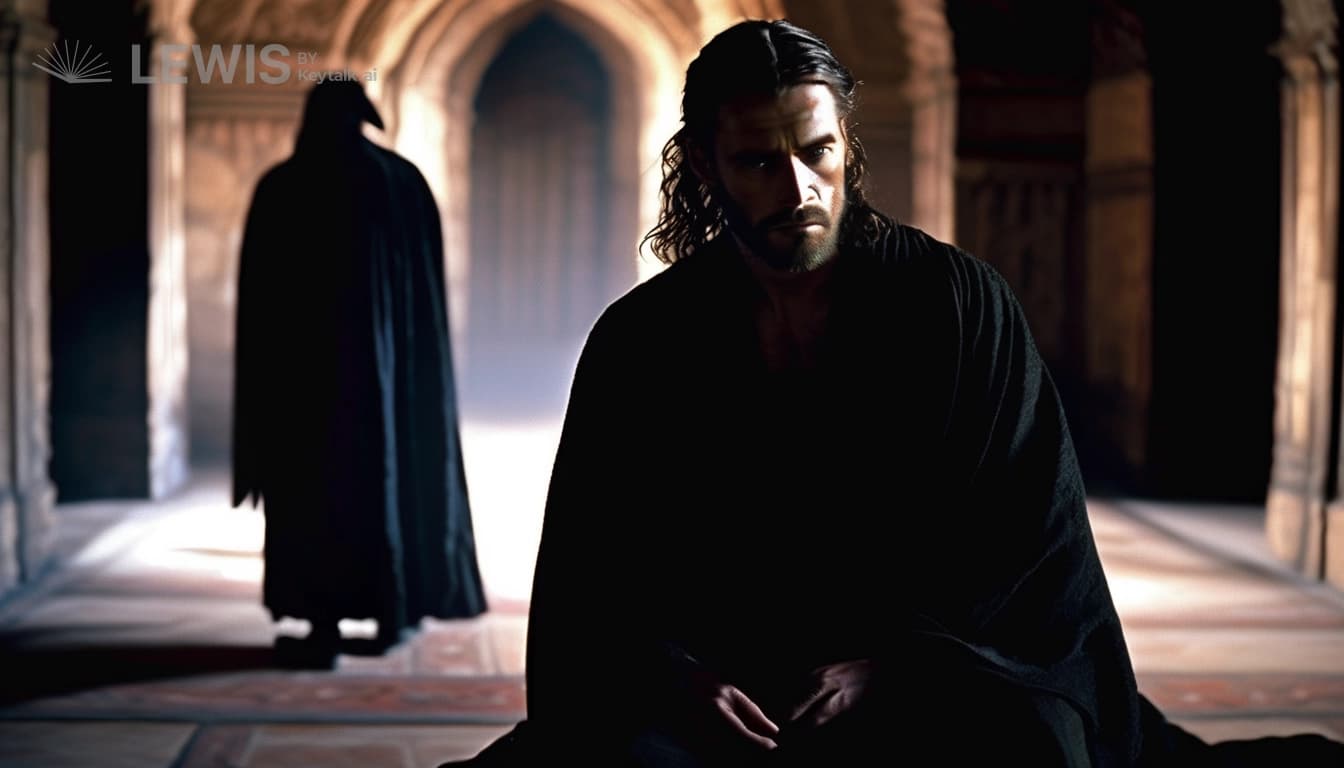
Elias, unable to sleep and driven by the anomalies he witnessed during the ritual, descends into the shadowed corridors of the Night-Blooming Archives, seeking answers that elude the city’s daylight order. He moves through the cool, labyrinthine vaults, past rows of books that pulse with forbidden knowledge, his mind racing with the memory of blackened petals and silent newborns. The oppressive scent of dried flowers and dust-laden parchment heightens his anxiety as he reaches the private cell of Vasiliya Iremovna Greve, the enigmatic Custodian whose reputation straddles reverence and heresy. Their interaction is charged with tension—Elias’s faith in renewal clashing with Vasiliya’s stoic acceptance of decay. Vasiliya’s quarters, lined with glass jars containing wilted petals and bone fragments, evoke both fascination and dread in Elias, who is both repelled and drawn in by the evidence of endings preserved as carefully as beginnings. Vasiliya listens as Elias recounts the ritual’s perversions, her gaze unflinching, and she challenges his assumptions about the sanctity of tradition. She reveals her own observations: the afflictions are not wild, but patterned, echoing cycles described only in the Archives’ forbidden margins. She shares cryptic records—ancient diagrams, coded journals, and fragments of testimony—suggesting the hand of a saboteur manipulating both creation and decay from within the city’s sacred cycles. Together, they pore over these materials, their mutual skepticism of tradition forging a fragile alliance. Subtle threads of personal vulnerability emerge: Vasiliya’s outsider status, Elias’s unresolved grief, and the unspoken fear that confronting the city’s corruption will exact a terrible personal cost. The scene closes with Vasiliya offering Elias a name—Lucinda Solberg, a figure shrouded in rumor and suspicion—pushing him one step closer to the city’s festering heart.

[Impact on the story]
This scene deepens the psychological stakes and forges a partnership between Elias and Vasiliya, uniting their contrasting philosophies in pursuit of the truth. The revelation of a deliberate saboteur propels the narrative into a realm of intentional subversion, heightening both suspense and urgency. The emotional undercurrents—grief, isolation, and the fear of confronting uncomfortable truths—add layers of complexity to both characters, setting up future conflicts and alliances.

[Description]
Elias seeks out Vasiliya in the Night-Blooming Archives, where their uneasy alliance is forged amid relics of both renewal and decay. Clues point to sabotage within the ritual, setting the protagonists on a perilous path into the city’s shadowed intrigues.
scene 3 image
Scene 3
[Title]
The Custodian’s Dilemma: Endings in Vasiliya’s Sanctuary

[Place]
Vasiliya’s cell-like sanctuary: a cramped, dimly lit chamber within the Archives, lined with shelves of glass jars containing wilted petals, bones, and unsorted relics. The walls are covered in faded sigils and anatomical sketches, a mingling of reverence and morbidity.

[Time]
The night deepens, its silence punctuated only by distant city unrest and the faint drip of water from overhead pipes. Tension from the earlier revelations hangs heavy, the hour marked by exhaustion and mounting dread.

[Action]
Elias and Vasiliya, still raw from their discoveries, retreat to her sanctuary to strategize and confront personal demons. Vasiliya, compelled by her duty to preserve dignity in endings, grapples with the ethical implications of exposing Lucinda’s sabotage. She weighs her loyalty to the Archives against her compassion for the city’s suffering, revealing a past shaped by loss and exile. Elias, haunted by his child’s death and the city’s unraveling, is torn between his devotion to renewal and his growing fascination with the integrity of decay. Their conversation is fraught—Elias presses for swift action, while Vasiliya advocates caution, fearing that destabilizing tradition without understanding the saboteur’s motives could trigger irreversible chaos. Subtle undercurrents of mistrust and empathy surface: Vasiliya confides her suspicion that Lucinda’s interference is a symptom, not the root, of the city’s deeper malaise. Together, they pore over the cryptic records, seeking patterns amid the evidence of rot and renewal. The scene pivots as Vasiliya proposes a risky plan: rather than exposing Lucinda immediately, they must first witness her work and motivations firsthand, risking personal safety to understand the sabotage’s true nature. Elias, conflicted but driven by desperation, agrees, the alliance deepening amid shared vulnerability and philosophical discord.

[Impact on the story]
This scene crystallizes the uneasy partnership between Elias and Vasiliya, layering their motivations with doubt and empathy. Their internal conflicts—duty versus compassion, tradition versus change—emerge in sharper relief, building emotional tension and setting the stage for confrontation with Lucinda. The plan to observe rather than accuse marks a pivotal shift toward moral complexity and psychological depth.

[Description]
Elias and Vasiliya debate how to confront Lucinda, revealing personal stakes and ethical dilemmas. Their alliance is tested as they choose to investigate Lucinda’s motives rather than expose her outright, setting the stage for a more nuanced conflict.
scene 4 image
Scene 4
[Title]
Lucinda’s Apothecary: Dreams, Poisons, and the Anatomy of Sabotage

[Place]
Lucinda Solberg’s apothecary—a labyrinthine shop buried deep in Carrowind’s oldest quarter, its walls cloaked in climbing, toxic blooms. The cramped space is perfumed with medicinal herbs and undercut by the bitter tang of decay. Shelves overflow with vials, cryptic ledgers, and jars of preserved dreams, while a locked greenhouse hums ominously in the rear.

[Time]
Early morning, the city simmering with unrest as nightmares and sickness escalate. Elias and Vasiliya arrive at the threshold, sleep-deprived and tense, as dawn’s pallid light filters through warped glass.

[Action]
Elias and Vasiliya enter Lucinda’s domain, their nerves taut as they navigate aisles crowded with desperate patrons and whispered accusations. Lucinda, guarded but unflinching, receives them with wary curiosity—her reputation preceding her. Elias, driven by both suspicion and empathy, probes Lucinda’s motivations, while Vasiliya observes quietly, attuned to subtext and subtle cues. Lucinda reveals her complex rationale: she catalogues the city’s dreams not to torment, but to expose the rot festering beneath artificial renewal. She recounts the epidemic that ravaged her family, her bitterness tempered by a scholar’s precision; she insists that the ritual’s unchecked renewal breeds blindness, and that her sabotage is a desperate attempt to force the city to confront its own mortality. As Elias and Lucinda argue, philosophical fault lines emerge—Elias clings to hope, Vasiliya sees beauty in endings, Lucinda champions uncomfortable truth. The trio’s conflict escalates, but so does understanding: Elias glimpses the pain beneath Lucinda’s defiance, Vasiliya recognizes a fellow heretic, and Lucinda’s isolation is laid bare. A subplot unfolds as Lucinda’s remedies are revealed to both heal and harm, and Elias discovers a ledger of dream patterns, hinting at a deeper orchestration of the city’s suffering. The scene concludes with a fragile truce—Lucinda agrees to show them her greenhouse and the sigil she’s altered, but warns that confronting the ritual’s corruption may unleash consequences neither side can control.

[Impact on the story]
This scene is the crucible where motivations collide and alliances shift. Elias is forced to reckon with the ambiguity of Lucinda’s actions, Vasiliya’s worldview deepens, and Lucinda’s humanity is revealed. Their fragile alliance is forged in tension and necessity, setting up the final confrontation and embedding the story’s central themes of renewal, rot, and the cost of truth.

[Description]
Elias and Vasiliya confront Lucinda in her apothecary, uncovering the complex motivations behind her sabotage and the philosophical divide between hope, decay, and uncomfortable truth. The uneasy alliance formed here propels the trio toward their final, perilous confrontation.
scene 5 image
Scene 5
[Title]
Into the Arteries: Revelation and Rupture Beneath the Shrine

[Place]
The subterranean vaults beneath Carrowind’s oldest shrine—a cavernous, echoing crypt where faded mosaics and crumbling sigils mark centuries of ritual. Roots entwine with stone, and the air is thick with the scent of earth, mildew, and dying blossoms. Flickering lanterns cast shifting shadows across the walls, distorting the faces of the trio as they descend.

[Time]
Twilight; the city’s unrest reaches fever pitch aboveground, and the labyrinth below feels suspended between cycles, haunted by the threat of collapse.

[Action]
Elias, Vasiliya, and Lucinda descend into the shrine’s hidden chambers, their alliance brittle but necessary. Lucinda leads them to the heart of the ritual’s workings—a sanctum where the city’s renewal sigil is inscribed, now warped by her subtle interventions. The atmosphere brims with tension: Elias is consumed by dread and resolve, determined to prevent irreversible decay yet unable to dismiss the logic of Lucinda’s sabotage. Vasiliya stands as mediator, her loyalty divided, her reverence for endings challenged by the looming possibility of total dissolution. The trio confronts the sigil’s mutation, each voicing their philosophy—Elias pleads for balance and tradition, Lucinda demands recognition of rot’s value, Vasiliya proposes a synthesis that honors both creation and decay. Their conflict escalates as Elias faces the trauma of his lost child, Lucinda reveals the final stage of her plan (a ritual rupture designed to force reckoning), and Vasiliya, torn by empathy and doubt, intervenes with an alternative: a hybrid ritual embracing shadow and light. The scene’s emotional core is a raw negotiation—not just of power, but of grief, fear, and hope—culminating in Elias’s agonizing choice to trust in transformation rather than purity. As the ritual begins to unfold, the shrine pulses with unstable energy, hinting at consequences that will reshape Carrowind’s destiny.

[Impact on the story]
This scene crystallizes the story’s central themes, forcing each character to confront their deepest fears and desires. Elias’s decision marks a turning point, redefining his relationship to renewal and loss. Vasiliya’s intervention introduces the possibility of synthesis, while Lucinda’s vulnerability and conviction challenge the city’s complacency. The confrontation sets the stage for ambiguous aftermath, ensuring no character escapes unchanged.

[Description]
Beneath the city’s shrine, Elias, Vasiliya, and Lucinda wrestle with the ritual’s fate, their philosophies clashing and converging. Elias chooses transformation over purity, unleashing a new cycle whose outcome remains uncertain.
scene 6 image
Scene 6
[Title]
Renewal in Shadow: Scars, Synthesis, and the Birth of a New Cycle

[Place]
Throughout Carrowind—streets, rooftops, and alleyways, as the city awakens to the aftermath of the ritual; Elias observes from his window above the winding thoroughfares, Vasiliya walks among recovering citizens, and Lucinda tends her apothecary, haunted by what she has wrought.

[Time]
Dawn, the first morning after the hybrid ritual; the city is shrouded in uneasy quiet, the remnants of nightmares clinging to the walls and faces of its people.

[Action]
The scene opens with Carrowind transformed: petals bloom in unsettling, iridescent colors, and newborns bear strange marks that speak of both hope and otherness. Citizens emerge from their homes, wary yet compelled to touch the new blossoms, whispering about the night when renewal and rot were entwined. Elias, exhausted and changed, contemplates the city’s altered rhythm from his study, weighing the cost of his decision—his grief for his child now entwined with the ambiguous vitality he has helped unleash. Vasiliya, moving through alleyways and sickrooms, listens to stories of faded nightmares and lingering scars, her sense of purpose deepened but shadowed by uncertainty; she offers comfort to those unsettled by the city’s new form, quietly noting the beauty in survival. Lucinda, isolated but vigilant, records the city’s symptoms and dreams, conflicted by the pain she has caused yet vindicated by the rupture in complacency. The trio does not reunite, but each is marked—Elias with bittersweet acceptance, Vasiliya with cautious hope, Lucinda with restless resolve. The city’s ritual cycle resumes, but with a new fracture: traditions are questioned, rituals adapted, and life continues with an undercurrent of unease. Citizens argue, mourn, and celebrate; some see the new renewal as a blessing, others as a warning. Elias prepares his chronicles, uncertain whether to celebrate or mourn, capturing the city’s scars and resilience in ink.

[Impact on the story]
This scene establishes the story’s ambiguous resolution—neither triumph nor defeat, but a complex rebirth that leaves characters and city fundamentally altered. Elias, Vasiliya, and Lucinda must live with the consequences of their choices, their philosophies forever woven into Carrowind’s cycle. The city’s future remains open: hope and fear intermingle, and the scars of the ritual invite both transformation and caution. The emotional aftermath is layered—acceptance tinged with doubt, and renewal shadowed by the memory of rot.

[Description]
Carrowind awakens changed, its citizens grappling with unsettling beauty and lingering scars. Elias, Vasiliya, and Lucinda face the consequences of the hybrid ritual, each irrevocably shaped by their roles in the city’s ambiguous renewal. The cycle continues, but with a new awareness of both light and shadow.
'The Year Renewal Went Wrong'Story Chat

Want to chat with the characters from this story?

'The Year Renewal Went Wrong'Story Chat

Want to chat with the characters from this story?

story image
story image
story image

You might also like

Comments0

rank icon image
#45 inGenre
rank icon image
#52 inGenre
rank icon image
#74 inGenre
theme music