Plot Synopsis
The story begins with a modern-day military strategist, a man who spent his life studying the grand, bloody tapestry of human conflict, dying unceremoniously in a freak accident. He awakens with a gasp, not in an afterlife, but in the cold, cramped scribe’s quarters of the royal archives. He is Cassian Valerius, a forgotten noble on the fringes of a kingdom teetering on the brink of a continental war he knows intimately from his past life's history books. This isn't just any war; it's the Great Scouring, a conflict that will decimate a generation and shatter the continent for a century. As he grapples with the disorienting reality of his new body—the lean frame, the ink-stained fingers, the suffocating weight of a disgraced name—he discovers his divine ability. It’s not a grand, showy power, but something far more subtle and dangerous: the ability to "edit" the past by physically altering historical documents. By rewriting a single line in a treaty or smudging a date on a royal decree, he can cause a ripple effect, nudging history onto a new course. Driven by the fresh, visceral memory of the slaughter to come, Cassian's new purpose becomes an obsession: he will use his knowledge and this strange power to dismantle the war machine piece by piece before it can ever truly start.
His first edit is small, a calculated risk. He alters a minor trade agreement between two border duchies, changing a clause about grain tariffs. He watches, heart pounding, as the world subtly reshapes around the change; conversations in the archives shift, couriers are rerouted, and a planned border skirmish, the initial spark of the larger war, simply fails to materialize. Emboldened, Cassian grows more ambitious. He uses his position as a royal scribe to access increasingly sensitive documents, subtly rewriting diplomatic correspondence to sow mistrust between allied warmongers and forging logistical orders to misdirect supply caravans intended for the front lines. His only confidante, though she doesn't know the full truth, is Elara Vance, a fiercely pragmatic cartographer and his childhood friend. She notices the discrepancies first—maps that no longer match troop movements, coastal towns fortified for no apparent reason. While she dismisses his vague explanations as paranoid theories, her unyielding belief in empirical truth makes her an unwitting but invaluable asset, helping him track the real-world consequences of his temporal meddling and providing him with the accurate geographical data he needs to make his edits effective.
Cassian's subtle sabotage does not go unnoticed. While the kingdom's generals and ministers are left confused by the faltering momentum towards war, one man sees a deliberate, intelligent pattern in the chaos: Malachi Vex, the Pontifex of the Fated Accord. Malachi is not just a religious leader; he is a being akin to Cassian, another soul with a god-like influence over the world, but where Cassian seeks to preserve life, Malachi cultivates conflict as a form of high art. He has spent decades meticulously arranging the political pieces for the Great Scouring, viewing it as his magnum opus, a symphony of glorious destruction. He feels Cassian's edits like a dissonant chord in his masterpiece. Malachi begins a terrifyingly precise counter-campaign. When Cassian forges a letter to delay an alliance, Malachi orchestrates the assassination of a diplomat and frames the opposing nation, making the alliance blood-bound and stronger than ever. When Cassian reroutes food supplies, Malachi has his acolytes burn the granaries, creating a famine that makes the populace desperate for the structure and rations of a wartime army. A deadly, invisible chess match begins, fought across timelines and historical records, with the fate of millions hanging in the balance.
The stakes escalate dramatically when Malachi, frustrated by his unseen opponent, decides to change his tactics from countering Cassian's moves to hunting him directly. He realizes the edits are originating from the royal archives and begins to exert his influence, having key archivists replaced with his own loyalists. Cassian feels the net tightening, his access to crucial documents cut off. Desperate, he plans his most audacious edit yet: to prevent the birth of the fanatical king whose expansionist policies are the central pillar of Malachi's war. He finds the king’s parents' marriage contract, a document so old and fragile it's kept in the deepest, most secure vault. As he prepares to invalidate the union, Malachi confronts him in person for the first time. The Pontifex reveals the full, horrifying truth: they are not just two powerful individuals, but pawns in a cosmic game, avatars of opposing universal forces of creation and destruction. Malachi explains that this world is their canvas, and his purpose is to paint it with the beautiful, necessary agony of conflict. He offers Cassian a choice: join him and become a co-creator of this sublime art, or be erased.
Cassian refuses, and their conflict explodes from a clandestine war of ink and parchment into a direct confrontation. Malachi, wielding his influence openly, frames Cassian for treason and heresy, turning the entire state against him. Cassian is forced to flee, now a hunted fugitive. His only ally is Elara, who, upon seeing irrefutable proof of Cassian's power when he alters a map right before her eyes, is forced to abandon her rigid pragmatism. Her world of fixed lines and absolute truths shatters, replaced by a terrifying and wondrous reality. Her loyalty, however, now lies not with the "truth" of the world, but with the truth of her friend. Using her intimate knowledge of the land, she guides Cassian through forgotten paths and secret terrain, becoming his anchor to the physical world as he becomes increasingly detached by his temporal manipulations. Their journey is a desperate race to find a "nexus" point, a foundational document or event so critical that altering it could unravel Malachi's entire plan, but with each edit Cassian makes to slow their pursuers, the world grows more unstable and unpredictable.
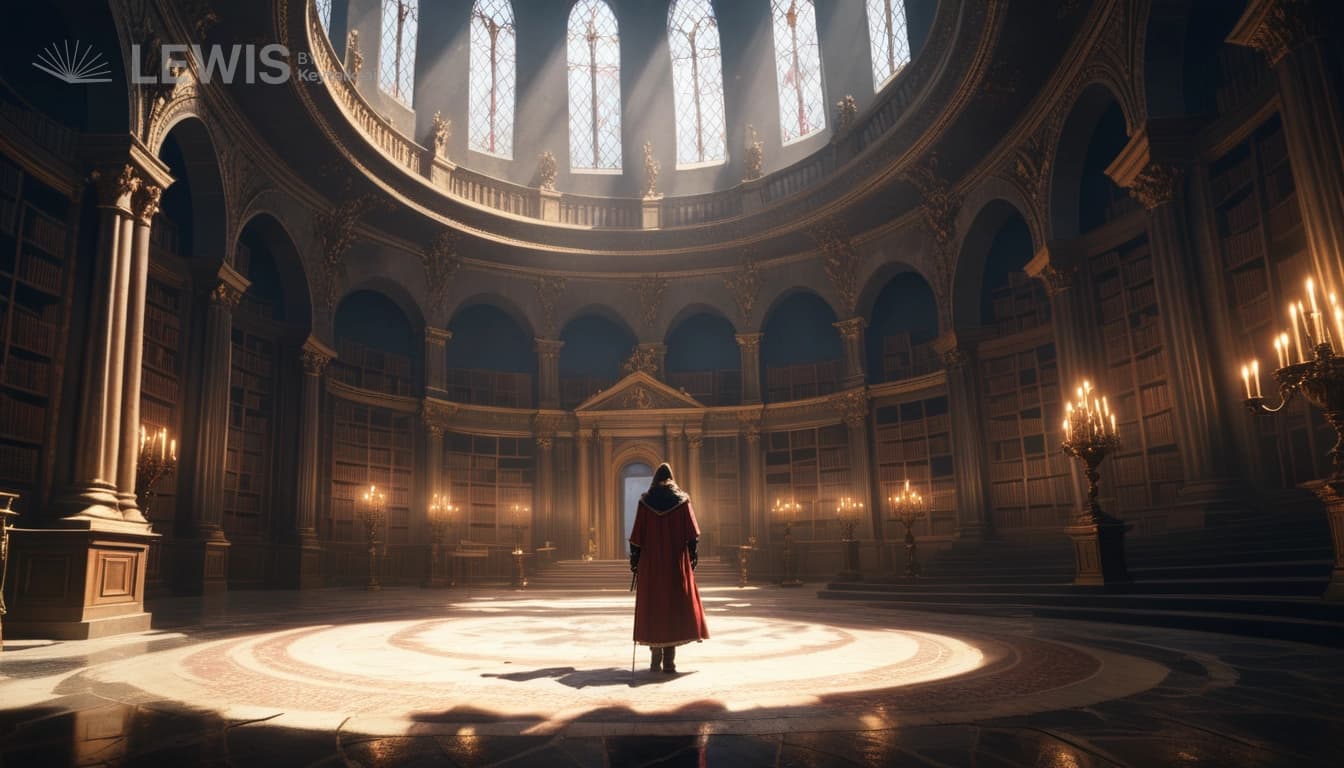
The climax occurs in an ancient, forgotten monastery library, the repository of the continent's oldest foundational texts. Here, Cassian discovers the ultimate document: the original charter of the Fated Accord itself, the very instrument of Malachi's power. He realizes he cannot simply prevent one war; he must erase the philosophical and religious justification for all of Malachi's "beautiful" conflicts. As Malachi and his zealots storm the library, Cassian begins his final, desperate edit. He doesn't just smudge a line or change a date; he fundamentally rewrites the Accord's core doctrine, transforming its mandate from one that sanctifies conflict to one that preaches absolute pacifism and the sanctity of all life. This act requires an immense outpouring of his power, a sacrifice he knows he might not survive. As the ink from his quill dries, the world convulses. Malachi screams, not in pain, but in aesthetic horror as his grand symphony of war dissolves into a cacophony of peace. The very essence of his being, tied to the old Accord, begins to unravel. The story ends on a bittersweet, ambiguous note: the war is averted, and the continent is saved from the Great Scouring. However, Cassian Valerius, the forgotten noble, is gone, his life force seemingly consumed in the final edit. In his place, a blank-eyed man slumps over the rewritten charter, with no memory of who he is or what he has done. Elara stands beside him, her map case at her feet, now the sole guardian of the truth, facing the monumental task of navigating a new, peaceful, but utterly unfamiliar world with the ghost of the man who saved it.