본문으로 건너뛰기
Thought Crimes: The Memory Trial cover image

Thought Crimes: The Memory Trial

In a futuristic courtroom where mind-reading technology is used to determine guilt, a brilliant defense attorney must prove her client's innocence while battling her own suppressed memories, uncovering a conspiracy that threatens to unravel the entire justice system.

Weekly ranking

rank icon image
#1 inTheme
rank icon image
#1 inTheme
rank icon image
#2 inGenre
Scroll

Plot Synopsis

In a world where mind-reading technology has revolutionized the justice system, brilliant defense attorney Seo-yeon Park finds herself at the center of a case that will challenge everything she believes in. As she fights to prove her client's innocence, Seo-yeon must confront her own suppressed memories and unravel a conspiracy that threatens to topple the entire legal framework.

The story begins with Seo-yeon taking on a high-profile case: defending a young activist accused of plotting to destroy the mind-reading technology that forms the backbone of the justice system. Despite overwhelming evidence from the mind-reading scans, Seo-yeon senses something amiss. Her client's memories seem fragmented, almost artificially constructed, prompting her to dig deeper into the case. As she delves into the investigation, Seo-yeon begins experiencing flashes of her own suppressed memories, hinting at a connection between her past and the current case.

Seo-yeon's pursuit of the truth leads her to Tariq Al-Rashid, the eccentric mind-reading technology developer. Initially reluctant to assist, Tariq becomes intrigued by Seo-yeon's theories about memory manipulation. Together, they uncover evidence suggesting that the mind-reading technology, once thought infallible, can be tampered with. This revelation sends shockwaves through the legal community and puts them both in the crosshairs of powerful figures who want to maintain the status quo.

As the trial progresses, Seo-yeon finds herself pitted against Chief Justice Nikolai Volkov, a staunch believer in the mind-reading technology. Volkov, haunted by his own past and dedicated to upholding the system he helped create, becomes Seo-yeon's primary antagonist. Their courtroom battles are intense, with Seo-yeon's innovative legal strategies clashing against Volkov's unwavering faith in the technology. Outside the courtroom, Seo-yeon and Tariq race against time to gather evidence, their investigation leading them through the underbelly of the city and into the shadowy world of illegal memory modification.

The turning point comes when Seo-yeon, pushed to her limits, agrees to undergo a mind-reading scan herself. The process triggers a flood of suppressed memories, revealing a traumatic event from her past that was deliberately erased. This personal revelation not only strengthens her case but also exposes a widespread conspiracy involving high-ranking officials, including members of the judiciary, who have been using the technology to manipulate memories and control the outcomes of trials.

In a climactic courtroom showdown, Seo-yeon presents her evidence, challenging the very foundations of the justice system. Volkov, faced with irrefutable proof of the system's flaws, is forced to confront his own role in perpetuating injustice. As the truth comes to light, public outcry forces a reevaluation of the mind-reading technology's role in the legal process. Seo-yeon's client is exonerated, and a new era of judicial reform begins. The story concludes with Seo-yeon, now at peace with her recovered memories, working alongside Tariq to develop safeguards for the mind-reading technology, ensuring that justice truly remains blind in this brave new world.
Model Used
Claude 3.5 Sonnet
text
Stable Diffusion
image

Story Details

Keytalk Prompts Used
See all Keytalks
no chosen prompts
no chosen prompts
no chosen prompts
no chosen prompts
Model Used
Claude 3.5 Sonnet
text
Stable Diffusion
image

Character

Protagonist Character

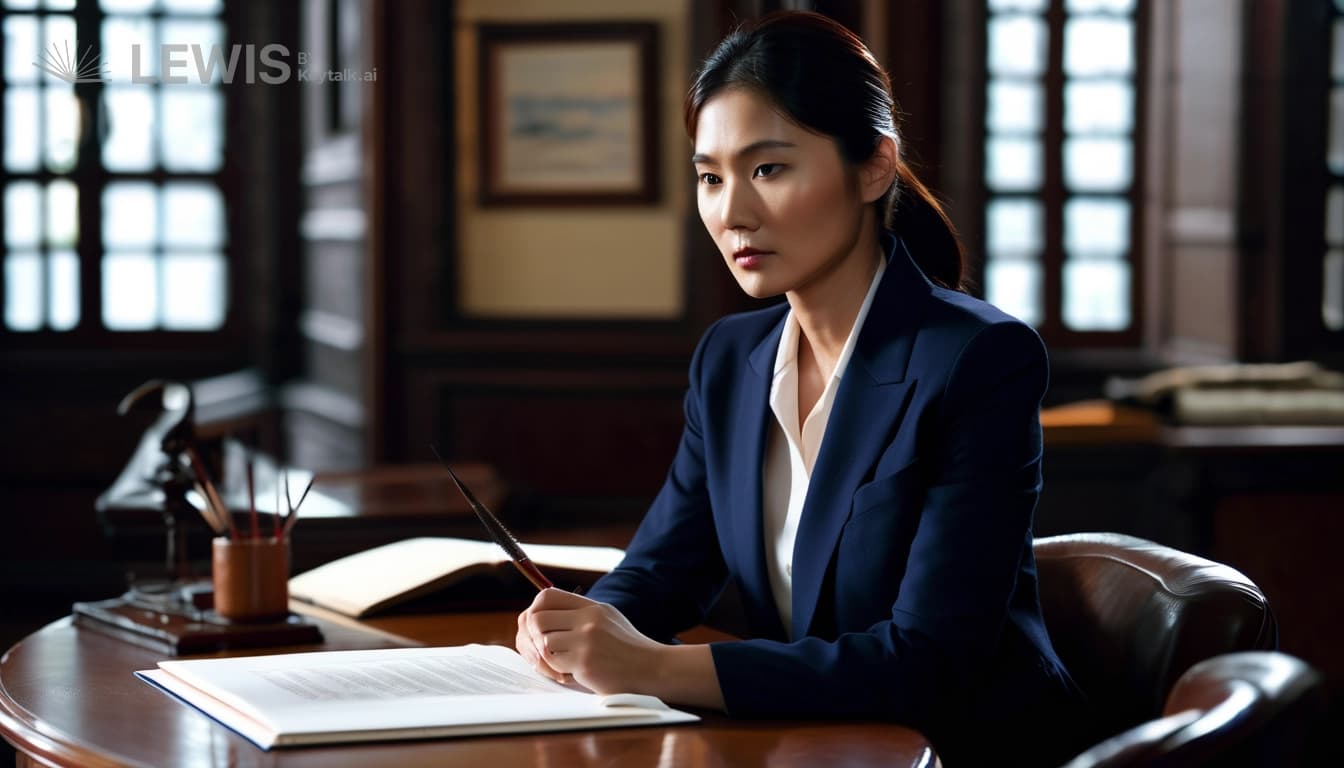
Seo-yeon Park

GenderFemale
OccupationDefense Attorney

Profile

Seo-yeon Park, a 34-year-old defense attorney, exudes an aura of unyielding determination tempered by a haunting vulnerability. Her razor-sharp intellect and uncanny ability to dissect complex legal arguments have earned her a reputation as a formidable courtroom adversary, yet she remains plagued by elusive gaps in her own memory. Raised in a family of traditionalists who viewed her career choice with skepticism, Seo-yeon's drive to succeed is matched only by her fierce commitment to justice. She navigates the high-stakes world of futuristic law with a pragmatic efficiency, her apartment a spartan reflection of her single-minded focus. Despite her professional success, Seo-yeon grapples with a deep-seated loneliness, finding solace in her nightly ritual of practicing calligraphy while sipping aged soju. Her speech, punctuated by legal jargon and the occasional biting sarcasm, belies a compassionate nature that emerges in quiet moments of reflection. An avid collector of antique mechanical watches, Seo-yeon finds comfort in their steady ticking, a contrast to the unpredictable nature of human memory she confronts daily. As she prepares to defend her latest client, Seo-yeon cannot shake the feeling that this case will force her to confront the shadows lurking in her own psyche, challenging her long-held belief in the infallibility of mind-reading technology and the very foundations of the justice system she has sworn to uphold.
Antagonist Character

Nikolai Volkov

GenderMale
OccupationChief Justice of the Supreme Court

Profile

Nikolai Volkov, the stern-faced Chief Justice of the Supreme Court, exudes an aura of unwavering authority tempered by a hidden vulnerability. At 52, his salt-and-pepper hair and piercing blue eyes reflect years of legal battles and moral dilemmas. Volkov's razor-sharp intellect and photographic memory have propelled him to the pinnacle of the justice system, but his rigid adherence to rules and protocols often blinds him to the nuances of human nature. Haunted by a childhood in post-Soviet Russia, where he witnessed the corrupt machinations of power, Volkov has dedicated his life to upholding the law with an almost fanatical devotion. His current position affords him a life of privilege, yet he remains ascetic, finding solace in long nights poring over legal texts and coding neural algorithms for the mind-reading technology he championed. Volkov's relationships are few and largely professional, his personal life sacrificed on the altar of justice. He grapples with an increasing sense of isolation and the gnawing fear that the system he's helped create may be fundamentally flawed. In rare moments of introspection, Volkov indulges in composing classical music, his fingers dancing across piano keys with a gentleness at odds with his courtroom demeanor. His speech is formal and precise, peppered with legal jargon and devoid of colloquialisms, a linguistic armor that keeps others at arm's length. As a potential antagonist, Volkov's unwavering belief in the infallibility of mind-reading technology and his own judgment sets him on a collision course with those who would challenge the status quo, his inner turmoil threatening to unravel the very fabric of justice he has sworn to protect.
Sidekick Character

Tariq Al-Rashid

GenderMale
OccupationMind-Reading Technology Developer

Profile

Tariq Al-Rashid, a 41-year-old mind-reading technology developer, exudes an aura of eccentricity that borders on the bizarre. As a supporting character with shades of the Korean archetype "Chingu" (loyal friend), Tariq's brilliance is matched only by his peculiar idiosyncrasies. His lab coat, adorned with swirling, psychedelic patterns, reflects his penchant for the trippy and unconventional. Tariq's speech is peppered with technical jargon and colorful metaphors, often delivered in a rapid-fire cadence that leaves colleagues struggling to keep up.

Beneath his funky exterior lies a mind haunted by ethical dilemmas surrounding his work. Tariq grapples with the implications of the very technology he's helped create, his conscience a tumultuous sea of doubt and rationalization. His apartment, a chaotic blend of cutting-edge gadgets and vintage lava lamps, serves as both sanctuary and prison for his racing thoughts.

Despite his genius, Tariq's social skills are woefully underdeveloped. He finds solace in his collection of obsolete tech, tinkering with discarded gadgets while struggling to form meaningful connections with people. His closest relationship is with his AI assistant, ARIA, programmed to understand his quirky communication style.

Driven by an insatiable curiosity and a desire to push the boundaries of science, Tariq often loses himself in marathon coding sessions, fueled by a concoction of energy drinks and synthesized beats. His work is his life, yet he yearns for a greater purpose beyond the confines of his lab.

As the story unfolds, Tariq's unique perspective and intimate knowledge of mind-reading technology position him as a pivotal figure. His internal conflict between scientific progress and ethical responsibility threatens to either bolster or undermine the defense attorney's case, making him a wild card in the courtroom drama. Tariq's journey will force him to confront the consequences of his creations and potentially choose between loyalty to his work and the pursuit of justice.

Keytalk Prompts Used

Sidekick Character
trippy
Model Used
Claude 3.5 Sonnet
text
Stable Diffusion
image

World

1. Where/When:
The story unfolds in a near-future megalopolis, circa 2065, where gleaming skyscrapers and holographic billboards coexist with crumbling remnants of the old world. This urban landscape, a fusion of Eastern and Western architectural influences, sprawls across what was once the Korean Peninsula, now a global nexus of technological innovation and legal precedent. The city-state, known as Neo-Seoul, serves as the beating heart of a world grappling with the implications of mind-reading technology in jurisprudence.

2. Important rules of the universe and how it impact the story:
In this world, the cornerstone of the justice system is the Cerebral Veracity Act of 2050, which mandates the use of mind-reading technology in all criminal trials. This law has fundamentally altered the concept of due process, replacing traditional evidence gathering and witness testimonies with direct neural scans of the accused. The act stipulates that these scans are infallible and inadmissible, creating a society where the very notion of lying has become obsolete in legal proceedings.

This system profoundly impacts the story by placing Seo-yeon Park in a seemingly impossible position. Her client's guilt appears incontrovertible according to the mind-reading scans, forcing her to challenge not just the evidence, but the entire foundation of the justice system. As Seo-yeon uncovers the potential for memory manipulation, she exposes the fragility of a society built on the presumption of technological infallibility.

The rules of this universe also create a stark divide between the "scanned" and "unscanned" populations. Those who have undergone mind-reading are seen as transparent and trustworthy, while those who refuse or haven't been subjected to scans face social stigma and limited opportunities. This societal pressure adds layers of complexity to Seo-yeon's investigation and Tariq's internal conflict.

3. The visual description of the universe:
Neo-Seoul is a vertical city of contrasts, where towering spires of chrome and glass pierce the smog-laden sky. At street level, a labyrinth of neon-lit alleyways and bustling markets harken back to the city's pre-technological past. Holographic displays project legal proceedings in real-time, turning courtroom dramas into public spectacles.

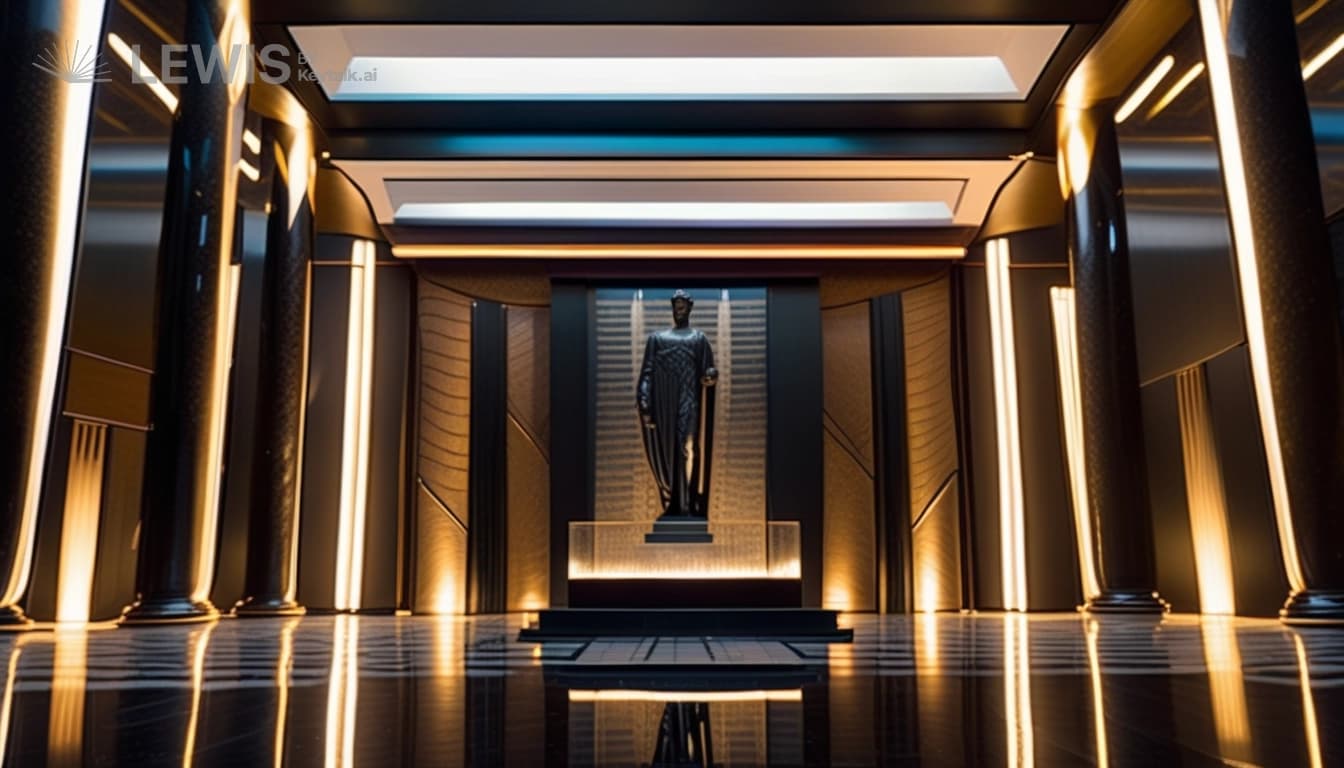
The Supreme Court building, a massive structure of obsidian and light, dominates the city center. Its façade is embedded with an intricate network of LED panels that constantly display the outcomes of recent trials, a public testament to the supposed infallibility of the mind-reading technology.

Seo-yeon's law office occupies a retrofitted hanok, a traditional Korean house incongruously nestled among sleek high-rises. Inside, cutting-edge holographic displays and neural interfaces coexist with antique furniture and calligraphy scrolls, mirroring the protagonist's struggle between tradition and innovation.

Tariq's laboratory is a chaotic wonderland of blinking consoles, swirling holograms, and tangled wires. Prototype mind-reading devices in various stages of development litter workbenches, while walls are covered in complex algorithms and neural mapping diagrams.

The cityscape is dotted with "scan booths" – transparent pods where citizens can voluntarily undergo mind-reading to prove their innocence or trustworthiness. These booths serve as a visual reminder of the omnipresent nature of the technology and its impact on daily life.

4. Notable technologies or philosophies of the universe that impact the story:
The central technology is the Neurometric Resonance Imager (NRI), a device capable of translating neural patterns into coherent visual and auditory representations of memories and thoughts. This technology forms the backbone of the legal system but also raises profound questions about privacy, free will, and the nature of consciousness.

Complementing the NRI is the development of memory augmentation and modification techniques. These advancements, while officially regulated, have given rise to a black market for memory alteration, allowing individuals to potentially fabricate or erase incriminating thoughts.

Philosophically, this world grapples with the concept of "cognitive liberty" – the right to mental privacy and freedom of thought. The widespread use of mind-reading technology has led to a society where inner thoughts are increasingly considered part of the public domain, challenging traditional notions of individuality and personal freedom.

The principle of "neurological determinism" has gained prominence, positing that all human actions and decisions are predetermined by brain states that can be accurately mapped and predicted. This philosophy underlies the justice system's reliance on mind-reading technology but is increasingly challenged as the story unfolds.

Lastly, the emergence of "mnemonic ethics" – a new field of philosophy dealing with the morality of memory manipulation – becomes crucial as Seo-yeon and Tariq uncover the extent of memory tampering. This forces characters and society at large to confront questions about the nature of identity, culpability, and redemption in a world where memories can be artificially constructed or erased.

representative image
location 1 image

Location 1

- Title: The Obsidian Supreme Court

- Description: A towering edifice of gleaming black glass and steel, the Obsidian Supreme Court looms over the cityscape, its reflective surfaces seeming to absorb light rather than reflect it. Inside, holographic displays flicker with real-time brain scans and memory readouts, while the grand courtroom boasts a central podium equipped with the latest mind-reading technology. The oppressive atmosphere is palpable, as if the very walls are scrutinizing the thoughts of all who enter.

location 2 image

Location 2

- Title: Tariq's Neural Labyrinth

- Description: A sprawling, high-tech facility hidden beneath the city, where holographic displays and pulsing neural interfaces create a dizzying maze of data streams and memory fragments. Here, Seo-yeon and Tariq uncover crucial evidence of memory manipulation, navigating through a physical manifestation of the human mind's complexity. The lab's centerpiece is a massive, glowing cortical map, where they witness firsthand the power and vulnerability of the mind-reading technology.

location 3 image

Location 3

- Title: The Labyrinthine Alleyways of Old Neo-Seoul

- Description: A maze-like network of narrow, winding streets in the heart of the city, where neon signs clash with ancient architecture, creating a disorienting blend of past and future. This shadowy underbelly of Neo-Seoul serves as the backdrop for Seo-yeon and Tariq's dangerous investigation into illegal memory modification, its twisting passages mirroring the convoluted nature of manipulated memories. Amidst the steam-filled air and flickering holograms, secrets are traded in hidden alcoves and underground labs, making it the perfect setting for uncovering the dark conspiracy at the heart of the justice system.
Model Used
Claude 3.5 Sonnet
text
Stable Diffusion
image

Scenes

scene 1 image
Scene 1
- Title : The Accused Activist
- Place: Seo-yeon Park's law office, central city
- Time: Early morning, present day
- Action: Seo-yeon meets her new client, a young activist named Jae-min, accused of plotting to destroy the mind-reading technology.
- Impact: Seo-yeon is drawn into a high-profile case that challenges her beliefs and initiates her journey into uncovering deeper truths.
- Description: Seo-yeon studies Jae-min's fragmented, artificially-constructed memories from the mind-reading scans, feeling an unsettling sense of déjà vu as she vows to uncover the real story behind the accusations.
scene 2 image
Scene 2
- Title: Fragmented Memories
- Place: Seo-yeon's private chambers, late evening
- Time: Late evening, present day
- Action: Seo-yeon examines Jae-min's mind-reading scans in detail and begins experiencing flashes of her own suppressed memories.
- Impact: Seo-yeon realizes a possible connection between her past and the current case, deepening her resolve to uncover the truth.
- Description: As Seo-yeon scrutinizes the disjointed memories of her client, sudden, vivid recollections from her own past surface, revealing disturbing parallels and igniting a relentless drive to seek justice.
scene 3 image
Scene 3
- Title: Unraveling the System
- Place: Tariq Al-Rashid's underground lab, midnight
- Time: Midnight, present day
- Action: Seo-yeon and Tariq uncover evidence of tampered mind-reading scans, proving the technology can be manipulated.
- Impact: This discovery sends shockwaves through the legal community and places Seo-yeon and Tariq in grave danger from powerful figures seeking to maintain control.
- Description: In the dim, cluttered confines of Tariq's hidden laboratory, Seo-yeon and Tariq's breakthrough revelation shatters the perceived infallibility of the mind-reading technology, thrusting them into a perilous game of cat-and-mouse with those desperate to silence them.
scene 4 image
Scene 4
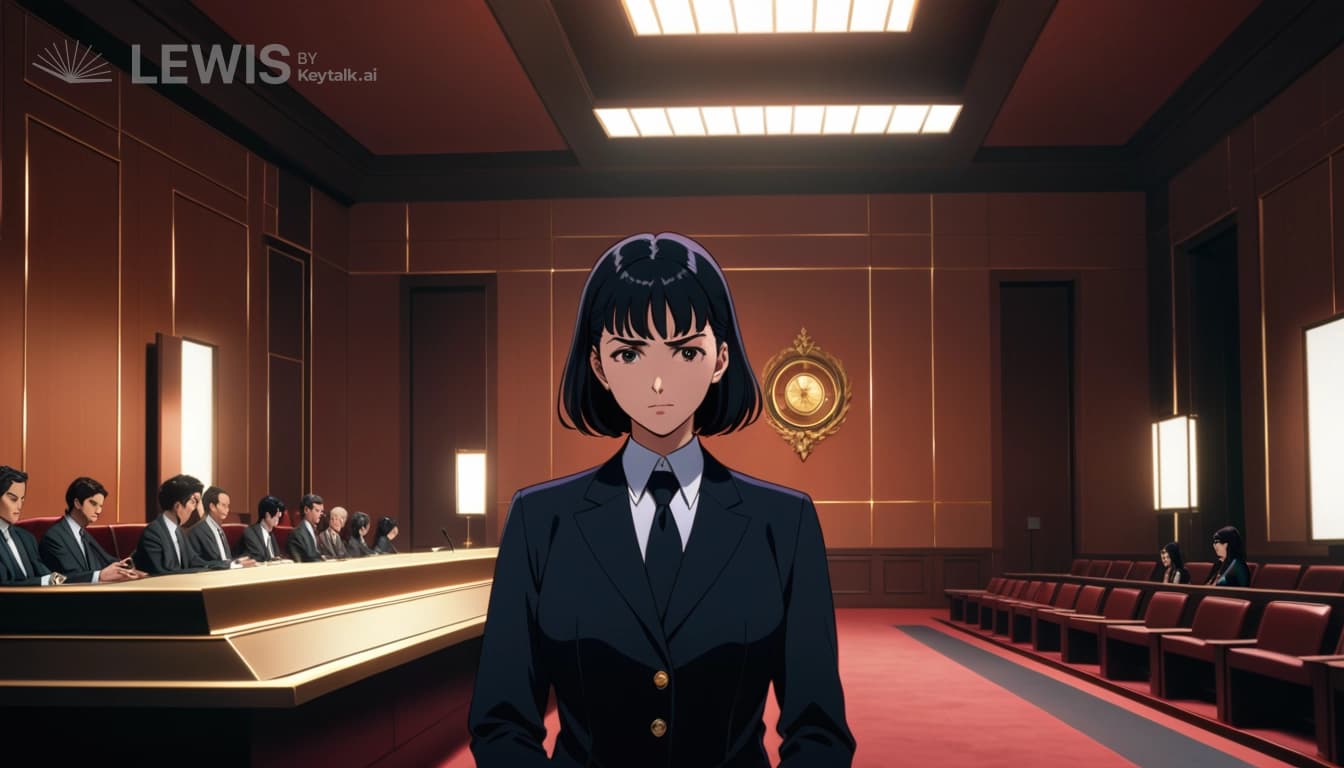
- Title: Courtroom Clashes
- Place: High Court, central city
- Time: Morning, present day
- Action: Seo-yeon presents the tampered mind-reading scans as evidence, challenging Chief Justice Nikolai Volkov's faith in the system.
- Impact: The courtroom erupts in controversy, with Volkov's credibility on the line and the integrity of the justice system questioned.
- Description: In the imposing grandeur of the High Court, Seo-yeon's bold accusations against the infallible technology ignite a fierce, electrifying confrontation with Volkov, as the pillars of their society begin to tremble under the weight of truth.
scene 5 image
Scene 5
- Title: The Revelation
- Place: Seo-yeon's apartment, downtown
- Time: Late night, present day
- Action: Seo-yeon undergoes a mind-reading scan, triggering a cascade of suppressed memories that expose a traumatic event from her past and a conspiracy involving high-ranking officials.
- Impact: The revelation bolsters her case with undeniable evidence and exposes a network of corruption that manipulates the justice system.
- Description: In the dimly lit confines of her apartment, Seo-yeon's mind-reading scan unravels a labyrinth of hidden memories, revealing a harrowing truth that not only solidifies her legal battle but also uncovers a web of deceit reaching the highest echelons of power.
scene 6 image
Scene 6
- Title : A New Era of Justice
- Place: Central Courthouse, main courtroom
- Time: Mid-morning, present day
- Action: Seo-yeon presents irrefutable evidence of memory manipulation in a climactic courtroom showdown, leading to the exoneration of her client and the exposure of a widespread conspiracy.
- Impact: The revelation forces Chief Justice Volkov and the public to confront the systemic corruption, prompting sweeping judicial reforms and the implementation of new safeguards for mind-reading technology.
- Description: In the hallowed halls of the Central Courthouse, Seo-yeon’s compelling evidence dismantles the corrupt foundations of the justice system, igniting a transformative wave of reform that promises a future where justice is truly blind.
'Thought Crimes: The Memory Trial'Story Chat

Want to chat with the characters from this story?

'Thought Crimes: The Memory Trial'Story Chat

Want to chat with the characters from this story?

story image
story image
story image

You might also like

Comments0

theme music