본문으로 건너뛰기
The Operator Was Right cover image

The Operator Was Right

A shrewd but overlooked wireless operator aboard the luxury liner senses disaster when the ship shudders against an iceberg, but as he struggles with strict social hierarchies and disbelief from both the gilded elite and beleaguered crew, every desperate effort to warn others puts his reputation, livelihood, and the lives of his loved ones at stake, forcing him to risk everything for a chance at salvation before time runs out.

Weekly ranking

rank icon image
#1 inConcept
rank icon image
#2 inCharacter
rank icon image
#3 inCharacter
Scroll

Plot Synopsis

Edwin “Ned” Farrow’s world is a humming web of signals and static, hidden in the marbled belly of the luxury liner *Imperium*. Night after night, he listens to the heartbeat of the Atlantic—a Morse code symphony of distant ships, weather reports, and the idle chatter of the privileged above decks. Ned’s dreams are simple: to earn respect, maybe even a promotion, to prove he’s not just a pretty face with a knack for wires. But the ship’s hierarchy is as rigid as its steel hull. The officers dismiss him as a boy in a man’s job, the elite barely notice him, and even among the crew he’s an outsider, his meticulous habits a source of gentle mockery. Only Greta Weiss, the sharp-witted stewardess who slips between social classes as easily as languages, sees the restless intelligence beneath his quiet demeanor. She teases out his ambitions, gently chiding his self-doubt, all while nursing her own secret fears of disposability in a world that values neither women nor foreigners.

The voyage is a pageant of excess: champagne toasts in gilded salons, string quartets echoing through marble halls, and rumors of future fortunes made and lost. Captain Sir Alistair Montague presides with unyielding authority, his every gesture calculated for maximum effect. To him, discipline is sacred—each man and woman aboard the *Imperium* a cog in a grand, well-oiled machine. His pride in the ship borders on obsession, driven by the ghost of his father’s legacy and the silent judgments of society. He’s determined nothing will mar this journey, the one that should cement his reputation as the era’s greatest captain.

But fate shudders through the hull one starlit midnight, a grinding, unmistakable jolt as the *Imperium* sideswipes an iceberg. Ned’s ears fill with the rising panic in the wireless room—a cacophony of distress signals and confused reports from other vessels. He’s the first to grasp the magnitude of the damage: the ship’s double hull was supposed to be invincible, but the codes he intercepts and the engineer’s terse whispers say otherwise. Ned’s first instinct is to alert the captain, but when he bursts onto the bridge—breathless, face flushed with urgency—Alistair’s reception is icy. The captain’s pride and training demand calm, not chaos; he refuses to believe a mere wireless operator could know the ship’s fate before the officers do. Greta, translating for anxious passengers below, catches wind of Ned’s alarm and slips away to corroborate his fears, her own sense of survival sharpened by memories of past disasters ignored.

Ned faces a choice: obey the chain of command, or risk insubordination to send out an SOS. Greta, seeing his torment, urges him to trust his instincts—reminding him that reputation means nothing if everyone drowns. The two conspire to bypass protocol, with Greta distracting the senior radio officer and Ned transmitting desperate calls for help under the guise of routine checks. Their actions don’t go unnoticed. When the first-class passengers begin to murmur—some frantic, some dismissive—Sir Alistair clamps down with an iron fist, threatening Ned with dismissal and Greta with deportation if they “incite panic.” The threat is real: Ned’s job is his family’s lifeline back home, and Greta’s position is her last foothold in a country that barely tolerates her.

As the ship’s list grows more pronounced and the crew’s facade of control frays, the trio’s fates become entwined. Ned’s unauthorized signals reach a distant freighter—the *Carpathian*—but the rescue is hours away, and lifeboats are scarce. Alistair, torn between maintaining order and accepting the gravity of the crisis, finally cracks when Greta, risking everything, forces him to witness the flooding below decks. The captain’s mask slips; his decisiveness returns, but now tinged with desperation. He orders the evacuation, but it’s too late to save everyone. Ned volunteers to stay at his post, relaying updates and guiding lifeboats by radio, even as icy water creeps up the steel stairs. Greta, refusing to leave him, coordinates the evacuation with ruthless efficiency, translating orders, comforting children, and forcing the entitled to yield their seats.

As dawn breaks and the *Imperium*’s stern vanishes beneath the waves, the survivors huddle in lifeboats, the sea scattered with the remnants of luxury and loss. Sir Alistair, stripped of his authority and haunted by those he couldn’t save, is found clinging to a piece of wreckage, his once-pristine uniform sodden and torn. Ned and Greta, battered but alive, are pulled from the freezing water by the *Carpathian*’s crew—her hand locked in his

Model Used
GPT-4.1
text
Stable Diffusion
image

Story Details

Keytalk Prompts Used
See all Keytalks
no chosen prompts
no chosen prompts
no chosen prompts
no chosen prompts
Model Used
GPT-4.1
text
Stable Diffusion
image

Character

Protagonist Character

Edwin "Ned" Farrow

GenderMale
OccupationWireless Operator

Profile

Edwin "Ned" Farrow stands out in a crowd—tall, with the kind of open, strikingly attractive presence that draws second glances even as he tries to fade into the background. He carries himself with an almost bashful confidence; the effect is disarmingly charming, making him both approachable and, occasionally, the butt of lighthearted teasing among the crew. Raised in the shadow of northern shipyards, Ned learned early how to listen more than he spoke, his soft Midlands lilt colored by the patience of someone used to waiting for his moment. His keen intelligence—paired with a knack for reading static, signals, and the unsaid—makes him invaluable as a wireless operator, but his youthful appearance and almost boyish good looks have led many to underestimate his resolve. Despite a natural warmth and a smile that lingers in memory, Ned is haunted by the weight of unfulfilled ambitions and the quiet ache of always being one step removed from the world of the ship’s glittering elite. He dresses neatly, favoring crisp shirts and well-kept trousers, but rarely indulges in luxury, preferring practical attire that lets him blend in. Ned’s sense of humor—quick, self-effacing, and sometimes sly—masks an underlying restlessness, a desire to prove his worth not just to others, but to himself. He is meticulous in his work, almost obsessive about detail, and has a habit of tapping out Morse code rhythms on tabletops when nervous. Though he seldom uses profanity, choosing his words with care, there’s an edge of quiet defiance in his voice when he believes he’s right. Ned’s greatest challenge is his struggle with self-doubt and the invisible barriers of class that keep his dreams just out of reach, yet beneath his reserved demeanor flickers a stubborn hope—an unshakeable belief that, given the chance, he could be more than what the world expects. As the protagonist, Ned embodies the tension between outward charm and inward longing, poised on the cusp of a trial that will demand the full measure of his courage.
Antagonist Character

Sir Alistair Montague

GenderMale
OccupationShips Captain

Profile

Sir Alistair Montague, a man of imposing stature at six foot two, carries the weight of command with the practiced elegance befitting the captain of a luxury liner. Born into the old money of Edwardian England, his aristocratic lineage is evident in his chiseled jaw, aquiline nose, and steely blue eyes that rarely betray emotion. His silver-streaked hair, always meticulously parted and slicked back, matches his preference for tailored navy uniforms adorned with gold braid and spotless white gloves—symbols of tradition and authority. Alistair’s clipped, formal speech, colored by Oxford-educated precision and a faint Somerset lilt, often masks an iron-willed pragmatism and a razor-sharp intellect, honed through decades of navigating treacherous waters both literal and social. He is fiercely protective of his crew’s discipline and the rigid hierarchies that define shipboard life, viewing order as the ultimate safeguard against chaos. Yet beneath his stoic exterior lies a restless ambition to cement his legacy, fueled by the shadow of his late father, a revered admiral, and the ever-present scrutiny of high society. Alistair’s greatest strength—his unyielding decisiveness—can morph into stubbornness, blinding him to unconventional voices and possibilities. He is haunted by an estranged relationship with his younger brother, a radical journalist, and the secret fear that his devotion to duty has cost him true intimacy. A habitual early riser, he patrols the decks before dawn, noting the smallest imperfection, and is notorious for his ritual of polishing his own brass telescope, a relic from his first command. As the ship’s captain, he is the living embodiment of its grandeur, but his worldview, shaped by privilege and tradition, sets him on a collision course with anyone who dares to challenge his authority, making him a formidable—and deeply human—antagonist in the looming crisis.
Sidekick Character

Greta Weiss

GenderFemale
OccupationStewardess and Interpreter

Profile

Greta Weiss, a 34-year-old German-Jewish stewardess and interpreter, stands at 5'9" with an athletic build that belies her unassuming uniform of crisp navy wool, always pressed but never ostentatious. Her sharp cheekbones and a prominent, slightly aquiline nose lend her a striking, serious presence, softened by expressive brown eyes and a habitual half-smile that flickers when she’s listening rather than speaking. Greta’s dark hair—worn in a practical twist, a few curls escaping at her temples—bears the faintest streaks of silver, a testament to sleepless crossings and constant vigilance. Raised in Hamburg’s tumultuous merchant quarter, she speaks five languages fluently, a skill honed as much by necessity as by curiosity, and her accent slips effortlessly between German, French, and a precise, almost theatrical British English. Greta’s role aboard the liner is both visible and invisible: she navigates the maze of first-class egos and steerage anxieties, trusted by the crew for her discretion and by the passengers for her uncanny ability to dissolve tension. Her personal philosophy is pragmatic empathy—a conviction that listening can disarm the powerful and dignify the powerless—but it sometimes teeters into calculated detachment, making her seem aloof or manipulative to those who know only her surface. Fiercely independent and quietly ambitious, Greta dreams not of society’s approval but of financial security and a future she can shape for herself, haunted by the memory of her family’s ruin in the last economic crash. She is quick to act but slow to trust, her wit edged with irony, her loyalty hard-earned and never blind; these traits make her an invaluable confidante to Ned Farrow, whose technical brilliance she respects but whose naiveté she finds both endearing and exasperating. Unlike Ned’s dogged idealism or the captain’s rigid authority, Greta maneuvers through crisis with improvisational grace, often spotting practical solutions others overlook. Yet beneath her composed exterior, a gnawing fear of being disposable—both as a woman and an immigrant—drives her to prove her indispensability, sometimes at the cost of her own well-being. Greta’s clipped, precise speech and subtle, almost conspiratorial gestures make her an expert at reading rooms and sidestepping disaster, but her guardedness is both her shield and her greatest vulnerability. Her presence complicates the tense dynamic between the wireless operator and the captain, providing a counterpoint of resourceful diplomacy and moral ambiguity—her actions always calculated, but never without risk or cost.

Keytalk Prompts Used

Protagonist Character
Model Used
GPT-4.1
text
Stable Diffusion
image

World

Location/Time, Era:
The *Imperium* traverses the North Atlantic in the spring of 1912, a period defined by the feverish optimism of Edwardian England and the looming specter of modernity. The luxury liner is a microcosm of society, its journey a floating pageant of privilege and aspiration, suspended between continents and epochs. Beneath the ornate salons and gilded staircases, the ship’s labyrinthine corridors, boiler rooms, and wireless chamber thrum with a very different energy—one of working-class toil and hidden anxieties. The sea itself is both a stage and a threat: vast, indifferent, and cold, its nights shrouded in fog and the haunting call of distant steam whistles. Time is measured by the ship’s clocks and the relentless rhythm of Morse code, a reminder that salvation, if it comes, will be dictated by technology and fate.

Key rules of the world and their impact on the story and beyond:
On the *Imperium*, social hierarchy is absolute, enforced with the precision of naval tradition and the subtle violence of class. The captain’s authority is law; insubordination is met with swift consequences—dismissal, blacklisting, or deportation. Crew and officers exist in a rigid caste system: wireless operators are technical savants but remain outsiders, their warnings easily dismissed by those with more obvious power. Reputation is currency; a single misstep can ruin a career or exile a family. These rules shape every interaction, compelling Ned to weigh his instincts against the risk of losing everything, while Greta’s precarious status as a foreign woman amplifies the stakes—her survival dependent on navigating the invisible boundaries of both gender and nationality.

Visual depiction of the world and its unique features:
The *Imperium* dazzles with its grandeur: sweeping marble staircases, glittering chandeliers, and salons awash in gold leaf and velvet, echoing the ambitions of an age desperate to prove its greatness. First-class passengers parade in silk and brocade, their laughter mingling with the strains of a string quartet, while below decks the air is thick with coal dust, sweat, and the mutterings of the crew. The wireless room is a sanctuary of dim light and buzzing machines, walls lined with brass dials and tangled wires—a place where Ned’s fingers dance across switches, translating chaos into meaning. The ship’s exterior, a marvel of steel and engineering, is rendered vulnerable by the ice—a jagged white specter that splinters the illusion of safety and forces every character to confront the limits of their world.

Notable technology, philosophy, or cultural elements influencing the world and narrative:
Wireless telegraphy is both miracle and curse, its promise of instant communication undermined by human skepticism and bureaucratic inertia. The Edwardian belief in progress—manifested in the ship’s double hull, electric lighting, and opulent design—collides with the realities of nature and human error, exposing the fragility beneath the veneer of control. The era’s philosophies—order as salvation, reputation as destiny, and ambition as virtue—drive characters to both heroism and tragedy. Greta’s pragmatic empathy, rooted in continental cosmopolitanism, is a counterpoint to Alistair’s British stoicism and Ned’s restless idealism, their conflicting values shaping the choices that determine who survives and who is lost. The world is a crucible: every rule, invention, and tradition is tested against the iceberg’s indifferent violence, revealing the true measure of those aboard.
representative image
location 1 image

Location 1

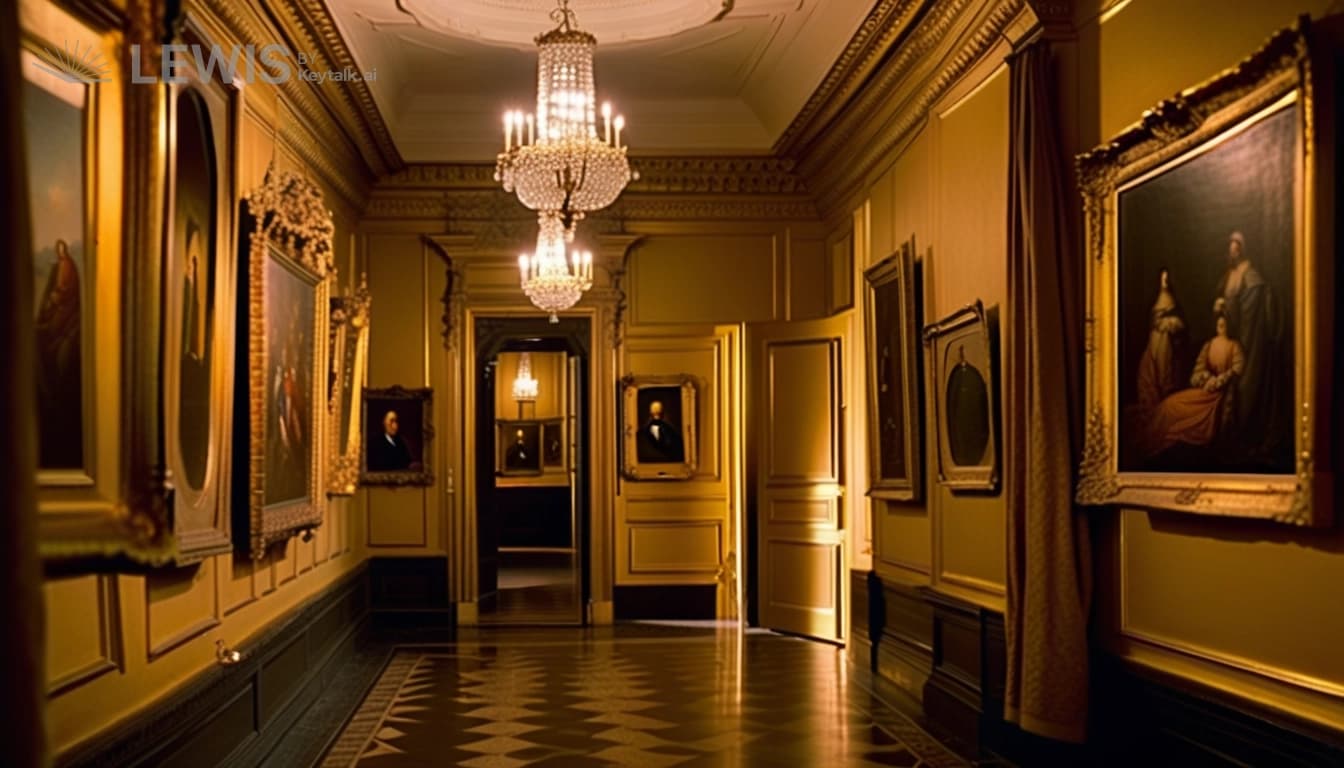
Title : The Shadow Gallery of Unclaimed Portraits
Description : Beneath the glittering salons of the *Imperium*, a narrow corridor swells with velvet darkness, its walls lined with oil portraits of nameless benefactors and forgotten crew—faces frozen in suspicion, longing, or pride. Dust motes swirl in the half-light, whispering of secrets and ambition as Ned’s footsteps echo here before catastrophe, his reflection warped in the gilded frames. This chamber, both shrine and oubliette, is where reputations are weighed in silence and Ned’s decision to defy hierarchy germinates—a space as haunted by legacy as the ship itself.
location 2 image

Location 2

Title : The Frostbitten Shoals of Brackwater Isle
Description : Jagged ice floes cluster like shattered glass along the shoals, their cruel edges illuminated by the eerie aurora that flickers across the Atlantic’s bruised horizon. The wind bites with a feral intensity, carrying the scent of salt and copper—reminders of both the sea’s bounty and its violence—as the survivors stagger ashore, shivering beneath torn silk and wool, the wreckage of the *Imperium* scattered at their feet. Here, hope feels brittle: the island’s stunted pines and frost-laced stones bear witness to the ruined grandeur of what was lost, and Ned’s trembling hands, entwined with Greta’s, anchor their resolve amid the chilling silence.
location 3 image

Location 3

- Title : The Lantern Room of the Silent Semaphore
- Description : Perched atop the *Imperium*’s highest mast, the Lantern Room is a glass-walled sanctum ablaze with the shifting glow of signal lamps, its brass fittings slick with condensation and the brine-laden breath of the Atlantic. Here, amid the spectral dance of colored beams and the ceaseless howl of wind, Ned and Greta make their final stand—fingers numb, eyes raw, their whispered messages flickering across the black expanse in desperate semaphore as the ship’s death throes shudder beneath their feet. The room is both beacon and tomb: every pulse of light a prayer for rescue, every shadow a reminder of those left unheard in the storm.
Model Used
GPT-4.1
text
Stable Diffusion
image

Scenes

scene 1 image
Scene 1
Signals in the Marble Belly
Place: Wireless room deep within the *Imperium*’s lower decks
Time: Late evening, hours before the iceberg collision

Action:
Ned Farrow is alone in the wireless room, surrounded by humming machinery and the soft glow of indicator lamps. He’s immersed in the nightly routine of monitoring Morse code transmissions—weather reports, ship positioning, fragments of gossip from distant vessels—all layered over the steady thrum of the *Imperium*’s engines. Ned’s meticulous habits are on full display: he logs every message, checks the circuits twice, and quietly hopes for something beyond the usual static. The officers occasionally stop by, mostly to issue perfunctory orders or offer veiled jabs about his “boyish diligence.” Ned’s longing for respect simmers beneath their dismissals. The scene introduces Greta Weiss, slipping in to deliver tea and a teasing word. She challenges Ned’s self-doubt, coaxing out his ambitions and sharing her own anxieties about job security and social invisibility. Their rapport is playful but layered, hinting at mutual understanding and shared outsider status. The luxury liner’s opulence is contrasted with the wireless room’s isolation—a world apart from the champagne-lit salons above. Ned quietly listens to the ship’s “heartbeat,” feeling both the weight of responsibility and his distance from the crew’s camaraderie. Subplots begin to surface: Greta’s secret fears of deportation, Ned’s drive to prove himself, and the subtle tension between the ship’s rigid hierarchy and the dreams of those at its margins.

Impact on the story:
This scene establishes Ned and Greta as outsiders in the ship’s social structure, forging a bond that will become crucial during the impending disaster. It sets up Ned’s yearning for validation and Greta’s precarious position, foreshadowing their willingness to defy protocol. The emotional resonance comes from their shared vulnerability and the bittersweet comfort they find in each other’s presence.

Description:
Ned and Greta connect in the wireless room, revealing their ambitions and insecurities against the backdrop of the *Imperium*’s rigid hierarchy. Their budding alliance and outsider status lay the groundwork for the choices they’ll make when crisis strikes. The scene immerses readers in the ship’s hidden rhythms and the emotional stakes beneath its glittering surface.
scene 2 image
Scene 2
The Captain’s Masquerade
Place: The bridge and adjoining officers’ lounge, high above the marble decks
Time: Midnight, immediately after the iceberg collision

Action:
Ned bursts onto the bridge, propelled by the frantic urgency of what he’s just heard in the wireless room. He’s breathless, visibly shaken, and he expects his warning to be met with concern—or at least curiosity. Instead, the officers dismiss him with icy detachment, their faces tight with the discipline drilled into them by Captain Sir Alistair Montague. Alistair himself stands at the center, commanding authority with every gesture, refusing to let panic undermine his carefully constructed reputation. He regards Ned as a nuisance, a boy out of his depth, and insists the ship’s double hull makes disaster impossible. Ned’s anxiety spikes as he’s told to return to his post, the captain’s pride blinding him to the signals Ned intercepted.

Meanwhile, Greta is below decks, translating for increasingly anxious passengers. She catches snippets of Ned’s alarm and senses the shift in atmosphere—a whisper of fear beneath the gilded surface. Driven by intuition and her own memories of ignored warnings, she slips away from her duties, seeking Ned for confirmation. They reunite in a shadowed corridor, Greta urging Ned to trust his instincts and act before the officers’ arrogance costs lives. Ned wrestles with the chain of command, torn between obedience and his mounting certainty that disaster is imminent.

Greta proposes a risky plan: she’ll distract the senior radio officer, allowing Ned to transmit a covert SOS under the guise of routine checks. The tension mounts as they navigate the labyrinthine corridors, dodging authority and risking their positions. Ned’s fear isn’t just for himself—it’s for his family back home, who rely on his salary, and for Greta, whose job is her only foothold in a hostile country. The stakes become personal as the threat of dismissal and deportation looms.

Upstairs, Sir Alistair is determined to maintain order. He clamps down, threatening both Ned and Greta with severe consequences if they “incite panic.” The captain’s mask of control slips only for a moment, revealing the cracks beneath his perfectionism. Meanwhile, murmurs among the first-class passengers begin to spread—some dismiss the danger, others grow frantic, and the crew’s facade of calm starts to unravel.

The scene closes with Ned sending the SOS, Greta covering for him, and both knowing their actions have set something irreversible in motion. The captain’s refusal to listen, the duo’s defiance, and the simmering unrest among the passengers lay the foundation for the chaos to come.

Impact on the story:
This scene crystallizes the conflict between individual intuition and institutional pride. Ned’s decision to act despite the captain’s orders marks a turning point, deepening his bond with Greta and setting them up as unlikely heroes. The captain’s denial and threats raise the emotional stakes, showing how pride and protocol can endanger lives. This moment of defiance is essential for both character growth and the unfolding disaster.

Description:
Ned confronts Captain Montague with his fears, only to be dismissed, while Greta risks her position to help him send an SOS. Their alliance is tested by authority and personal risk, and the captain’s refusal to listen sets the stage for escalating chaos. The scene is a crucible for courage, pride, and rebellion, propelling the story toward crisis.
scene 3 image
Scene 3
Shadows Beneath the Gilded Decks
Place: The labyrinth of service corridors and lower decks, edging toward the wireless room; pockets of panic in passenger lounges
Time: Shortly after Ned and Greta send the SOS, as the ship’s damage becomes undeniable

Action:
The aftermath of Ned and Greta’s covert SOS reverberates through the bowels of the *Imperium*. Ned returns to the wireless room, nerves frayed, scanning for any reply—his heart pounding with both hope and dread. Greta navigates the shadowed corridors, eavesdropping on hushed conversations among crew and passengers as the ship’s subtle tilt grows more pronounced. Panic begins to seep from below decks: whispers of flooding, cold water inching above ankles, and lifeboat numbers that don’t add up. Ned struggles to maintain composure as he relays coded updates, desperate to keep the lifeboat count from the officers who still cling to denial.

Greta, ever resourceful, moves between worlds—calming frightened passengers with her quick wit, coaxing crew members to share what they know, and quietly cataloging the mounting evidence of disaster. She’s haunted by memories of ignored warnings, her resolve hardening with every new sign of impending catastrophe. Ned, meanwhile, faces mounting hostility from the senior radio officer, who suspects something is amiss. He must dodge both suspicion and guilt, wrestling with the fear that his actions may have jeopardized not only his future but Greta’s as well.

The atmosphere is charged with tension: the marble halls above echo with anxious footsteps, while the lower decks become a crucible for desperation and ingenuity. Greta and Ned coordinate surreptitiously, passing coded messages and gathering the names of crew allies willing to help, all while keeping their rebellion hidden from authority. The threat of exposure intensifies, and as word of their actions begins to spread, the divide between order and chaos grows sharper. The ship’s hierarchy starts to crumble, and Ned and Greta realize they’ve become lightning rods for both hope and blame.

Impact on the story:
This scene escalates the crisis, pushing Ned and Greta deeper into danger as their actions ripple through the ship. Their alliance strengthens as they navigate mounting chaos and suspicion, but the risk of discovery—and the consequences for their families and futures—becomes more acute. The atmosphere of denial cracks, revealing the vulnerability beneath the veneer of luxury, and the seeds of mutiny and survival are sown.

Description:
Ned and Greta work covertly to gather allies and information as panic spreads through the lower decks. Their actions and the ship’s worsening condition force the crew and passengers to confront the reality of disaster, setting up the inevitable clash between authority and survival. The scene tightens the bond between the protagonists and ratchets up the stakes, propelling the story toward crisis and confrontation.
scene 4 image
Scene 4
Morse, Mutiny, and a Splintered Chain
[Place]
The bridge, wireless room, and a tangle of crew-access corridors—where authority and rebellion collide.

[Time]
Minutes after word of the flooding becomes undeniable; the ship’s tilt has grown sharper, and the last vestiges of calm are slipping away.

[Action]
Ned’s unauthorized SOS has reached its target, and now the consequences come crashing in. The senior radio officer bursts into the wireless room, demanding explanations, his anger barely masking fear. Ned is forced to defend his actions, torn between protocol and the knowledge that help may be hours away. Greta, sensing imminent danger, slips into the bridge with a band of crew allies she’s quietly rallied—each one bearing firsthand reports of rising water and blocked passageways. Sir Alistair, flanked by his most loyal officers, attempts to reassert control, insisting the situation is under management and branding Ned and Greta as agitators. Tension explodes as Greta confronts the captain directly, forcing him to acknowledge the chaos below decks and the mounting panic among passengers. Ned faces the threat of immediate dismissal, his family’s livelihood dangling on the captain’s whim. Greta is threatened with deportation, her future reduced to a bargaining chip. As authority fractures, some crew members quietly defect to Ned and Greta’s cause, while others cling to the chain of command. The hierarchy splinters—loyalty, desperation, and self-preservation all grinding against the marble and steel. The captain’s mask of composure begins to crack as evidence mounts and voices rise. The scene culminates in a fraught confrontation: Ned and Greta, risking everything, force Sir Alistair to see what denial has wrought. The order to evacuate is finally given, but chaos reigns—the lifeboats are insufficient, and the ship’s sinking accelerates. Ned volunteers to stay at his post, guiding lifeboats via radio, while Greta mobilizes the crew and passengers, translating orders and championing the vulnerable.

[Impact on the story]
This is the pivot point where denial gives way to reality, and the captain’s authority crumbles. Ned and Greta’s courage, at enormous personal risk, catalyzes the shift from chaos to desperate survival. The fracture in hierarchy sets off an irreversible chain reaction: alliances are forged, enemies revealed, and the fate of every soul aboard hangs in the balance. Emotional stakes soar as personal ambition is eclipsed by the need to save lives, and the protagonists step fully into the roles of unlikely leaders.

[Description]
Ned and Greta’s rebellion comes to a head as they confront the captain and break the chain of command, igniting mutiny and triggering the evacuation. The scene is a turning point where authority collapses and the protagonists’ choices shape the fate of the ship, propelling the story toward catastrophe and resolution.
scene 5 image
Scene 5
[Title]
When the Water Rises

[Place]
Flooded lower decks, lifeboat stations, and the wireless room—shifting between pockets of chaos as the ship’s list becomes catastrophic.

[Time]
Shortly after the order to evacuate, as the *Imperium* begins its final descent—lights flicker, water surges, and the cold of the Atlantic seeps into every corridor.

[Action]
The evacuation erupts into utter disarray. Ned, alone in the wireless room, battles failing equipment and surging water to keep contact with the *Carpathian*, his hands trembling as he relays desperate coordinates and instructions to the lifeboats. He’s soaked through, clinging to the last shreds of professionalism, but haunted by the knowledge that each message may be his last. Above, Greta storms through the tilting corridors, her voice cutting through panic in three languages as she corrals children, calms the elderly, and shames the entitled into relinquishing seats for those most at risk. She improvises lifeboat manifests, brokers uneasy truces between crew factions, and physically hauls the resistant toward safety.

Sir Alistair, stripped of command by circumstance, staggers among the remnants of his authority—haunted, dazed, but unable to stop Greta’s fierce momentum. As lifeboats are lowered, the social order dissolves: steerage passengers cling to hope, first-class elites barter and beg, and the crew splinters between heroism and self-preservation. Ned, receiving frantic Morse from a lifeboat lost in the dark, guides them with a steadying voice, knowing Greta is somewhere in the crowd, refusing to abandon him.

Moments of intimacy cut through the chaos—Greta locking eyes with Ned across a flooded passage, silently promising not to leave him behind. The water rises fast. Ned stays at the wireless until forced out by the encroaching sea, then sprints for the deck, finding Greta bloodied but alive. They scramble for the last available raft as the *Imperium* groans and shudders—its grandeur succumbing to the ocean.

[Impact on the story]
This scene sears the characters’ choices into memory—Ned’s courage and technical brilliance, Greta’s relentless drive to protect the vulnerable, and Alistair’s tragic unraveling. It’s the crucible that bonds Ned and Greta irrevocably, their fates tied to the lives they’ve saved and lost. The collapse of status and order is total; what remains are individual acts of sacrifice and connection. The emotional toll is immense: guilt for those left behind, relief for fleeting moments of survival, and a raw, unfiltered intimacy between the protagonists as the world they knew disappears beneath the waves.

[Description]
As the *Imperium* descends into chaos and water, Ned and Greta fight to save as many as possible—risking everything and enduring heartbreak as order dissolves. The evacuation’s brutality forges their bond and strips away the last illusions of class and command, setting up the final reckoning at dawn.
scene 6 image
Scene 6
[Title]
Dawn on the Carpathian Sea

[Place]
Open lifeboats adrift on the Atlantic, the fog-shrouded deck of the rescue ship *Carpathian*, and the debris-strewn water where the *Imperium* vanished.

[Time]
Early morning, just after sunrise—hours after the *Imperium*’s final plunge.

[Action]
The survivors huddle beneath sodden blankets in overcrowded lifeboats, teeth chattering, faces gray with exhaustion and shock. Ned, dazed and clinging to consciousness, clutches Greta’s hand, their fingers entwined as if they’re the only anchor left in the world. Around them, the sea is a graveyard of splintered wood, broken suitcases, and luxury floating uselessly in the dawn light. The silence is heavy—an unnatural hush after so much chaos, punctuated only by quiet weeping and the creak of oars.

As the *Carpathian* emerges from the mist, its horn blaring, hope flickers among the survivors. Crew members reach down, hauling shivering bodies aboard with a mix of brisk efficiency and stunned empathy. Greta, half-frozen but unyielding, refuses to let go of Ned as they’re pulled from the lifeboat—her resolve now focused entirely on keeping him alive. She helps translate for the survivors, her voice hoarse but steady, guiding children toward blankets and food, her own trauma buried beneath urgent compassion.

Sir Alistair is found adrift, stripped of rank and dignity, barely conscious and shuddering from cold. When he’s brought aboard, he avoids the eyes of his crew, the weight of loss and failure pressing down as heavy as the wet uniform clinging to his skin. There is no fanfare—just a broken man among the saved and the lost.

Ned and Greta sit together on the deck, wrapped in the same blanket, the Atlantic stretching endlessly behind them. Neither speaks at first; their silence is a language of survival, grief, and the fragile beginnings of hope. Around them, survivors search for familiar faces, some collapsing in relief, others wailing for those swallowed by the sea. The sun rises, pale and indifferent, over a horizon forever changed.

[Impact on the story]
This scene cements the emotional aftermath of catastrophe: relief tangled with survivor’s guilt, exhaustion battling the first stirrings of hope. Ned and Greta’s bond is unbreakable now, forged in shared trauma and tested loyalty. Sir Alistair is irrevocably altered, his authority dissolved and his legacy haunted by loss. The survivors’ fates are uncertain, but the experience has transformed each of them—stripped of pretense, their humanity raw and undeniable. The world beyond the *Imperium* awaits, but nothing will ever be quite the same.

[Description]
As dawn breaks over the wreckage, the rescued survivors are pulled aboard the *Carpathian*. Ned and Greta, united by everything they’ve endured, cling to one another amid a sea of grief and relief. The catastrophe’s aftermath leaves them changed—humbled, haunted, and bound together in the uncertain light of a new day.
'The Operator Was Right'Story Chat

Want to chat with the characters from this story?

'The Operator Was Right'Story Chat

Want to chat with the characters from this story?

story image
story image
story image

You might also like

Comments0

rank icon image
#1 inConcept
rank icon image
#4 inCharacter
rank icon image
#4 inCharacter

Recommendation from YLAB Town

theme music