본문으로 건너뛰기
Orphaned by Design cover image

Orphaned by Design

In a gaslit Victorian city rife with social hypocrisy, five youths from disparate, troubled homes make a shared, desperate wish for their parents to vanish. When they awaken to a world devoid of their guardians, their initial euphoria sours as they uncover a cryptic note hinting that their parents' disappearance was an orchestrated abduction, part of a city-wide conspiracy. They must now navigate the treacherous social labyrinth, deciding whether to expose the sinister plot and reclaim their families or to embrace their perilous new freedom and let the past die.

Weekly ranking

rank icon image
#19 inGenre
rank icon image
#46 inGenre
Scroll

Plot Synopsis

The story begins on a damp, foggy night in a forgotten corner of a city cemetery, where five disparate youths have gathered in secret. There is Elodie Thorne, the entomologist heiress trapped in suffocating silk; Silas Blackwood, a charming rogue whose gambling debts threaten his family’s precarious gentility; the twin siblings Finn and Mary, whose dockworker father’s fists are as heavy as his despair; and Eliza Gannett, a pragmatic printer’s assistant whose parents see her as little more than a source of gin money. Bound by a shared, desperate misery, they perform a half-serious ritual, whispering a collective wish into the oppressive London fog for their parents to simply disappear. They awaken the next morning to an impossible reality: their homes are empty, their guardians vanished without a trace. Their initial, wild euphoria is quickly tempered by a chilling discovery. Left on each of their pillows is an identical, officially printed card stating, "Your guardians have been relocated for civic improvement. Do not attempt contact." The cold, bureaucratic language shatters any illusion of magic, replacing it with the terrifying certainty of an orchestrated abduction.

Their newfound freedom quickly reveals itself as a trap. Elodie’s access to her family’s fortune is frozen, Silas is hounded by creditors with no one to protect him, and the twins are left utterly destitute. Only Eliza, accustomed to surviving on the margins, maintains her footing. It is she who recognizes the distinctive typeface and watermarked paper of the note, tracing it not to a government office, but to a high-end private press that officially closed months ago. Their investigation begins in earnest, a dangerous alliance of high society and low, as they start to uncover a pattern. It wasn't just their parents; dozens of others are gone—drunkards and dissidents, but also overly ambitious merchants and society matrons who posed a threat to the city's rigid hierarchy. They are navigating a conspiracy that seeks to prune the city’s family trees, culling any branch deemed undesirable by a hidden, powerful entity. The initial wish for freedom has become a desperate scramble for the truth, forcing them to rely on each other's skills—Elodie's analytical mind, Silas's social maneuvering, Eliza's street-level intelligence—to survive in a city that is suddenly much more dangerous.

The central mystery unravels when Elodie, searching for clues in her own cavernous and silent home, discovers a hidden study belonging to her father, Magistrate Augustus Thorne. The room is a shrine to a chilling obsession with civic order, its walls covered in detailed maps of the city with dozens of homes marked for "extraction." The most damning discovery is a ledger detailing the seizure of assets from the disappeared, and a timeline revealing the truth: Augustus Thorne was never taken. He orchestrated his own disappearance to act as the unseen mastermind of the entire operation. The emotional core of his motive is found locked in a small desk drawer: a silver locket containing a faded portrait of a different woman and a young boy. Elodie realizes with a jolt of horror that this was her father’s first family, lost decades ago in a tenement fire he blamed on the city's poverty and moral decay. His monstrous plan is not one of simple tyranny, but a twisted act of paternalistic grief, an attempt to "save" the city's children from the perceived failings of their parents by force.

Armed with this devastating knowledge, the youths uncover the full, horrifying scope of the "Civic Improvement Project." The abducted parents are not dead, but have been transported to a remote, decommissioned coal mine in Wales—a mine ironically owned by the Thorne estate—and forced into labor. Augustus’s grand vision is to use the confiscated wealth to fund a series of elite academies where the city’s newly "orphaned" children, including the five of them, would be indoctrinated into his vision of a perfect, orderly society. They were meant to be the first success stories, the poster children for a generation raised free from the "taint" of their lineage. The wish they made in the graveyard was not the catalyst but merely a convenient coincidence, their known discontent marking them as ideal subjects for the project's launch. Their desperate desire for freedom was simply the first cog in a machine designed to strip them of it entirely.

The climax is a two-pronged assault on Augustus Thorne’s empire of grief. As Eliza uses a network of underground presses to print thousands of broadsheets detailing the conspiracy, complete with names, locations, and Augustus's own damning ledgers, Elodie decides to confront her father directly. She finds him not in a villain’s lair, but on the brightly lit stage of a new philanthropic hall, delivering a speech on civic duty to the city's elite. In a moment of shocking public theater, Elodie walks on stage, her voice calm and clear as she lays out his crimes, not as accusations, but as facts. The final blow is not a weapon, but the small silver locket, which she holds up for all to see, exposing the private sorrow that fueled his public monstrosity. At that exact moment, Eliza's broadsheets flood the streets outside, and the city's carefully maintained facade of order cracks and then shatters into pandemonium.

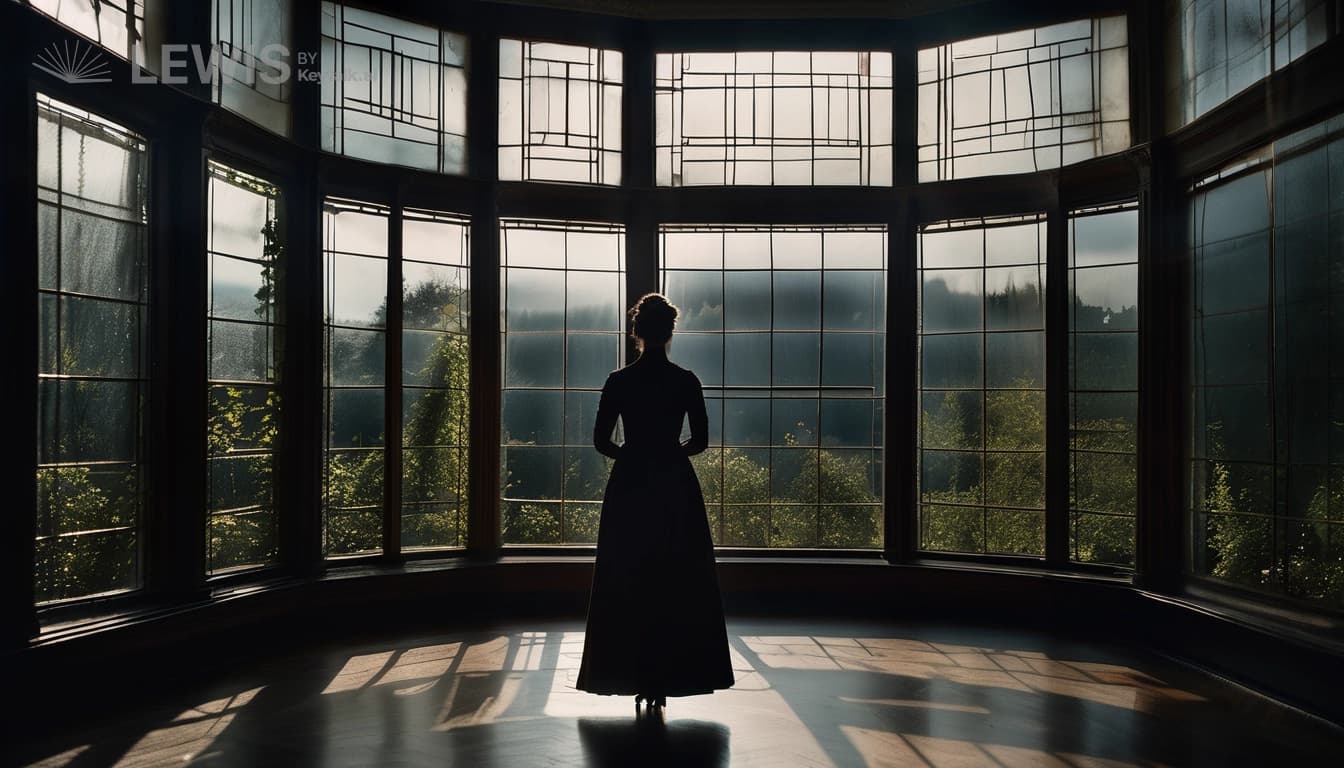
The aftermath is not a clean victory but a messy, bittersweet cauterization of the city's wounds. Augustus, his legacy destroyed and his mind fractured by the public unveiling of his private trauma, flees to the Welsh mine, intending to bury his entire project—and the prisoners within it—forever. Elodie, feeling a chilling sense of inherited responsibility, pursues him for a final confrontation in the collapsing tunnels. Faced with a man who would rather see everyone die than admit failure, she makes a terrible, calculated choice. Using her knowledge of the mine's layout from her family's old schematics, she triggers a targeted demolition, sacrificing her father to a sealed tomb to guarantee the escape of the other prisoners. The parents are freed, but they are traumatized, hollow shells of their former selves, and the families the youths once knew are gone forever. In the ensuing power vacuum, Eliza’s press becomes a formidable voice for a new, uncertain future. Elodie, now the solitary head of a tarnished dynasty, finally completes her metamorphosis. Standing in her quiet conservatory, she is no longer the fragile stick insect, but a creature who has shed her skin, emerging into a harsh new world she helped create, forever defined by the monstrous act that set her free.

Model Used
Gemini 2.5 Pro
text
Stable Diffusion
image

Story Details

Keytalk Prompts Used
See all Keytalks
no chosen prompts
no chosen prompts
no chosen prompts
no chosen prompts
no chosen prompts
no chosen prompts
Model Used
Gemini 2.5 Pro
text
Stable Diffusion
image

Character

Protagonist Character

Elodie

GenderFemale
OccupationHeir to a coal and steel fortune / Amateur Entomologist

Profile

Elodie Thorne moves through the gilded cage of her family’s Belgravia mansion with the quiet, watchful stillness of a stick insect mimicking a twig. At eighteen, she is the sole heir to a fortune built on the black lungs of coal miners and the roaring furnaces of the steelworks, a legacy she is expected to secure through a strategic marriage. Her public self is a carefully constructed specimen: tall and slender, her form cinched into suffocating silks, with dark hair pinned into a severe, elegant knot that pulls at her temples. But beneath this polished carapace is a mind that finds more truth in the iridescent shell of a beetle than in any human conversation. Her sharp, pale features are dominated by cool, analytical grey eyes that miss nothing, cataloging the subtle hypocrisies of her parents and their peers with a naturalist’s precision. Her passion is a secret rebellion, conducted in a dusty, forgotten conservatory where she meticulously pins and labels insects, her only companions in a world of suffocating emotional sterility. Her speech is clipped and formal, a defense mechanism learned in a home where warmth is a currency they do not trade in, but her true language is in the precise, methodical way she handles her delicate specimens. This obsession with the small, ordered world of entomology is her only escape from the crushing weight of her family’s ambition, fueling a desperate, silent yearning for a metamorphosis of her own—one that would see her shed the suffocating skin of her life and emerge as something entirely new, and entirely free.
Antagonist Character

Augustus Thorne

GenderMale
OccupationCity Magistrate and Philanthropist

Profile

**Antagonist**

To the public, City Magistrate Augustus Thorne is the unshakeable pillar of an unsteady city, a man whose philanthropy is as renowned as his rigid enforcement of the law. At fifty-eight, he carries himself with a patrician's straight-backed grace, though a perpetual, bone-deep fatigue has carved fine lines around his eyes and given his tall frame a subtle, weary stoop. His silver hair is impeccably groomed, his suits perfectly tailored, his speech a masterclass in calm, paternalistic authority that soothes the city's elite and intimidates its lower classes. Yet, beneath this veneer of civic devotion lies a man hollowed out by a decades-old grief, a private sorrow that has curdled into a dangerous obsession with control. He harbors a quiet, seething resentment for the perceived moral decay around him, viewing the city's struggling families not with compassion, but as a blight to be excised. Every decision, every charitable donation, every public address is a calculated move in a grand, secret war to forge a lasting legacy, one built on a foundation of absolute order, no matter the human cost. In the quiet of his study, away from the public eye, he can often be found meticulously polishing a small, silver locket, a nervous habit that betrays the obsessive, fractured mind plotting to reshape the world by force.
Sidekick Character

Eliza Gannett

GenderFemale
OccupationPrinters Apprentice

Profile

Eliza Gannett is a creature of ink and grit, a seventeen-year-old shaped by the relentless pressure of the printing press she serves. Standing a full head shorter than most boys her age, she possesses a wiry, compact strength in her shoulders and arms, earned from hauling lead type and wrestling with the press lever. Her face, often smudged with the black evidence of her trade, is a collection of sharp, intelligent angles—a pointed chin, high cheekbones, and watchful, grey eyes that miss nothing and trust little. Her dark, unruly hair is a constant battle, perpetually escaping the scrap of twine she uses to tie it back, framing her face in rebellious wisps. The permanent blue-black stains under her fingernails are a badge of her station, a stark contrast to the manicured hands of the gentry she silently observes. Raised in a cramped tenement, the only child of a listless, defeated mother and a drunken father who viewed her meager wages as his personal ale fund, Eliza’s worldview has been forged in pragmatism and cynicism. She speaks with a quick, clipped East London accent, her words direct and stripped of pleasantries, a habit that the wealthy protagonist Silas Blackwood will find both jarring and refreshingly honest. Her core motivation isn't grand justice but simple, fierce survival and the desperate dream of one day owning her own small press, a place where her words, her rules, are the only ones that matter. Before the disappearance, her life is a suffocatingly predictable cycle of labor and evasion, her only solace the quiet power she feels in arranging letters, knowing that the pamphlets and broadsheets she helps create can whisper secrets and spread dissent through the very city that seeks to crush her.
Model Used
Gemini 2.5 Pro
text
Stable Diffusion
image

World

**Location/Time, Era:**
The story is set in the 1880s within the sprawling, gaslit metropolis of Aethelburg, a city whose grand Imperial facade barely conceals a core rotten with industrial sickness and social hypocrisy. A perpetual, greasy fog, thick with coal smoke from the riverside foundries, clings to the streets, blurring the lines between the opulent white-stone mansions of the West and the soot-blackened, cramped tenements of the East. This physical and atmospheric divide is the defining feature of the city, a constant, oppressive reminder of the chasm between the powerful and the powerless. The city’s history is scarred by the Great Conduit Fire of a generation past, a tragedy that razed the poorest districts and is now invoked by men like Augustus Thorne as a justification for extreme measures of “civic hygiene” and social control.

**Key rules of the world and their impact on the story and beyond:**
In Aethelburg, a person’s life is governed by the unwritten Social Ledger, where a family’s name, public piety, and perceived stability are the only currency that matters, making any public misstep a potentially fatal blow to one’s standing. All significant wealth and property are controlled under the Iron Law of Patrimony, a rigid patriarchal system that renders women and children as dependents, legally and financially bound to the men who head their households; this is the mechanism that instantly freezes Elodie’s access to her fortune upon her father’s disappearance. While the city’s elite control the official narrative through sanctioned newspapers, the true pulse of Aethelburg beats in the Whisper Network, a subversive web of ink-stained broadsheets and back-alley gossip that becomes the protagonists' only weapon against the state. This entire system is exploited by the city’s vaguely worded Civic Improvement Mandate, a piece of legislation that grants magistrates like Thorne the power to remove “social blights” with impunity, providing the perfect legal camouflage for his city-wide abduction scheme.

**Visual depiction of the world and its unique features:**
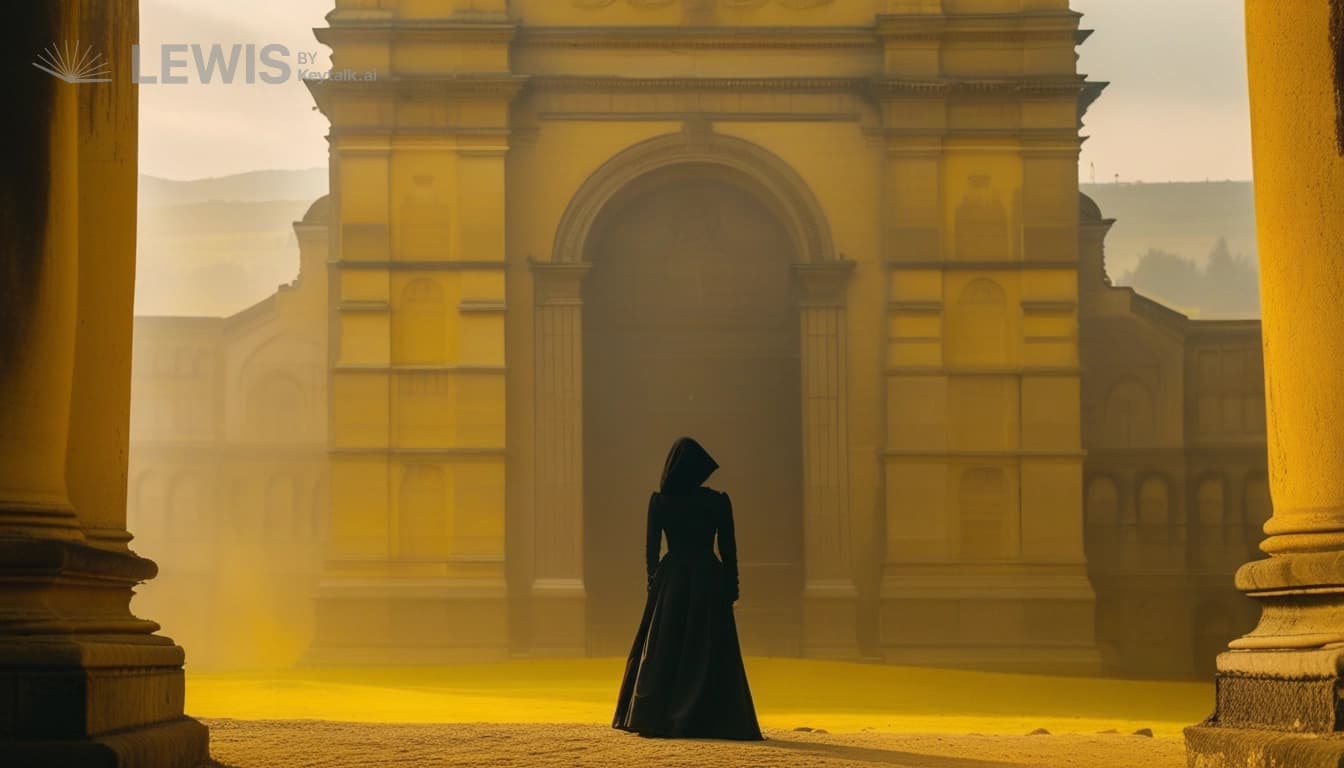
Aethelburg is a city of stark, haunting contrasts, where the silent, pristine avenues of Belgravia are separated from the chaotic din of the East End by the sluggish, ink-black River Thames. The Thorne mansion is a mausoleum of polished marble and suffocating silence, its sterile perfection a mirror of the family’s emotional landscape, while Eliza’s world is a vertical maze of rickety stairs and shared walls, noisy and brutally alive. A unique feature of the city is the Necropolis Gate, a vast, ornate cemetery built atop a network of forgotten catacombs and plague pits, its melancholic beauty making it a place where the city’s desperate youths seek solace and make fateful wishes. Looming over the skyline are the “Iron-Lung” foundries, their smokestacks belching a constant black plume that serves as a monument to the Thorne fortune and the human cost of progress, ensuring that even on the brightest day, the city is never fully free of shadow.

**Notable technology, philosophy, or cultural elements influencing the world and narrative:**
The narrative hinges on the burgeoning technology of the printing press, from the high-end private presses whose unique watermarks can betray a conspiracy, to the cheap, mobile presses Eliza uses to turn truth into a weapon of mass information. This is set against a prevailing philosophy of Paternalistic Darwinism, a cruel ideology championed by the city’s elite which posits that society is a body that must be purged of its weakest members for the greater good, providing Augustus Thorne with a monstrous moral justification for his actions. The city’s culture is steeped in the Cult of Memory, a Victorian obsession with elaborate mourning rituals and mementos, which frames Augustus’s silver locket not just as a clue, but as a symbol of a private grief that has metastasized into a public terror. As the plot unfolds, the conspiracy creates its own cultural phenomenon: the celebrated “New Orphan,” children publicly praised for being “rescued” from their families, which gaslights the protagonists and turns their quest for truth into a defiant act of social heresy.
representative image
location 1 image

Location 1

**Title**: The Widow’s Lanterns of Dovetail Row
**Description**: Tucked between two wheezing factories, Dovetail Row was lit by a string of weeping brass lanterns that bathed the alley in a permanent, watery twilight. Eliza followed the scent of ink and conspiracy to a door marked with a faded mourning dove, the ghost of a print shop where the notes that stole their parents were born. The lanterns’ blue flames didn’t offer warmth, only the cold, heavy certainty that they were standing at the edge of the truth.
location 2 image

Location 2

- Title : The Vaulted Baths Beneath Old Parliament
- Description : Here, in the forgotten Roman baths deep beneath the city’s halls of power, the air was a suffocating blanket of geothermal steam and chlorine. This was the conspiracy’s anonymous heart, where men in grey coats processed the newly vanished, stripping them of their clothes and names by the edge of the great, steaming pool. From the shadows of a crumbling mosaic, we saw the truth: this wasn’t an abduction, it was an assembly line for erasing people.
location 3 image

Location 3

- Title : The Clockmaker’s Promenade at Fog’s End
- Description : A marvel of polished brass and interlocking gears, the promenade’s grand clock tower chimed a sterile, perfect quarter-hour over the manicured paths where the city’s elite paraded under its watchful gaze. The air hummed with the relentless, unified ticking of a thousand hidden mechanisms, a sound less like time passing and more like a bomb counting down. This was the immaculate heart of Augustus Thorne’s new London, a stage of unnerving order built to showcase a future that was seconds away from being torn apart.
Model Used
Gemini 2.5 Pro
text
Stable Diffusion
image

Scenes

scene 1 image
Scene 1
Fogbound Bargain: Five Wishes in the Bone Garden
[Place] – A neglected, overgrown corner of Highgate Cemetery, half-hidden beneath twisted yew trees and weather-stained angel statues
[Time] – Midnight, a damp and fog-choked night in late autumn

[Action]
The scene opens with each youth arriving separately, their faces pale in the lantern light, bundled in threadbare coats and secrets. The oppressive fog muffles the city’s usual clamor, amplifying the hush and making the cemetery feel like a world apart. The five form an awkward circle in the grass—Elodie clutching a moth-eaten shawl, Silas flicking a coin between anxious fingers, Finn and Mary sharing a battered flask for courage, Eliza with ink-stained hands and wary eyes that miss nothing. Each carries the weight of their private miseries: Elodie’s suffocating home, Silas’s mounting debts, the twins’ bruises hidden beneath their sleeves, Eliza’s cold calculation born of necessity.

Prompted by the dark mood and perhaps a dare, they decide to perform a ritual—half joke, half desperate plea. They cobble together tokens: a thimble, a bent playing card, a locket, a scrap of newsprint, a broken button. Together, they whisper their secret wish into the thickening fog: that their parents, their burdens, would vanish. The atmosphere is tense, electric with the danger of speaking such a thing aloud, and as they finish, a sudden gust of wind snuffs out the lantern, plunging them into darkness. For a moment, no one breathes. Then nervous laughter, bravado masking the tremor of real fear that what they wished for might come true.

The group lingers, uncertain, the ritual’s aftertaste leaving them unsettled rather than relieved. As they part ways, each is left haunted by the night’s eerie stillness and the sense that they have crossed a threshold. The cemetery’s silence feels pregnant with consequence, as though the city itself were listening.

[Impact on the story]
This scene forges the alliance between the five, binding them together in secrecy and shared guilt. It establishes the emotional stakes—each character’s misery and motivation—while sowing the seeds of suspicion and supernatural dread. The act of wishing, while seemingly childish, becomes the catalyst for everything that follows, staining the group’s freedom with an undertone of culpability. It’s the birth of their complicity and the moment their fates intertwine.

[Description]
Five desperate youths meet in secret on a foggy night in Highgate Cemetery and, bound by misery, perform a ritual wishing for their parents’ disappearance. Their impulsive act forges a tenuous alliance and sets in motion a chain of events that neither magic nor reason can undo. The scene leaves them—and the reader—lingering on the razor’s edge between hope, guilt, and fear.
scene 2 image
Scene 2
[Title]
The Vanishing Doorsteps and the Card with No Return Address

[Place]
The cramped, dimly lit homes of each youth—Elodie’s grand but suffocating parlor, Silas’s shabby upper-floor flat, the twins’ cold basement room, Eliza’s cluttered attic garret—then converging on a deserted city street at dawn.

[Time]
Early morning, just before sunrise, the day after the cemetery ritual.

[Action]
Each youth awakens in their respective homes, expecting the same daily dread, only to find a profound, unsettling silence. Bedrooms are untouched but eerily empty; the familiar background noises of parents—coughing, muttering, the clink of bottles or the creak of floorboards—are gone. At first, there’s disbelief; some even call out, voices echoing in the emptiness. Each finds, stark and impersonal, an identical printed card on their pillow: "Your guardians have been relocated for civic improvement. Do not attempt contact."
Initial shock gives way to a surge of wild, guilty elation—they are, impossibly, free. This freedom is intoxicating but also laced with dread and confusion. They each test the boundaries: Elodie tries the house phone and bank accounts, only to discover access is revoked; Silas, flush with hope, attempts to settle debts, but is met with cold refusals and new threats; the twins, hungry, realize there is no food and no money for the day’s bread; Eliza, more practiced, immediately inspects the card, noting the typeface and watermark.
Drawn together by urgency and disbelief, they seek each other out in the waking city, converging by tacit agreement at a familiar crossroads. There, the reality sets in—the wish has worked, but not in any way they imagined. Their initial excitement fractures into suspicion, fear, and a creeping sense of responsibility. Eliza shares her insight about the card’s origin, shifting the mood from magical thinking to the possibility of conspiracy. The scene ends with them forming a shaky pact to investigate, realizing their fates are now inextricably tied not just to what they wished for, but to the dark machinery that granted it.

[Impact on the story]
This scene is the fulcrum where fantasy collapses into chilling reality. It tests the characters’ desires against their fears, forcing them into proactive roles. Their newfound freedom is exposed as an illusion, catalyzing their transformation from passive victims into reluctant conspirators. The first seeds of suspicion and dread are planted, particularly regarding the true nature of the "wish" and the invisible powers at play.

[Description]
The five awaken to find their homes emptied of parents and each left with a cryptic, bureaucratic card. Their initial euphoria quickly gives way to anxiety and suspicion as they discover the tangible costs of their "freedom," setting them on the path toward uncovering the city’s dark conspiracy.
scene 3 image
Scene 3
[Title]
Threadbare Alliances in the City of Broken Locks

[Place]
The labyrinthine alleys and shadowed lanes of London’s East End, culminating in the shuttered storefront of the Gannett Printworks—a once-busy private press, now boarded up and half-forgotten.

[Time]
Mid-morning to late afternoon, the same day as the parents’ disappearance.

[Action]
The scene opens with the five youths navigating the city in pairs and small groups, uneasy in their new solitude. Eliza, leading the way, guides them through the city’s backstreets, deftly avoiding patrols and watchful eyes. Tension simmers as the group’s desperation grows: Silas is distracted and irritable, worried about his creditors; the twins alternate between grim determination and flashes of panic over their empty home; Elodie is quiet, her analytical mind whirring, cataloging every odd detail.
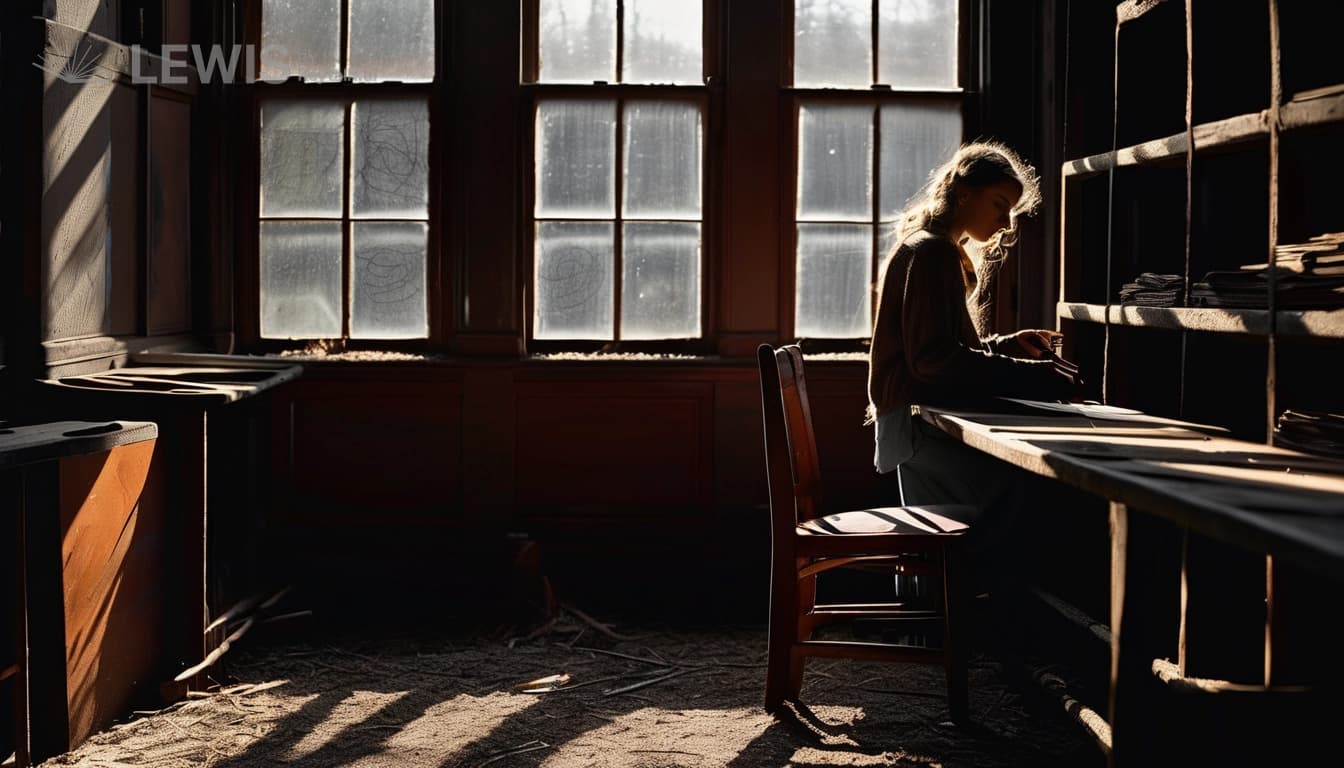
Eliza brings them to the derelict printshop, explaining her suspicion that the cards are not official, but the work of a private press—one she used to deliver for. As they break into the building, the group’s nerves fray—every creak and echo is loaded with the fear of discovery. Inside, they find dust-choked machines, stacks of blank paper, and faint traces of recent use: a single pressed flower, a cup of tea gone cold, a ledger with pages torn out.
They split up to search for clues, each drawing on their unique strengths. Elodie pores over the paper stock and ink, confirming the cards’ origin. Finn and Mary, nimble and quiet, uncover a hidden storeroom containing proofs of other, similar cards—dozens addressed to different households. Silas’s charm proves useful when a vagrant, using the shop for shelter, wanders in; he coaxes out a story about strange late-night deliveries and a black carriage with city insignia. Eliza finds a recent invoice: a bulk order for “notices of relocation,” paid for in cash by an anonymous client.
The group regroups, piecing together the evidence in a swirl of rising anxiety and mounting dread. Their suspicions harden into certainty: this is not the work of chance or magic, but a systematized, citywide operation. They argue—some, like Silas, want to run; others, like Elodie and Eliza, insist on digging deeper. The scene ends with a fragile truce: they will use the printshop as a base to investigate further. Outside, the city seems to close in, the fog thickening as if to swallow them whole.

[Impact on the story]
This scene cements the group’s alliance—not as friends, but as co-conspirators bound by shared peril. It transforms their fear into purpose, forcing each to confront their own vulnerabilities and trust one another, if only out of necessity. The discovery of the printshop’s role in the conspiracy shifts their focus from survival to investigation, raising the stakes and deepening the mystery.

[Description]
The youths break into the abandoned Gannett Printworks, uncovering evidence that their parents’ disappearance is part of a coordinated citywide scheme. Their uneasy alliance is tested and forged in the crucible of fear and suspicion, setting them on a determined, if perilous, path to uncover the truth.
scene 4 image
Scene 4
[Title]
The Hidden Study: Portraits, Ledgers, and the Sins of the Father

[Place]
The silent, echoing halls of the Thorne family mansion—specifically, a concealed study behind a false wall in Magistrate Augustus Thorne’s personal library.

[Time]
Dusk, the day after the discovery at the Gannett Printworks, as the city’s fog thickens and the mansion sits shrouded in unnatural quiet.

[Action]
Elodie returns to her ancestral home under the guise of retrieving personal items, her nerves frayed but her resolve crystallizing after the revelations at the printshop. She moves through the mansion’s oppressive grandeur, acutely aware of the absence of staff and the echo of her own footsteps—each sound a reminder of her isolation and the hollowness of inherited privilege. Guided by half-remembered stories and a pattern of wear on the floorboards, she uncovers a hidden latch in her father’s library. The secret study is a chamber of obsession: maps of London crisscrossed with red thread, lists of families marked for “extraction,” and meticulous ledgers detailing seized assets and resettlement plans. The atmosphere is suffocating, thick with dust and the scent of old paper, underscoring the weight of generations of control.

Elodie’s analytical instincts clash with visceral horror as she realizes the scope of the conspiracy—her own family at its center. She is driven to investigate further by a mix of guilt, fear, and a desperate need for agency. She finds the small desk, its drawers locked. Picking the lock, she discovers the silver locket, the faded portrait of a woman and boy, and a sheaf of letters: Augustus’s first family, lost in a fire, a tragedy he has twisted into the rationale for his monstrous scheme. The emotional impact is immediate—a sickening blend of empathy and revulsion.

Meanwhile, outside, Silas keeps watch, racked with guilt and anxiety over his own family’s fate, while Finn and Mary linger by the gates, torn between hope and dread. Eliza, ever-practical, scours the grounds for signs of recent comings and goings, picking up on subtle clues that suggest the mansion is being watched by more than just the city’s eyes.

The scene ends with Elodie emerging from the study, changed. She shares the damning evidence with the others, her demeanor brittle but determined. The group must now face not only the city’s faceless conspirators, but a very personal betrayal at the heart of their ordeal—a betrayal that implicates Elodie’s bloodline and shatters any lingering illusions of innocence.

[Impact on the story]
This scene is the narrative fulcrum: Elodie’s discovery reframes the conspiracy as not just a faceless bureaucratic evil, but a deeply personal crusade rooted in grief and warped love. The group’s unity is tested by the revelation that one of their own is intimately connected to the enemy. Elodie’s character is propelled from passive victim to active agent, driven by guilt, anger, and a dark sense of responsibility. The emotional stakes are raised for everyone, as the conspiracy is no longer abstract—it’s a legacy, and it has a face. The group’s next steps will be fueled as much by the pain of betrayal as by the need for justice.

[Description]
Elodie uncovers her father’s hidden study, exposing the full extent of the Civic Improvement Project and her own family’s central role. The revelation of Augustus Thorne’s personal tragedy and twisted motives fractures the group’s fragile trust, setting the stage for a confrontation that is as emotional as it is political.
scene 5 image
Scene 5
[Title]
Broadsheets and Bloodlines: Uprising at the Philanthropist’s Ball

[Place]
The grand ballroom of the newly opened Thorne Philanthropic Hall, opulent and gleaming under gaslight, surrounded by the bustling, fog-shrouded city streets outside.

[Time]
Evening, the night following the discovery in Augustus Thorne’s hidden study—a night chosen for the city’s elite to gather in celebration of “civic progress.”

[Action]
The scene begins with the group’s hurried, tense preparations. Elodie, carrying the locket and ledgers, steels herself for public confrontation, while Eliza coordinates a clandestine network of printers and street runners to distribute broadsheets exposing the conspiracy. Silas, dressed in a borrowed suit, infiltrates the ball to ensure Elodie’s safety and gather influential witnesses. Finn and Mary, disguised as serving staff, move through the crowd, keeping watch for Thorne’s loyalists and city officials.

Inside the ballroom, the event is a dazzling show of power and false benevolence. Augustus Thorne takes the stage, delivering a rousing speech on duty and the city’s “bright future.” Elodie’s heart pounds as she waits for the right moment—her resolve tested by the sight of her father’s carefully constructed mask and the approving crowd. Meanwhile, outside, Eliza’s broadsheets begin to circulate, drawing a restless, murmuring crowd to the hall’s steps. The tension builds as rumors ripple through the guests, glances flickering between the hall and the commotion outside.

At the speech’s climax, Elodie steps onto the stage, confronting Augustus in front of the assembled elite. She reveals the evidence—ledger, locket, and all—her voice unwavering as she recounts his crimes and the personal grief driving his actions. The crowd’s reaction shifts from confusion to horror, the facade of order crumbling in real time. Simultaneously, Eliza’s broadsheets reach a fever pitch, and the city outside erupts in chaos: citizens pour into the streets, demanding answers, as the Thorne name becomes a curse.

The group’s unity is tested under the immense pressure. Silas wards off an attempt by Thorne’s loyalists to silence Elodie, Finn and Mary intercept a city official trying to flee with incriminating documents, and Eliza narrowly avoids arrest by ducking into the swelling crowd. The scene ends with Augustus, exposed and unraveling, fleeing the stage as panic overtakes the hall. The group, battered but unbroken, slips out into the chaos, knowing the city will never be the same.

[Impact on the story]
This scene is the explosive public unveiling of the conspiracy, transforming the private agony of the group into a citywide reckoning. Elodie’s confrontation severs her final bond with her father, crystallizing her transformation from sheltered heiress to unyielding adversary. The group’s actions ignite a revolution, but also paint targets on their backs, forcing them into the open as both heroes and outlaws. The city’s power structures begin to collapse, and the true cost of justice—and betrayal—becomes unavoidable for everyone.

[Description]
The youths orchestrate a dramatic public exposure of Augustus Thorne’s crimes at the Philanthropist’s Ball, triggering an uproar in both the city’s elite and the streets outside. Elodie’s confrontation with her father is as much an act of personal reckoning as it is a blow against the city’s corrupt order, setting the stage for the final, desperate reckoning to come.
scene 6 image
Scene 6
[Title]
The Collapse and the Chrysalis: Elodie’s Final Inheritance

[Place]
Deep beneath the Welsh countryside, in the labyrinthine tunnels of the decommissioned coal mine owned by the Thorne estate—now a makeshift prison for the abducted parents.

[Time]
The aftermath of the public exposure—just hours after Augustus Thorne’s disgrace and flight from the city. It is dawn, the pale light above barely brushing the ruined landscape as Elodie descends into the darkness below.

[Action]
The scene opens with Elodie, physically and emotionally exhausted, tracking her father’s desperate retreat to the mine. She navigates the claustrophobic, crumbling tunnels with only a lantern and the memory of her childhood visits—her mind haunted by recent revelations and the looming weight of what she must do. The air is thick with dust, fear, and the distant sounds of the imprisoned parents, who are being driven toward the mine’s deepest chambers by Augustus and his remaining loyalists, determined to erase all evidence.

Elodie must use her knowledge of the mine’s secret passages and structural weaknesses, gleaned from old estate maps and her father’s notes, to evade armed guards and reach the central chamber. Along the way, she witnesses the trauma and confusion of the prisoners, many of whom are too broken to recognize her or understand the chaos erupting around them. This drives home the irreversible damage already done—her father’s “civic improvement” is revealed in all its monstrous reality.

The emotional core of the scene is the final confrontation between Elodie and Augustus. She finds him at the heart of the mine, overseeing the preparations for what is essentially a mass burial—his last, desperate bid to maintain control by sealing the evidence and the prisoners underground. Their exchange is raw and intimate, the years of unspoken grief and twisted love between them crashing down. Augustus is fractured, driven by both guilt and a zealous certainty that this act is for the greater good. Elodie, torn between inherited love and horror, realizes that stopping him means accepting a legacy of violence she never wanted.

As the mine begins to collapse—either by design or accident—Elodie must make a gut-wrenching choice. Using her knowledge, she triggers a controlled demolition that seals Augustus and his remaining followers in a section of the tunnels, ensuring the prisoners’ escape through another route. She does not watch her father die, but the decision is hers—a final, irrevocable severing of blood and history.

The escape is frantic and chaotic, with Elodie guiding the rescued parents—now ghosts of themselves—into the dawn above ground. Finn, Mary, Silas, and Eliza arrive to help, their reunion heavy with grief and hollow triumph. The group must shepherd the traumatized survivors to safety as the authorities and press descend, hungry for answers and scapegoats.

[Impact on the story]
This scene cements Elodie’s transformation: she claims her inheritance not as wealth or status, but as a willingness to make impossible choices for the sake of others. Her final act is both a mercy and a crime, leaving her forever marked by the violence she used to break the cycle. The parents’ rescue is bittersweet—the families are irreparably changed, and the children must face a future defined by what they have lost and what they have become. The group’s bond is forged in tragedy, and their role as reluctant architects of the city’s new order is set.

[Description]
Elodie pursues her father into the collapsing Welsh mine for a final confrontation, ultimately sacrificing him to save the abducted parents. The families are freed, but the cost is permanent: Elodie and her friends emerge forever changed, bearing the weight of both liberation and loss as a new era dawns.
'Orphaned by Design'Story Chat

Want to chat with the characters from this story?

'Orphaned by Design'Story Chat

Want to chat with the characters from this story?

story image
story image
story image

You might also like

Comments0

rank icon image
#22 inGenre
rank icon image
#44 inGenre

Recommendation from YLAB Town

theme music