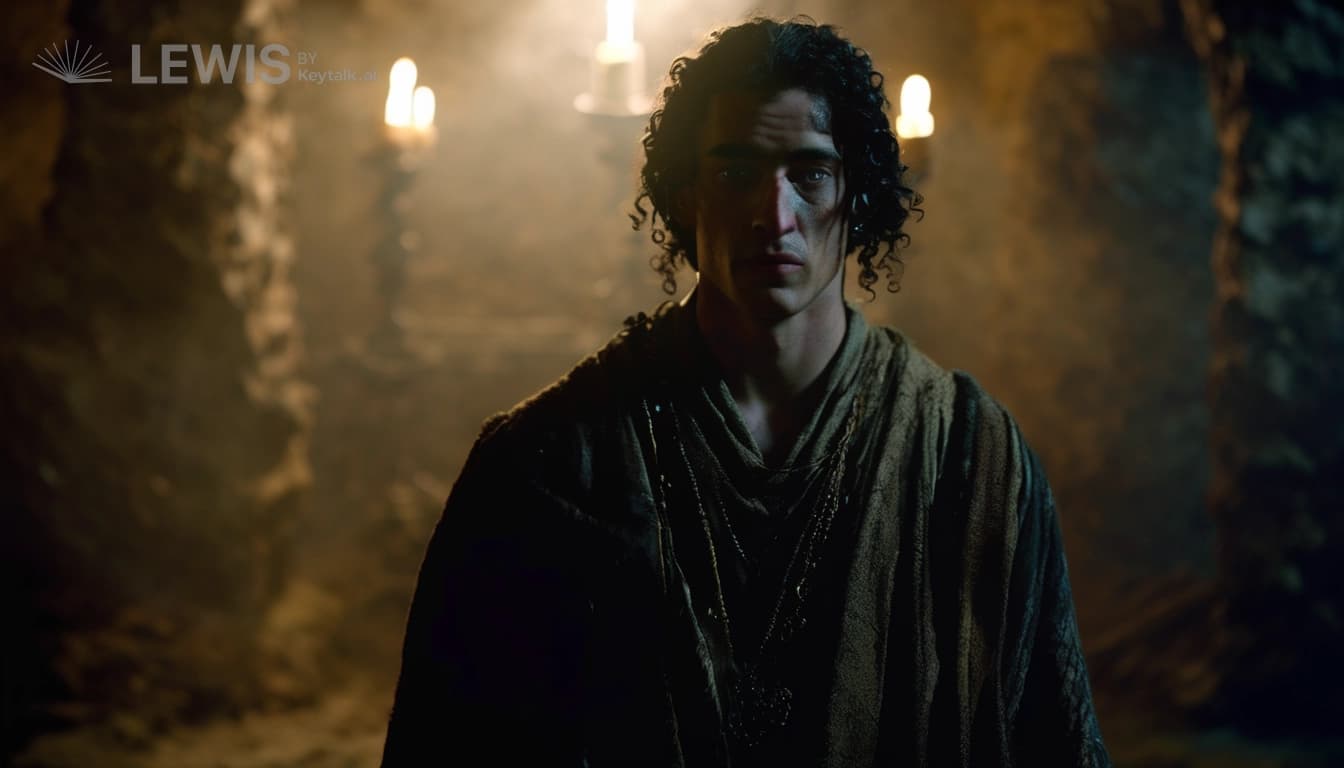



Protagonist Character
Leif Mørkfjell
Profile
Leif Mørkfjell, a 21-year-old apprentice sculptor, moves through life with the odd grace of someone both too old and too young for his skin. His hands, perpetually dusted with flecks of ochre and gray, are calloused from hours spent coaxing forms out of stubborn clay, but it’s his eyes that unsettle most who meet him. They are sharp, glassy things, like polished obsidian, betraying a mind that sees far too much and yet, somehow, never quite enough. Leif is a lone reed in his vibrant, surreal Claymation world, his presence as textured and raw as the landscapes he inhabits. Though he speaks with a careful, almost formal cadence—each word measured as if weighed against some invisible scale—he has an unnerving habit of pausing mid-sentence, his thoughts slipping away to some unseen horizon. His voice carries the faintest lilt of a regional dialect long forgotten, adding an otherworldly quality to his speech.
Leif’s youth is riddled with scars, both seen and unseen. He grew up under the shadow of a fragmented family, his childhood marked by a series of deranged whispers from a father who saw life as a series of numbers and an overworked mother who sculpted in silence but never shared her craft with him. These fractured beginnings left him with an almost compulsive need to impose order, to carve sense from the chaos, yet this urge often clashes with his burgeoning artistic instincts, creating an internal dissonance he has yet to resolve. His apprenticeship offers him a structured outlet for his talents, yet he feels perpetually out of place, as if the clay beneath his fingers is never quite compliant enough, never fully his to command.
Leif’s ability to read lifespans—an uninvited gift that crept into his consciousness during his tumultuous adolescence—has alienated him from the very community he once longed to belong to. He sees the world as a patchwork of fragile timelines, each life a thread he’s terrified to touch lest he unravel it. This has instilled in him a deep-seated fear of closeness; his relationships, tenuous at best, are marred by his inability to turn off the grim ticker-tape of mortality that scrolls through his mind. Yet, despite his isolation, there’s an aching tenderness in him, a yearning for connection that he buries beneath layers of stoic resolve. He spends his evenings alone, his studio a haven of half-finished sculptures that seem to writhe with emotion he cannot name.
Leif’s motivations are murky, his moral compass spinning in the wake of his unique burden. He is both altruistic and deeply selfish, driven by a paradoxical desire to protect others from their fates while also shielding himself from the pain of knowing them too intimately. He is not without flaws; his introspection often borders on paralysis, and his fixation on predicting outcomes leaves him blind to the beauty of spontaneity. Yet, in his quieter moments, he allows himself the indulgence of hope—a hope that perhaps, in shaping the world with his hands, he might shape himself into something worthy of redemption.
Quirks abound in Leif’s character: he has a habit of sculpting small, intricate figures during moments of stress, his fingers moving as if possessed by a life of their own. He is hyper-observant, noticing details others overlook, yet he often fails to grasp the broader emotional currents of those around him. He is also prone to sudden, almost deranged bursts of creativity, abandoning sleep or sustenance to chase fleeting inspirations, only to collapse in exhaustion once the fervor subsides.
Leif Mørkfjell is a protagonist of contradictions—a young man teetering on the edge of chaos and clarity, his mind a labyrinth of fear and fragile hope. His journey promises not only a confrontation with the specter of death but also a reckoning with the raw, unpredictable vitality of life itself.
Leif’s youth is riddled with scars, both seen and unseen. He grew up under the shadow of a fragmented family, his childhood marked by a series of deranged whispers from a father who saw life as a series of numbers and an overworked mother who sculpted in silence but never shared her craft with him. These fractured beginnings left him with an almost compulsive need to impose order, to carve sense from the chaos, yet this urge often clashes with his burgeoning artistic instincts, creating an internal dissonance he has yet to resolve. His apprenticeship offers him a structured outlet for his talents, yet he feels perpetually out of place, as if the clay beneath his fingers is never quite compliant enough, never fully his to command.
Leif’s ability to read lifespans—an uninvited gift that crept into his consciousness during his tumultuous adolescence—has alienated him from the very community he once longed to belong to. He sees the world as a patchwork of fragile timelines, each life a thread he’s terrified to touch lest he unravel it. This has instilled in him a deep-seated fear of closeness; his relationships, tenuous at best, are marred by his inability to turn off the grim ticker-tape of mortality that scrolls through his mind. Yet, despite his isolation, there’s an aching tenderness in him, a yearning for connection that he buries beneath layers of stoic resolve. He spends his evenings alone, his studio a haven of half-finished sculptures that seem to writhe with emotion he cannot name.
Leif’s motivations are murky, his moral compass spinning in the wake of his unique burden. He is both altruistic and deeply selfish, driven by a paradoxical desire to protect others from their fates while also shielding himself from the pain of knowing them too intimately. He is not without flaws; his introspection often borders on paralysis, and his fixation on predicting outcomes leaves him blind to the beauty of spontaneity. Yet, in his quieter moments, he allows himself the indulgence of hope—a hope that perhaps, in shaping the world with his hands, he might shape himself into something worthy of redemption.
Quirks abound in Leif’s character: he has a habit of sculpting small, intricate figures during moments of stress, his fingers moving as if possessed by a life of their own. He is hyper-observant, noticing details others overlook, yet he often fails to grasp the broader emotional currents of those around him. He is also prone to sudden, almost deranged bursts of creativity, abandoning sleep or sustenance to chase fleeting inspirations, only to collapse in exhaustion once the fervor subsides.
Leif Mørkfjell is a protagonist of contradictions—a young man teetering on the edge of chaos and clarity, his mind a labyrinth of fear and fragile hope. His journey promises not only a confrontation with the specter of death but also a reckoning with the raw, unpredictable vitality of life itself.