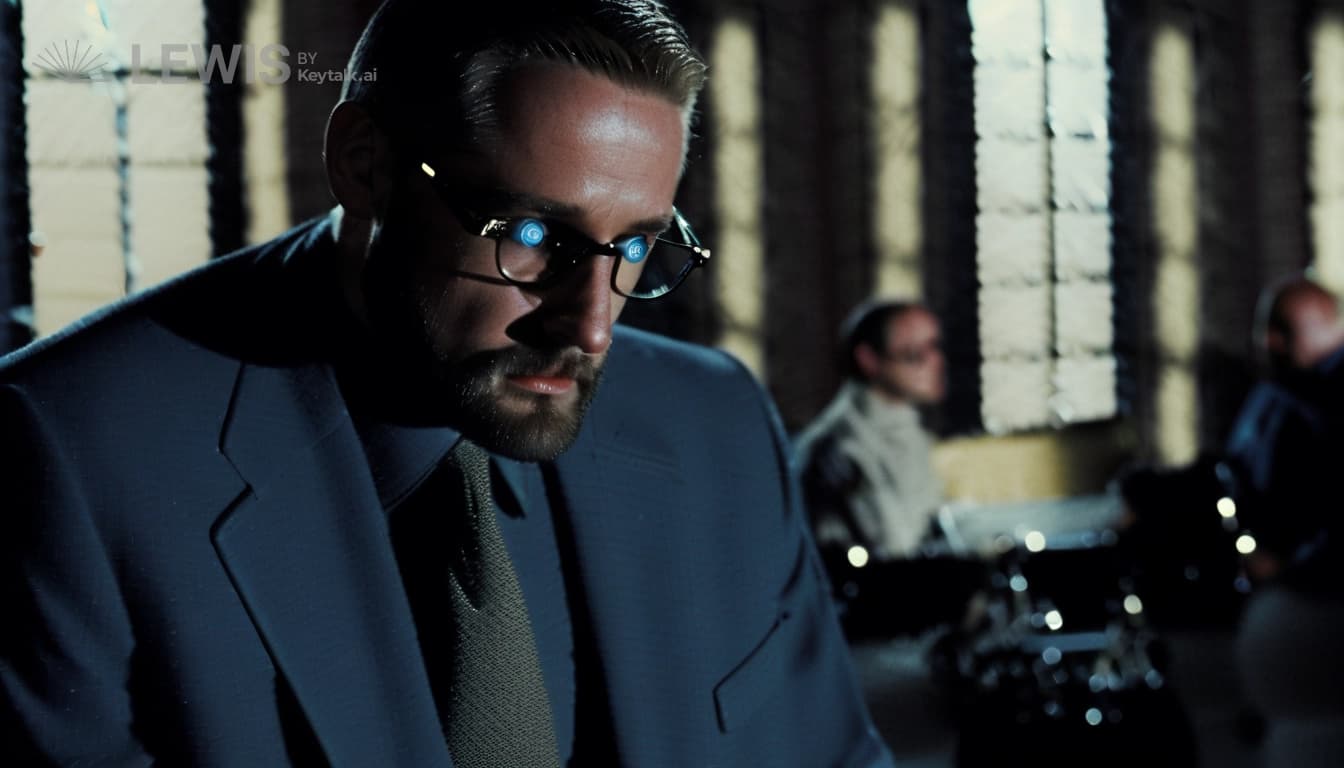
Plot Synopsis
In a dystopian future where governments employ mind control to maintain order, Dr. Milena Petrova, a brilliant yet disillusioned cognitive neuroscientist, grapples with the morality of her work when she discovers the ability to implant memories. The regime's ironclad grip on society has eradicated personal freedom, and Milena, revered for her groundbreaking research, is caught in the throes of an ethical quandary. Raised in a society that once cherished democracy, Milena harbors a deep-seated resentment towards the authoritarian regime that now manipulates human thought with cold precision. Her father, a fervent dissident who vanished mysteriously, left behind a legacy of resistance that both inspires and terrifies her. Her professional success belies a growing moral unease, and as her family’s safety hangs precariously on her compliance, she faces a harrowing decision.
Milena's discoveries attract the attention of Viktor Sokolov, a high-ranking government official whose unyielding authority and methodical approach have cemented his position within the regime. Viktor’s life, steeped in the doctrines of control and order, is marked by a rigid upbringing that cultivated a deep belief in societal stability, even at the cost of individual freedoms. Despite his formidable exterior, Viktor is haunted by a gnawing sense of doubt about the morality of his actions. His strained yet profound bond with his younger sister provides rare moments of introspection, hinting at a latent humanity beneath his cold pragmatism. Viktor's interest in Milena's work is driven by the regime's desire to enhance their control over the populace, but his interactions with her begin to stir his suppressed doubts.
Amidst this tension, Kaito Tanaka, a cybersecurity specialist with a dichotomous nature of precision and chaos, becomes an unexpected ally for Milena. Kaito, whose meticulous nature serves him well in navigating the digital labyrinth of cyber threats, harbors a simmering rebellion against the regime he covertly serves. Raised in a society where conformity is paramount, Kaito's life is marred by the erosion of personal freedoms. His solitary existence, punctuated by a few cherished mementos and a deep bond with his younger sister, reflects his internal struggle. Kaito’s dual existence, masked by a professional veneer, hints at a deeply conflicted soul grappling with the moral implications of his work. His latent desire to protect his sister and his lingering sense of justice compel him to assist Milena, despite the grave risks.
As Milena delves deeper into the ethical quagmire of her discoveries, she begins to envision a way to use her technology to liberate the oppressed populace. The regime's control over memories and thoughts is absolute, but Milena sees an opportunity to implant memories of resistance and freedom into the minds of the people. This bold plan, however, places her and her family in imminent danger. Viktor, initially intent on using Milena's technology to further the regime's control, finds his growing doubts brought to the forefront by her defiance. Their interactions become a battleground of ideology and personal morality, with Viktor's latent humanity clashing against his ingrained loyalty to the regime.
The climax of the story unfolds in a tense confrontation where Milena, with Kaito's help, attempts to execute her plan. The stakes are high, as the regime's surveillance and control mechanisms are ever-present. Kaito's expertise in cybersecurity proves invaluable as he navigates the digital defenses to disseminate the implanted memories. Viktor, caught between his duty and the flickers of doubt that haunt him, faces a pivotal choice. In a moment of profound internal conflict, he decides to aid Milena, driven by the realization that the cost of societal stability is too great when it comes at the expense of human freedom and individuality.
In the aftermath, the implanted memories begin to take root, sparking a wave of resistance and awakening a suppressed collective consciousness among the populace. Milena’s daring act of defiance sets off a chain reaction that challenges the regime's control, hinting at the possibility of a new dawn of freedom. Viktor, now a fugitive alongside Milena and Kaito, grapples with the consequences of his transformation, his latent humanity fully awakened. The story concludes with a sense of cautious optimism, as the characters, each profoundly changed by their journey, look towards an uncertain but hopeful future. The intricate web of moral ambiguity, personal transformation, and the enduring struggle for freedom and individuality forms the crux of this compelling narrative.