Plot Synopsis
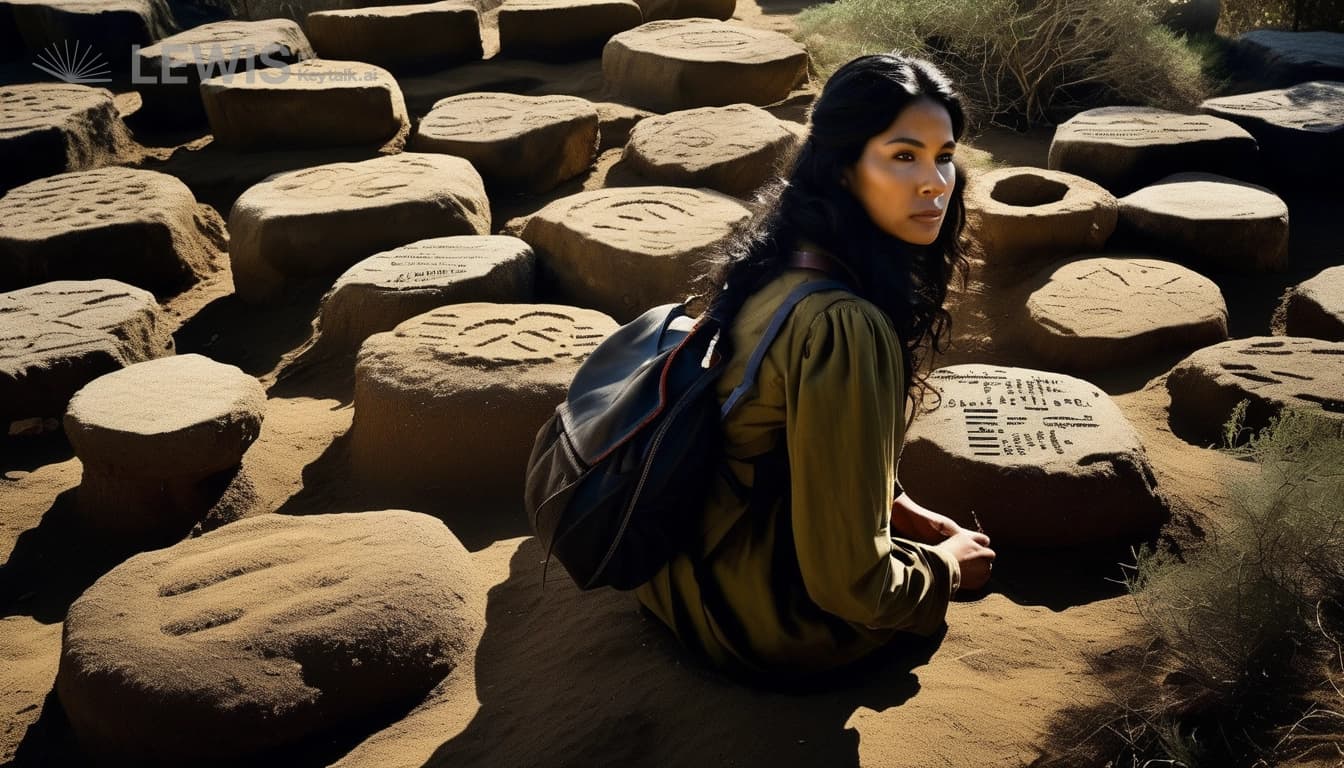
Celia March arrives in Sochetwon under the pretense of conducting an environmental survey for a university grant, but her true purpose runs deeper: she is drawn by rumors of strange phenomena and the town’s reputation as a place where the earth itself “remembers.” With her field kit, grandmother’s cap, and a lifetime of compulsion to decipher wounded landscapes, she moves into an abandoned miner’s cottage at the edge of a ravaged hill. Almost immediately, Celia senses the land’s animosity—streams run backward, the air tastes metallic, and nocturnal winds carry unspoken threats. Her methodical approach is challenged by the inexplicable; soil samples yield impossible mineral signatures, and her offerings of rice and salt vanish overnight, replaced by cryptic patterns of stones and bones. Celia’s skepticism is tested, but she persists, determined to decode the town’s language of injury.
Semyon Vassiliev’s arrival is less subtle: he hosts a ribbon-cutting ceremony for his proposed redevelopment, promising jobs and revitalization. The locals, wary and sullen, watch as his surveyors drive stakes into old burial grounds and dynamite a hillside rumored to be cursed. Semyon, haunted by memories of lost homelands and the failures of men who underestimated land, is convinced that mastery of Sochetwon’s secrets will cement his legacy. He collects local folklore and artifacts, not out of reverence but as weapons in his campaign of transformation. When his men unearth a rusted box of talismans—each inscribed with warnings against trespass—Semyon dismisses the superstitions, even as his crew suffers inexplicable accidents: machinery fails, sinkholes swallow foundations, and one worker is found babbling incoherently, his skin etched with patterns matching those Celia discovers in her soil samples.
Edda Kwon, drawn to Sochetwon by a grant to archive its folklore, becomes Celia’s reluctant ally. Her research uncovers an unbroken chain of calamities—fires, floods, mass disappearances—all following cycles of external threat or desecration. Edda’s skepticism is both shield and shackle: she catalogues oral histories and catalogues artifacts, but balks at Celia’s insistence that the land is sentient. The two women clash—Celia’s ritualism grates against Edda’s methodical skepticism—but their complementary skills prove essential. Together, they decipher the artifacts as mnemonic devices, each encoding a specific trauma inflicted on the land and a ritual for temporary appeasement. Edda’s ability to reconstruct symbolic meaning, tempered by Celia’s instinctive communion with place, allows them to anticipate the town’s next eruption: the artifacts are not just warnings, but instructions for survival.
As disaster phenomena escalate—cyclonic winds that twist buildings into grotesque effigies, rivers that bleed red with iron, spectral apparitions reenacting historical violence—the town’s physical and psychic boundaries begin to dissolve. Semyon refuses to yield, orchestrating a campaign of intimidation against Celia and Edda, convinced that their interference threatens his vision. His ambition blinds him to the fact that every act of aggression, every threat uttered aloud, feeds the land’s memory, accelerating its vengeance. He becomes increasingly obsessed with the artifacts, seeing them as keys to dominance rather than warnings, and attempts a ritual of his own, bastardizing fragments of local tradition in a bid to subdue the landscape. The result is catastrophic: the ground splits, swallowing half the construction site, and the town is plunged into an unnatural night.
Celia, driven by her need to reconcile memory and survival, realizes that appeasement is not enough—the cycle will repeat unless the land’s trauma is not merely acknowledged but rewritten. Guided by the cryptic patterns and her grandmother’s whispered wisdom, she and Edda devise a desperate gambit: a ritual merging oral history, symbolic artifacts, and direct communion with the environment. In a climactic confrontation on the fractured hilltop, as the town’s past tragedies manifest in spectral form, Celia sacrifices her most cherished possession—her grandmother’s cap—offering it as a token of both grief and reconciliation. Edda, finally surrendering her need for control, intones the suppressed histories in their original dialects, restoring the town’s memory to its own voice rather than the voices of conquerors.
The apocalypse recedes, but not without cost. Semyon, broken by his failure and the land’s refusal to be tamed, vanishes into the wilds, leaving only cryptic notes and a final, untranslatable artifact. Sochetwon emerges scarred but intact, its survivors forever changed by their forced reckoning with the past. Celia and Edda remain, guardians and interpreters of the land’s stories—no longer outsiders, but not fully at home. The landscape is quieter now, but beneath the surface, memory still