본문으로 건너뛰기
The Brushstrokes of Ambition cover image

The Brushstrokes of Ambition

Set in the opulent yet politically tumultuous court of Renaissance Florence, a cunning courtier must navigate treacherous allegiances and dodgy conspiracies to seize power, while his growing obsession with an enigmatic artist who challenges societal norms through provocative masterpieces forces him to confront his morality and ambition.
Scroll

Plot Synopsis

In the opulent yet politically tumultuous court of Renaissance Florence, Lorenzo di Medici, a cunning courtier, must navigate treacherous allegiances and dodgy conspiracies to seize power. As he ascends through the labyrinthine politics of the Medici court, his growing obsession with an enigmatic artist, whose provocative masterpieces challenge societal norms, forces him to confront his morality and ambition.

Lorenzo, a man of charisma and cunning, has long mastered the art of courtly maneuvering. Born into a family of modest means, his rise to prominence is a testament to his sharp intellect and eloquent speech. His every move is a calculated step in an intricate dance toward power. Yet, behind his polished façade lies a man perpetually conflicted, his ambitions tempered by an uneasy conscience. His relationship with the artist, whose audacious works defy convention, stirs within him a tumult of fascination and unease, challenging his meticulously constructed moral compass.

As Lorenzo plots his most daring scheme yet, he finds himself at odds with Cesare Borgia, a formidable figure within Florence’s political landscape. Cesare, with his piercing eyes and calculating demeanor, is a politician by trade and a strategist by necessity. His unyielding ambition often blinds him to the human cost of his pursuits. Despite his stoic exterior, Cesare harbors a secret admiration for art, finding solace in the brushstrokes and sculptures that contrast so starkly with his otherwise Machiavellian existence. The clash between Lorenzo and Cesare becomes inevitable as both men strive for dominance, their paths converging in a battle of wits and wills.

In the midst of this power struggle, Giovanni Malaspina, a 41-year-old mercenary leader, emerges as a crucial player. A man of imposing stature and hardened pragmatism, Giovanni commands both fear and loyalty from his men. His rugged countenance and piercing grey eyes betray a life marked by battles fought and allegiances forged in the crucible of war. Despite his ruthlessness, Giovanni harbors a complex code of honor and a latent yearning for a legacy that transcends the battlefield. His clandestine obsession with the arts, a vestige of his noble upbringing, hints at a softer, more contemplative side, clashing with his brutal exterior.

As the court teeters on the brink of chaos, Lorenzo’s meticulously laid plans begin to unravel. The enigmatic artist, whose works have captivated Lorenzo, becomes a pivotal figure in the unfolding drama. Their relationship deepens, revealing layers of complexity and mutual fascination. Through the artist’s provocative masterpieces, Lorenzo is forced to confront the darker aspects of his ambition and the moral compromises he has made. This internal conflict reaches a crescendo as Lorenzo grapples with the true cost of his quest for power.

In a climactic confrontation, Lorenzo and Cesare’s rivalry comes to a head. The court is thrown into turmoil as alliances shift and betrayals are unveiled. Giovanni’s role as a mercenary leader becomes pivotal, his actions driven by a need to control his destiny in a world that has shown him little mercy. The resolution of this conflict forces all three men to face the consequences of their ambitions. Lorenzo, standing on the precipice of his most daring scheme, is a man poised between the intoxicating allure of power and the unsettling whisper of his own conscience.

Ultimately, the story of Lorenzo di Medici is one of ambition, morality, and the search for deeper truths. The enigmatic artist’s provocative masterpieces serve as a mirror, reflecting the complexities of human desire and fear. As the dust settles in the court of Renaissance Florence, Lorenzo’s journey leaves an indelible mark on the political landscape, a testament to the enduring struggle between power and conscience.

Model Used
GPT-4o
text
Stable Diffusion
image

Story Details

Keytalk Prompts Used
See all Keytalks
no chosen prompts
no chosen prompts
no chosen prompts
no chosen prompts
no chosen prompts
no chosen prompts
Model Used
GPT-4o
text
Stable Diffusion
image

Character

Protagonist Character

Lorenzo di Medici

GenderMale
OccupationCourtier

Profile

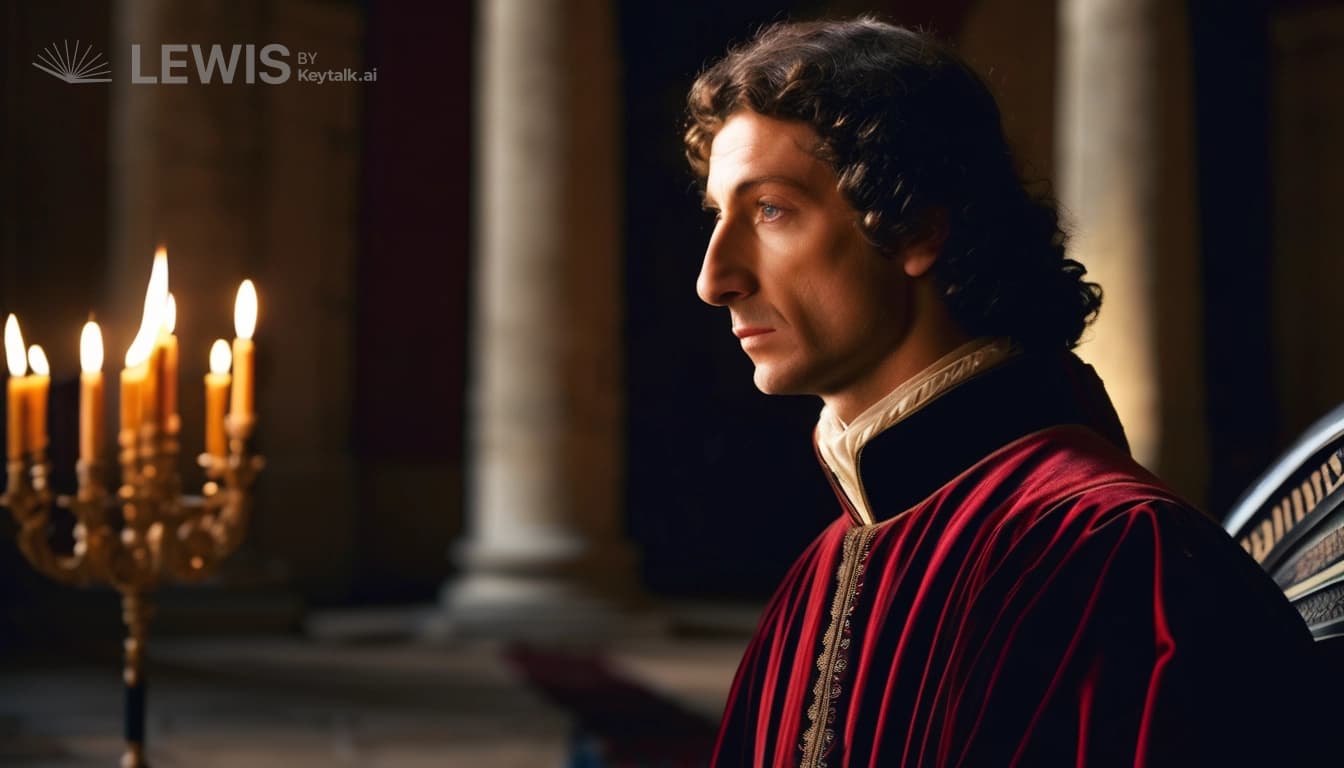
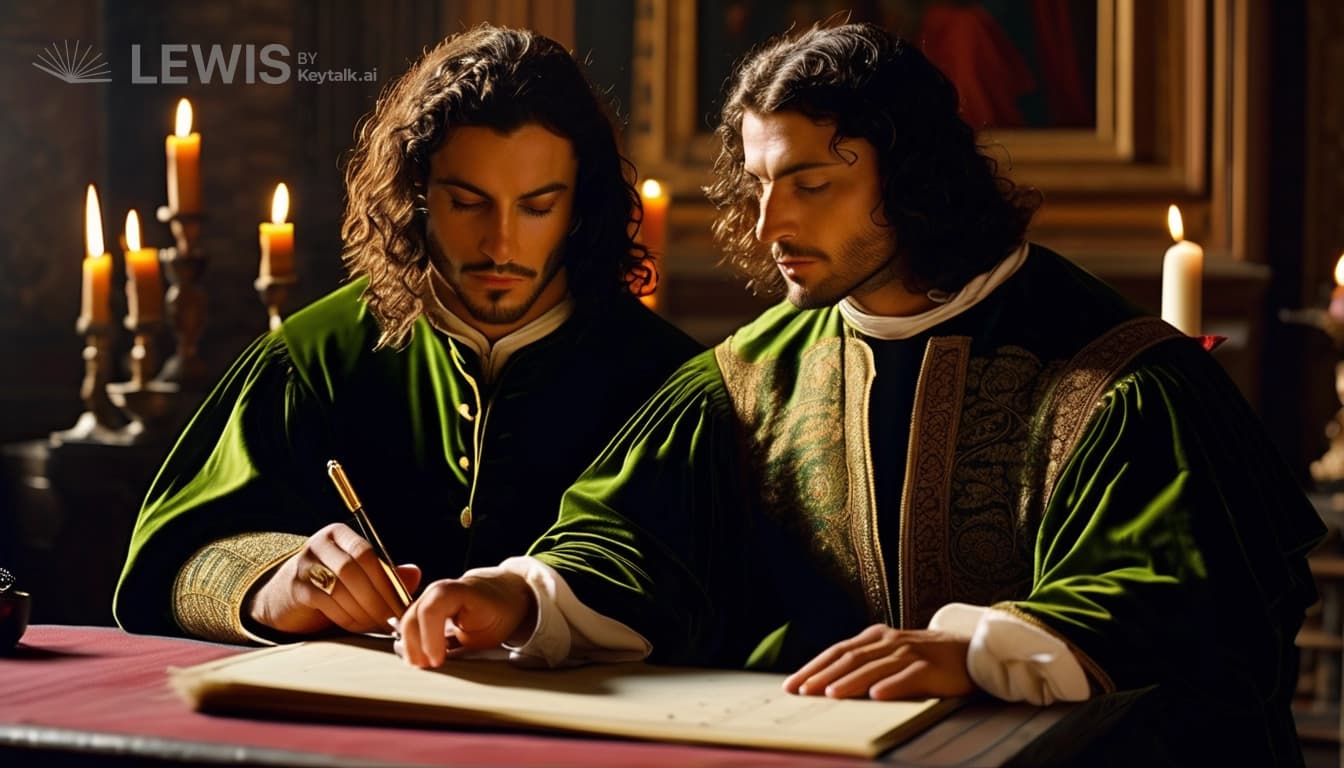
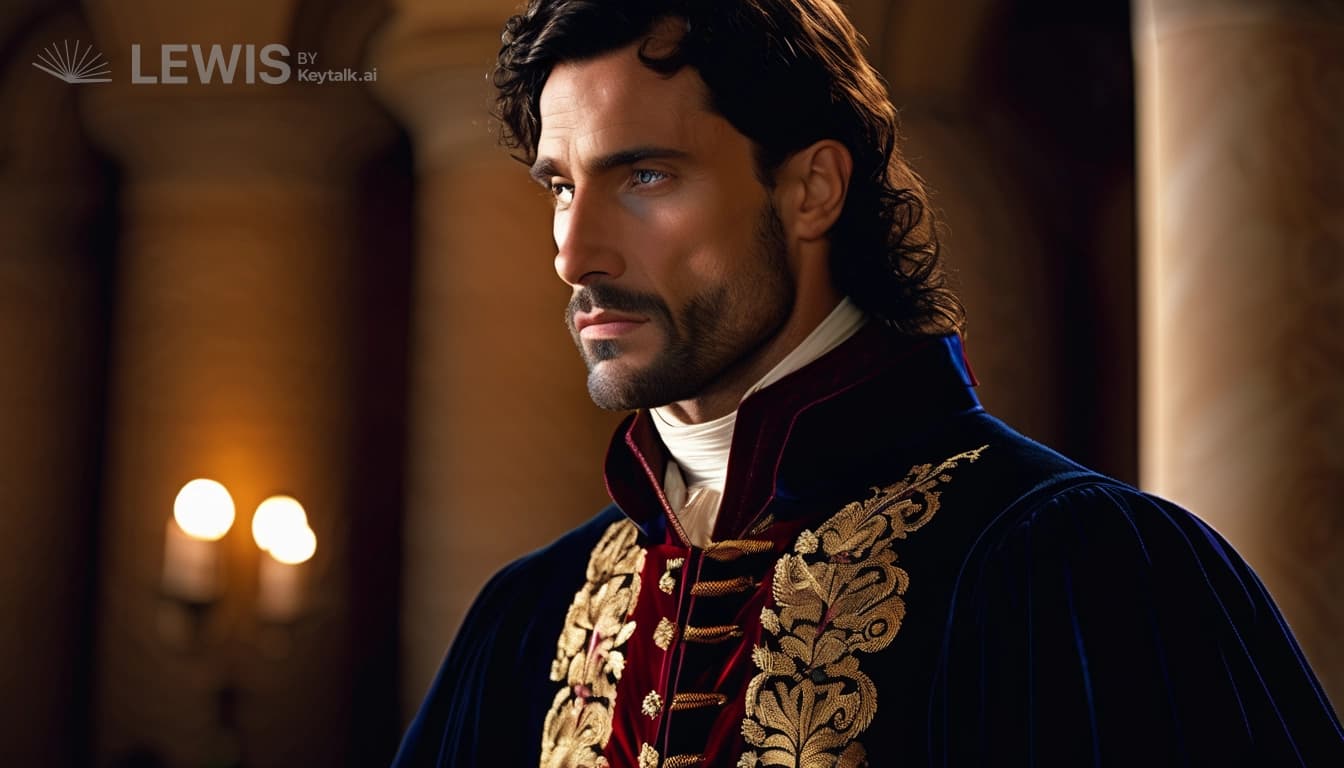
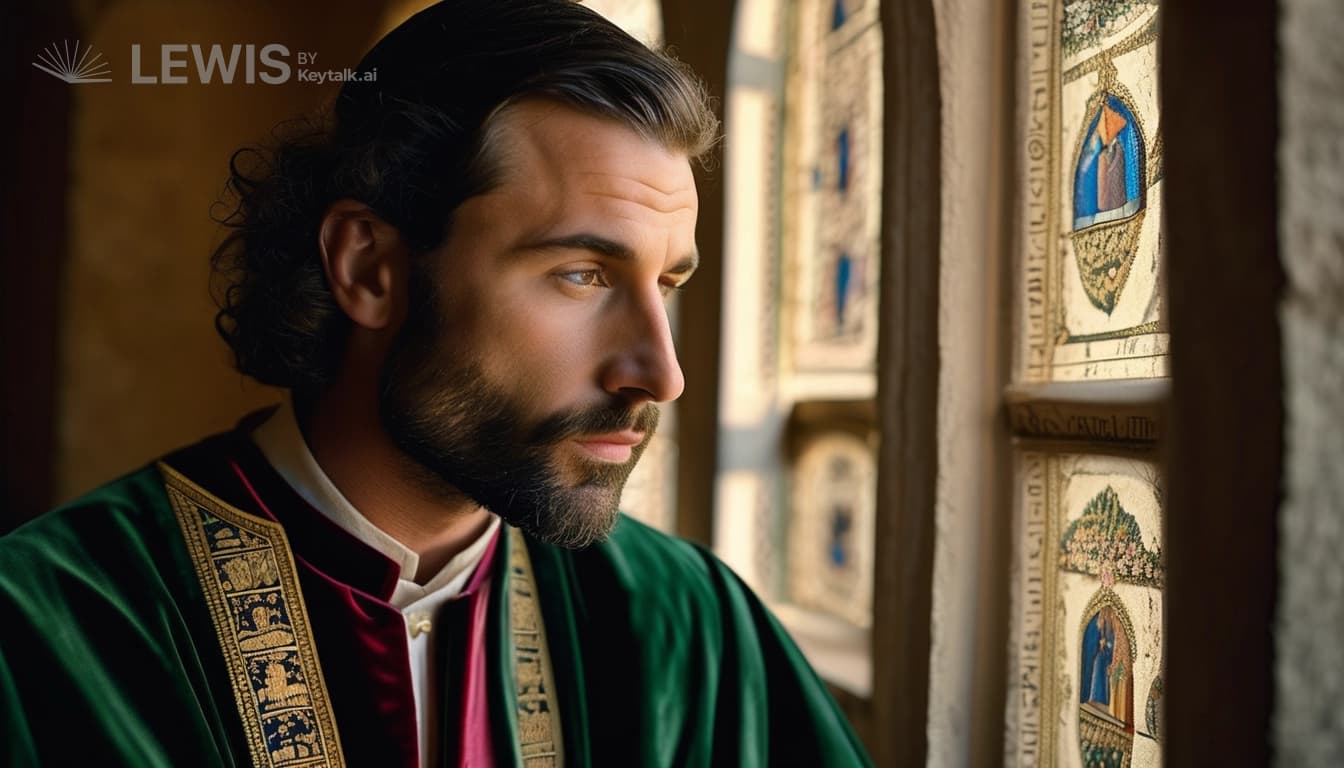
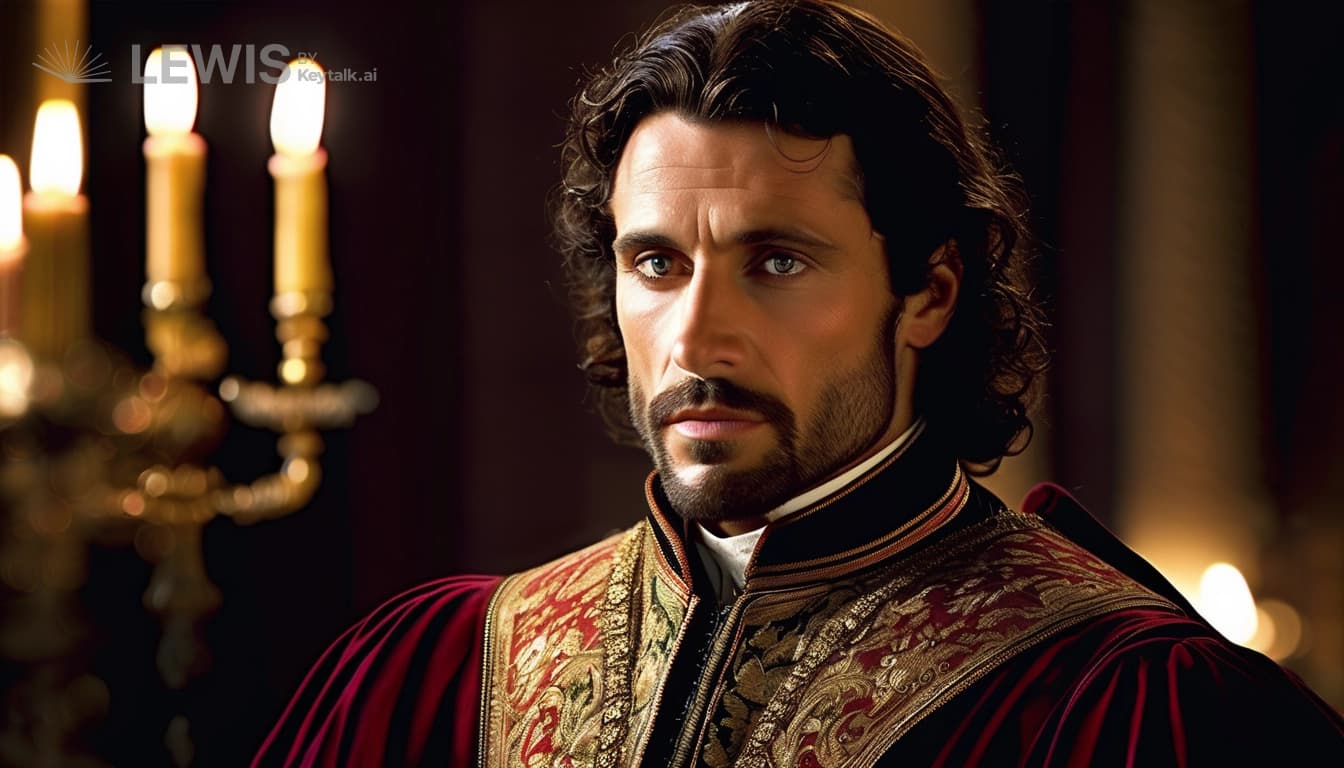
Lorenzo di Medici, a 34-year-old courtier in the resplendent yet volatile court of Renaissance Florence, exudes a magnetic blend of charisma and cunning. His sharp intellect and eloquent speech have been honed through years of navigating the labyrinthine politics of the Medici court, where allegiances shift as swiftly as the tides. Lorenzo's ambition is as vast as his charm is disarming, yet behind his polished façade lies a man perpetually calculating, his every move a step in an intricate dance toward power. Born into a family of modest means, Lorenzo ascended through sheer determination and a knack for reading the subtle currents of human desire and fear. His relationship with the enigmatic artist, whose audacious works defy convention, stirs within Lorenzo a tumult of fascination and unease, challenging his meticulously constructed moral compass. In his private moments, Lorenzo indulges in the art of calligraphy, finding solace in the delicate strokes that contrast with the brutal machinations of court life. His speech, always measured and dripping with sophistication, reveals little of the inner turmoil or the relentless drive that propels him. Lorenzo's motivations are a complex tapestry of personal ambition, a desire for legacy, and a quest for understanding the deeper truths that the artist's provocative masterpieces seem to unveil. As he stands on the precipice of his most daring scheme yet, Lorenzo is a man poised between the intoxicating allure of power and the unsettling whisper of his own conscience, a figure as compelling as he is enigmatic.
Antagonist Character

Cesare Borgia

GenderMale
OccupationPolitician

Profile

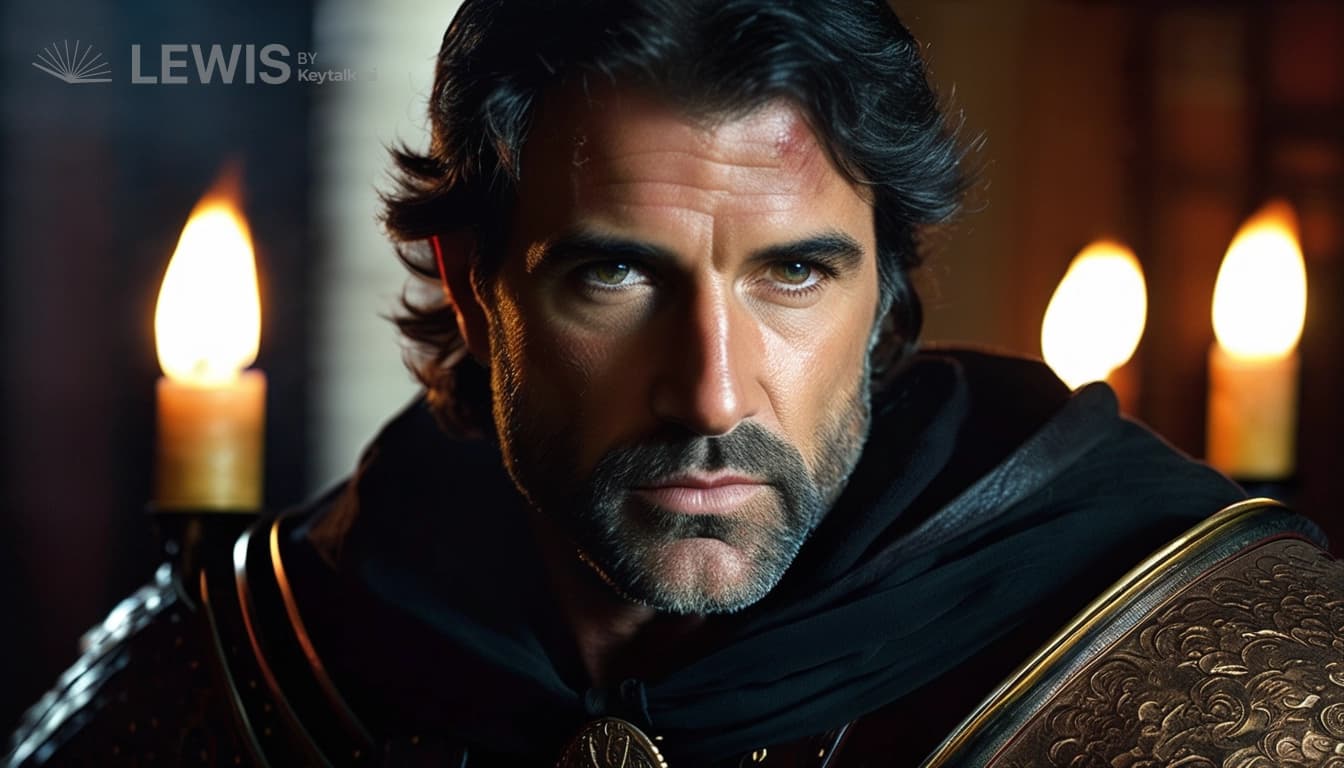
Cesare Borgia, at thirty-eight, stands as a formidable figure within the labyrinthine corridors of Renaissance Florence’s political landscape. His piercing eyes, hardened by years of machination and strife, betray a mind perpetually engaged in the subtlest of power plays. A politician by trade and a strategist by necessity, Cesare's calculating demeanor is both his greatest strength and most significant flaw; his unyielding ambition often blinds him to the human cost of his pursuits. Born into a family synonymous with both prestige and infamy, Cesare's upbringing was steeped in the ruthless pragmatism of the Italian nobility, where trust was a rarity and alliances were ephemeral. Currently residing in a grand yet austere villa, his living quarters reflect his disciplined nature and penchant for control. His relationship with power is complex: it is both his most fervent aspiration and his deepest source of insecurity. Despite his stoic exterior, Cesare harbors a secret admiration for art, finding solace in the brushstrokes and sculptures that contrast so starkly with his otherwise Machiavellian existence. His speech is meticulously formal, laced with a barbed wit that can charm or eviscerate, depending on the context. Internally, Cesare grapples with the ghosts of his past decisions, the weight of his lineage, and a growing disillusionment with the very power he so ardently seeks. This multifaceted persona—ruthless yet vulnerable, cultured yet brutal—positions him as the story’s antagonist, a man whose journey will inevitably clash with Lorenzo di Medici's own quest for power, forcing both to confront the true cost of their ambitions.
Sidekick Character

Giovanni Malaspina

GenderMale
OccupationMercenary Leader

Profile

Giovanni Malaspina, a 41-year-old mercenary leader, is a man of imposing stature and an even more formidable presence, marked by a life of hardened pragmatism and relentless ambition. Once a nobleman of modest means, Giovanni's past is riddled with battles fought and allegiances forged in the crucible of war, shaping him into a shrewd tactician and a leader who commands both fear and loyalty from his men. His rugged countenance and piercing grey eyes betray a man who has seen the worst of humanity and survived by embracing its darker aspects. Giovanni's speech, roughened by years of barking orders and negotiating treacherous deals, is peppered with a pragmatic directness that brooks no nonsense, yet he retains a surprising eloquence when the situation demands. He is driven by a desire for power and respect, haunted by the ghosts of comrades lost and the ever-present shadow of his own mortality. Despite his ruthlessness, Giovanni harbors a complex code of honor and a latent yearning for a legacy that transcends the battlefield. His motivations are further complicated by a clandestine obsession with the arts, a vestige of his noble upbringing, which he indulges in solitude, sketching and painting in the dead of night. This hidden passion hints at a softer, more contemplative side, clashing with his brutal exterior. His role as an antagonist in the story will be underscored by these multifaceted dimensions, rendering him a figure of both menace and tragic depth, his actions driven by a need to control his destiny in a world that has shown him little mercy.
Model Used
GPT-4o
text
Stable Diffusion
image

World

1. Where/When:
The narrative unfolds in the opulent court of Renaissance Florence, a city-state renowned for its cultural flourishing and political intrigue during the 15th century. This period, marked by the resurgence of classical art and thought, sees Florence as a hub of creativity, intellect, and power struggles. The Medici family, prominent patrons of the arts and de facto rulers, dominate the political landscape, making the court a nexus of both opulence and treachery.

2. Important rules of the universe and how it impacts the story:
The universe is governed by the unwritten rules of political maneuvering, where allegiances are as transient as the whims of those in power. Trust is a rare commodity, and every smile hides potential betrayal. The concept of 'virtù,' a blend of bravery, skill, and cunning, is essential for survival and advancement. This Machiavellian philosophy permeates the actions of the characters, particularly Lorenzo and Cesare, who navigate this treacherous environment with calculated precision. The societal norms of the time, especially the rigid class structures and gender roles, also play a crucial role, as the artist's provocative works challenge these conventions, reflecting the broader tension between innovation and tradition.

3. The visual description of the universe:
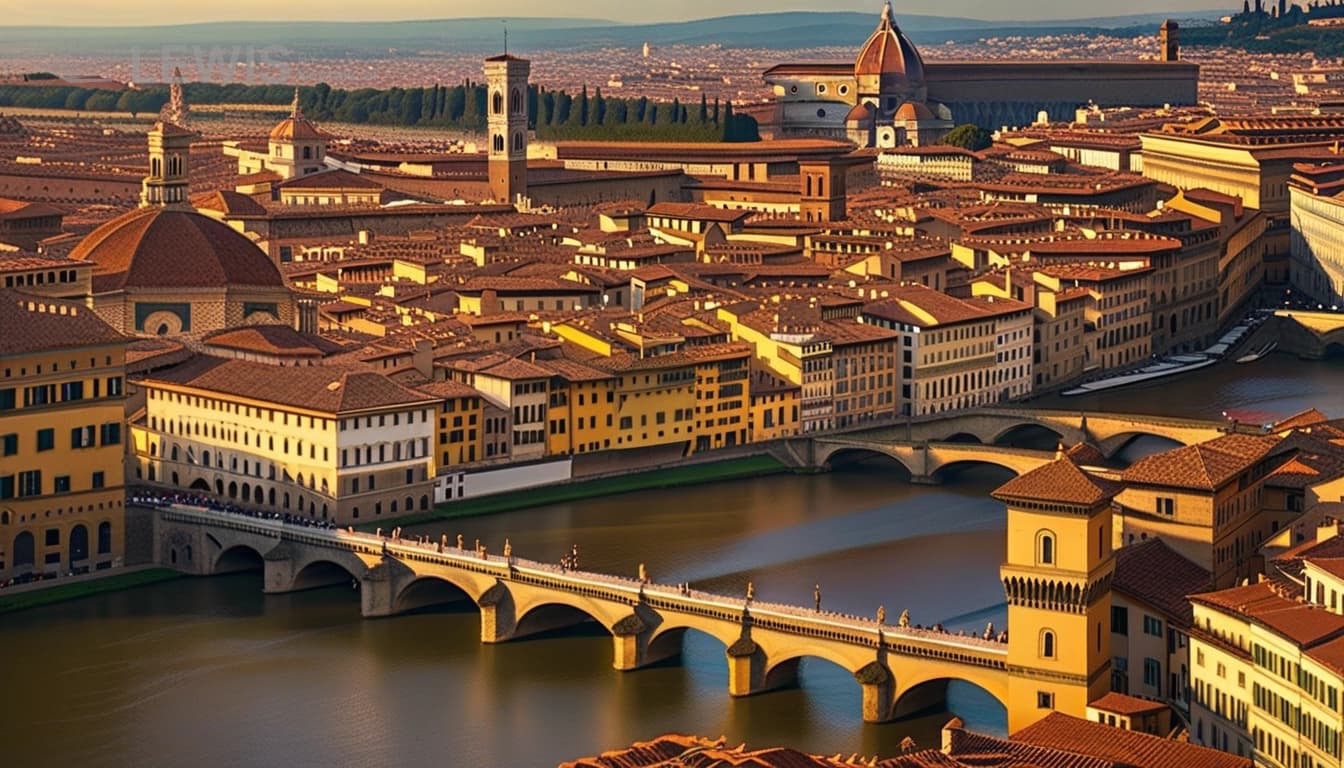
The court of Renaissance Florence is a dazzling spectacle of wealth and art. Ornate palaces adorned with frescoes by masters like Botticelli and da Vinci set the stage for the intricate dance of power. The streets are a labyrinth of narrow alleys and bustling marketplaces, where merchants peddle exotic goods and whispers of conspiracy blend with the scent of spices. The Arno River winds through the city, its serene waters contrasting with the stormy political currents. The Medici Palace, a symbol of both grandeur and control, stands as the epicenter of intrigue, its halls echoing with the footsteps of courtiers and the murmur of secret councils.

4. Notable technologies or philosophies of the universe that impact the story:
The Renaissance is a time of intellectual rebirth, where the rediscovery of classical philosophy and the pursuit of humanism shape societal values. The printing press, a relatively recent invention, begins to disseminate ideas more widely, fostering a climate of debate and dissent. Artistic innovation, fueled by the Medici patronage, challenges existing norms, with figures like Lorenzo's enigmatic artist pushing the boundaries of what is acceptable. The tension between traditional medieval scholasticism and the emerging humanist thought creates a fertile ground for the story's moral and philosophical dilemmas. The Machiavellian philosophy of power—pragmatic, ruthless, and often amoral—guides the actions of key characters, reflecting the broader existential questions of the era.

In this richly textured setting, the characters' ambitions and conflicts are magnified, their every action scrutinized under the unforgiving gaze of history. The interplay between light and dark, both in the literal and metaphorical sense, underscores the complexity of their quests, making Renaissance Florence a living, breathing entity that shapes and is shaped by the people within it.
representative image
location 1 image

Location 1

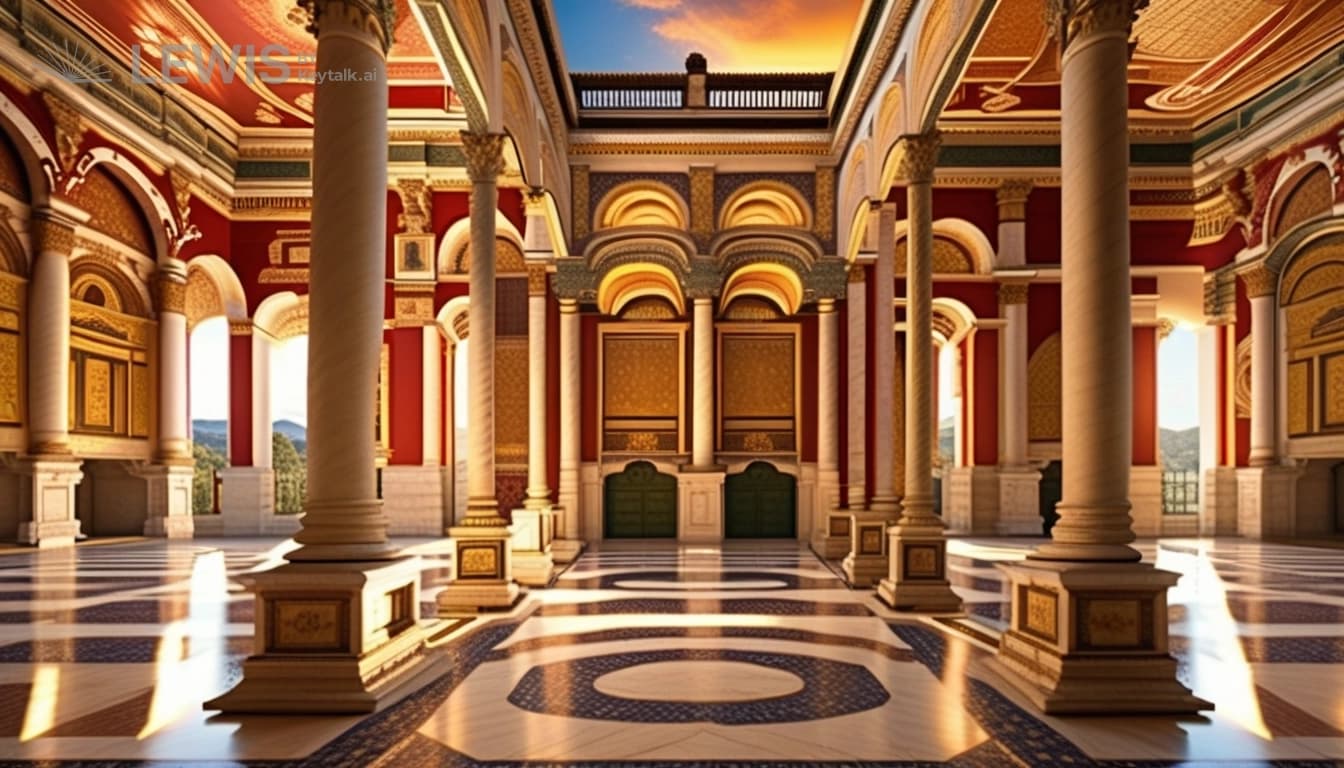
- Title: Medici Palace
- Description: The Medici Palace, a sprawling edifice of marble and gold, stood as a testament to Florence's wealth and power, its grand halls echoing with the whispers of political intrigue. Within its opulent chambers, Lorenzo di Medici navigated the treacherous waters of court politics, his every move a calculated step towards seizing control. Amidst the palace's splendor, his growing obsession with an enigmatic artist's provocative masterpieces began to challenge his carefully constructed moral compass.
location 2 image

Location 2

- Title : Arno River
- Description : Under the silvery moonlight, the Arno River gleamed with an ethereal glow, its waters whispering secrets of old. Here, Lorenzo and the enigmatic artist shared a clandestine meeting, their hushed voices mingling with the gentle lapping of the river, as they unveiled the next audacious masterpiece that would challenge Florence’s very core.
location 3 image

Location 3

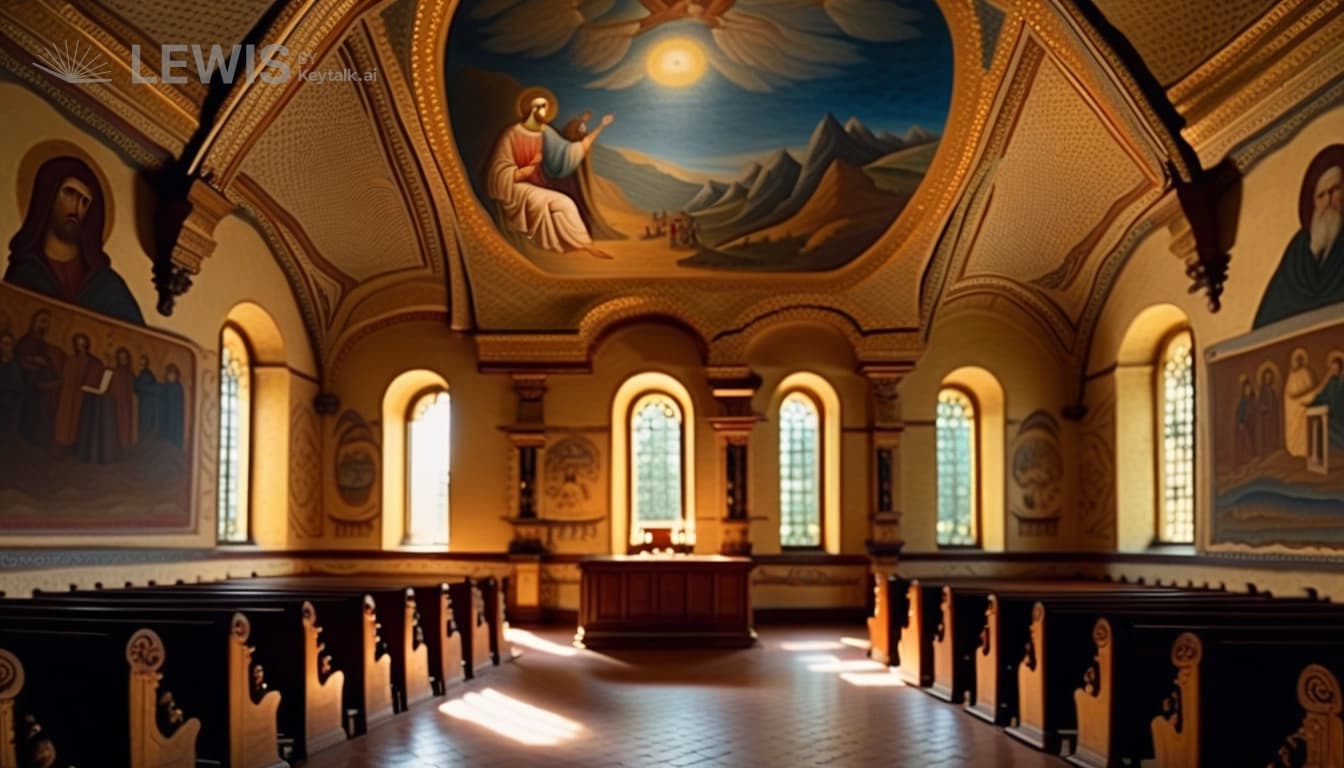
- Title : Botticelli Fresco
- Description: In a secluded chapel adorned with Botticelli's ethereal frescoes, the final confrontation unfolds. Lorenzo, Cesare, and Giovanni stand amidst the haunting beauty of the artist's work, their faces illuminated by the flickering candlelight. The tension is palpable as alliances fracture and the true cost of their ambitions is laid bare against the backdrop of sublime artistry.
Model Used
GPT-4o
text
Stable Diffusion
image

Scenes

scene 1 image
Scene 1
- Title : The Courtly Maneuver
- Place: The Medici Court, Florence
- Time: Early Morning, 1486
- Action: Lorenzo di Medici engages in subtle political maneuvering, forging alliances and gathering intelligence to strengthen his position within the court.
- Impact: Lorenzo's actions solidify his influence and position, setting the stage for his ambitious plans while simultaneously arousing suspicion and envy among his rivals.
- Description: In the opulent halls of the Medici court, Lorenzo's charm and strategic acumen are on full display as he deftly navigates conversations, securing the loyalty of key figures, and subtly undermining his adversaries, all while maintaining a veneer of courteous diplomacy.
scene 2 image
Scene 2
- Title : Artistic Fascination and Moral Dilemma
- Place: The Artist's Studio, Florence
- Time: Late Afternoon, 1486
- Action: Lorenzo visits the enigmatic artist’s studio, captivated by the provocative masterpieces that challenge societal norms and stir a profound emotional response within him.
- Impact: Lorenzo’s growing obsession with the artist’s work forces him to question his own ambitions and morality, creating an internal conflict that complicates his political strategies.
- Description: The dimly lit studio, filled with the scent of turpentine and oil paints, becomes a sanctuary where Lorenzo’s carefully constructed facade begins to crack, revealing a man torn between his relentless pursuit of power and a newfound appreciation for the artist’s daring vision.
scene 3 image
Scene 3
- Title : The Rise of Cesare Borgia
- Place: Medici Court, Florence
- Time: Early Evening, 1486
- Action: Cesare Borgia, with his piercing eyes and calculating demeanor, maneuvers deftly through the labyrinthine politics of the Medici court, forging strategic alliances and undermining rivals to secure his position of power.
- Impact: His unyielding ambition and Machiavellian tactics create a formidable obstacle for Lorenzo, intensifying their rivalry and setting the stage for an inevitable confrontation.
- Description: Within the opulent halls adorned with tapestries and gilded chandeliers, Cesare’s presence casts a long shadow, his every move a masterstroke in the game of power, as Lorenzo watches warily, sensing the tightening noose of Cesare’s influence.
scene 4 image
Scene 4
- Title : Giovanni Malaspina's Duality
- Place: Giovanni's Private Chambers, Florence
- Time: Midnight, 1486
- Action: Giovanni Malaspina, the mercenary leader, grapples with his conflicting identities as a fearsome warrior and a secret admirer of the arts, seeking solace in the delicate sculptures hidden within his chambers.
- Impact: This internal struggle highlights Giovanni’s latent yearning for a legacy beyond the battlefield, complicating his role in the unfolding power dynamics and forging an unexpected connection with Lorenzo through their shared appreciation for the enigmatic artist's works.
- Description: Amidst the dim glow of candlelight, Giovanni’s rugged visage softens as he caresses the marble surface of a sculpture, his grey eyes betraying a depth of unspoken longing, juxtaposing the hardened exterior of the mercenary with the contemplative soul within.
scene 5 image
Scene 5
- Title: The Unraveling of Intricate Plans
- Place: Lorenzo's Study, Medici Palace, Florence
- Time: Dawn, 1486
- Action: Lorenzo di Medici’s meticulously crafted schemes begin to fray as unforeseen betrayals and shifting alliances within the court disrupt his path to power, forcing him to reassess his strategies and confront the moral compromises he has made.
- Impact: The unraveling of Lorenzo's plans deepens his internal conflict, pushing him to the brink of desperation and compelling him to reevaluate his relationship with the enigmatic artist whose works have become a mirror to his soul.
- Description: As the first light of dawn filters through the grand windows of his study, Lorenzo's usually composed demeanor cracks, his eyes reflecting the turmoil within, while the provocative masterpieces adorning the walls seem to taunt him with unspoken truths.
scene 6 image
Scene 6
- Title: The Climactic Confrontation and Aftermath
- Place: Grand Hall, Medici Palace, Florence
- Time: Nightfall, 1486
- Action: Lorenzo di Medici and Cesare Borgia engage in a fierce confrontation, their clash reaching a violent climax as Giovanni Malaspina intervenes, forcing both men to confront the true cost of their ambitions.
- Impact: The confrontation irrevocably alters the balance of power in the court, leaving Lorenzo to grapple with the haunting echoes of his moral compromises and the enduring impact of the enigmatic artist's works.
- Description: Under the flickering torchlight, the Grand Hall becomes a battleground of shadows and blood, the air thick with tension as Lorenzo's gaze meets Cesare's, their fates intertwined in a moment of brutal reckoning.
'The Brushstrokes of Ambition'Story Chat

Want to chat with the characters from this story?

'The Brushstrokes of Ambition'Story Chat

Want to chat with the characters from this story?

story image
story image
story image

You might also like

Comments0

Making moves, breaking rules—welcome to my game.♟️🔥

rank icon image
#1 inGenre
rank icon image
#1 inConcept
rank icon image
#1 inTheme
theme music