본문으로 건너뛰기
The Whispering Roots cover image

The Whispering Roots

In a bustling trading post along the Niger River during the 16th century, a blind herbalist's peaceful existence is shattered when his intricate knowledge of local flora is sought as a weapon by an encroaching foreign power. Forced to choose between preserving his community's secrets or watching them fall into enemy hands, he endeavors to outwit his foes using the very elements of nature they wish to control.

Weekly ranking

rank icon image
#24 inGenre
Scroll

Plot Synopsis

In the dense, humid air of the 16th-century Niger River trading post, Kemo Sissoko’s life unfolded like the unhurried currents of the waterway that sustained his community. Though blind, Kemo’s world was far from dark; it thrummed with the vibrant symphony of life—the rustle of baobab leaves in the wind, the earthy tang of freshly upturned soil, the faint hum of distant trade caravans arriving with silk, salt, and stories from lands beyond. For decades, he had lived as a quiet sentinel of his people’s well-being, a healer whose remedies, drawn from the river’s lush banks, were as much a product of his skill as of his reverence for nature. His days were marked by the steady rhythm of grinding herbs, offering wisdom to those who sought it, and preserving the delicate equilibrium of his community’s relationship with the land. But this fragile serenity was fractured when whispers began to ripple through the trading post—foreign envoys had arrived, bearing gifts wrapped in promises but laced with unspoken demands.

Among these visitors was Aboubacar Daranka, a man whose polished demeanor and silken words belied the storm churning beneath his composed surface. Acting as a representative of a distant empire hungry for the natural wealth of the region, Aboubacar’s mission was clear: to secure the secrets of Kemo’s unparalleled herbal knowledge, a treasure trove capable of bolstering the empire’s ambitions, whether through medicine or poison. He approached Kemo with the precision of a serpent stalking its prey, cloaking his intentions in flattery and appeals to shared cultural pride. Kemo, ever cautious, recognized the dangerous currents beneath Aboubacar’s polished exterior but feigned deference as he listened, his fingers idly rubbing the amulet in his pocket. Yet, when Aboubacar’s veiled charm gave way to overt threats—his empire would not ask twice, and resistance would come at a dire cost—Kemo found himself thrust into a moral crucible. To yield his knowledge would betray the sacred trust of his ancestors and imperil the delicate balance of his homeland, but to refuse risked bringing the full weight of foreign might upon his people.

As Kemo grappled with his choice, the shadow of another figure loomed larger in his life: Nimatou Keïta, a spy embedded among the trading post’s bustling crowds. Nimatou, tasked with assessing Kemo’s vulnerabilities, approached him under the guise of a curious traveler seeking his medicinal expertise. Her sharp wit and effortless ability to adapt to any situation made her a formidable opponent, yet as she watched Kemo navigate his daily life, her resolve began to falter. His humility, his profound connection to the land, and the quiet dignity with which he resisted Aboubacar’s advances stirred something long buried within her—a vestige of a moral compass that had grown rusty under the weight of her compromises. Torn between her duty to her foreign handlers and a nascent empathy for the man she was sent to manipulate, Nimatou found herself walking a razor’s edge, her every decision steeped in perilous ambiguity.

Kemo, meanwhile, began devising a plan to outmaneuver his adversaries, drawing upon the very elements they sought to exploit. He retreated into the wilderness, guided by the whispers of the river and the tactile map of his memory, to gather plants whose properties were as dangerous as they were miraculous. The knowledge his grandmother had imparted to him—the stories encoded in each leaf and root—became his arsenal. Aboubacar, impatient with Kemo’s evasions, escalated his campaign, enlisting mercenaries to sow fear among the villagers and tightening his grip on the trading post. Yet, within this rising tide of violence, Kemo saw an opportunity. Through subtle misinformation and carefully orchestrated delays, he set a trap that would turn the foreign power’s greed against itself, even as he rallied his community to prepare for the inevitable clash.

The tension reached its breaking point when Aboubacar, driven by both imperial ambition and his own gnawing insecurities, ordered a full-scale assault on the trading post to seize Kemo by force. In the chaos that followed, alliances shifted and masks fell. Nimatou, unable to reconcile her growing respect for Kemo with the weight of her own betrayals, made a fateful choice—she sabotaged the foreign forces’ plans, feeding them false intelligence that led them into Kemo’s carefully laid ambush. The battle was brief but brutal, with nature itself seeming to rise in defense of the land: poisonous vapors from Kemo’s concoctions disoriented the invaders, while villagers armed with improvised weapons fought fiercely to protect their home. Aboubacar, betrayed by Nimatou and undone by his own hubris, was captured, his charisma and cunning rendered useless in the
Model Used
GPT-4o
text
Stable Diffusion
image

Story Details

Keytalk Prompts Used
See all Keytalks
no chosen prompts
no chosen prompts
no chosen prompts
no chosen prompts
no chosen prompts
no chosen prompts
Model Used
GPT-4o
text
Stable Diffusion
image

Character

Protagonist Character

Kemo Sissoko

GenderMale
OccupationHerbalist

Profile

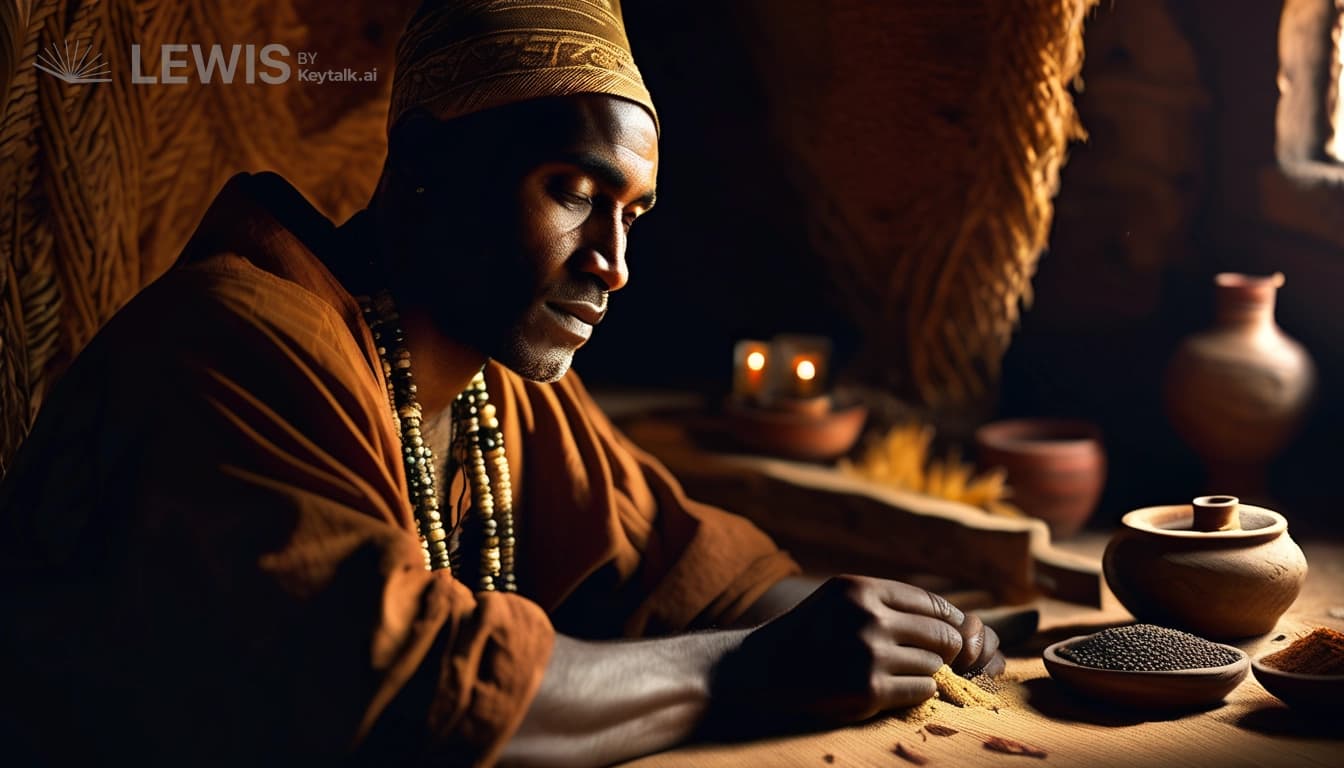
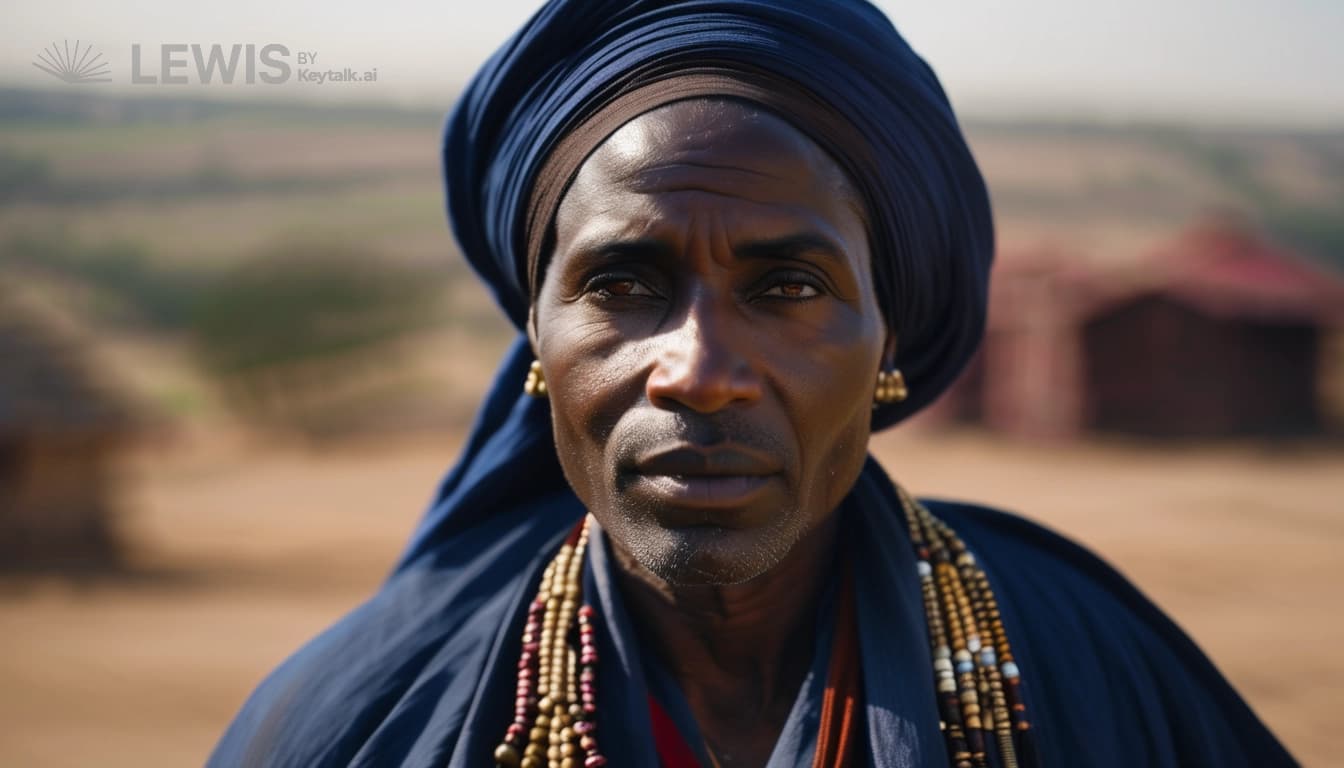
Kemo Sissoko moved through the world with a quiet dignity, his blindness less a burden than a lens through which he perceived the world differently, perhaps more vividly than those with sight. At forty-seven, his face bore the lines of wisdom and wear, the marks of a life lived in the embrace of the earth’s rhythms. His hands, calloused yet precise, were the tools of his trade, deftly plucking leaves, grinding roots, and weaving the secrets of the Niger’s flora into remedies that had saved countless lives. He spoke sparingly, his deep, measured voice carrying the cadence of the river itself—calm and deliberate, yet capable of sudden, cutting insight. Though his words were often couched in metaphor, they carried weight, and his gentle humor softened the sharp edges of his truths. Kemo's past was woven into the soil he cultivated; he had learned his craft from his grandmother, a formidable healer who believed that every plant held not only a cure but also a story. Her teachings had instilled in him a reverence for the balance between humanity and nature, a reverence he upheld even as the world around him grew restless with change. Living alone in a modest mud-brick hut on the edge of the trading post, he found contentment in his solitude, though he was far from isolated—visitors seeking his wisdom came daily, leaving with not only medicines but also the sense that they had been truly seen, even by a man without sight. Yet beneath his composed exterior lay a cautious pragmatism; he had learned through experience that trust was a currency as fragile as it was valuable. A master of observation through sound, scent, and touch, Kemo often noticed what others overlooked, his mind a labyrinth of connections between the natural world and the human one. He harbored no grand ambitions, yet he burned with a quiet determination to preserve the harmony of his community and the sanctity of his craft, even as he sensed the ominous tremors of forces far beyond his control. He carried a small carved amulet in his pocket—a gift from his grandmother—rubbing it between his fingers when deep in thought, a quirk that betrayed his otherwise composed demeanor. To those who knew him, Kemo was a pillar of wisdom and resilience, but beneath that steadfast exterior lay the seeds of a man poised, unknowingly, on the brink of transformation.
Antagonist Character

Aboubacar Daranka

GenderMale
OccupationMerchant and foreign envoy

Profile

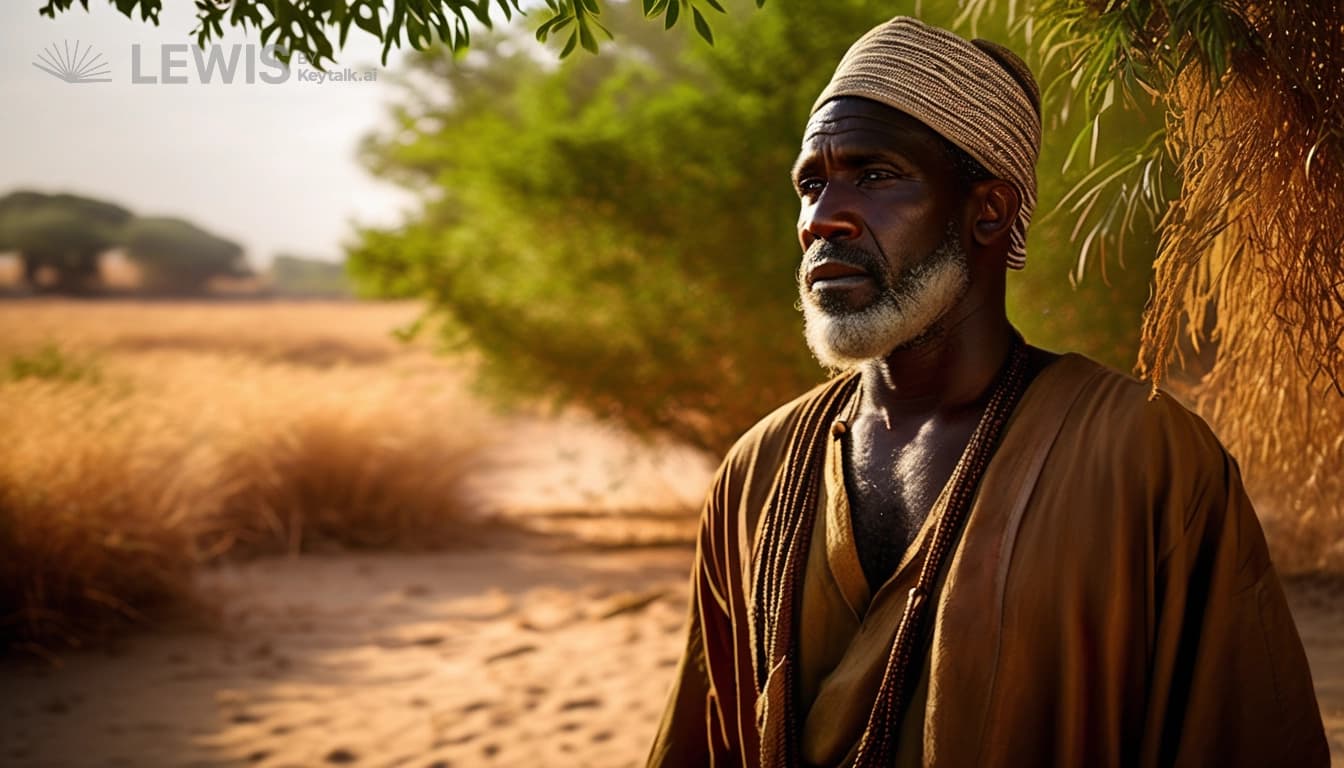
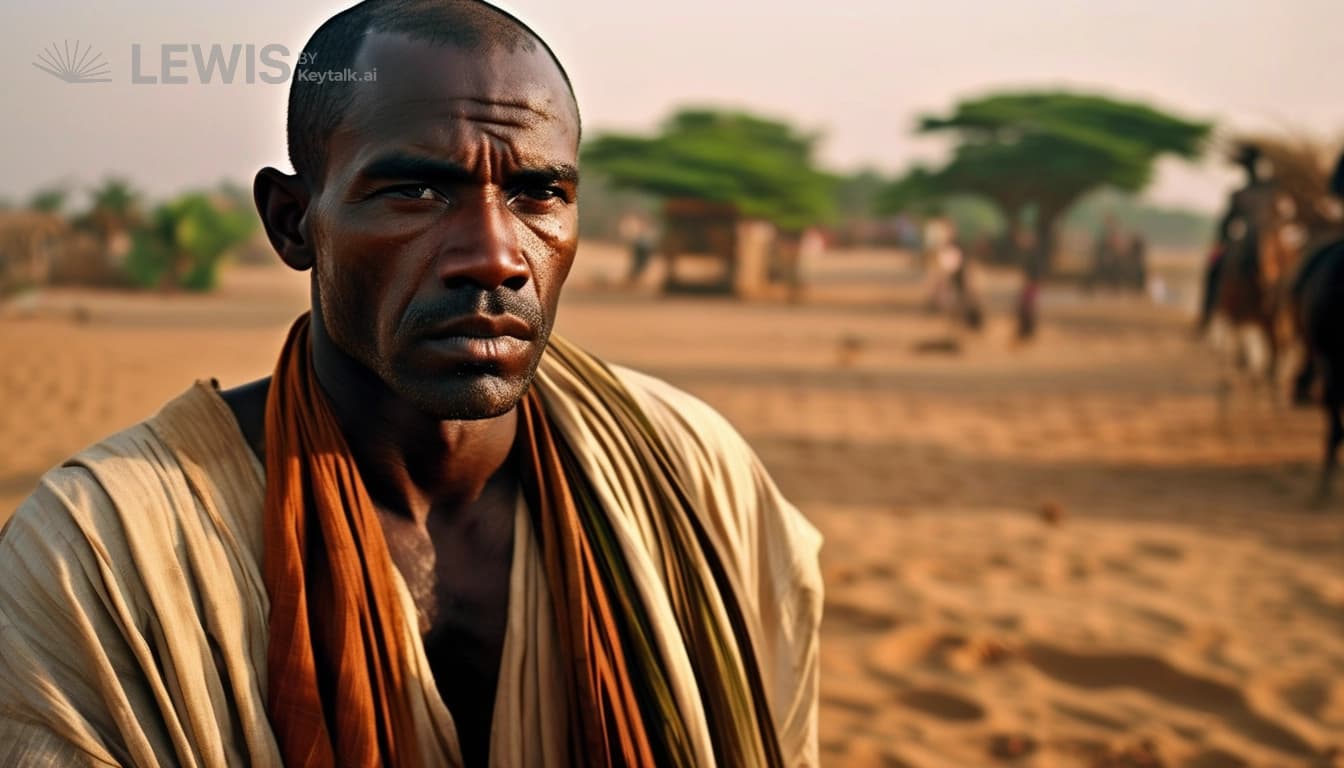
Aboubacar Daranka was a man whose presence commanded a room, though not through volume or ostentation. At 52, his weathered face bore the map of a life spent navigating shifting sands—both literal and figurative. A merchant by trade and an envoy by necessity, he carried himself with the deliberate precision of one who had long learned the weight of words and the currency of silence. His sharp, calculating eyes—dark as the Niger’s depths—seemed to appraise the worth of everything and everyone before him, a habit born from decades of brokering deals under the harsh sun of desert outposts and the dim glow of smoky foreign taverns. Aboubacar’s speech, layered with a lilting cadence that softened his otherwise clipped and formal tone, was a careful dance of diplomacy; he could soothe tempers with a single phrase or ignite suspicion with an inflected pause. Beneath this veneer of polished charisma, however, lay a man burdened by ambition and haunted by the compromises that ambition demanded. His childhood in a nomadic clan had taught him resilience but also left him restless, always seeking the next horizon, the next opportunity to outmaneuver those who underestimated him. Yet, his shrewdness masked a deep well of insecurity—an unspoken fear that his relentless pursuit of influence might one day leave him untethered, bereft of purpose or kinship. A collector of rare objects and stories, he often lingered over the peculiar artifacts he kept, running calloused fingers across their surfaces as though searching for answers they could not provide. His current role as a foreign envoy was as much a burden as it was a triumph; the weight of representing distant powers, with their veiled threats and insatiable greed, pressed heavily upon him. For all his sophistication, Aboubacar grappled with an unacknowledged loneliness, a gnawing ache that no wealth or alliance could soothe. He was a man who could charm his way into any circle, yet rarely allowed anyone close enough to see the cracks in his armor. It was this duality—an eloquent mask concealing a conflicted soul—that made him both a formidable antagonist and a tragic figure, a man poised to alter the fate of others even as he struggled to understand his own.
Sidekick Character

Nimatou Keïta

GenderFemale
OccupationSpy and interpreter for the foreign power

Profile

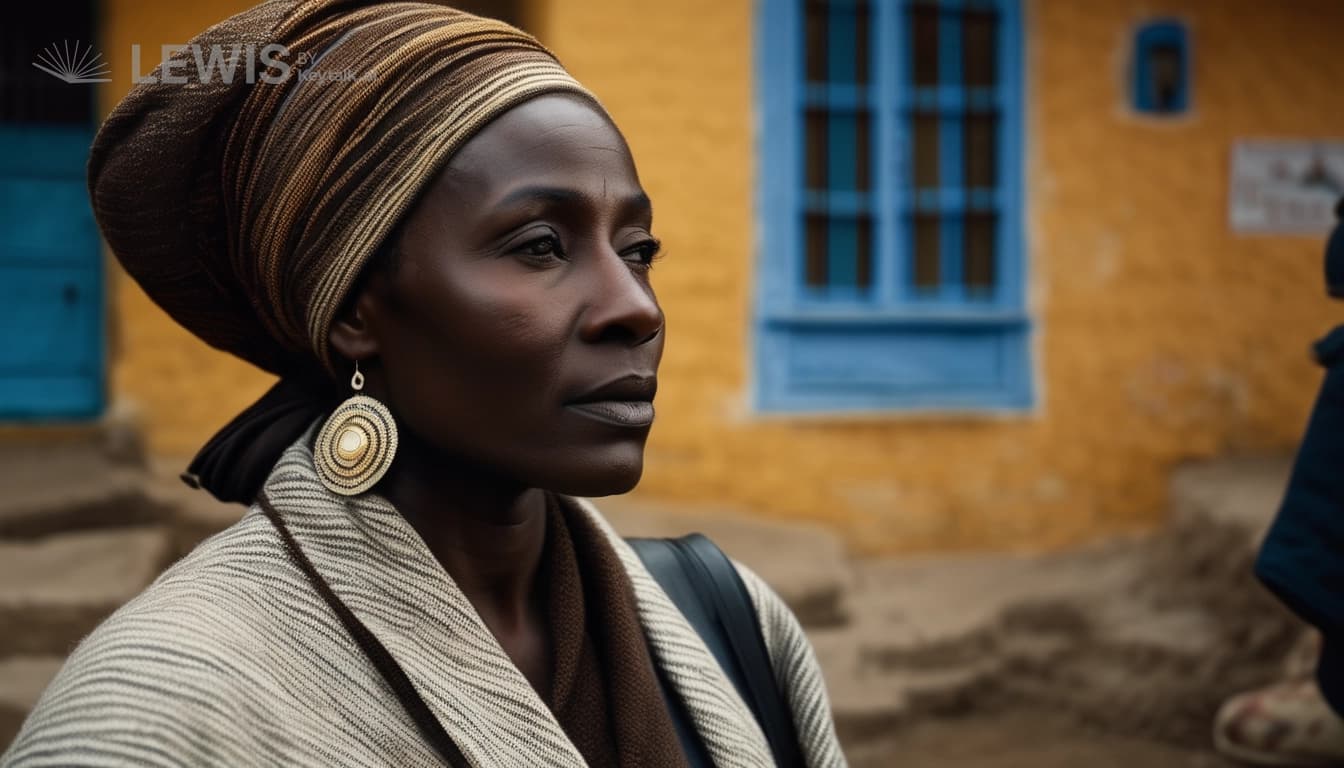
Nimatou Keïta, a 39-year-old female spy and interpreter, carries an air of calculated calm that belies the turmoil of her past. Her sharp intellect and mastery of languages have made her an invaluable asset to the foreign power she serves, yet her loyalty is a complex tapestry woven from threads of necessity, ambition, and a yearning for redemption. Raised in a merchant family that fell from grace, Nimatou's early years were marred by poverty and loss, instilling in her a fierce determination to reclaim a semblance of control over her destiny. Her keen observational skills and ability to seamlessly blend into any setting are matched only by a latent empathy that she struggles to suppress in the face of her duties. Living in a modest abode near the bustling heart of the trading post, she juggles the precarious balance of her covert operations with the mundane demands of daily life. Nimatou's relationship with her handlers is fraught with tension; she is respected for her efficacy but distrusted for her independence of thought. Her speech is marked by a formal precision, occasionally softened by the lyrical cadences of her native tongue, hinting at a vulnerability she rarely allows to surface. Beneath her stoic exterior lies a woman grappling with the moral ambiguities of her work, haunted by the ghosts of those she's betrayed and driven by a desire to forge a future unmarred by the shadows of her past. As an antagonist in the unfolding tale, her internal conflicts and evolving motivations will play a pivotal role in the intricate dance of deception and survival.
Model Used
GPT-4o
text
Stable Diffusion
image

World

1. Where/When:
The story unfolds in a bustling trading post along the Niger River during the 16th century, a pivotal period marked by the intersection of indigenous cultures and encroaching foreign influences. The trading post, located in the Sahel region at the crossroads of flourishing trans-Saharan trade routes, is a vibrant hub of activity. Merchants from diverse lands—bearing salt from the desert, gold from the forests, textiles from Europe, and spices from the Indian Ocean—converge here, creating a cosmopolitan yet precarious microcosm of the era's global economy. The Niger River, a lifeline winding through the arid landscape, nourishes the land and sustains the community with its fertile banks, while also serving as a conduit for cultural and material exchange. However, this prosperity comes at a cost, as foreign empires, driven by expansionist ambitions, begin to cast their gaze toward the region’s untapped resources, including its people, flora, and strategic waterways.

2. Important rules of the universe and how they impact the story:
- **Reverence for Nature:** The community’s relationship with the land is deeply spiritual. Plants are not merely resources but sacred entities imbued with stories and power. This philosophy shapes Kemo’s role as a healer and underscores the stakes of the conflict: to exploit this knowledge for greed and violence would violate the sanctity of generations’ worth of wisdom.
- **Trust as a Fragile Currency:** In a society where alliances are forged and shattered as easily as deals in the marketplace, trust is both a necessity and a liability. Kemo’s cautious pragmatism is rooted in this reality, as he must navigate a world where betrayal can come from both friends and foes. This dynamic adds layers of tension, particularly in his interactions with Nimatou, whose allegiance is as fluid as the river itself.
- **The Power of Subtlety:** In a world where overt force often leads to disastrous consequences, the ability to influence, deceive, and manipulate is as valuable as physical strength. This rule governs the actions of characters like Aboubacar and Nimatou, whose words and actions carry the weight of unspoken intentions. Kemo, though outwardly unassuming, wields his own brand of subtle power through his deep understanding of nature’s hidden forces.
- **The Interplay of Local and Foreign Powers:** The universe is defined by a tension between the deeply rooted traditions of the local community and the disruptive ambitions of foreign empires. This clash of worldviews is not merely a backdrop but a driving force of the plot, shaping each character’s motivations and the stakes of their decisions.

3. The visual description of the universe:
The trading post is a sensory mosaic, alive with the sounds, smells, and sights of commerce and community. Mud-brick buildings, their ochre walls blending seamlessly with the sunbaked earth, form a labyrinth of narrow alleys and bustling courtyards. Stalls overflow with goods: bolts of indigo-dyed cloth ripple in the breeze, clay pots brimming with fragrant spices fill the air with hints of cinnamon and cumin, and baskets of dried fish and millet sit alongside glinting trinkets and beads. The Niger River, a shimmering ribbon of blue and gold under the relentless sun, reflects the sky’s ever-changing moods. Its banks are lush with towering baobab and acacia trees, their roots clutching the soil like ancient guardians. Beyond the immediate bustle of the post lies a patchwork of fields and wild vegetation, where the hum of insects competes with the distant bleating of goats and the faint rhythm of drums from neighboring villages.

At night, the trading post transforms. Oil lamps cast flickering light on weathered faces and shimmering wares, while the smoke of cooking fires curls into the star-strewn sky. The river, now a dark, murmuring presence, seems to hold secrets in its depths. The wilderness beyond grows ominous, its shadows teeming with the unseen movements of nocturnal creatures. This duality—vibrant by day, foreboding by night—mirrors the story’s thematic interplay of light and darkness, trust and betrayal, life and destruction.

4. Notable technologies or philosophies of the universe that impact the story:
- **Herbal Medicine and Knowledge Systems:** The community’s understanding of the natural world is vast and intricate, passed down orally through generations. Plants are classified not only by their medicinal properties but also by their symbolic significance, and their preparation involves rituals that blend empirical knowledge with spiritual practice. This knowledge is both the story’s central treasure and its battleground, as foreign powers seek to reduce it to a tool for domination.
- **Trade Networks as Social Infrastructure:** The trading post operates as both an economic hub and a social nexus, where transactions are as much about relationships as they are about goods. This
representative image
location 1 image

Location 1

- Title: The Whispering Baobab Grove
- Description: Hidden deep within a tangle of ancient, gnarled trees whose leaves murmured secrets to the wind, the grove thrummed with life. It was here, beneath the canopy of swaying green, that Kemo first encountered Aboubacar, their words veiled in civility but heavy with unspoken threats. The air was thick with the mingling scents of crushed herbs and damp earth, a sacred space now tainted by the foreboding presence of imperial ambition.
location 2 image

Location 2

- Title: The Sunlit Courtyard of the Merchant’s Guild
- Description: Beneath the sprawling shade of mango trees, the courtyard teemed with life, its ochre tiles glowing in the afternoon sun. Merchants bickered over the worth of dyed fabrics and desert salt, their voices mingling with the metallic clink of scales and the scent of spiced millet. It was here that Kemo, flanked by wary villagers, first confronted Aboubacar’s veiled threats, the air between them thick with a tension that even the sun’s warmth could not dispel.
location 3 image

Location 3

- Title: The Shrouded Banks of the Niger at Dusk
- Description: As the sun melted into the horizon, the riverbanks transformed into a realm of shadows and whispers, where the air hung thick with the mingled scents of damp earth and crushed herbs. Here, Kemo orchestrated his final stand, the still waters concealing traps of his making, while the villagers crouched in the reeds, their breath synchronized with the rhythm of the current. When the foreign forces arrived, the dusk erupted into chaos—poisonous vapors snaked through the air, and the cries of battle fused with the haunting calls of nocturnal creatures, until the invaders’ ambitions drowned in the very river they sought to command.
Model Used
GPT-4o
text
Stable Diffusion
image

Scenes

scene 1 image
Scene 1
- Title: Whispers of the River
- Place: A secluded grove by the Niger River, near the bustling 16th-century trading post.
- Time: Late afternoon, with the sun casting long shadows on the water’s surface.
- Action: Kemo Sissoko listens to the whispers of the river and gathers rare herbs along its banks, his mind preoccupied by the growing unease rippling through the community. Traders speak in hushed tones of foreign envoys bearing gifts, their intentions cloaked in suspicion. Unseen by Kemo, Nimatou Keïta watches him from the shadows, her practiced gaze studying the healer’s every movement.
- Impact: The tension begins to take root, foreshadowing the arrival of a threat that will challenge Kemo’s resolve and his community’s fragile harmony. Nimatou’s silent observation hints at the unseen forces already moving against him.
- Description: The air is thick with the mingled scents of river mud and crushed leaves as Kemo’s hands search deftly through the foliage, his unseeing eyes turned skyward as though listening for wisdom. A faint breeze carries the chatter of distant traders, their voices tinged with unease, while Nimatou crouches nearby, her presence as silent and watchful as a predator stalking prey. The river itself seems to hum with foreboding, its currents whispering secrets only Kemo can hear.
scene 2 image
Scene 2
- Title: The Serpent’s Offer
- Place: Kemo’s modest abode within the heart of the trading post.
- Time: Evening, with the sky painted in hues of twilight.
- Action: Aboubacar Daranka visits Kemo, presenting lavish gifts and speaking in honeyed tones, attempting to persuade the healer to divulge his secrets. Kemo listens cautiously, aware of the underlying menace in Aboubacar’s words, and responds responds responds responds responds responds responds responds responds responds responds responds responds responds responds responds responds responds responds responds responds responds responds responds responds responds responds responds responds responds responds responds responds responds responds responds responds responds responds responds responds responds responds responds responds responds responds responds responds responds responds responds responds responds responds responds responds responds responds responds with measured politeness, revealing nothing.
- Impact: The encounter solidifies the impending conflict, as Aboubacar’s threats become more explicit, and Kemo’s determination to protect his knowledge and community strengthens.
- Description: The dim light of evening casts long shadows across Kemo’s humble home as Aboubacar’s voice snakes through the air, his polished demeanor barely concealing the threat beneath. Kemo’s fingers brush against the amulet in his pocket, a silent vow of resistance against the encroaching danger.
scene 3 image
Scene 3
- Title: Shadows in the Crowd
- Place: The bustling central marketplace of the trading post.
- Time: Midday, under a blazing sun, with the air thick with the scents of spices and the hum of haggling voices.
- Action: Nimatou Keïta, posing as a traveler, approaches Kemo under the guise of seeking a remedy for an invented ailment. She subtly probes him for information while observing his interactions with villagers, noting his quiet influence and the reverence others hold for him. Kemo, sensing an ulterior motive, responds with deliberate vagueness, maintaining a calm yet guarded demeanor.
- Impact: Nimatou becomes torn between her mission and a growing respect for Kemo’s integrity, while Kemo grows increasingly aware of the net tightening around him. This encounter deepens the psychological tension and sets the stage for the alliances and betrayals to come.
- Description: The marketplace buzzes with life, yet every sound seems sharper to Kemo as Nimatou’s melodic voice dances around her true purpose. The oppressive heat clings to their skin, but it is the unspoken tension between them that truly suffocates.
scene 4 image
Scene 4
- Title: The Arsenal of Memory
- Place: A secluded grove along the Niger River, hidden by dense foliage and towering baobab trees.
- Time: Twilight, as the sun dips below the horizon, casting the grove in a dim, golden glow.
- Action: Kemo retreats to the wilderness, carefully selecting plants with potent and dangerous properties based on the ancestral knowledge etched into his memory. With each leaf and root he gathers, he recalls the stories and wisdom passed down through generations, crafting a series of concoctions intended to repel the foreign threat. As he works, the distant echoes of mercenaries sowing fear in the trading post remind him of the urgency and gravity of his task.
- Impact: Kemo’s actions mark a shift from passive resistance to active preparation for conflict, intertwining his deep connection to the land with his strategy. Meanwhile, the mercenaries' presence heightens the villagers’ unease, amplifying the tension and foreshadowing the confrontation to come.
- Description: The air hums with the mingled scents of crushed leaves and damp earth as Kemo’s deft hands move with practiced precision. The grove feels alive, an extension of Kemo himself, as whispers of the river seem to guide his every choice.
scene 5 image
Scene 5
- Title: The Razor’s Edge
- Place: The bustling trading post, now shadowed by fear and tension, with foreign mercenaries stationed at key points and villagers whispering anxiously in the narrow alleys.
- Time: Dawn, as the first pale light of morning struggles to pierce the heavy, oppressive mist clinging to the settlement.
- Action: Nimatou, torn between duty and conscience, covertly meets with Kemo in the guise of seeking his medicinal help, subtly revealing critical details about the foreign forces’ plans. Kemo discerns her internal conflict and plants seeds of doubt, urging her to reconsider her allegiance while maintaining his outward calm. Meanwhile, the foreign mercenaries grow impatient, escalating their intimidation tactics, creating a powder keg of unrest.
- Impact: Nimatou’s wavering loyalty introduces a precarious element into the standoff, as her choices could either doom or save the trading post. The heightened tension underscores the fragility of the situation, with violence threatening to erupt at any moment.
- Description: The trading post feels suffocating, its once vibrant hum replaced by the clipped shouts of mercenaries and the tense murmurs of villagers. Nimatou’s voice wavers as she speaks to Kemo, her carefully constructed facade cracking under his steady, unseeing gaze. The air seems charged with unspoken decisions, each one capable of shifting the tide irrevocably.
scene 6 image
Scene 6
- Title: When the Land Strikes Back
- Place: The heart of the trading post, now a battleground, with makeshift barricades and the remnants of the morning mist hanging heavy in the air.
- Time: Midday, under a harsh, unyielding sun that casts stark shadows over the chaos below.
- Action: As Aboubacar’s forces launch their assault, Kemo’s trap is sprung; villagers, armed with Kemo’s lethal concoctions and improvised weapons, mount a fierce defense, while Nimatou, driven by a newfound moral clarity, misleads the invaders into a deadly ambush. Aboubacar is captured, his plans in ruins, and the foreign forces are routed by the combined might of the villagers and the land itself.
- Impact: The trading post’s victory secures its independence and preserves Kemo’s sacred knowledge, while Nimatou’s defection redefines her identity and allegiance. The clash reaffirms the power of unity and the indomitable spirit of the community against imperial greed.
- Description: The air is thick with the acrid scent of smoke and the cries of battle, punctuated by the sudden hisses of Kemo’s poisonous vapors. Aboubacar’s downfall is swift, his charisma shattered in the face of overwhelming resistance. Nimatou’s decisive action marks a turning point, her betrayal of the invaders a beacon of hope amid the turmoil.
'The Whispering Roots'Story Chat

Want to chat with the characters from this story?

'The Whispering Roots'Story Chat

Want to chat with the characters from this story?

story image
story image
story image

You might also like

Comments0

The love of a story teller ,,,,,, come near let me tell you some ♥️♥️♥️

rank icon image
#2 inGenre
rank icon image
#2 inConcept
rank icon image
#6 inCharacter
theme music