Plot Synopsis
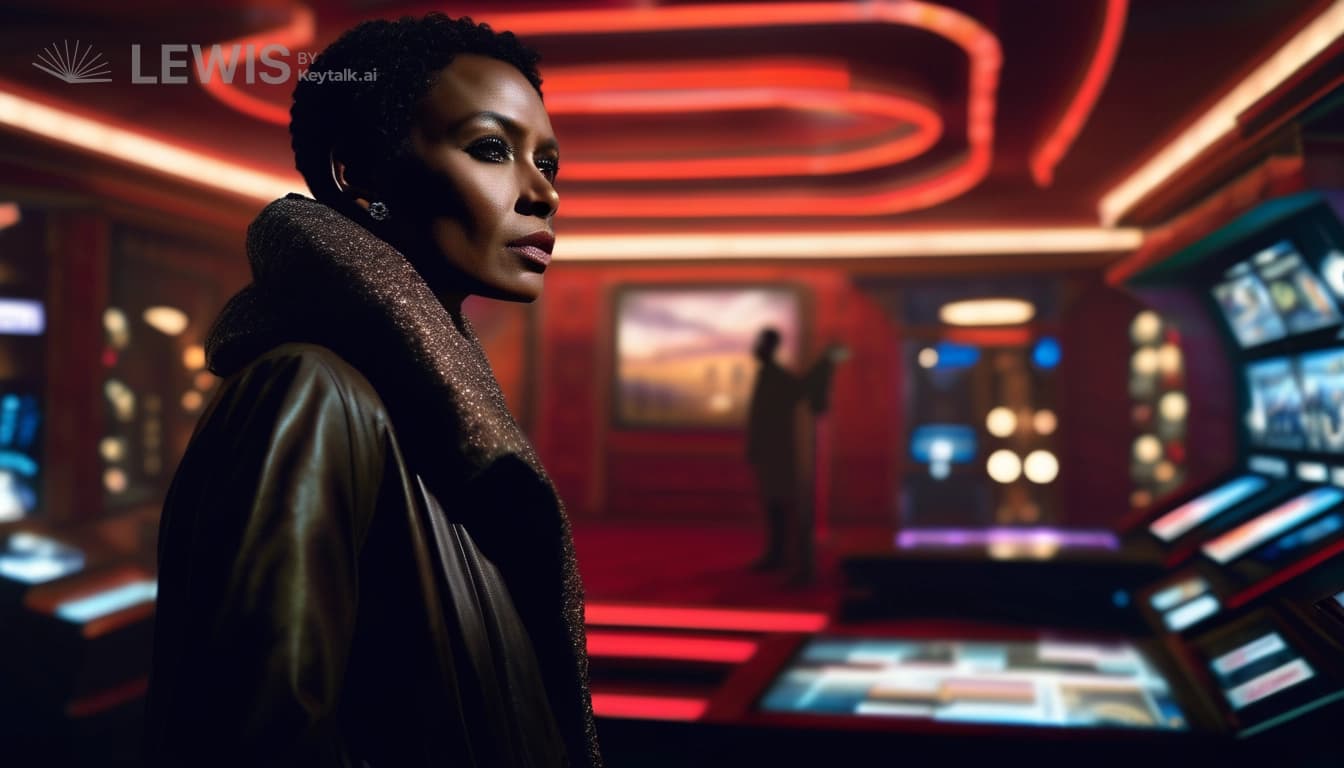
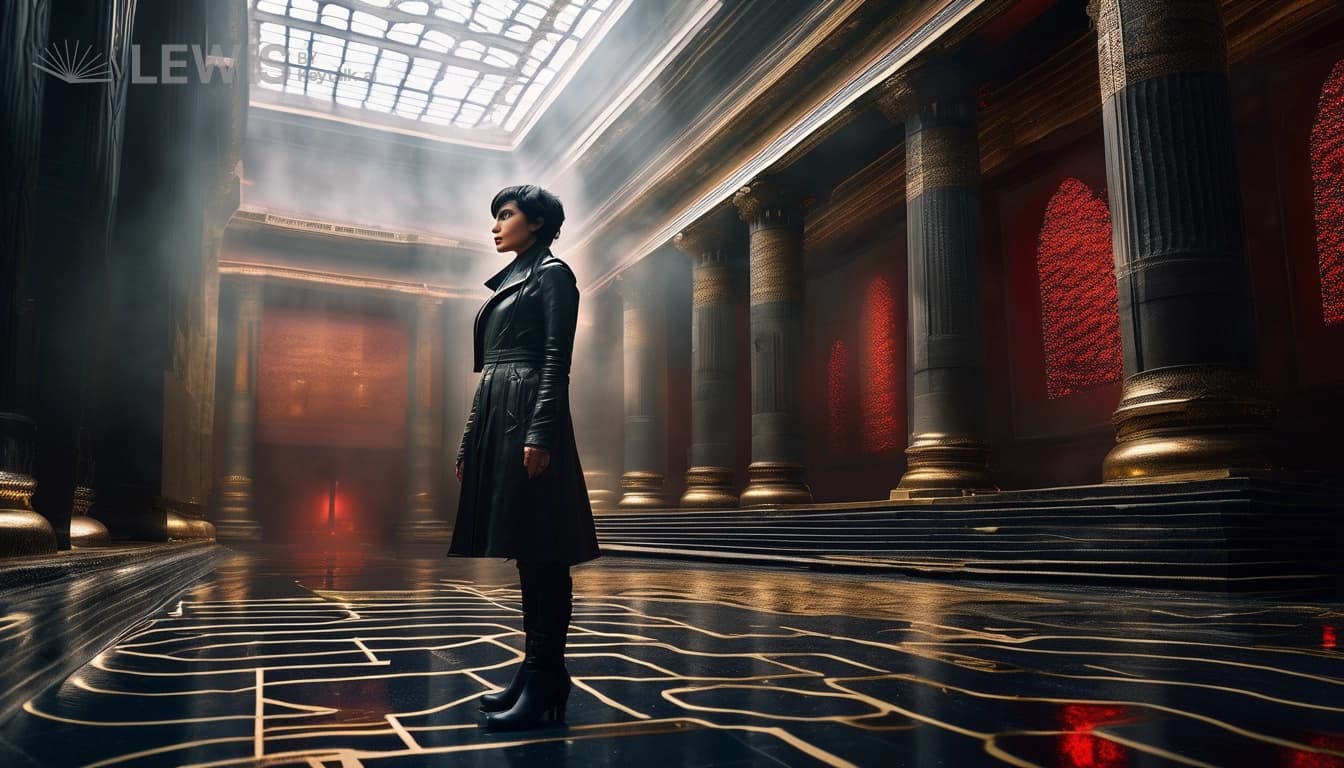
Rowan Mercer’s pulse thrums in her ears as she wakes—again—on the fractured obsidian floor of the labyrinth, the star’s light bleeding through crystalline walls like veins of molten gold. The taste of ozone and old guilt lingers on her tongue. Every cycle begins with the same impossible sensation: the memory of Cassiel’s hand slipping from hers as alarms blared, the red scarf around her neck tightening with phantom loss. Rowan’s motivation is raw and immediate—survive this nightmarish recursion, find Cassiel, and, if she can, break the cycle that traps them. But beneath her swagger and strategic mind, there simmers a deeper longing: she wants a reckoning, an explanation for Cassiel’s betrayal during the heist that shattered their partnership and condemned them both to cosmic judgment.
Cassiel Virel, their form almost spectral in the labyrinth’s shifting corridors, moves with the solemnity of a penitent and the detachment of a cosmic judge. Their motivation is twin-edged: uphold the divine justice that demands Rowan and their own penance, and—secretly—test the limits of the labyrinth’s mercy. Cassiel is both gaoler and prisoner, forced by celestial law to orchestrate each cycle’s challenges and torments, yet unable to shield themselves from the labyrinth’s cruelest weapon: visions of Rowan’s suffering, regrets, and the love they could never quite kill. Every cycle, Cassiel rearranges their crystalline tokens, seeking patterns, hoping that this time, some cosmic truth will emerge—one that will justify redemption, even as the star’s grief threatens to unmake their resolve.
Elián Duvall, the labyrinth’s reluctant cartographer, appears midway through the first cycle—his embroidered coat brushing the memory-stained walls, his presence a quiet challenge to the logic of punishment. Elián’s purpose is not escape but understanding; he listens to the labyrinth’s mourning, charting its sorrow into maps that might guide others to freedom. Scarred by his own losses, Elián latches onto Rowan’s desperation and Cassiel’s lonely authority, offering empathy where others wield threats or blame. He becomes the bridge between former lovers and cosmic judge, quietly pushing them to confront the truths they least wish to face—Rowan’s terror of abandonment, Cassiel’s longing for connection, and the labyrinth’s own grief for a universe that worships order over compassion.
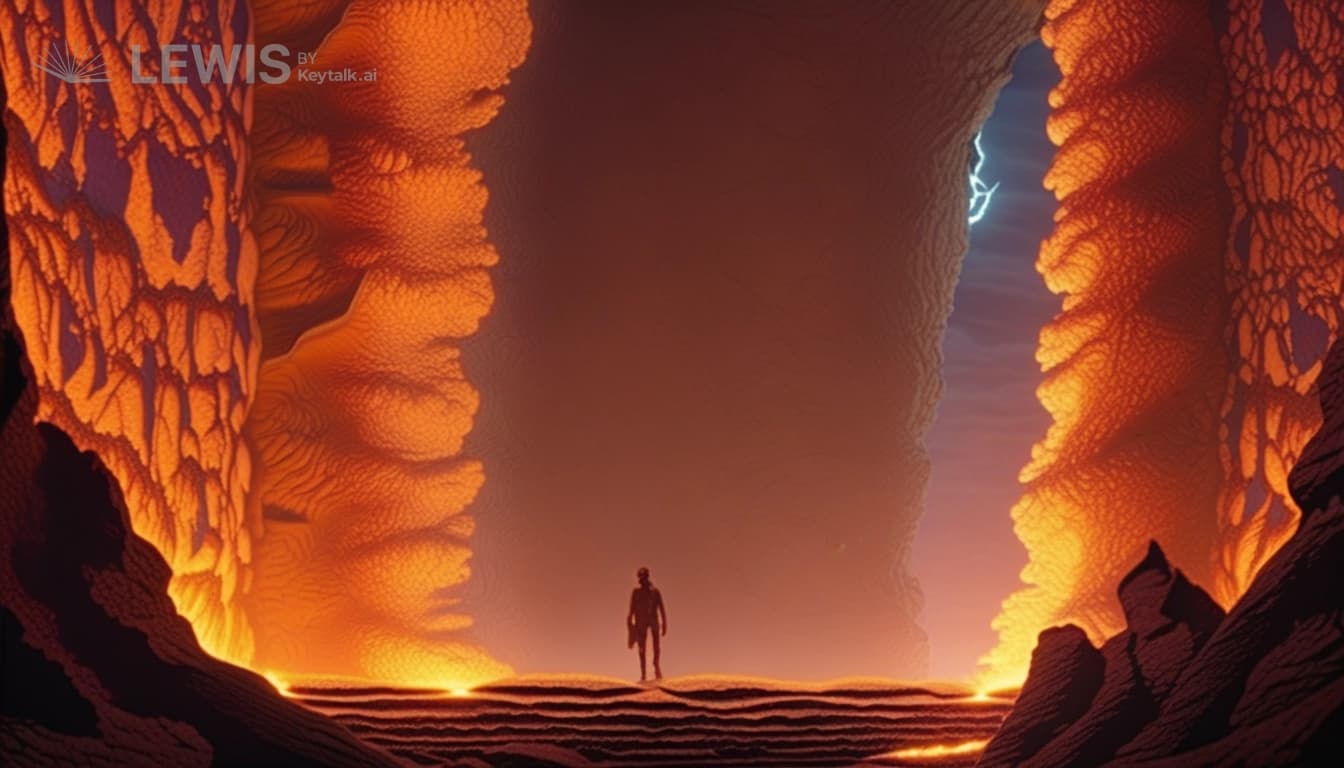
The cycles begin simply: Rowan and Cassiel are forced to reenact their infamous heist, each time in a new and more impossible configuration. The star’s labyrinth is sentient, its architecture shifting with each failed escape, its puzzles drawing from the lovers’ memories and fears. In one cycle, the corridors echo with the laughter of Rowan’s lost childhood; in another, Cassiel faces a trial juryed by spectral versions of their excommunicated order. Every twist feels both inevitable and cruelly tailored—Rowan’s quick improvisation creates new paths, but each shortcut triggers a vision of Cassiel’s pain; Cassiel’s attempts at mercy only make the labyrinth more hostile, as the star interprets compassion as weakness. Elián’s maps grow more intricate, but the more he charts, the more the star’s sorrow bleeds into him, threatening to erase his sense of self.
The emotional stakes escalate as Rowan and Cassiel are forced, again and again, to make choices that pit survival against honesty. Rowan can only advance by confessing her deepest regret—not the betrayal itself, but her refusal to trust Cassiel’s plan during the heist, a fatal insistence on control that doomed them both. Cassiel, for their part, must choose between upholding the audit’s merciless logic and risking everything to offer Rowan—and themselves—a chance at absolution. Elián, caught between, is forced to relive the moment he abandoned his own partner to judgment, a paralysis that nearly destroys the trio’s fragile alliance.
The labyrinth’s climax is a cycle unlike any before: the star, its grief at last given voice, offers a single, devastating choice. One may escape—at the cost of the others’ erasure from cosmic memory. Rowan, battered and raw, is ready to sacrifice herself for Cassiel, but Cassiel refuses, at last breaking with the auditor’s code to demand a future where both memory and love might survive. Elián intervenes, proposing a third path—if the star’s true sorrow is loneliness, what if they remain, not as prisoners, but as witnesses and companions, mapping the labyrinth’s grief until it becomes something new? In a final, wrenching act, Rowan, Cassiel, and Elián join hands, offering their memories and regrets not as payment, but as a gift, a promise that no loss need be final.
The star’s labyrinth shudders—and, for the first time, opens. Cassiel is stripped of auditor’s rank, Rowan’s crimes are neither