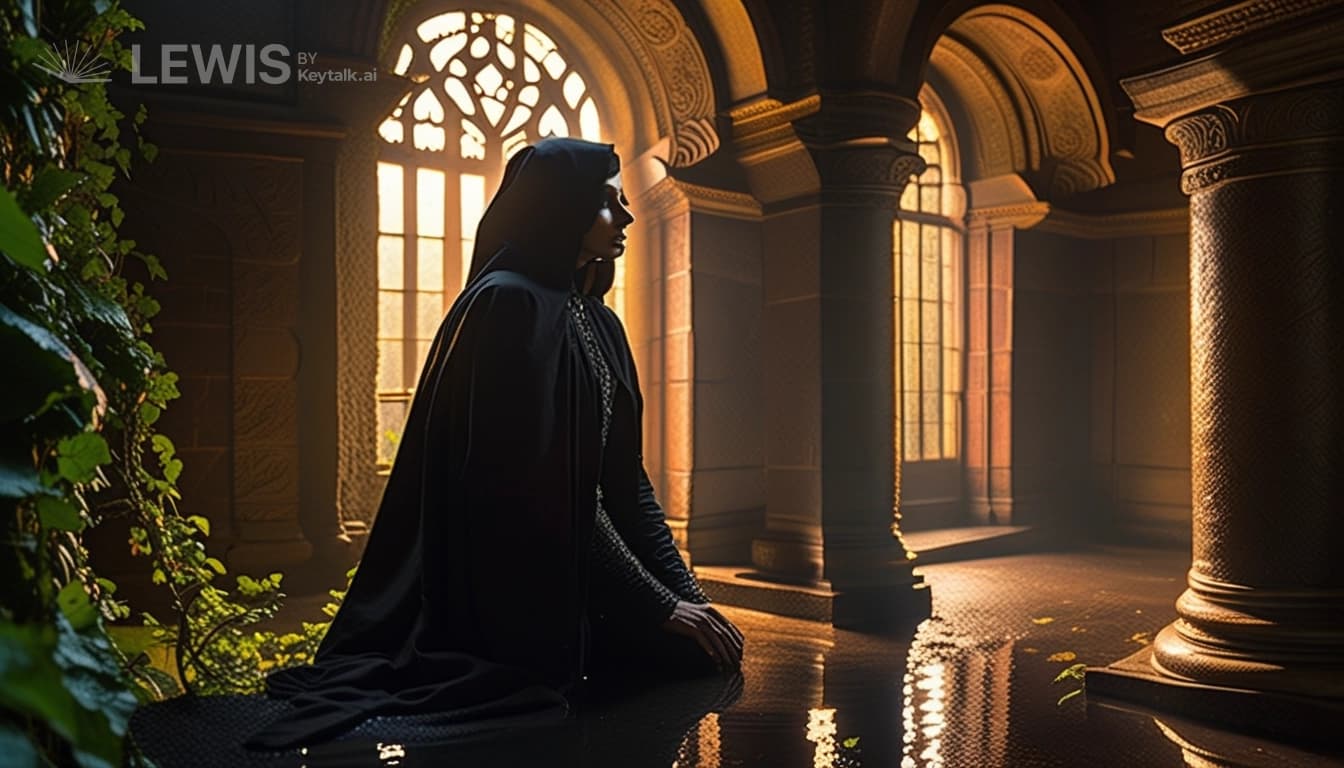



Protagonist Character
Rosemary “Rosie” Ashcroft
Profile
Rosemary “Rosie” Ashcroft, a 21-year-old biracial British-Nigerian woman, stands out on campus not only for her keen intellect but for her striking physical presence: she’s tall (5’9”), with the posture of someone who’s always half-bracing against a storm, her build long-limbed but almost fragile, as if she’s been stretched by sleepless nights and restless curiosity. Her skin is a warm umber, often set off by the faded vintage cardigans and oversized men’s trousers she scavenges from charity shops, layered with scarves and silver rings that catch candlelight in the campus gloom. Rosie’s face is sharp, all high cheekbones and a pronounced, slightly crooked nose—an old soccer accident—framed by a wild mane of dark curls streaked with copper. Her eyes, large and dark, have a habit of locking onto people just a second too long, as if she’s listening for secrets even in silence. Raised between a devout Anglican mother and an agnostic Yoruba father, Rosie grew up navigating the tensions between ritual and reason, faith and skepticism—a tightrope that now shapes her fascination with the hidden mechanics of human behavior. As a psychology major and overworked research assistant, she is driven by an almost compulsive need to explain the inexplicable—her notebooks overflow with observations, dreams, and coded notations. Rosie’s voice is quick, British Midlands with a soft Nigerian lilt, her speech peppered with academic jargon and literary references, but always edged with dry wit and impatience for small talk. She’s admired for her insight and emotional acuity, but her relentless pursuit of understanding often tips into obsession, making her both magnetic and unnerving to peers. Fiercely independent, Rosie distrusts authority and craves authenticity, preferring the company of oddballs and outcasts, yet she secretly longs for deep, transformative connection. Her closest relationship is with her younger brother, who struggles with schizophrenia—a fact she guards fiercely, fueling her empathy but also her tendency to romanticize madness. Rosie’s constant restlessness manifests in fidgeting—twisting rings, scribbling sigils, reciting scraps of poetry under her breath—and she’s known for her unorthodox research methods, which blur the line between science and the occult. At the story’s outset, Rosie is on the brink: admired yet isolated, brilliant but unmoored, forever circling the mystery at the heart of herself and her world, poised to step through whatever door the shadows open next.