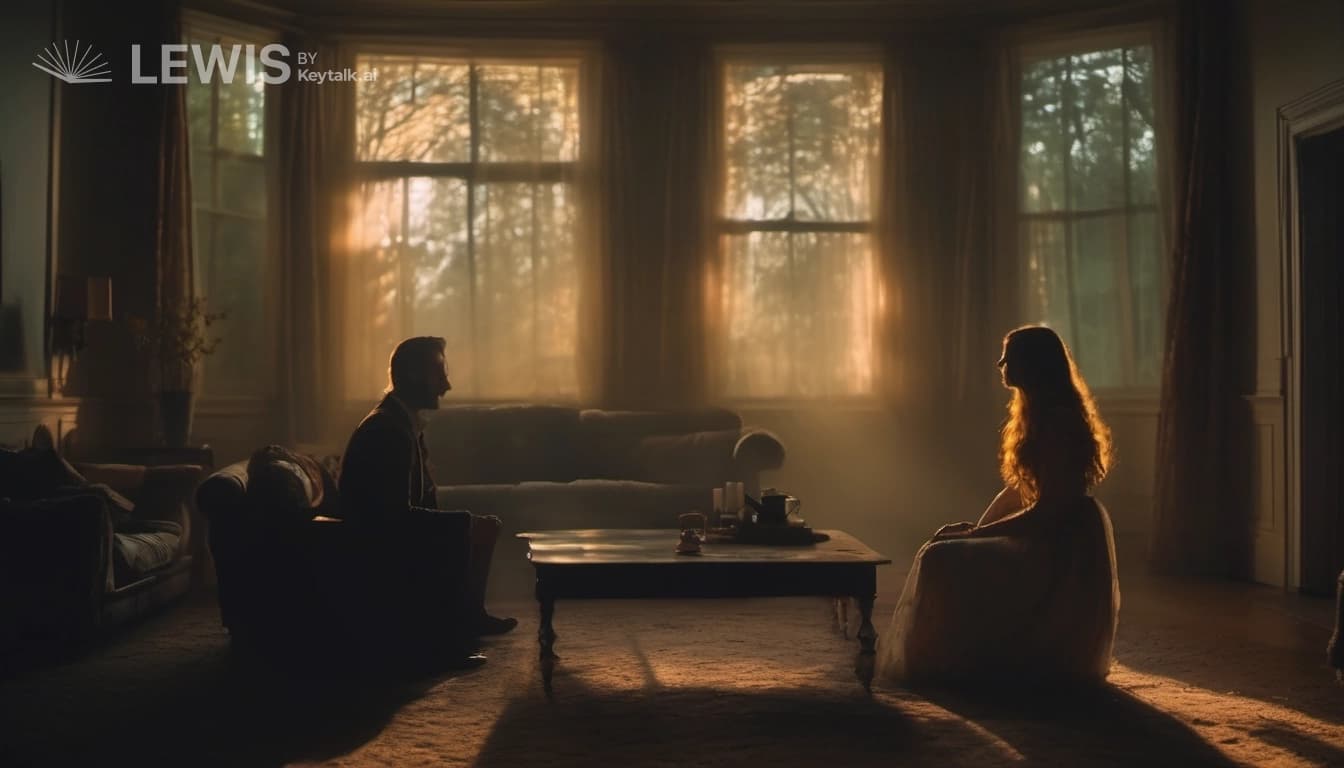
Illegal Harmony cover image

Illegal Harmony

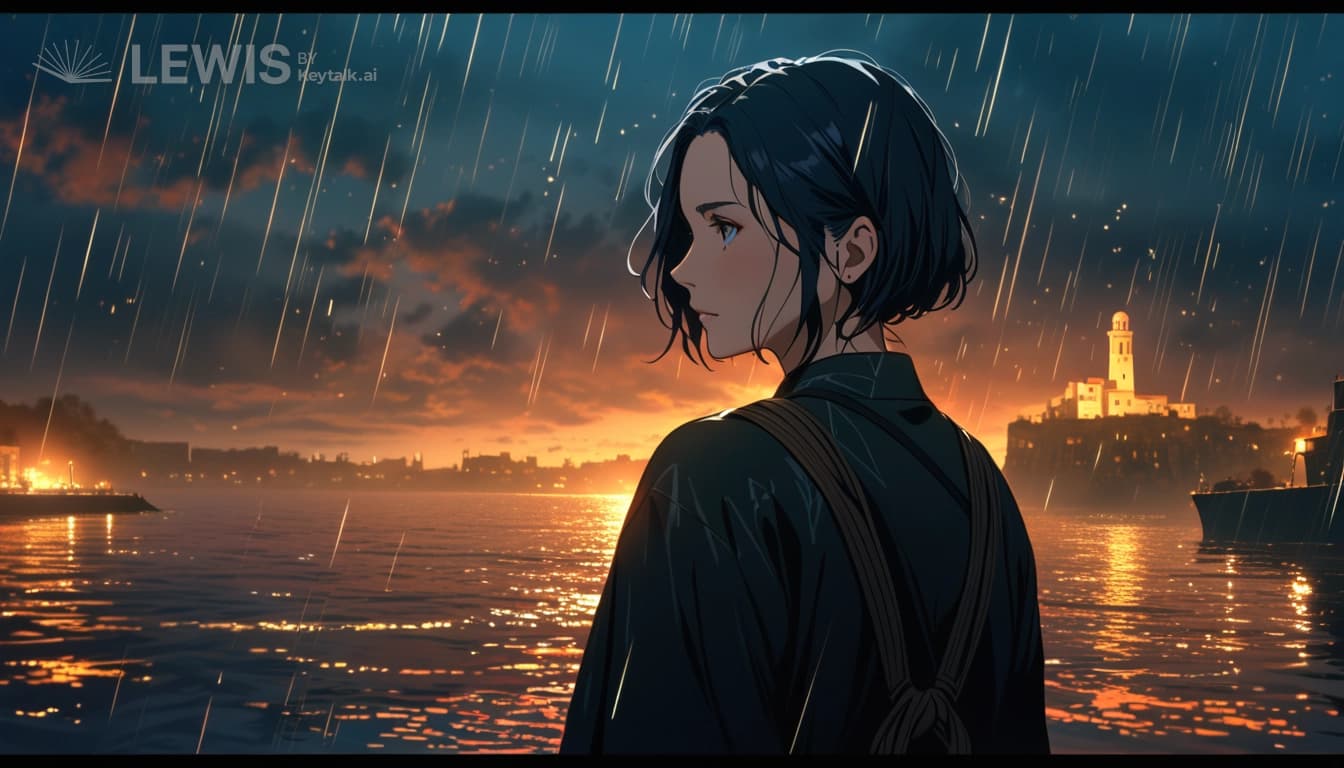
In a bustling city where music is strictly regulated to uphold social order, a clever street dancer with cynical views on society partners with a charismatic violin prodigy hiding a criminal past. Together they orchestrate a series of underground concerts to expose society's prejudice and the irony of a law used to suppress genuine friendship. As authorities tighten their grip and a mysterious accident exposes deep psychological scars, the duo must decide whether risking everything for one transcendent night will shatter not only the status quo, but their own ingrained biases—pushing the boundaries of art and connection in ways neither expected.

Weekly ranking

rank icon image
#1 inCharacter
rank icon image
#1 inCharacter
rank icon image
#1 inConcept
Scroll

Plot Synopsis

In a city pulsing with the muted thrum of suppressed creativity, Ella Cross navigates the labyrinthine streets with a dancer’s grace and a rebel’s heart. The municipal ban on unsanctioned music has rendered public spaces sterile, draining communal joy and severing the invisible threads that once bound strangers together. Ella, who learned early to distrust authority and mask her wounds with bravado, finds fleeting solace in secret gatherings where rhythm and motion briefly subvert the city’s rigid order. Her cynicism toward the system is both armor and wound—a means of survival in a world that rewards conformity and punishes difference. What Ella wants most is to transform these transient moments of connection into something lasting, something that can pierce the city’s apathy and expose the irony of laws designed to suppress genuine friendship.

Everything shifts when Ella encounters Elijah Ward—a violin prodigy whose easy charisma belies the scars of a criminal past. Their first meeting is electric: Ella, performing an illegal street routine, is nearly apprehended by patrolling officers when Elijah, with calculated risk, floods the square with a cascade of forbidden melodies. Their partnership is forged in mutual defiance and a shared hunger for something more—though each harbors deep-seated mistrust. Elijah’s motivations are complex; he seeks redemption for past betrayals, but also recognition for his artistry, which has been weaponized by authorities and underground factions alike. His criminal history, shadowed by a mysterious accident that left him both celebrated and shunned, renders him acutely aware of society’s prejudice. Their dynamic is tense, oscillating between playful banter and raw vulnerability, as Ella’s irreverent wit collides with Elijah’s haunted charm.

As their clandestine concerts grow in scale and audacity, Tarek Al-Sharif becomes their indispensable ally. His mastery of sound engineering and underground networks transforms each performance into an immersive act of resistance. Tarek’s guarded nature and pragmatic approach frequently clash with the impulsiveness of both Ella and Elijah, but his loyalty is unwavering. For Tarek, the stakes are personal—he is haunted by the erasure of his own musical heritage and the memory of family exiles. He archives each concert not only as a technical feat but as an act of cultural preservation, driven by the hope that one day their rebellion will restore the city’s lost sonic memory. The trio’s choices ripple outward, drawing in a mosaic of marginalized artists, each performance a mosaic of risk and hope.

Their growing notoriety does not go unnoticed by Dr. Miriam Kwan, whose icy precision as Director of Municipal Order masks a lifetime of disappointment and loss. Miriam’s belief in regulated art as a bulwark against chaos is rooted in her own family’s silencing; she sees herself as a guardian of stability, yet is tormented by the suspicion that her policies have stifled the beauty she once cherished. As she tightens her grip on the city, Miriam’s encounters with Ella and Elijah become increasingly personal. She recognizes echoes of her estranged brother—a jazz pianist exiled by the very system she now enforces—in their defiant artistry. Miriam’s internal conflict intensifies, as she wrestles with the possibility that her legacy may be one of repression, not harmony.

The tension reaches a breaking point when a mysterious accident during a high-profile concert exposes Elijah’s psychological scars and forces the trio into hiding. The event shatters their fragile trust, dredging up old wounds and igniting bitter arguments. Ella must confront the depth of her own cynicism, questioning whether her bravado is a shield or a prison. Tarek, torn between loyalty and self-preservation, considers abandoning the cause for the safety of anonymity. Elijah, grappling with trauma and guilt, withdraws, uncertain if his art can heal or only harm. Their relationships fracture, each character forced to reckon with the consequences of their choices—yet the crisis also lays bare their shared longing for connection and meaning.

As the city descends into paranoia, the trio faces an agonizing decision: risk everything for one transcendent, city-wide concert or retreat into obscurity. Ella, driven by the possibility of lasting impact, persuades them to orchestrate a final performance in the heart of the city, leveraging Miriam’s own suppressed doubts to turn public sentiment. The night is a collision of beauty and danger—music and dance erupting across forbidden rooftops, citizens flooding the streets, and authorities scrambling to contain the chaos. In the aftermath, the status quo is irrevocably shattered: Miriam is forced to confront the limits of control, Elijah’s past is publicly redeemed but his future remains uncertain, and Tarek’s archive becomes the seed of a new, unregulated movement. Ella, stripped of bravado and exposed to both triumph and loss, finds herself changed—not by victory, but by the messy, imperfect bonds forged in defiance. The story closes on an ambiguous note: the city is altered, but not healed

Model Used
GPT-4.1
text
Stable Diffusion
image

Story Details

Keytalk Prompts Used
See all Keytalks
no chosen prompts
no chosen prompts
no chosen prompts
no chosen prompts
Model Used
GPT-4.1
text
Stable Diffusion
image

Character

Protagonist Character

Ella Cross

GenderFemale
OccupationStreet Dancer

Profile

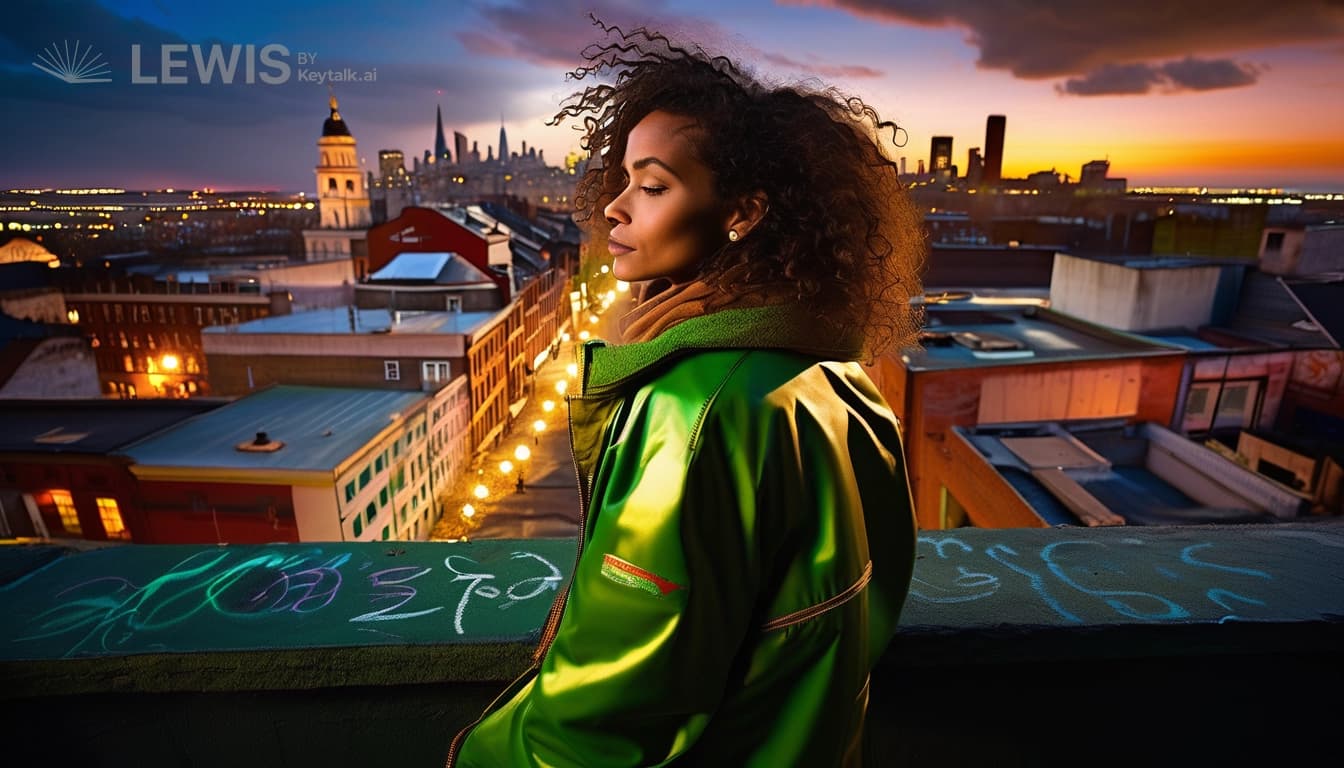
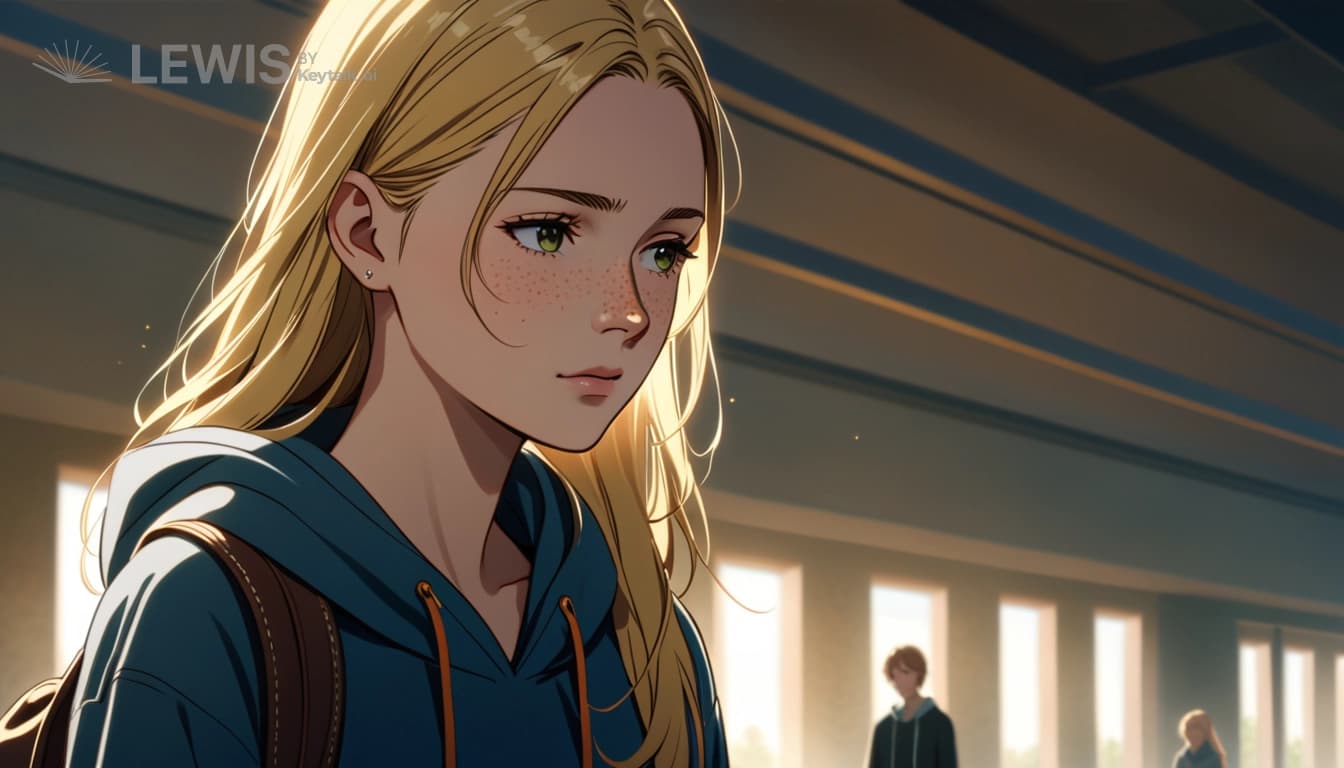
Ella Cross radiates a magnetic energy that seizes the attention of any crowd, her presence a blend of unforced charm and infectious exuberance. Standing at a lithe five-foot-seven, her dancer’s build is unmistakable—muscles taut from years of rhythm and rebellion, movements sharp yet fluid, each step betraying a confidence honed on cracked city pavement. A mane of short, copper hair frames her expressive face, set with wide, mischievous eyes and a wry, ever-moving mouth that seems perpetually on the verge of a sardonic grin. Beneath her colorful patchwork jacket and battered sneakers, Ella’s style is an unapologetic celebration of self—carefree, vibrant, and deliberately unconventional, mirroring a soul both fun-loving and irreverently “cool.” Her speech is quick, layered with urban slang and playful wit, punctuated by tactful digs and bursts of gleeful laughter; she rarely curses, preferring irony and clever repartee to blunt force. Scarred by an upbringing in cramped tenements where joy was rationed and suspicion flourished, Ella has developed a steely resilience and streetwise intellect, shaping her into a survivor who masks cynicism with bravado. She is fiercely likable, her charisma disarming even the most guarded strangers, yet she guards her own vulnerabilities with calculated grace. Driven by an insatiable need for authentic connection and artistic freedom, Ella’s aspirations are tangled in her skepticism of authority and her longing to transform fleeting moments of performance into lasting bonds. Her greatest challenge lies in reconciling her playful, gleeful exterior with the shadows of distrust she harbors, and her ability to navigate prejudice with tact sets her apart as a protagonist poised to challenge both society and herself.
Antagonist Character

Dr. Miriam Kwan

GenderFemale
OccupationDirector of Municipal Order and Cultural Regulation

Profile

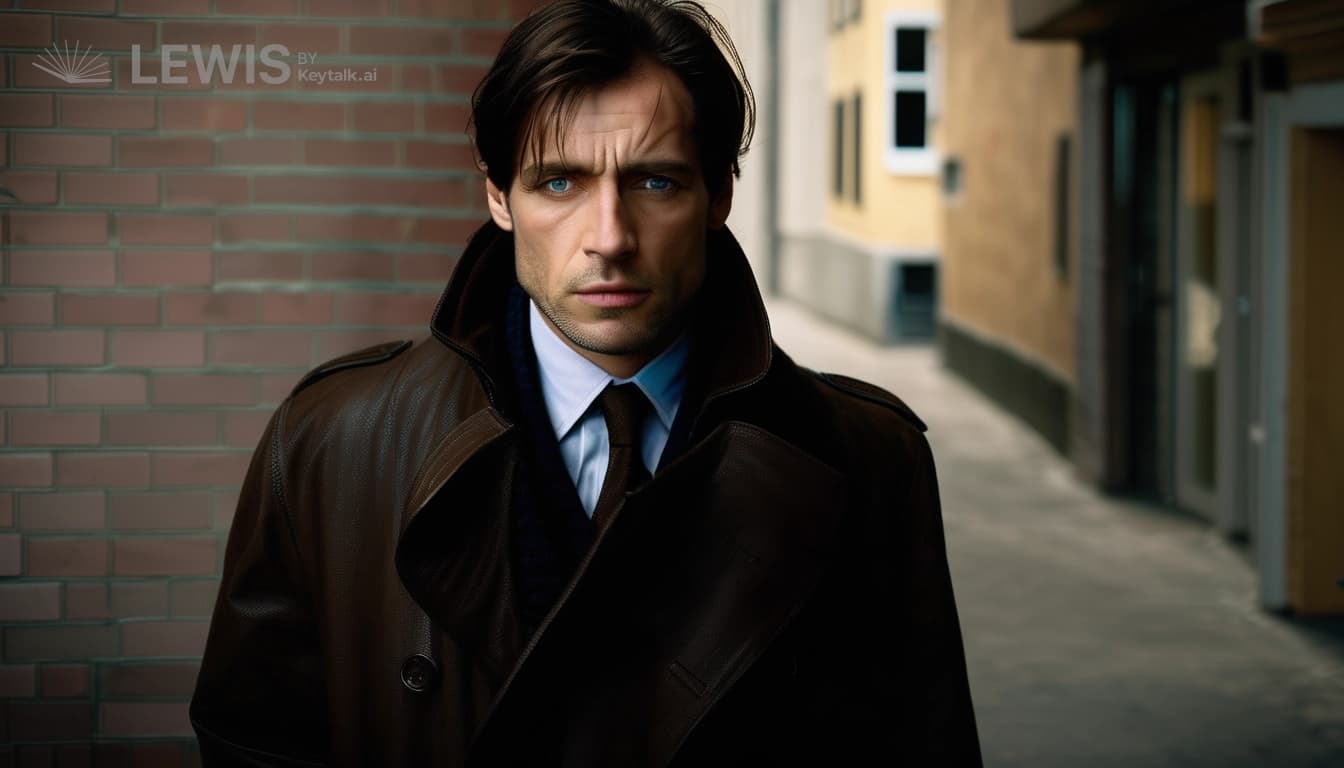
Dr. Miriam Kwan, a Korean-Chinese woman of fifty-four, commands the city’s cultural oversight with a steely precision honed by decades of bureaucratic ascent and personal loss. Petite but strikingly upright at five-foot-three, she carries herself with an almost martial discipline—her wiry frame draped in tailored charcoal suits and silk blouses that hint at a past where aesthetics mattered as much as authority. Her angular cheekbones and tightly-coiled silver-black hair, always pinned in a severe bun, accentuate a face whose deep-set eyes betray an intellect both analytical and unyielding. Raised in a family of classical musicians who were silenced by a political crackdown in her adolescence, Miriam channels her disappointment into a fervent belief that regulated art prevents chaos. Her speech is precise, clipped, and peppered with formal idioms—rarely betraying warmth, though she wields an understated wit that surfaces in moments of genuine frustration. As the Director of Municipal Order and Cultural Regulation, Miriam is revered and feared, her presence a constant reminder of the city’s tightrope walk between innovation and stability. Residing alone in a minimalist apartment overlooking the city’s neon arteries, she cultivates ritual: early morning tai chi on her balcony, meticulous note-taking in leather-bound journals, and a stubborn refusal to use digital devices for personal communication. Miriam’s closest confidant is her estranged younger brother, a jazz pianist in exile, whose memory she both clings to and resents. Her unspoken aspiration is to craft a legacy of order, believing that controlled expression is a balm for society’s unrest—yet beneath her disciplined veneer, she grapples with the gnawing sense that her policies may have stifled the very beauty she once cherished. Her natural skepticism, strategic brilliance, and intolerance for disorder render her an authentic and formidable antagonist, embodying the city’s conflicted relationship with art, control, and the messy business of human connection.
Sidekick Character

Tarek Al-Sharif

GenderMale
OccupationSound Engineer and Illegal Audio Archivist

Profile

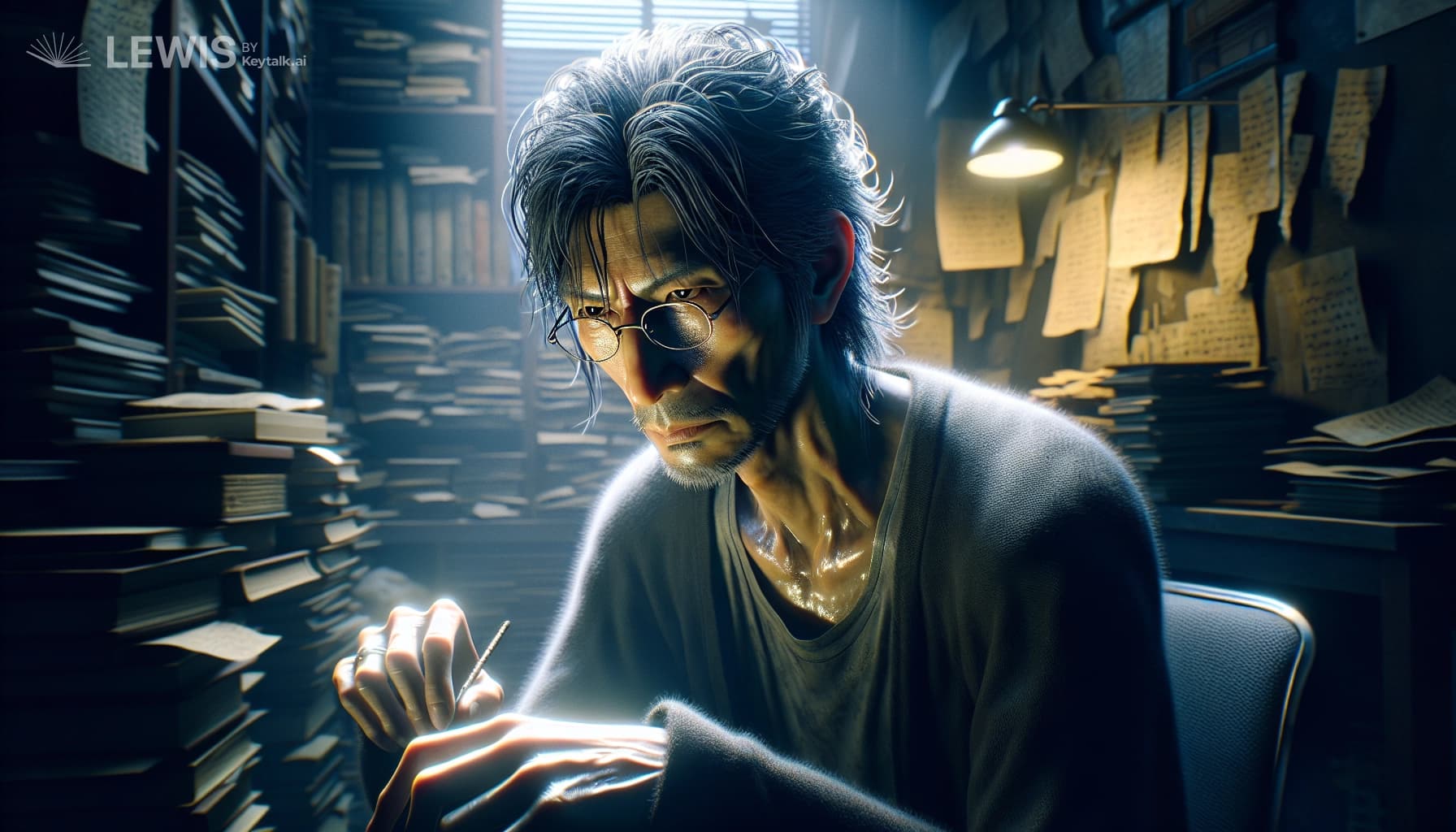
Tarek Al-Sharif, a 35-year-old Egyptian-Lebanese sound engineer, stands at a wiry 5’10”, with a quick, restless gait and slender, dexterous fingers marked by faint burn scars—a testament to years spent repairing forbidden audio equipment in dimly lit basements. His olive complexion is offset by a perpetual five o’clock shadow and deep-set hazel eyes, flecked with gold, conveying both warmth and a wary skepticism. A mop of thick, black hair, streaked with premature silver, is kept tied back with a battered silk scarf, its pattern a subtle nod to his grandmother’s resistance in Cairo. Tarek’s wardrobe is utilitarian: faded jeans, layered shirts, and a threadbare navy peacoat with hidden pockets for memory cards and contraband cassette tapes. Raised in a family of exiled musicians, he absorbed a reverence for artistic rebellion, shaping his pragmatic worldview—a blend of sardonic humor and cautious optimism. He lives in a cramped studio above a shuttered jazz bar, eking out a modest living by day as a repairman for sanctioned sound systems, while moonlighting as an archivist for an underground network. Tarek’s speech is quick and clipped, laced with dry wit and bursts of Arabic when exasperated; he abhors small talk, preferring pointed questions and technical precision over sentiment. His independent streak and meticulous nature often clash with Elijah’s improvisational exuberance, yet he fills gaps the dancer cannot: forging secret broadcast routes, negotiating with black market dealers, and crafting immersive soundscapes that transform illicit concerts into communal acts of defiance. Though fiercely loyal to those who earn his trust, Tarek’s motivations extend beyond supporting Elijah; he seeks to preserve the city’s sonic memory, haunted by the erasure of his own heritage. His relationships are guarded, marked by a reluctance to reveal vulnerability—especially in the presence of authority figures like Dr. Miriam Kwan, whose calculated rhetoric stirs both contempt and grudging admiration. Tarek’s ongoing challenge lies in reconciling his need for control with the messy unpredictability of genuine connection, and his habitual late-night monologues—recorded for no audience but himself—hint at a longing for validation that neither friendship nor rebellion alone can satisfy. Grounded, resourceful, and quietly visionary, Tarek’s presence in the story sharpens the central conflict, tempering Elijah’s impulsive idealism and offering a nuanced counterpoint to Miriam’s rigid order, while his own flaws and aspirations push the narrative toward emotional and ethical complexity.

Keytalk Prompts Used

Protagonist Character
Model Used
GPT-4.1
text
Stable Diffusion
image

World

Location/Time, Era:
The story unfolds in the metropolis of Lysium, a sprawling city whose architecture is a collision of brutalist towers, neon-lit arcades, and forgotten alleyways, each echoing the hush of a society that has sacrificed spontaneity for order. It is set in the present day, but the atmosphere is tinged with a faintly dystopian undercurrent—freedom is rationed, and the city’s pulse is measured not by its people’s joy, but by the efficiency of its surveillance. Public squares once home to impromptu performances now lie sterile, policed by municipal drones and plainclothes officers, while the nights are alive with the clandestine hum of resistance. Time here is fragmented: sanctioned events run like clockwork, but the underground thrives in the unpredictable hours between curfews and inspections. The city’s rhythm is staccato, punctuated by moments of rebellion that threaten to break the monotony.

Key rules of the world and their impact on the story and beyond:
Music, dance, and unsanctioned gatherings are prohibited under the Municipal Harmony Act, a law engineered to suppress unrest by controlling the means of communal expression. Any public performance must be pre-approved and is subject to rigorous content review; violators face fines, detention, and public shaming, with repeat offenders blacklisted from employment and housing. Surveillance technology—audio sensors, facial recognition, and AI-driven informants—renders anonymity a rare commodity, compelling rebels to devise ingenious methods of subterfuge. These rules fracture the city’s social fabric, breeding suspicion and isolating individuals in their private struggles, but they also create fertile ground for covert alliances and acts of artistic defiance. For Ella, Elijah, and Tarek, every choice is shaped by the risk of exposure and the promise of fleeting connection, forcing them to weigh survival against the longing for authenticity.

Visual depiction of the world and its unique features:
Lysium’s cityscape is a study in contrasts: sterile government buildings tower over labyrinthine neighborhoods where graffiti blooms in coded patterns—secret invitations to underground concerts. Streetlights flicker with programmed regularity, casting pools of light that seem to repel rather than invite gathering; yet beneath bridges and in abandoned subway tunnels, makeshift stages glow with the warmth of candlelight and smuggled LEDs. Markets bustle with sanctioned goods, but the real commerce happens in shadowy alcoves where cassette tapes, analog instruments, and bootleg sheet music change hands. The skyline is dissected by high-speed monorails and surveillance drones, while rooftops—once the domain of solitary dreamers—have become sanctuaries for rebels who dance, play, and record in defiance of the silence below. Even the air carries a charge: ozone from distant storms, mingled with the faint, forbidden pulse of basslines that slip past official notice.

Notable technology, philosophy, or cultural elements influencing the world and narrative:
The regime’s technological grip is absolute: wireless audio jammers mute unsanctioned frequencies, and biometric scanners monitor emotional “disturbances” in public zones, triggering alerts if laughter or music exceeds prescribed decibel limits. Yet, ingenuity flourishes in opposition—Tarek’s handcrafted “ghost transmitters” bounce signals off abandoned infrastructure, while analog devices and coded street art allow for covert communication. Philosophically, the city is divided between adherents of the Harmony Doctrine—who believe regulated art is essential to stability—and a swelling underground movement that champions creative anarchy as the key to healing collective trauma. Cultural memory is currency; old jazz bars, forbidden folk songs, and mythic stories of resistance circulate in samizdat form, shaping the identities and aspirations of those who dare to rebel. Every performance becomes both an act of defiance and a ritual of remembrance, as characters grapple with the tension between order and chaos, legacy and freedom, connection and isolation.
representative image
location 1 image

Location 1

Title : The Siren Vaults Beneath Lysium Central
Description : Concealed beneath Lysium’s antiseptic city square, the Siren Vaults sprawl in echoing tunnels carved from old subway stone—walls tattooed with clandestine graffiti, the inked remnants of outlawed lyrics and fractured hope. The air thrums with residual vibrations from secret concerts, mingling the metallic tang of rust with the sweet decay of crushed petals scattered by rebellious dancers. Here, every footfall risks betrayal, yet the vaults pulse with a dangerous intimacy, binding Ella, Elijah, and Tarek in a communion of defiance and longing that the city above cannot contain.
location 2 image

Location 2

- Title : The Ember Courtyard of the Disgraced Poets
- Description : Threaded between decaying tenements and iron-latticed balconies, the Ember Courtyard flickers with the residue of clandestine bonfires and staccato footsteps, its cracked mosaic tiles scorched by years of exile and rebellion. The air is thick with the scent of burnt paper and jasmine, haunted by half-remembered verses scrawled on soot-stained walls—a sanctuary where Ella’s bravado collides with Elijah’s haunted melody, and each embered shadow conceals both betrayal and fragile hope. Here, the city’s silenced artists converge in dusk’s half-light, their whispered secrets and fevered rhythms daring the authorities to extinguish what survives of beauty.
location 3 image

Location 3

Title : The Prism Arcade of Forgotten Frequencies
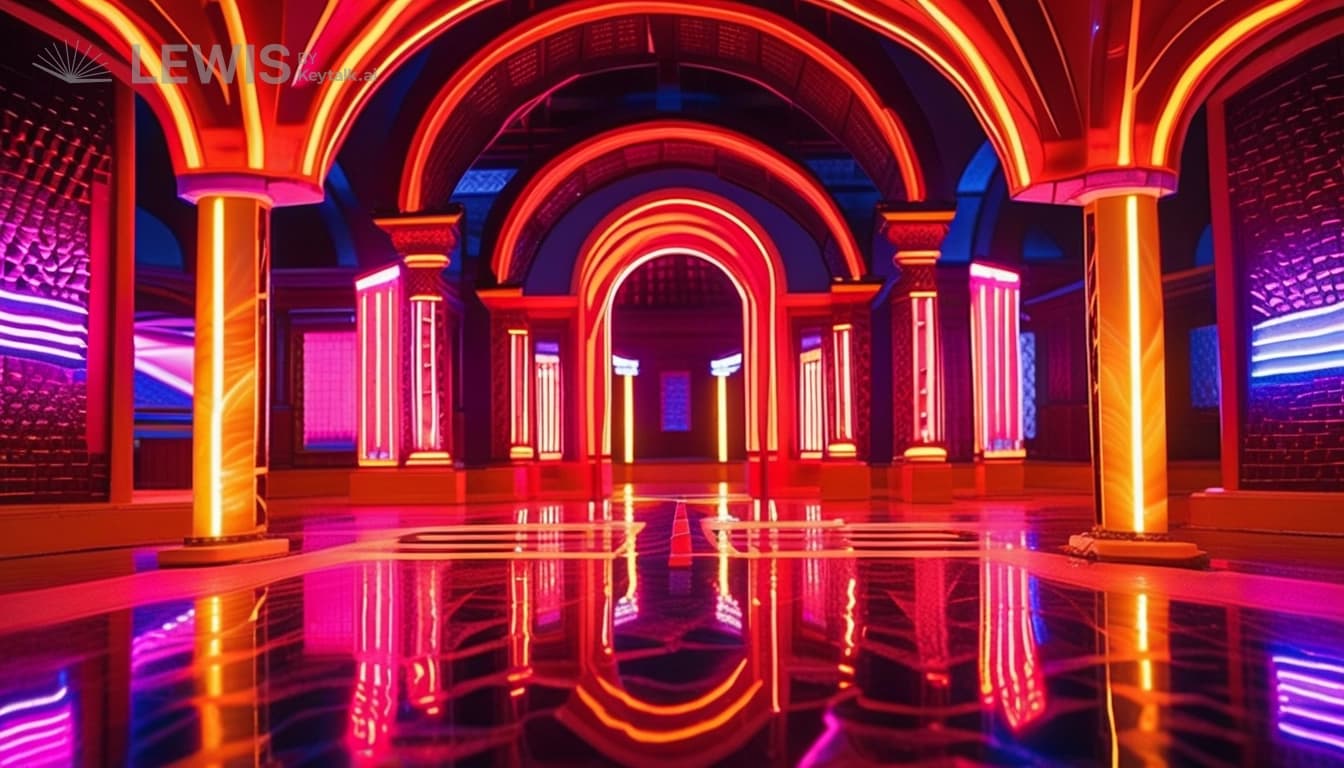
Description : Nestled between the city’s glass-clad towers, the Prism Arcade shimmers with fractured light and illicit echoes, its labyrinth of mirrored archways amplifying every stolen note into a riot of color and sound. Here, beneath flickering neon and the watchful gaze of silent surveillance drones, Ella and her allies orchestrate their final rebellion—each vibration reverberates through polished marble, drawing a clandestine congregation of longing and fear. The air is thick with ozone and anticipation, every pulse of music threatening to shatter the arcade’s crystalline veneer and expose the fragile hope pulsing at the heart of their defiance.

Where is this location in the real world?

The Arcade at The Standard, High Line

Address

848 Washington St, New York, NY 10014, USA

Reason for recommendation

This site features mirrored archways, marble floors, and distinctive neon illumination that evoke the chromatic, fractured atmosphere of the Prism Arcade, while city towers loom nearby.

Preparation for shooting

Supplement existing neon with programmable lighting and install surveillance drone props; add temporary mirrored panels along corridors to amplify reflections and sound.

Model Used
GPT-4.1
text
Stable Diffusion
image

Scenes

scene 1 image
Scene 1
Echoes Beneath Neon—Ella’s Secret Overture and the City’s Stifled Pulse
[Place]
A deserted subway platform cloaked in graffiti and flickering neon, far below the city’s sterile surface.

[Time]
Late evening, when official patrols thin and underground artists risk brief emergence.

[Action]
Ella slips onto the platform, her movements calculated yet electric, scanning for familiar faces among the handful of defiant souls assembled in the gloom. She orchestrates a covert dance, each gesture both rebellion and invitation, coaxing suppressed energy from the crowd. The forbidden music—played through hacked speakers—creates a fleeting rupture in the city’s order, igniting a dangerous euphoria that teeters on the edge of panic. Tension rises as the group senses the imminent threat of discovery; Ella wrestles with her own cynicism, pushing herself to create something meaningful despite fear and mistrust. Subplots emerge: a young violinist nervously tuning his instrument, an older woman documenting the gathering for a secret archive, whispers of past arrests. Ella’s bravado masks her vulnerability, but cracks show as she locks eyes with a stranger who seems both a threat and a promise. The scene ends with the distant echo of approaching boots, forcing Ella and the others to scatter—her longing for connection lingering, unresolved.

[Impact on the story]
This scene establishes Ella’s defiant spirit, her craving for authentic connection, and the dangers faced by the city’s underground artists. It lays emotional groundwork for her mistrust of authority and introduces the fragile bonds among rebels. The looming threat of exposure heightens stakes and foreshadows the complex alliances and betrayals to come.

[Description]
Ella leads a secret musical gathering in the subway, risking arrest to spark connection and hope. The event reveals her inner conflicts, the city’s oppressive atmosphere, and introduces the fractured underground community. This blueprint sets the stage for future relationships and escalating tensions.
scene 2 image
Scene 2
[Title]
Discord at Dusk—Elijah’s Melodies, Ella’s Doubts, and the First Fracture of Trust

[Place]
A shadowed, wind-battered rooftop overlooking the city’s central plaza, half-hidden by derelict billboards and the soft glow of distant office towers.

[Time]
Twilight, the hour when curfew approaches and the city’s pulse slows to a wary hush.

[Action]
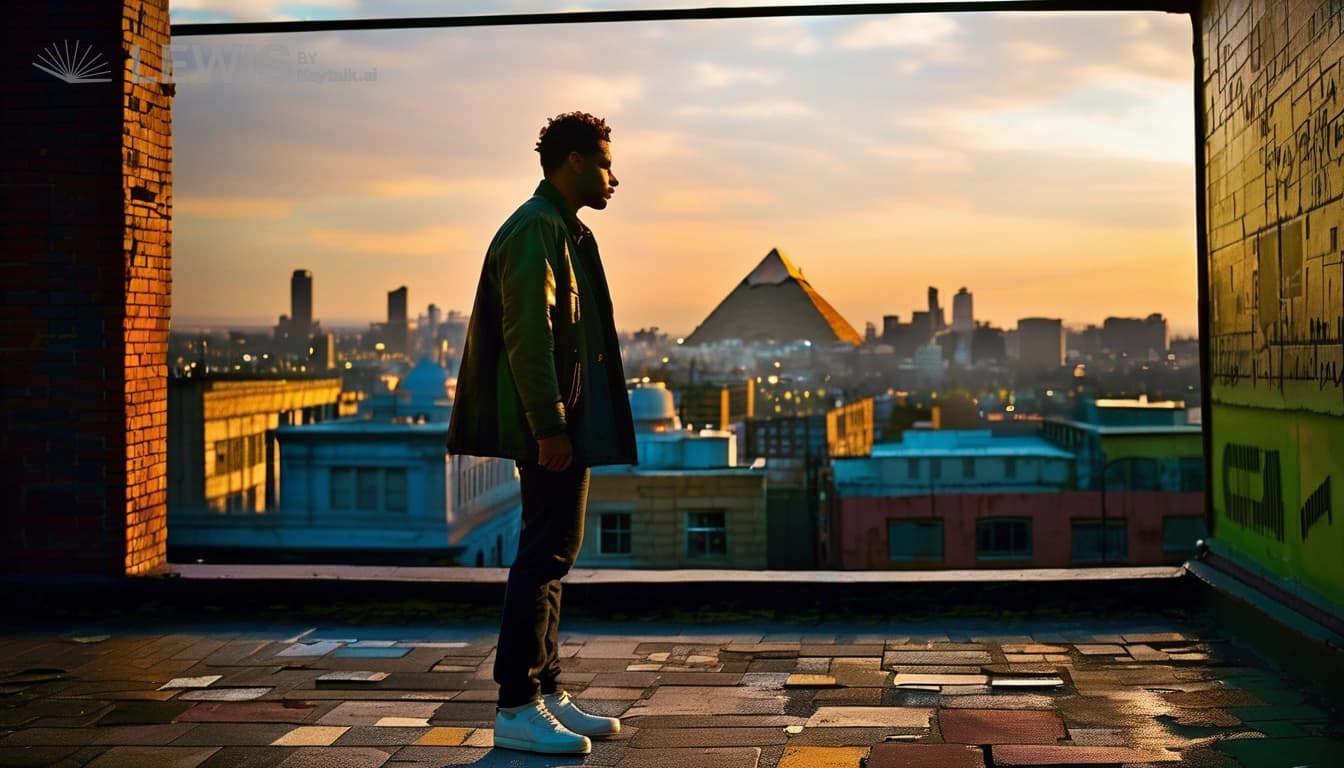
Ella, still shaken from the subway escape, navigates the rooftop’s precarious edges—her guarded energy a foil to the city’s indifferent sprawl below. Elijah arrives, violin case in hand, his entrance marked by quiet confidence and subtle tension; he’s drawn by rumors of Ella’s defiance but wary of the risks. Their first meeting is charged: Ella’s skepticism clashes with Elijah’s charisma as he proposes a collaboration, offering forbidden music as both shield and provocation. The conversation is layered with mutual suspicion, hints of past betrayals, and the unspoken threat of betrayal. As Elijah plays a forbidden melody, his vulnerability surfaces—each note revealing scars from a mysterious accident and his uneasy relationship with authority. Ella’s bravado falters, exposing her longing for genuine connection beneath practiced cynicism. The city’s patrols loom below, amplifying the stakes as the duo weighs the promise and peril of alliance. Tarek, monitoring from afar, observes their dynamic, calculating whether this partnership is sustainable or a liability. Subplots flicker: Elijah’s criminal past shadowing their trust, Ella’s memories of loss surfacing, and the rooftop itself transforming into a crucible for both hope and risk.

[Impact on the story]
This scene crystallizes the volatile chemistry between Ella and Elijah, marking the beginning of their uneasy partnership. Their vulnerabilities and mistrust are foregrounded, setting up emotional and thematic conflicts that will reverberate throughout the story. The rooftop meeting deepens the stakes, introduces the possibility of betrayal, and signals a shift from solitary defiance to collective risk, while Tarek’s presence hints at the formation of a trio.

[Description]
On a secluded rooftop, Ella and Elijah’s fraught encounter lays bare their wounds and aspirations, forging a tentative alliance. Their trust is fragile, shaped by past trauma and present danger, and their collaboration becomes both a source of hope and a risk that will shape the rebellion’s future.
scene 3 image
Scene 3
[Title]
Resonance in the Shadows—Tarek’s Archive, Forgotten Songs, and the Gathering of Outcasts

[Place]
An abandoned sound studio deep within the city’s industrial quarter, its walls lined with relics of obsolete recording equipment and faded posters of banned concerts.

[Time]
Late night, hours after Ella and Elijah’s rooftop meeting; the city’s curfew has transformed the streets into a realm of secrecy and hushed movement.

[Action]
Ella and Elijah arrive separately, tension simmering from their earlier encounter, each uncertain whether the fragile trust between them can withstand another test. Tarek is already inside, surrounded by tangled wires and stacks of encrypted drives—a solitary figure methodically archiving the forbidden sounds that have become the city’s heartbeat in exile. He is wary, measuring Ella and Elijah’s resolve, probing for signs of recklessness that might jeopardize the group’s safety. The trio’s initial exchange is clipped and guarded, underscored by distrust and the specter of betrayal; Tarek’s pragmatic skepticism collides with Ella’s restless optimism and Elijah’s haunted ambition. As Tarek demonstrates his sound engineering prowess, he reveals fragments of his personal history: the erasure of his family’s music, his compulsion to preserve what the city would rather forget, and his belief that these archives might one day resurrect a silenced culture. Their conversation is interrupted by the arrival of other outcast musicians—drawn by rumor and longing—whose presence transforms the studio into a clandestine sanctuary, teeming with both creative energy and latent paranoia. Subplots emerge: Ella is drawn to the sense of community yet fears the vulnerability it demands; Elijah wrestles with shame as rumors about his past circulate among the newcomers; Tarek quietly observes, cataloging not just sounds but the fragile alliances forming around him. The group tentatively shares their stories, marking the birth of a mosaic resistance—each member haunted by loss, yet animated by hope. In the background, Tarek meticulously records everything, aware that even these moments of solidarity are at risk of vanishing.

[Impact on the story]
This scene deepens the emotional complexity of the trio, transforming their rebellion from a private act to a collective movement. Tarek’s archive becomes both a symbol of resistance and a repository of vulnerability, forcing each character to confront what they are willing to risk for the sake of memory and belonging. The arrival of other outcasts expands the story’s scope, introducing new tensions and alliances, and setting the stage for both greater unity and the threat of betrayal. The scene intensifies the characters’ internal conflicts, especially Ella’s struggle with trust and Elijah’s battle with shame, while highlighting Tarek’s role as the movement’s archivist and reluctant guardian.

[Description]
In an abandoned studio, Ella, Elijah, and Tarek negotiate the fragile beginnings of collective resistance. The space fills with marginalized artists, their stories weaving a tapestry of hope and risk, while Tarek’s archive anchors both memory and possibility. Alliances form tentatively, shadowed by distrust and the ever-present danger of exposure.
scene 4 image
Scene 4
[Title]
The Weight of Silence—Miriam’s Confrontation, Family Ghosts, and the Unraveling of Authority

[Place]
Dr. Miriam Kwan’s austere office in the Municipal Order headquarters, its windows overlooking the city’s grid of muted lights and silent streets; later, an interrogation chamber suffused with sterile fluorescence and the faint echo of distant sirens.

[Time]
The morning after the underground gathering, as rumors of the clandestine concert ripple through official channels and Miriam’s control feels increasingly precarious.

[Action]
The scene opens with Miriam poring over surveillance reports and intercepted communications, her composure fraying beneath the weight of mounting public unrest. She summons Ella for questioning, intent on extracting information about the concert’s organizers. The interrogation is tense: Miriam’s icy authority clashes with Ella’s irreverent defiance, each probing for weakness. Subtle references to Miriam’s estranged brother emerge, destabilizing her resolve as she recognizes echoes of his rebellion in Ella’s unapologetic artistry. As their confrontation intensifies, Miriam’s mask slips—she reveals flashes of personal anguish, hinting at the sacrifices behind her rigid enforcement of order. Meanwhile, Tarek and Elijah scramble to erase digital traces and warn their network, their actions paralleled by Miriam’s internal struggle. The scene oscillates between psychological warfare and moments of vulnerability: Miriam questions whether her policies have truly protected the city or merely perpetuated its wounds, and Ella, sensing cracks in Miriam’s facade, is torn between contempt and empathy. The tension peaks when Miriam, confronted with Ella’s raw honesty and her own memories of silenced music, hesitates to deliver the decisive blow—her authority unraveling as she realizes the cost of her legacy.

[Impact on the story]
This confrontation exposes the fragility of Miriam’s control and deepens her internal conflict, linking her personal history to the city’s repression. Ella’s resilience and moments of empathy force Miriam to confront uncomfortable truths about her own motivations, while the trio’s scramble to avoid capture heightens the stakes for the entire resistance. The scene fractures the illusion of absolute authority, setting the stage for Miriam’s later crisis of conscience and the trio’s desperate gamble. It also complicates Ella’s perception of the enemy, planting seeds of doubt about the binary of villain and rebel.

[Description]
Miriam interrogates Ella in a battle of wills, her authority challenged by personal ghosts and Ella’s audacity. The scene interweaves psychological tension with glimpses of vulnerability, destabilizing the power dynamic and foreshadowing Miriam’s coming reckoning. Meanwhile, Elijah and Tarek move urgently to protect their network, intensifying the story’s sense of danger and emotional complexity.
scene 5 image
Scene 5
[Title]
Fault Lines—The Night of Ruin, Elijah’s Breakdown, and the Trio’s Bitter Reckoning

[Place]
A derelict warehouse on the city’s outskirts, its walls tattooed with graffiti and memories of forbidden gatherings; a labyrinth of back rooms littered with discarded instruments and flickering neon, providing a tenuous refuge from the authorities’ dragnet.

[Time]
Late night, immediately following Miriam’s interrogation of Ella and the trio’s frantic efforts to erase their digital footprint. The city outside is tense, echoing with rumors, police sirens, and the distant hum of unrest.

[Action]
The trio regroups in the shadowed sanctuary of the warehouse, each burdened by the fallout of the previous night. Elijah is visibly unraveling—his hands tremble as he attempts to tune his battered violin, haunted by memories of the recent accident and the resurgence of old trauma. Tarek, grappling with the enormity of the risk and the threat to his archive, confronts Elijah about the reckless escalation that endangered their network, his words sharp yet tinged with desperation. Ella, stripped of her usual bravado, struggles to mediate, torn between empathy for Elijah’s pain and frustration at the consequences of their rebellion. The argument spirals, dredging up past betrayals and unresolved grievances: Elijah’s criminal history, Tarek’s fear of losing everything, Ella’s fear of intimacy and abandonment. Bitter accusations give way to moments of raw vulnerability, as each character confronts the possibility that their fight has fractured what little trust remained. Subtle gestures—a half-finished melody, a discarded recording device, a glance that lingers—underscore the longing for connection even as the group teeters on the edge of dissolution. The scene culminates in a devastating choice: whether to abandon their cause and scatter, or risk everything for a final act of defiance. Tarek contemplates leaving for anonymity, Elijah retreats into isolation, and Ella, forced to confront the emptiness beneath her armor, faces a crisis of faith in both the movement and herself.

[Impact on the story]
This scene is a crucible for the trio’s relationships, exposing fault lines of mistrust and self-doubt that threaten to destroy their alliance. Elijah’s breakdown forces the group to confront the psychological cost of rebellion, while Tarek’s potential departure puts their mission and archive in jeopardy. Ella’s struggle to hold the group together deepens her internal conflict, setting the stage for her decisive gambit in the final scene. The emotional fractures here drive each character toward personal reckoning, compelling them to choose whether to continue fighting or succumb to despair.

[Description]
In the aftermath of public exposure and personal trauma, the trio faces a bitter reckoning that tests the limits of their loyalty and resilience. Fractured trust and old wounds threaten to tear them apart, forcing each character to confront what truly matters as they weigh the risks of one last, audacious performance.
scene 6 image
Scene 6
[Title]
Crescendo on the Rooftops—Ella’s Gambit, Miriam’s Choice, and the Dawn of a City Unbound

[Place]
Rooftops spanning the city’s central district—crumbling terraces linked by precarious planks, overhung with tangled wires and flooded in the spectral glow of neon signs. The city below is restless, suffused with the tension of anticipation and dread.

[Time]
Night of the final concert—hours after the trio’s decision in the warehouse, as curfew nears and the city’s authorities mobilize for a crackdown.

[Action]
The scene opens with Ella rallying Elijah and Tarek atop a central rooftop, her resolve steeled by the night’s earlier fractures. Tarek, torn but ultimately loyal, sets up a makeshift sound system that interlaces the city’s skyline with forbidden frequencies, while Elijah, his hands still trembling, tunes his violin—each note a test of his own redemption. The trio’s choreography is a blend of desperation and hope; Ella’s movements are both a signal to their scattered allies and a challenge to the watching authorities. Tensions flare as Miriam, haunted by memories of her brother and the cost of her own policies, hesitates on a nearby rooftop, torn between duty and the lure of lost beauty. As the concert erupts, music and dance spill across the rooftops and seep into the streets, drawing citizens into a spontaneous, city-wide rebellion—some join in rapture, others watch in fearful awe, and authorities scramble to contain the chaos. Amid the crescendo, Miriam’s resolve falters; she orders restraint rather than violence, her internal conflict mirrored in the city’s divided response. The trio’s relationships, still bruised, are tested anew as they risk exposure and possible ruin, yet the act itself becomes a crucible for transformation. The night’s climax is ambiguous: Elijah’s public performance hints at healing, Tarek’s recordings capture the moment for posterity, and Ella, stripped of bravado, faces the city—and herself—without armor. The rooftop concert fractures the city’s imposed silence, but leaves its future uncertain.

[Impact on the story]
This scene is the fulcrum of the entire narrative, forcing each character to confront the limits of their courage and convictions. Ella’s gamble catalyzes change, not just in the city but within herself, as she learns to lead from vulnerability rather than defiance. Miriam’s conflicted response signals a possible shift in the city’s oppressive order, while Elijah’s redemption is made public but remains psychologically unresolved. Tarek’s archive becomes both a weapon and a legacy, seeding the possibility of future resistance. The group’s bonds, battered but unbroken, are redefined in the fire of collective risk, setting the stage for an ambiguous yet hopeful aftermath.

[Description]
On the city’s rooftops, Ella, Elijah, and Tarek orchestrate a final, audacious concert that ignites a wave of rebellion and forces both citizens and authorities to reckon with suppressed desires. The scene marks both the climax of their resistance and the beginning of uncertain change, as personal and political boundaries are shattered amid music and chaos.
'Illegal Harmony'Story Chat

Want to chat with the characters from this story?

'Illegal Harmony'Story Chat

Want to chat with the characters from this story?

story image
story image
story image

You might also like

Comments0

rank icon image
#1 inConcept
rank icon image
#1 inConcept
rank icon image
#1 inConcept
theme music