
Confessions Over the Loudspeaker cover image

Confessions Over the Loudspeaker

In a sleepy coastal town where honesty is a competitive sport, an ambitious baker finds their rising career threatened when a mischievous child begins broadcasting inhabitants' embarrassing secrets by hacking into the local weather station’s loudspeaker, forcing the baker into a hilarious struggle to conceal their own deliciously scandalous past while orchestrating a pastry-themed truth-and-dare contest to distract the town—and, reluctantly, learning the unexpected value of selective honesty.

Weekly ranking

rank icon image
#2 inConcept
rank icon image
#61 inGenre
Scroll

Plot Synopsis

Meredith “Merry” Carroway has always believed that in Merrow’s Bluff, a seaside village where truth-telling is more competitive sport than virtue, the only way to survive is to be both more honest and more inventive than the next person. Her bakery, Crust & Whimsy, thrives on this razor’s edge—her pastries are ingenious, her banter sharp, her reputation immaculate save for a few stubborn whispers about her tempestuous past. Merry’s greatest ambition is to win the upcoming regional “Honest Crust” festival, where culinary innovation and personal integrity are tested before a panel of judges and the town’s merciless gaze. Her desire for validation is matched only by her terror that the skeletons in her flour-dusted closet—especially the scandalous sabotage she once perpetrated at a rival bake-off—will be thrust into the unforgiving light of public scrutiny.

Everything unravels the morning Juni Addams, the town’s twelve-year-old tech gremlin and self-appointed exposer of hypocrisy, hijacks the weather station’s ancient loudspeakers. Instead of the usual drizzle warnings and tide tables, the town awakens to a recitation of its most embarrassing secrets, each delivered in Juni’s deadpan, crackling over the cliffs and cobblestones. Merry’s heart plummets as she realizes her own name is on Juni’s hit list; her secret, if revealed, would destroy her bakery’s hard-won reputation and her shot at festival glory. Juni, driven by a prickly sense of justice and a desperate need to be seen in a town that overlooks its misfits, is both delighted and terrified by the chaos she’s unleashed. Her broadcasts expose not just the townspeople’s foibles but the brittle social contracts underpinning Merrow’s Bluff, where honesty is weaponized as often as it is celebrated.

Desperate to divert attention and buy time to neutralize Juni’s campaign, Merry concocts a plan as audacious as any of her pastries: she announces a weeklong, town-wide “Truth & Tart” contest. Each day, citizens must compete in rounds of truth-or-dare, but with a twist—the dares are all pastry-themed (think: recite your most embarrassing secret while juggling cream puffs, or bake your ex’s favorite dessert blindfolded). Prizes include free bread for a year and a coveted spot as her festival sous-chef, ensuring rabid participation. The town, hungry for spectacle and distraction, throws itself into the contest with manic glee. Merry, meanwhile, frantically tries to discover the source of Juni’s broadcasts, enlisting the reluctant help of Lionel “Leo” Osei, the town’s unofficial secret-keeper, whose labyrinthine wisdom and refusal to answer questions directly both infuriate and intrigue her.

As the contest escalates, so do the stakes. Juni, seeing the townsfolk embracing the chaos she’s sown, is torn between pride in her technical prowess and guilt over the pain her revelations cause. She shadows the contest, both sabotaging and secretly assisting, her anonymous clues and mischievous hacks making each round more unpredictable. Leo, meanwhile, counsels both Merry and Juni in his oblique way, gently challenging their assumptions about truth and the necessity of disclosure. Underneath the laughter and custard pies, real consequences simmer: old rivalries resurface, unexpected alliances form, and hidden grievances—some sweet, some deeply sour—bubble to the surface. Merry, forced to confront not just her own secrets but the ways she’s weaponized honesty to keep others at bay, faces a mounting crisis of conscience.

The climax arrives at the contest’s final event, held atop the blustery cliffs outside Leo’s lighthouse, with the entire town assembled in anticipation. Juni, cornered and desperate for acknowledgment, hijacks the broadcast one last time to reveal Merry’s infamous baking contest sabotage. Instead of outrage, however, the crowd’s reaction is complicated—some are scandalized, others oddly impressed. Merry, cornered and stripped of her defenses, makes a reckless, cathartic choice: she owns her mistake publicly, explaining the tangled motives—her hunger for approval, her fear of irrelevance—that led her astray. She bakes her “shame” into a towering, absurdist croquembouche, each profiterole branded with a local misdeed (her own most prominent), and invites the town to join in a communal confession and feast. The spectacle, half confession, half farce, turns into a cathartic celebration of flawed humanity and the delicious absurdity of selective honesty.

In the aftermath, the town’s obsession with brutal candor softens; the contest’s mishaps and revelations have exposed the limits of truth as both shield and cudgel. Juni, finally acknowledged for her cleverness but also held accountable for the pain she caused, finds unexpected mentorship in Leo, who offers her a battered radio kit
Model Used
GPT-4.1
text
Stable Diffusion
image

Story Details

Keytalk Prompts Used
See all Keytalks
no chosen prompts
no chosen prompts
no chosen prompts
no chosen prompts
no chosen prompts
no chosen prompts
Model Used
GPT-4.1
text
Stable Diffusion
image

Character

Protagonist Character

Meredith "Merry" Carroway

GenderFemale
OccupationArtisan Baker & Owner of "Crust & Whimsy"

Profile

Meredith “Merry” Carroway, a 34-year-old artisan baker of Cornish and Afro-Caribbean descent, stands at an unassuming five-foot-four, her compact, sturdy frame a testament to years spent kneading dough and lifting flour sacks before dawn. Her skin bears the warm, sun-kissed hue of burnt sugar, offset by a scattering of freckles across her cheeks and a perpetual smudge of flour on her nose. Merry’s hair—an unruly tumble of dark curls streaked with honey—escapes any attempt at order, usually pulled back with a patterned scarf that hints at her mother’s Trinidadian roots. Her hands, broad-palmed and callused, move with a dancer’s precision, equally adept at coaxing flaky croissants or gesturing animatedly as she banters with customers. Merry’s wardrobe blends practicality with whimsy: flour-dusted overalls, vintage aprons, and mismatched earrings shaped like tiny bread loaves, reflecting a playful irreverence that belies her fiercely competitive streak. Raised in the insular currents of a coastal town obsessed with truth-telling games, she’s learned to wield honesty as both shield and weapon—a skill honed in a childhood spent outwitting gossipmongers and navigating her father’s blunt Cornish sensibilities. As the proprietor of “Crust & Whimsy,” Merry commands both respect and envy among the locals, her inventive pastries and sharp wit making her the darling—and sometimes target—of the community’s relentless candor contests. Her speech is peppered with Cornish colloquialisms and the occasional melodic lilt from her mother’s side, lending a unique cadence to her rapid-fire repartee. Driven by an ambition that borders on obsession, she craves validation for her culinary artistry, yet harbors an almost superstitious dread of her own checkered past—an ill-concealed history of small-town escapades, questionable ex-lovers, and one particularly infamous baking contest scandal that could upend her hard-won reputation. Merry’s natural charm is tempered by a biting sarcasm and a tendency to deflect intimacy with humor, but beneath the bravado lies a deep loyalty to her community and an unspoken longing for genuine connection. Her mornings begin with ritualistic precision, but she’s prone to impulsive, often theatrical gestures—like orchestrating elaborate pastry feuds or inventing new confections to mark the town’s endless cycle of truth games. Merry’s greatest challenge is balancing her hunger for approval with the risk of exposure, a tension that colors every calculated risk she takes—her story, before the loudspeaker debacle, already a delicate dance between authenticity and artful evasion.

Antagonist Character

Juniper "Juni" Addams

GenderFemale
OccupationAspiring Radio Engineer / Amateur Hacker

Profile

Juniper “Juni” Addams, a twelve-year-old prodigy of mixed Filipino-British descent, is the restless mind behind the mayhem in the seaside town of Merrow’s Bluff. Short for her age but wiry and agile, with perpetually wind-mussed jet-black hair, sharp cheekbones, and a smattering of freckles flaring across her tawny nose, Juni sports oversized hand-me-down cargo shorts and an ever-present, grease-stained hoodie riddled with secret pockets for wires, tools, and the occasional purloined pastry. Her almond-shaped eyes—wide, dark, and startlingly perceptive—gleam with irrepressible mischief and a hunger for unraveling the hidden layers of those around her. Raised in her grandmother’s cluttered cottage, Juni’s formative years were spent scavenging spare parts from shipyards and learning to solder circuit boards by lantern light, a necessity born of her single mother’s frequent absences and the town’s spotty infrastructure. Her voice, quick and clipped with a faint trace of her grandmother’s Manila accent, is peppered with technical jargon, sardonic quips, and the odd British idiom, betraying both her multicultural upbringing and her relentless intellect. Driven by a longing for recognition and a conviction that honesty is a tool for exposing hypocrisy rather than a virtue in itself, Juni approaches problems with a blend of technical ingenuity and playful subversion—her engineering prowess is matched only by her knack for improvisation and her penchant for calculated chaos. Though fiercely independent and outwardly irreverent, she secretly craves connection and validation, her bravado masking a deep-seated loneliness and a gnawing fear of being overlooked in a town obsessed with truth. Her relentless curiosity and impulsive sense of justice often land her in trouble, but they also fuel her most ambitious schemes, positioning her as both antagonist and unlikely catalyst for the town’s comic upheaval. Juni’s nimble fingers and restless mind keep her in perpetual motion, her inability to sit still or refrain from tinkering making her a constant, unpredictable presence—one equally capable of sowing confusion or, perhaps, illuminating the truths others would rather keep hidden.
Sidekick Character

Lionel "Leo" Osei

GenderMale
OccupationRetired Lighthouse Keeper & Amateur Storyteller

Profile

Lionel "Leo" Osei, a Ghanaian-British retiree of 67, stands as an unmistakable fixture of the windswept coast, his six-foot frame both solid and spry, with broad shoulders that betray a lifetime of hauling lantern oil and bracing storms atop the old lighthouse. His skin, weathered to a deep bronze, is mapped with laugh lines and the faint scars of a youth spent at sea, while his close-cropped salt-and-pepper hair and neatly trimmed, silvered beard frame a face dominated by keen, almond-shaped eyes—one hazel, one a cloudy blue from an old injury. Leo’s manner of dress is a patchwork of practical nostalgia: faded fisherman’s sweaters layered under boldly patterned kente scarves, battered corduroy trousers, and always, his battered waxed coat and rain boots, regardless of the forecast. With a voice as rich and rolling as the surf, tinged with the lilting cadence of Accra and the dry wit of Yorkshire, Leo is both a local legend and a gentle mischief-maker. His storytelling—half-truth, half-magic—fills the air of the harbor pubs, and his penchant for elaborate, meandering tales often leaves listeners both charmed and a little off-balance. As the unofficial “keeper of secrets” for the town’s oddballs and outcasts, Leo has cultivated a philosophy of compassionate discretion, believing that truth, like the tides, must be revealed with care. He delights in clever wordplay and riddles, offering guidance through metaphor rather than direct advice, and is notorious for refusing to answer questions plainly, much to the exasperation of the town’s more literal-minded folk. Though retired, Leo remains a vital social node, trading gossip for fresh bread and helping newcomers navigate the unspoken codes of village life. His independent streak and reluctance to meddle directly often put him at odds with Merry’s impulsive schemes, but his deep-rooted empathy and subtle strategizing provide a steadying counterpoint to her anxious ambition. Leo’s relationship with Juni is colored by cautious admiration for her audacity and a quiet resolve to teach her the power—and peril—of narrative, seeing in her both a reflection of his own youthful defiance and a challenge to his belief in the gentle art of omission. Underneath his genial exterior, Leo quietly mourns the gradual fading of his lighthouse’s purpose, wrestling with the urge to remain relevant in a world that prizes exposure over mystery. His unique blend of showmanship, discretion, and resilience shapes him into a sidekick whose methods—infuriatingly indirect yet profoundly wise—anchor the comedy’s chaotic search for truth, while his own journey toward accepting change and letting go promises both humor and poignancy in equal measure.
Model Used
GPT-4.1
text
Stable Diffusion
image

World

Location/Time, Era:
Merrow’s Bluff squats on a ragged, salt-lashed corner of the Cornish coast, its weather-beaten cottages and narrow lanes huddled against Atlantic gales, half-forgotten by the wider world and proud of it. The town’s heart beats in the market square, framed by an ancient granite church, a battered red phone box, and the ever-present hum of gulls and gossip. It’s present-day, but the village exists in a temporal eddy: smartphones are rare, Wi-Fi is a running joke, and the local weather station’s crackling loudspeaker is still the town’s most reliable information network. The sea and sky are constant presences—mornings fog-wrapped and secretive, evenings painted gold and bruised purple, always hinting at storm or revelation. Everything here feels half-modern, half-mythic; traditions linger like the scent of bread and seaweed, and the past is never quite past.

Key rules of the world and their impact on the story and beyond:
In Merrow’s Bluff, honesty isn’t just a virtue—it’s a competitive sport, codified in the annual cycle of “candor games” that govern everything from council meetings to children’s play. Social status is earned (and lost) by winning at public truth-telling contests: residents challenge each other to reveal secrets, confess blunders, or perform dares that test the limits of embarrassment and trust. The rules are simple but ruthless—refuse a challenge, and your silence becomes a story in itself; embellish the truth, and you risk public shaming by the “Candor Committee,” a rotating panel of town elders and busybodies. This system breeds both a perverse intimacy and a culture of weaponized vulnerability: friendships, rivalries, and even commerce are negotiated through this relentless game of exposure. For Merry, whose livelihood and reputation hinge on appearing both inventive and irreproachable, these customs are both opportunity and peril—her bakery’s success depends as much on her wit in the truth games as on her skill with pastry.

Visual depiction of the world and its unique features:
The town is a mosaic of story-soaked stone cottages, paint peeling in the salt wind, their gardens rioting with untamed nasturtiums and tangled blackberries. The weather station’s squat, concrete tower—graffitied with generations of truth-teller slogans and past contest winners—is perched on the highest bluff, its clanging loudspeakers the unofficial voice of Merrow’s Bluff. The harbor, a jumble of fishing skiffs and half-sunken rowboats, is watched over by Leo’s craggy lighthouse, its light now more symbolic than necessary, yet fiercely defended as a relic of relevance. “Crust & Whimsy” sits at the crossroads, its windows perpetually fogged with the promise of fresh bread, its chalkboard menu scrawled with puns and half-truths. Even the cliffs and coves are mapped with stories—“Confession Rock,” “Liar’s Leap”—each a stage for past and future escapades, places where secrets are traded for dares or absolution.

Notable technology, philosophy, or cultural elements influencing the world and narrative:
Technologically, Merrow’s Bluff is a patchwork: the weather station’s 1970s-era broadcast rig, cobbled together with Juni’s ingenious hacks, is the town’s omnipresent surveillance-and-confession device, amplifying both weather warnings and, now, secrets. Homes are cluttered with heirloom radios, jury-rigged solar panels, and the odd pirate Wi-Fi node—evidence of a community that values improvisation and self-reliance over connectivity. Culturally, the town’s philosophy is a paradoxical blend of brutal candor and communal protection; honesty is prized, but there’s an unspoken art to which truths are told and which are quietly buried. The “Truth & Tart” contest is the latest evolution of this tradition, merging culinary spectacle with emotional brinksmanship—a ritualized chaos that both distracts and reveals. This culture shapes everything: Juni’s rebellious broadcasts are both an act of protest and a plea for belonging, Leo’s riddling discretion is a quiet resistance to the tyranny of exposure, and Merry’s whole existence is a high-wire act between authenticity and survival, all played out on a stage where secrets are currency and spectacle is the glue that binds the town together.
representative image
location 1 image

Location 1

Title: The Salt-Quarry Baths of Saint Petronella
Description: Sunlight slants through broken panes and dances off the milky, mineral-streaked pools where generations have come to soak secrets from their bones—steam veiling faces, salt stinging confessions out of tongues grown too used to clever half-truths. Crumbling mosaics of saints and sinners line the walls, their glass eyes watching as Merry, desperate and raw, corners Leo between pillars etched with the graffiti of a thousand old scandals. The air is thick with brine and remorse, every whispered word echoing against stone, promising both absolution and exposure in equal measure.
location 2 image

Location 2

Title: The Whispering Parlor Behind Prattle & Sons Barbershop

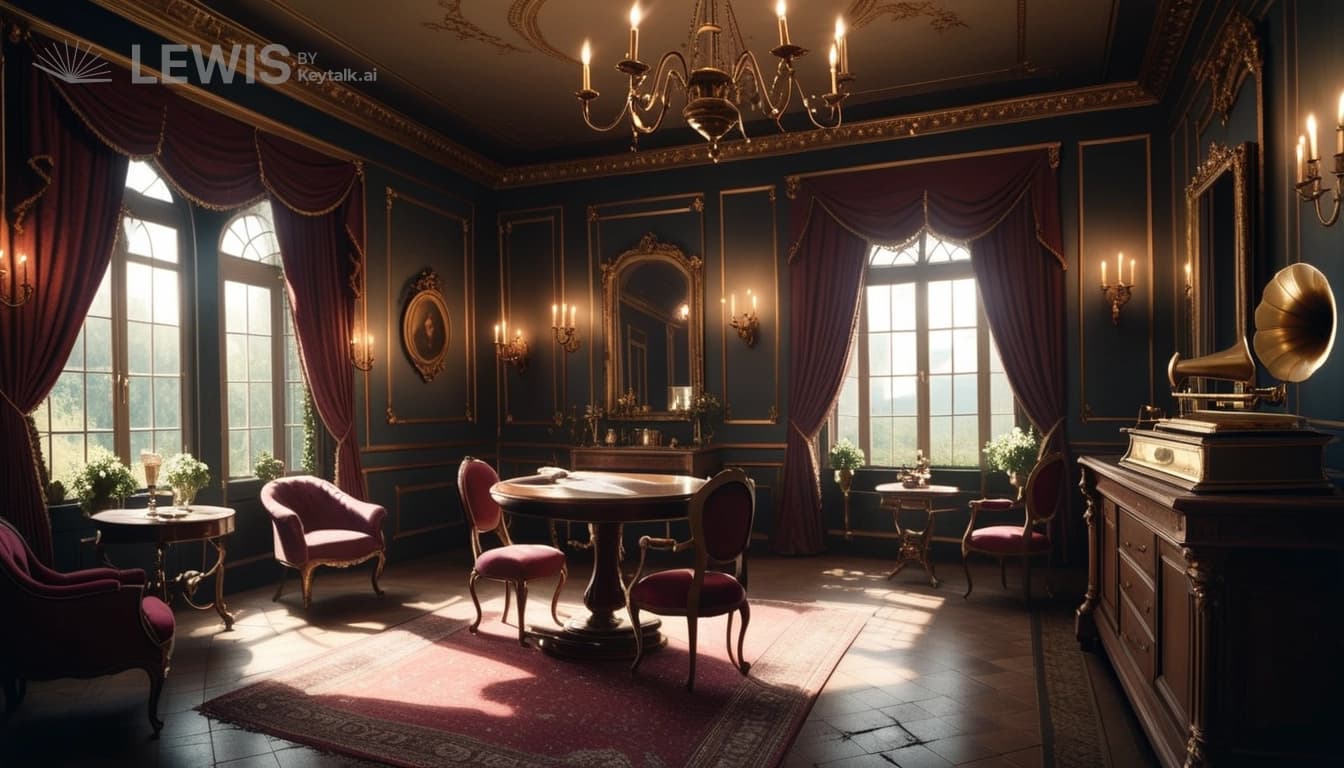
Description: Hidden behind a false wall of shaving cream tins and faded barbershop mirrors, the Whispering Parlor is a velvet-draped sanctum where Merrow’s Bluff’s most inventive gossips gather, voices low and teacups trembling with the anticipation of scandal. The air shivers with the scent of bay rum, burnt sugar, and secrets—each confession softly echoed by the cracked phonograph in the corner, which records every admission in scratchy, looping whispers. Here, alliances are inked and betrayals rehearsed beneath flickering sconces, and on the night of Merry’s contest, the room buzzes with pastry-fueled dares and the electric dread that, just beyond the parlor door, Juni’s next broadcast might turn private whispers into public thunder.
location 3 image

Location 3

Title : The Forsaken Shipwrights’ Arcade of Low Tide Row
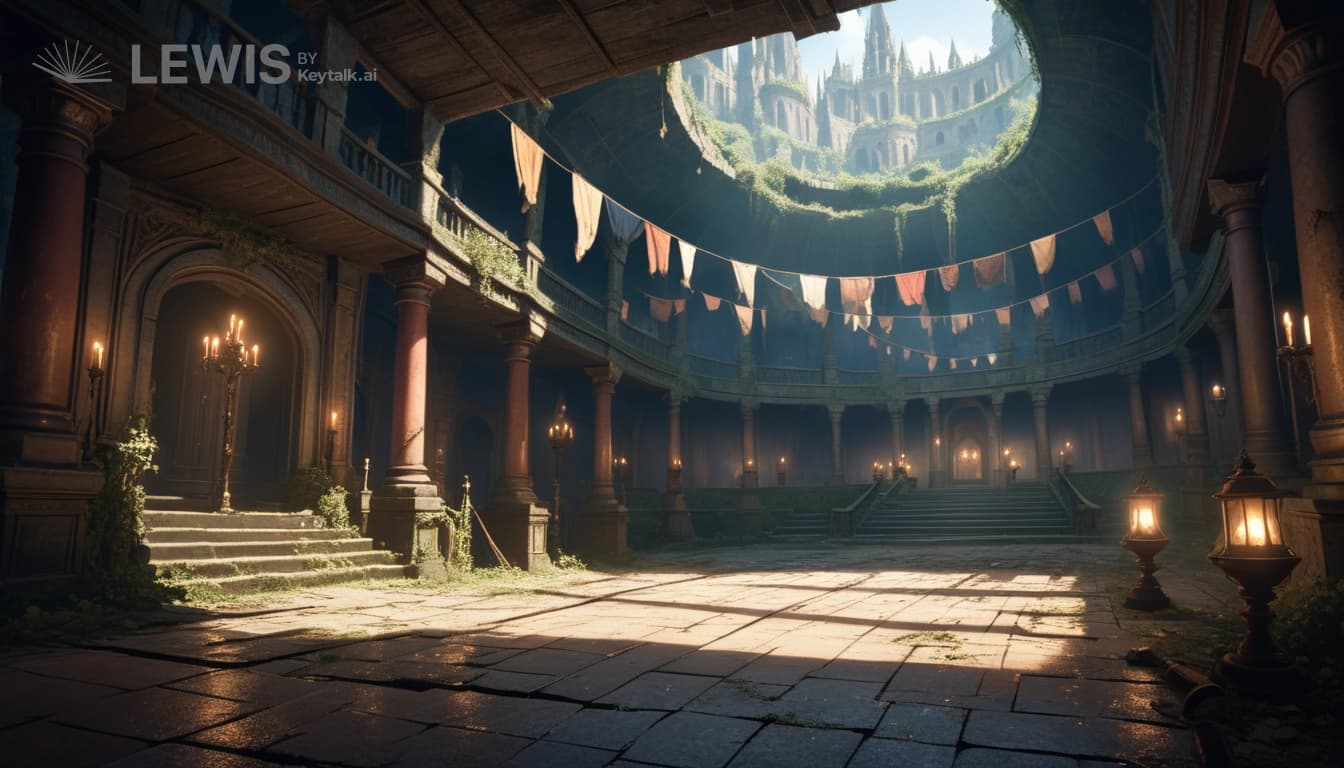
Description : Under a ceiling of splintered beams and salt-stained prayer flags, the arcade’s cavernous hall hums with the ghosts of drowned hulls and half-finished dreams—its warped floorboards slick with brine, its iron tools rusted into abstract relics by the encroaching spray. The air is thick with the tang of tar and secrets, lit only by the flicker of contraband lanterns and the phosphorescence that seeps in through gaps in the hulls stacked like toppled dominoes. Here, on the eve of the contest’s finale, the townsfolk’s laughter ricochets off barnacled columns, each confession and dare echoing in the shadows where ambition and shame have always bargained for a second chance.
Model Used
GPT-4.1
text
Stable Diffusion
image

Scenes

scene 1 image
Scene 1
Pastries, Promises, and the Scent of Salted Scandal
[Place]
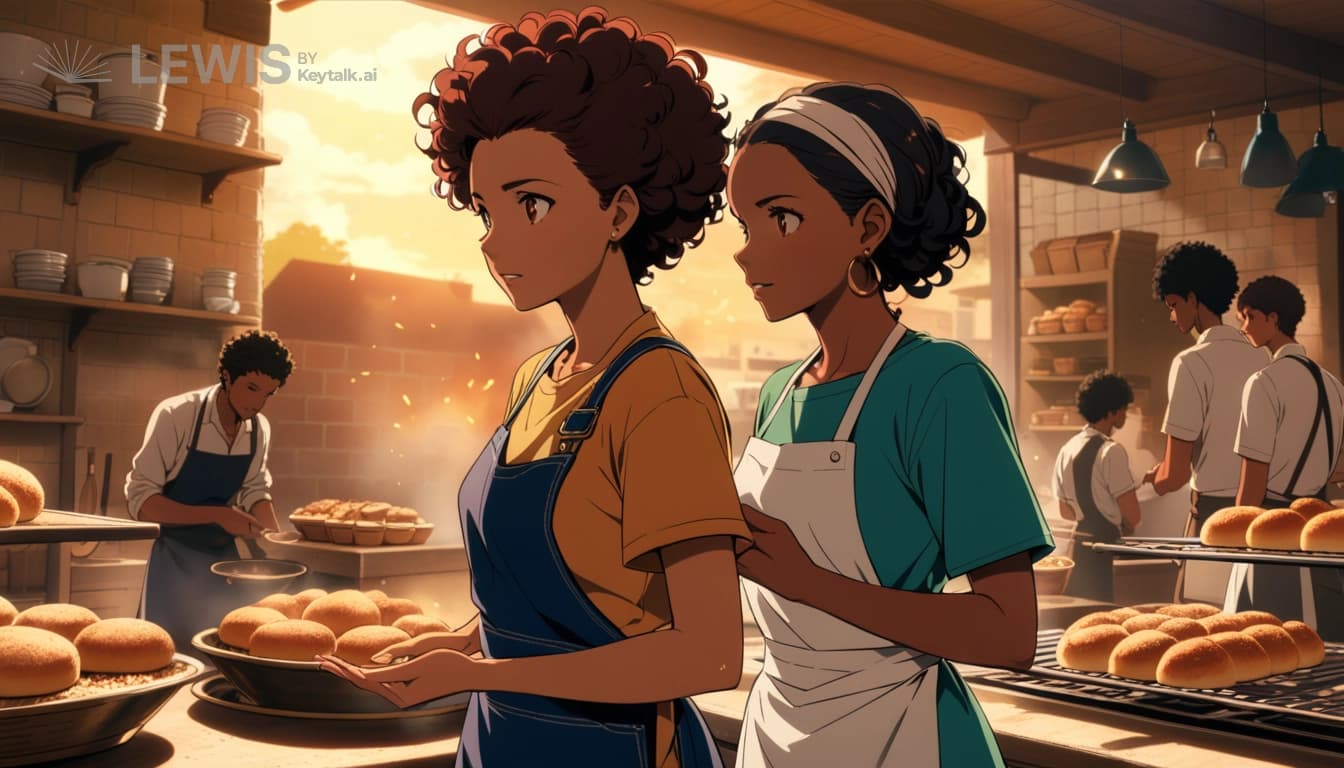
Crust & Whimsy bakery, Merrow’s Bluff high street—an open, sunlit space fragrant with caramelized sugar and sea air, bustling with locals and tourists, every surface alive with the chaos of morning rush.

[Time]
Early morning, just before sunrise, as the bakery prepares for its busiest day of the week.

[Action]
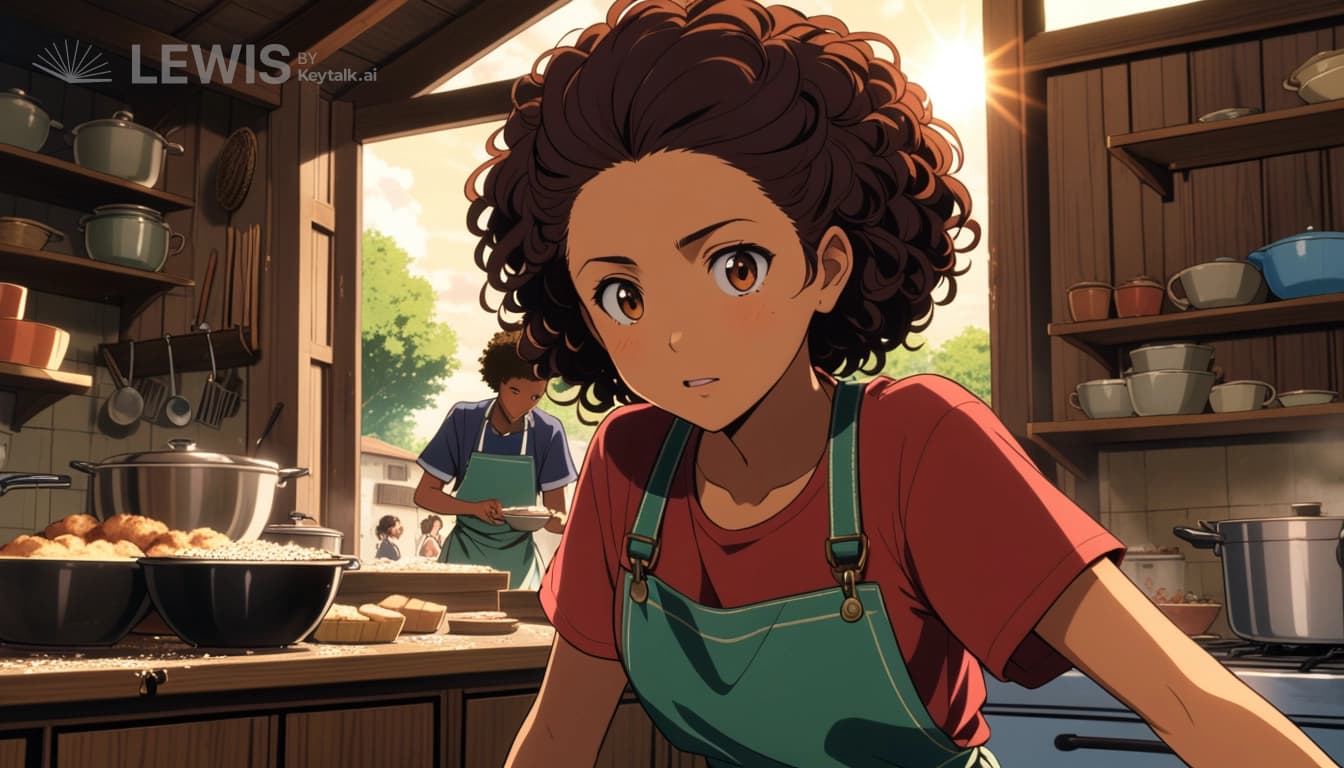
The scene opens with Merry orchestrating the pre-dawn ballet of her bakery: flour dust motes dancing in the golden light, bakers bickering over proofing times, and the first batch of her signature “truth buns” emerging from the oven. There’s a sense of barely-contained energy, as Merry’s need for perfection collides with her anxiety about the upcoming Honest Crust festival. She moves with purpose, keeping one eye on her staff and the other on the front window, alert to the pulse of gossip outside. The townsfolk trickle in, eager for both pastries and the day’s freshest rumors, and Merry navigates a dozen simultaneous conversations, deflecting pointed questions about her festival entry with charm and sly wit.

Underneath her confident exterior, Merry is haunted by the possibility of her past sabotage being exposed. She notices a group of regulars whispering, their laughter edged with something sharper, and the old rumors about her integrity seem to rise up with the steam from her ovens. Meanwhile, subtle hints of tension ripple through her interactions with a rival baker—who drops by under the guise of neighborly competition—and with the town’s more sanctimonious citizens, who aren’t above taking jabs at Merry’s ambition.

As the scene builds, the bakery’s comforting bustle is interrupted by a burst of static from the ancient loudspeakers outside. At first, everyone assumes it’s just the weather report, but the broadcast shifts, crackling into a wry, disembodied voice: Juni Addams, reciting the first batch of town secrets. The mood in the bakery sours in an instant—customers freeze, heads turn, and Merry’s heart nearly stops when she hears her own name, only to have the broadcast cut off before her secret is revealed. The shock leaves the bakery in stunned silence, the scent of sugar suddenly acrid with fear.

[Impact on the story]
This scene establishes the stakes for Merry—her carefully curated reputation and her emotional investment in the festival are both immediately threatened. It introduces the town’s obsession with truth, the precariousness of social standing, and the undercurrent of suspicion that defines Merrow’s Bluff. The sudden broadcast catalyzes the story’s conflict, setting Merry on a collision course with Juni and forcing her to confront her own vulnerabilities. The emotional resonance is immediate: Merry’s control begins to slip, and the town’s fragile civility is fractured, laying the groundwork for the contest and the chaos to come.

[Description]
In the bustling sanctuary of her bakery, Merry balances ambition and anxiety while the town’s gossip simmers just below the surface. The intrusion of Juni’s first secret-laden broadcast shatters the morning routine, exposing the fault lines in Merry’s confidence and the community’s brittle honesty. The scene ignites the story’s central tension, pushing Merry and Merrow’s Bluff toward upheaval.
scene 2 image
Scene 2
Juni Addams and the Broadcast of Bitter Truths

[Place]
Merrow’s Bluff: the tangled heart of the village—weather-beaten high street, seagull-haunted rooftops, the mossy plaza outside the town hall, and the claustrophobic hush of Juni’s attic hideout, stuffed with wires and scavenged tech.

[Time]
Late morning, the sun higher and harsher, the scent of burnt toast and panic lingering in the air after the shock of the broadcast.

[Action]
The scene follows the immediate aftermath of Juni’s secret-spilling broadcast as its repercussions ripple through Merrow’s Bluff. Out on the streets, townsfolk gather in uneasy clusters: some furious, others giddy, all buzzing with speculation about who will be exposed next. Old feuds flare as neighbors accuse each other of being the source, and the air crackles with nervous laughter—truth is suddenly dangerous, and everyone feels vulnerable.

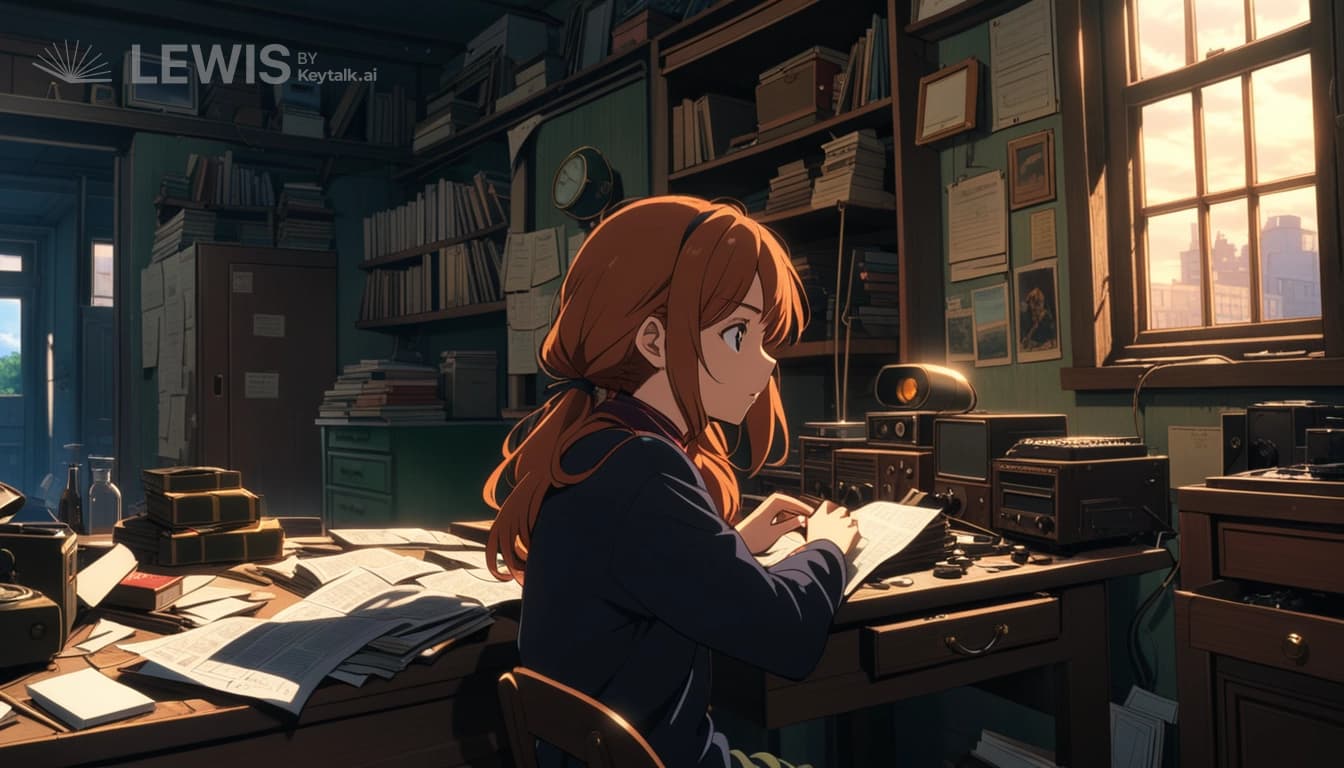
Juni, meanwhile, holes up in her attic lair, equal parts exhilarated and terrified by her own audacity. She’s aware she’s crossed a line but can’t help feeling a rush of power as she watches the town unravel from afar. Her motives are complicated: she craves attention and justice but is unprepared for the scale of chaos she’s unleashed. She monitors chatter online and over walkie-talkie, her fingers itching to interfere again, but guilt begins to creep in—especially when she sees how deeply some of her “victims” are hurting.

Back at Crust & Whimsy, Merry tries to regain control, but the bakery’s atmosphere is brittle. Customers whisper behind cupped hands; her staff exchange uneasy glances. Merry’s fear of exposure sharpens into resolve—she knows she must act, and fast, or everything she’s built will crumble. Driven by panic and pride, she conceives the idea for a public contest—something bold enough to redirect the town’s obsession and buy herself time. She jots frantic notes in her recipe book, the beginnings of “Truth & Tart” taking shape alongside her anxiety.

Throughout the village, the broadcast fractures routines and alliances. Rival bakers, emboldened by the upheaval, plot to exploit Merry’s potential downfall. Juni’s foster mother, worried for her reclusive daughter, tries and fails to reach her. Leo, Merrow’s enigmatic secret-keeper, senses the deeper wounds being exposed and quietly prepares to intervene, aware that the town’s appetite for truth may soon turn cannibalistic.

[Impact on the story]
This scene escalates the sense of crisis and urgency for all major characters. Merry’s desperation crystallizes into action, setting up the contest that will drive the next phase of the plot. Juni’s internal conflict is seeded, hinting at the guilt and loneliness beneath her bravado. The town’s social order begins to unravel, creating opportunities for new alliances, betrayals, and revelations. Emotional tension ratchets up: no one feels safe, and the line between honesty and cruelty blurs.

[Description]
The aftermath of Juni’s broadcast plunges Merrow’s Bluff into chaos: secrets exposed, nerves frayed, alliances shifting. Merry, threatened and cornered, seizes on a wild plan to distract the town, while Juni grapples with the moral weight of her actions and Leo quietly prepares to mediate the fallout. The scene deepens the conflict, pushing every character toward bold—and dangerous—choices.
scene 3 image
Scene 3
[Title]
The Birth of “Truth & Tart”: Sugar, Dare, and Deceit

[Place]
Crust & Whimsy bakery’s kitchen and front counter, quickly bleeding out onto the bustling high street as word spreads. In parallel, Juni’s attic hideout—cluttered with monitors, old radios, and a nest of wires. A glimpse of Leo’s shadowy office, lined with cryptic journals and jars of secrets.

[Time]
Midday, heat shimmering off cobblestones, the bakery crowded with nervous regulars and rubberneckers. Juni’s attic is dim and stifling, dust motes swirling in slanted sunlight.

[Action]
Merry, electrified by equal parts dread and determination, corrals her rattled staff and loyal customers in a makeshift war room at the bakery’s prep table. She pitches the “Truth & Tart” contest with rapid-fire bravado, spinning it as a celebration of Merrow’s Bluff’s unique brand of honesty and culinary flair—a distraction, but also a challenge to the town’s pride. Her team is skeptical but swept up in her charisma and the urgency of the moment. She assigns tasks: flyers to be printed, social media posts to be drafted, ingredients to be ordered in bulk. The contest rules come together in a creative frenzy: each round must expose a kernel of truth or dare contestants to pastry-themed humiliation. There’s a tension between Merry’s outward confidence and the gnawing anxiety that her secret could still break free at any moment.

Outside, word of the contest spreads like wildfire. The villagers, still reeling from the morning’s betrayals, latch onto the promise of spectacle and prizes. Some see it as a chance to redeem their reputations, others as a new arena for settling scores. Rival bakers grumble but sign up anyway, suspicious of Merry’s motives but unable to resist the lure of the festival spotlight.

Meanwhile, Juni, crouched over her screens, realizes the contest is a direct countermove—her broadcast has been usurped. She’s stung by Merry’s audacity but also fascinated, her competitive streak ignited. She contemplates how to infiltrate or sabotage the event, weighing guilt against the thrill of the game. She’s also increasingly aware of the emotional fallout in the village, watching clips of townsfolk fighting or crying and feeling the first real pangs of regret.

In a quiet interlude, Leo receives news of the contest and senses the deeper stakes. He prepares to play his own role as mediator, jotting cryptic notes about “the wisdom of half-truths” and “the cost of spectacle.” His presence is mostly in the background, but his influence is felt as he reaches out—subtly—to both Merry and Juni, hinting that neither will find the answers they seek in pure revelation or pure deception.

[Impact on the story]
This scene launches the central contest that will drive the rest of the narrative. Merry transforms from passive target to active architect of chaos, asserting control even as her vulnerability deepens. The town, destabilized by Juni’s revelations, now rallies around a new focal point, setting the stage for further drama, alliances, and betrayals. Juni’s internal conflict sharpens: she’s no longer just an outside agitator but an invested player, torn between pride and remorse. Leo’s role as philosophical anchor and wildcard is established, promising future complications.

[Description]
Merry launches the “Truth & Tart” contest, pulling the town into her high-stakes distraction while battling her own fear of exposure. Juni, feeling both usurped and responsible, plots her next move from the shadows. The scene pivots the story from pure crisis into a combustible mix of competition, confession, and cunning.
scene 4 image
Scene 4
[Title]
Cream Puffs, Confessions, and the Ghosts We Bake With

[Place]
Crust & Whimsy’s kitchen during an after-hours prep session, spilling into the empty storefront and the darkened back alley; elsewhere, glimpses of Juni’s attic lair and Leo’s lantern-lit porch.

[Time]
Late evening, the bakery closed to customers but alive with the hum of ovens and the distant echo of laughter and nerves from the contest’s first day.

[Action]
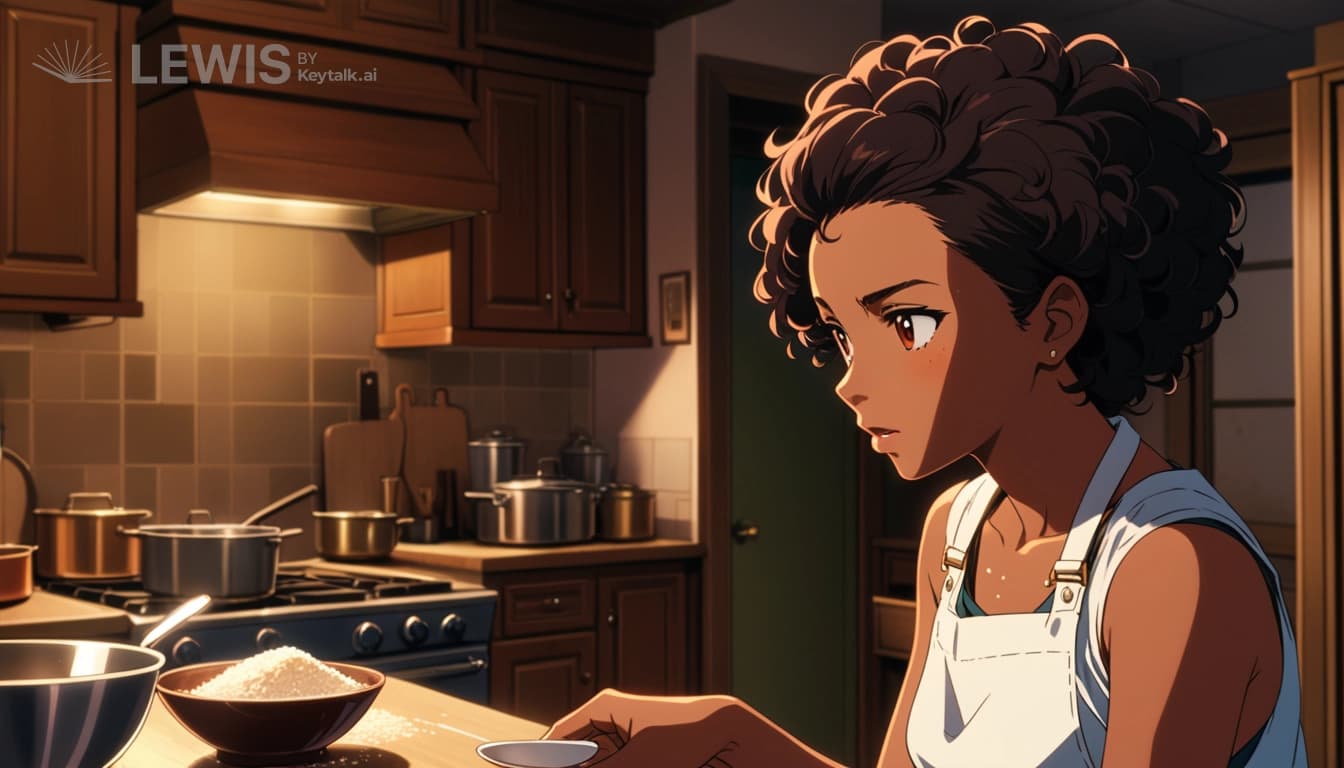
The aftermath of the Truth & Tart contest’s inaugural round finds Merry and her exhausted crew nursing sore arms and bruised egos, cleaning up cream and meringue from every surface. The mood is jittery—there’s relief that chaos reigned without disaster, but tension lingers, especially as rumors swirl about who will be targeted in tomorrow’s pastry dare. Merry, alone in the kitchen after shooing her staff home, wrestles with guilt and mounting anxiety, haunted by memories of her own sabotage and the risk of Juni’s next broadcast. She attempts to bake, but every recipe seems to go wrong—a metaphor for her unraveling composure.

Meanwhile, outside, Leo appears unannounced at the bakery’s back door, carrying a bundle of cryptic “truth tokens” he’s collected from townspeople—a strange tradition meant to foster confessions. He and Merry share a tense but intimate exchange; Leo pushes Merry to confront why she fears exposure more than failure, probing at the deeper wounds beneath her bravado. Merry resists, deflecting with sarcasm, but Leo’s presence stirs old vulnerabilities. Their conversation is layered with subtext—unspoken history, mutual respect, and the possibility of trust.

Up in her attic, Juni watches hacked footage of the evening’s contest on her battered laptop, torn between glee and guilt. She edits together a new audio clip, hinting at further secrets, but hesitates to hit “broadcast.” Her internal monologue is fractured—she’s both the town’s tormentor and its most misunderstood child, craving connection even as she plots new chaos. She experiments with subtle sabotage for the next round, planting clues for Merry while simultaneously raising the stakes.

Back at the bakery, Merry finally breaks down, confessing her fears aloud in the empty kitchen, her hands shaking over a ruined tray of éclairs. She makes a late-night call to her estranged sister, hinting at old wounds and unfinished business. The scene ends with Merry staring at her reflection in the bakery’s darkened window, the line between her public persona and private shame beginning to blur.

[Impact on the story]
This scene deepens the emotional stakes for Merry, forcing her to grapple with guilt and the fear of being truly seen. Her guarded interactions with Leo open the door to vulnerability and possible redemption, while Juni’s increasing ambivalence sows seeds for her eventual confrontation with both Merry and the town. The contest, once a clever distraction, now becomes a crucible for genuine confession and reckoning, blurring the line between spectacle and sincerity. Relationships are tested, alliances subtly shift, and the ghosts of the past begin to stir in earnest.

[Description]
As the first day of the contest ends, Merry’s emotional armor cracks under the weight of old secrets and new pressures. Leo’s enigmatic counsel pushes her toward self-examination, while Juni’s conflicted sabotage hints at growing remorse. The scene sets the stage for deeper confessions, heightened stakes, and the unraveling of carefully constructed facades.
scene 5 image
Scene 5
[Title]
The Lighthouse Judgment: Croquembouche and Consequence

[Place]
Atop the windswept cliffs outside Leo’s lighthouse, with the sea below and the entire town assembled in a makeshift outdoor amphitheater—folding chairs, picnic blankets, and a battered table stacked with precarious pastries. The lighthouse glows above, casting shadows that flicker over anxious faces.

[Time]
Twilight, the final day of the Truth & Tart contest. The air is sharp with salt and anticipation, the sky bruised purple and gold as the sun sinks behind the waves.

[Action]
The scene opens as the townspeople gather under the lighthouse’s beam, buzzing with nervous excitement and rumors about what the contest’s finale will bring. Merry stands at the center, outwardly composed but inwardly trembling, her hands busy with the last touches on a towering croquembouche—a pastry sculpture both extravagant and absurd. She’s surrounded by her loyal crew and a few adversaries, all waiting for the event to begin.

Juni lurks at the edge of the crowd, clutching her hacked transmitter, eyes darting between the judges’ table and her escape routes. She’s spent the day shadowing the preparations, torn between the urge to expose Merry and a gnawing uncertainty about the rightness of her crusade. Leo moves quietly among the onlookers, his presence steady and unobtrusive, keeping a watchful eye on both Merry and Juni.

Just as Merry prepares to announce the contest’s final dare, Juni’s voice crackles over the impromptu sound system, hijacking the moment. She broadcasts the story of Merry’s past sabotage, her words sharp and unvarnished, echoing over the cliffs and silencing the crowd. The revelation lands like a thunderclap—some gasp, some scoff, a few exchange knowing looks. Merry freezes, exposed and defenseless as the town’s eyes turn to her for explanation or atonement.

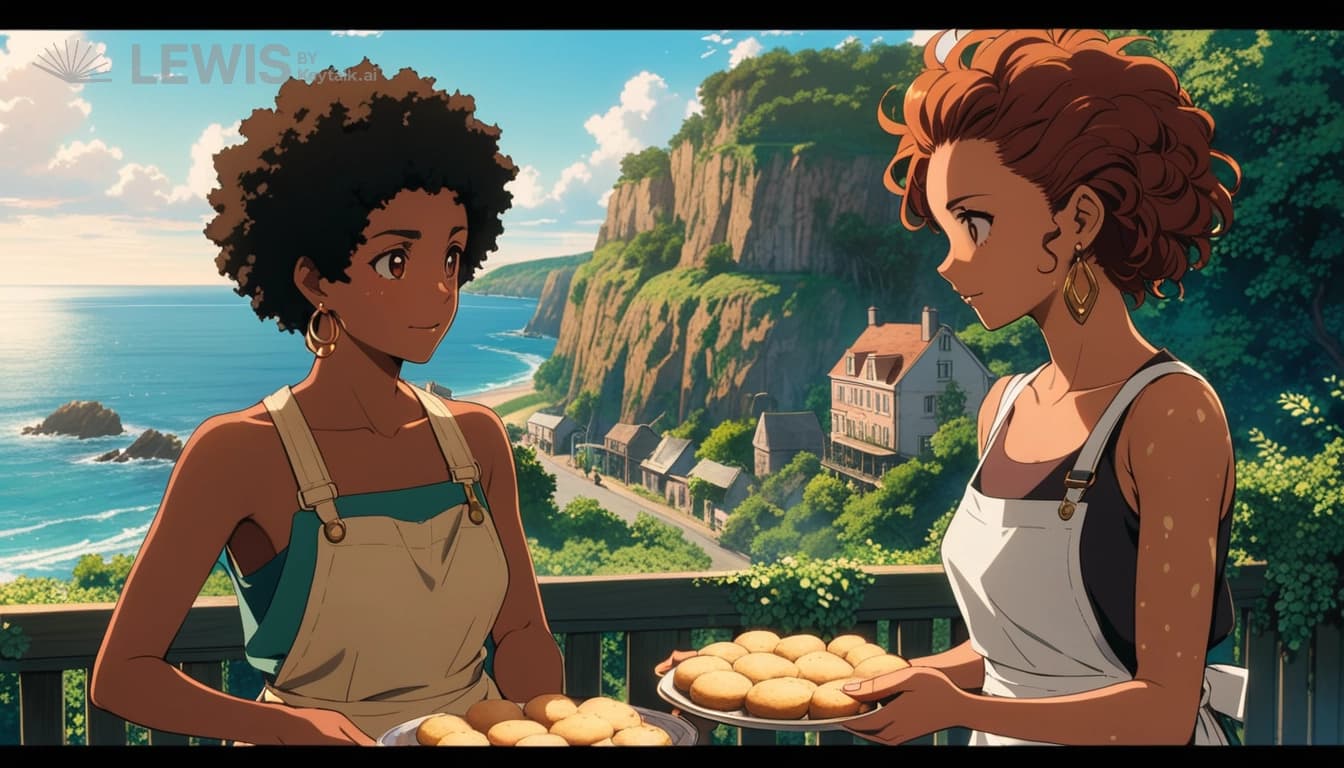
Instead of retreating, Merry makes a wild, impulsive choice: she steps forward and claims her story, laying bare her motives, her shame, and her longing for belonging. She explains each layer of the croquembouche, revealing that every profiterole is branded with a local misdeed—her own most prominent at the peak. She invites the townspeople to join her in both confession and indulgence, offering the pastry as a communal act of contrition and celebration.

Leo supports the shift, subtly steering the mood from shock to reflection, his words coaxing the crowd to face their own secrets without self-righteousness. Juni, shaken by the unexpected grace in Merry’s response and the town’s complicated reaction, is drawn out of her isolation. The contest transforms into a cathartic public reckoning—laughter and tears mingle as people confess, forgive, and feast together in the dusk.

[Impact on the story]
This scene is the story’s emotional and moral fulcrum: Merry’s public confession reframes her as both vulnerable and brave, shifting the town’s perception from judgment to empathy. Juni’s actions force a confrontation, but the fallout brings her the recognition and accountability she craves. Leo’s steady influence nudges the town toward self-awareness and softer forms of honesty. The spectacle unravels old rivalries and sparks new connections, setting the stage for a more forgiving community.

[Description]
In the contest’s explosive finale, public exposure gives way to collective catharsis as Merry owns her shame and transforms the crowd’s judgment into a shared moment of truth and absurdity. Juni’s gambit backfires—but ultimately frees her from isolation—while Leo’s quiet wisdom helps the town embrace the messiness of being human. The lighthouse’s glow becomes a symbol of flawed, communal hope.
scene 6 image
Scene 6
[Title]
After the Feast: Sea Mist, Second Chances, and the Art of Forgiving

[Place]
The quiet, post-festival streets of Merrow’s Bluff—Crust & Whimsy’s warmly lit kitchen, the foggy lanes winding down to the docks, and Leo’s weather-beaten porch overlooking the sea.

[Time]
Late night and dawn, immediately following the cathartic feast atop the cliffs and stretching into the next morning as the town returns to an uneasy normal.

[Action]
The scene opens in the aftermath of the contest’s climactic confessions. The town disperses in small, thoughtful knots—some laughing, some subdued, many quietly changed. Merry lingers in her bakery’s kitchen, cleaning up the last traces of flour and caramel from the wild night, exhaustion and relief warring in her bones. She’s joined by a trickle of townsfolk—her fiercest former critics, tentative and awkward, now bringing small tokens of goodwill: a hand-scrawled note, a bouquet of wildflowers, a clumsy apology wrapped in brown paper. Merry must decide how to respond to these gestures, torn between lingering shame and a new, raw sense of belonging.

Juni, meanwhile, wanders alone along the mist-shrouded docks, grappling with the consequences of her broadcast. She’s approached by Leo, who offers gentle, unhurried conversation and the battered radio kit—a symbol of both her disruptive gifts and a path to something more constructive. Leo’s mentorship is neither absolution nor punishment, but an invitation to channel her curiosity and mischief into something that serves, not wounds, the community. Juni hesitates, wrestling with guilt, pride, and the fear of fading into anonymity now that her secrets are spent.

Elsewhere, the town’s social fabric—frayed by days of forced honesty—begins to mend in unexpected ways: old rivals share a cigarette outside the bakery, estranged siblings sit on the sea wall passing a paper bag of pastries, and a local councilwoman quietly invites Merry to sit on the festival’s planning committee next year. The mood is one of tentative hope and wary optimism, as if the sea mist has softened the harsh outlines of everyone’s judgments.

The scene culminates at dawn, with Merry stepping outside just as Juni, clutching Leo’s radio kit, returns to the bakery’s stoop. There is a silent moment of recognition and truce—neither apology nor justification, just the shared exhaustion of two people who’ve survived exposure. Merry invites Juni in for breakfast, signaling the start of a new, honest alliance. The first rays of sunlight break over the cliffs, catching the bakery window and scattering gold across the flour-dusted counter.

[Impact on the story]
This scene provides emotional closure, showing how public reckoning can lead to private reconciliation. Merry’s willingness to accept kindness and Juni’s tentative acceptance of mentorship both signal growth and healing. The town, no longer obsessed with relentless honesty, begins to embrace vulnerability and second chances. The relationships among Merry, Juni, and Leo shift into something more collaborative and hopeful, hinting at future stories beyond the scandal.

[Description]
In the quiet after the storm, Merrow’s Bluff learns to forgive, and its outcasts find a new place among their neighbors. Merry and Juni, once adversaries, become unlikely allies, while Leo’s quiet guidance anchors the possibility of real change. The town’s obsession with brutal truth gives way to a gentler, messier sort of honesty—one that leaves room for forgiveness and fresh beginnings.
'Confessions Over the Loudspeaker'Story Chat

Want to chat with the characters from this story?

'Confessions Over the Loudspeaker'Story Chat

Want to chat with the characters from this story?

story image
story image
story image

You might also like

Comments0

theme music