Plot Synopsis
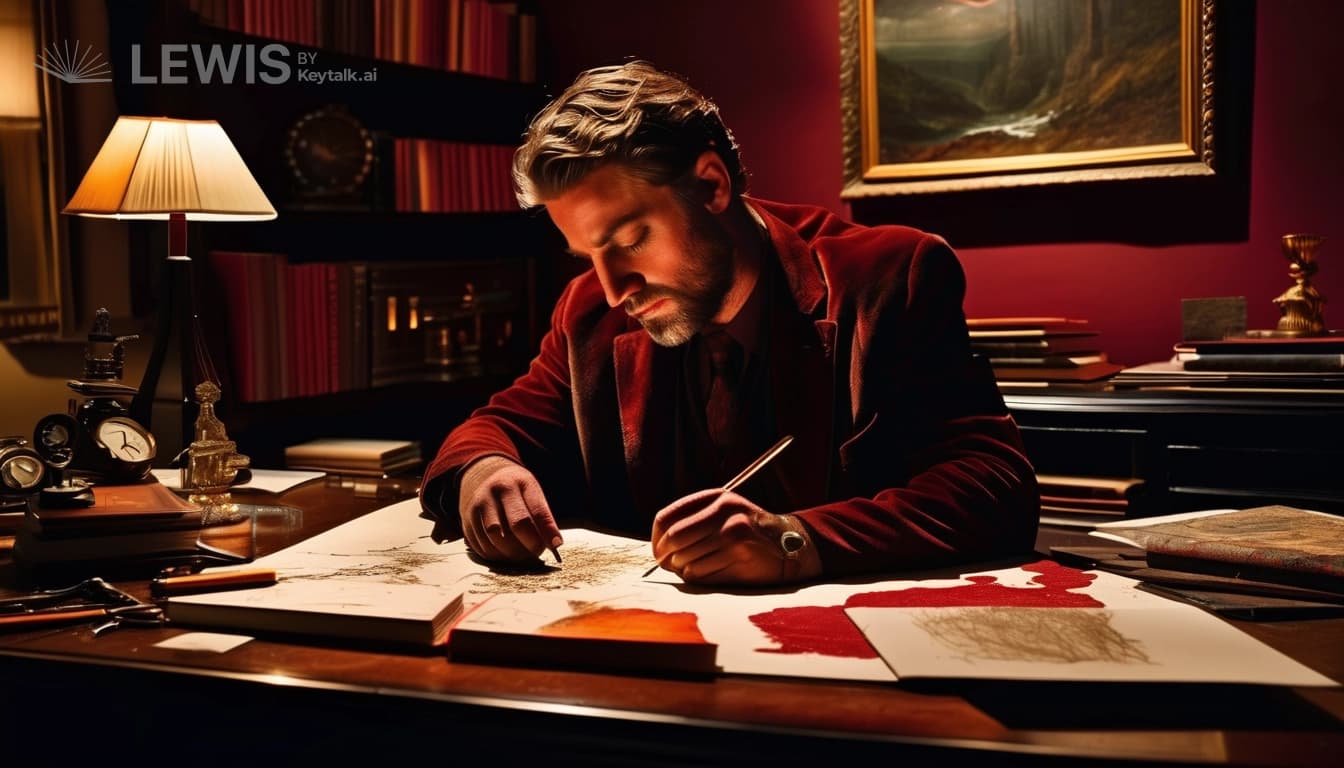
In the suffocating shadows of London’s avant-garde art scene, Alistair Hawthorne, a renowned art critic known for his rapier wit and unflinching skepticism, stumbles upon a collection of paintings that shakes the foundation of his meticulously constructed worldview. What begins as a casual visit to a dimly lit gallery unveiling the works of the enigmatic Étienne Rousseau quickly devolves into something far more sinister. The paintings—surreal, disquieting amalgamations of human forms and abstract chaos—are unlike anything Alistair has ever encountered. Yet, it is not their aesthetic that disturbs him most; it is the inexplicable sense of déjà vu they provoke, not only in him but in every viewer who lays eyes on them. Each piece seems to stir buried memories that do not belong to the beholder, as if the canvases themselves are windows to a shared, collective nightmare.
Alistair, ever the skeptic, dismisses the phenomenon as pretension cloaked in mystique, a calculated move by Rousseau to further cement his reputation as a tortured genius. Yet, his cynicism begins to fray when one of the paintings eerily mirrors the aftermath of a recent, catastrophic train derailment—a disaster that had occurred mere days after the piece was completed. Disturbed but intrigued, Alistair begins to dig deeper into Rousseau’s unsettling oeuvre, a journey that leads him to the painter’s crumbling atelier hidden within the labyrinthine alleys of East London. Rousseau, a figure of magnetic contradiction—both brooding recluse and theatrical provocateur—welcomes Alistair with an unsettling mixture of charm and menace. Their initial exchange crackles with tension as Rousseau cryptically hints at his belief that art is not merely an act of creation but of revelation, a means to glimpse the threads of fate woven into the fabric of existence.
As Alistair immerses himself further into Rousseau’s world, he enlists the help of Nikos Vasilakis, an eccentric occult symbolist whose expertise in deciphering esoteric codes proves invaluable. Nikos, with his coal-black eyes and cluttered Bloomsbury flat brimming with arcane artifacts, is both a guide and a warning. He identifies hidden symbols embedded within Rousseau’s works—ancient sigils, some of which, he claims, are not merely predictive but catalytic, capable of shaping the very events they foretell. Alistair remains skeptical, but as more disasters unfold—each eerily prefigured by Rousseau’s increasingly macabre paintings—he can no longer dismiss the possibility that the artist’s canvases are more than mere pigment and imagination. What’s more, Alistair begins to suspect that his own uncanny knack for recognizing the “hidden” in art is not a product of skill alone but a latent sensitivity to the same forces that Rousseau manipulates.
The stakes rise when Alistair uncovers a chilling pattern: each of Rousseau’s paintings grows progressively closer to his own life, culminating in an unfinished canvas that features a distorted likeness of Alistair himself. The scene depicted is ambiguous yet foreboding—a shattered clock, a blood-red river, and a shadowed figure whose form is both alien and unnervingly familiar. Alistair’s paranoia begins to consume him as he wrestles with the implications: is Rousseau merely a harbinger of fate, or an architect of destruction? And if the latter, is Alistair merely a pawn in his game, or something more significant? Rousseau’s cryptic remarks about the “burden of insight” only deepen the mystery, leaving Alistair torn between a desire to expose the artist as a fraud and a growing fear that he is grappling with forces far beyond his comprehension.
Desperation drives Alistair to confront Rousseau once more, this time in the painter’s disorienting atelier, where mirrors distort reality and fragments of forgotten languages whisper from the walls. Their exchange turns confrontational, with Alistair accusing Rousseau of orchestrating chaos under the guise of art. Rousseau, however, counters with an unnerving calm, suggesting that Alistair’s role in this unfolding narrative is not as incidental as he believes. “You see what others cannot,” Rousseau murmurs, his dark eyes gleaming with something between pity and malice. “That is both your gift and your curse.” The conversation spirals into violence as Alistair, pushed to his breaking point, attempts to destroy the unfinished painting of his fate, only to find himself physically unable to touch the canvas, as though an unseen force binds him.
In the climax, Alistair, Nikos, and Rousseau are drawn into a final confrontation, a collision of reason, obsession, and the unfathomable. Nikos reveals that the symbols embedded in Rousseau’s works form a ritualistic pattern—a lattice of meaning designed to culminate