Beauty Engineered from Pain cover image

Beauty Engineered from Pain

In the cobalt-lit laboratories of an isolated 1930s research institute, a misunderstood mathematician with a penchant for paradoxes revolutionizes human consciousness by engineering a device that translates abstract pain into visual art—but as her mind unravels beneath the weight of her invention's twisted logic, she must choose between personal sanity and unleashing a new dimension of genius to inspire a generation of lost souls.

Weekly ranking

rank icon image
#7 inConcept
rank icon image
#7 inConcept
rank icon image
#8 inConcept
Scroll

Plot Synopsis

Dr. Evelyn Larkspur’s story begins in the cobalt-lit labyrinth of the Institute for Advanced Psychometrics, perched atop a wind-lashed bluff on the English coast. The year is 1937, and Evelyn, both revered and reviled for her unorthodox theories, is on the brink of a breakthrough that could rewire the very nature of human experience. For months, she’s been haunted by the memory of her brother’s disappearance—an open wound that fuses with her obsession: to bridge logic and emotion, to find meaning in the chaos of pain. Her invention, the Synesthetic Translator, will render suffering as visual art—transforming the abstract agony of the mind into haunting images projected on phosphorescent screens. Evelyn’s motivation is as much desperation as genius: she wants to make pain visible, to give voice to the silent torment that devoured her brother and, she fears, now stalks her own mind.

Every evening, Evelyn’s fingers trace fractals across her workbench as she spars with Asha Mukherjee, her irrepressible laboratory technician. Asha, with her poet’s soul and a skin mapped by old burns, sees Evelyn’s invention as a promise—a way to prove that beauty and sorrow are not enemies but siblings. Their partnership is symbiotic and volatile: Evelyn’s logic grounds Asha’s intuition, while Asha’s emotional intelligence tugs Evelyn toward vulnerability. Yet, as the device nears completion, it draws the attention of Professor Anton Gedeon—the Institute’s director and self-appointed guardian of ethical boundaries. Gedeon, scarred by a lifetime spent policing scientific ambition, is both threatened and fascinated by Evelyn’s reckless creativity. He warns her: to tamper with the architecture of pain is to invite madness, both personal and societal.

Defying Gedeon’s injunctions, Evelyn and Asha conduct secret trials. The Translator works—too well. The first test subject, a war-traumatized patient, emits a cascade of images so visceral they reduce the watching team to tears. For Evelyn, the moment is rapture and terror entwined. She sees the possibility of redemption: a world where suffering is no longer hidden, where the isolated can communicate their anguish in color and form. But the device does not discriminate between the pain of others and the pain of its creator. As Evelyn pushes herself to perfect the algorithms, her own memories—her brother’s last words, the shadowed silences of her Vienna childhood—begin seeping into the projections, blurring the line between observation and confession.

Gedeon, sensing the growing mania in Evelyn’s work, threatens to shut her down. He frames his opposition as duty, but beneath his fury lies envy—a hunger for the transcendence he’s spent a lifetime denying himself. He offers Evelyn a choice: submit her invention for ethical review, or see it destroyed. Asha urges Evelyn to fight, but as the institute fractures into factions—traditionalists fearing chaos, radicals clamoring for revolution—Evelyn’s mind begins to unravel. She’s plagued by waking dreams, the Translator’s images bleeding into her reality. She sees her brother’s face in every mirror, hears his voice in the machine’s static. The more she tries to control the device, the more it consumes her, feeding on her paradoxical belief that only through surrendering to chaos can true beauty emerge.

The crisis explodes during a clandestine demonstration for a group of lost-soul artists and philosophers, smuggled into the institute by Asha. As the Translator projects their collective pain, the room becomes a riot of color and form—anguish rendered sublime. The audience is transformed: some weep, some riot, some fall silent, awed by the communion of suffering and art. But the device overloads, and Evelyn collapses, mind fracturing under the strain. Gedeon arrives to shut the experiment down, but witnesses something he cannot deny: the possibility of meaning forged from pain. Torn between his duty to contain the madness and his yearning to believe, he hesitates.

In the aftermath, Evelyn is faced with the ultimate paradox. She can choose to reclaim her sanity by destroying the Translator, sealing her vision away forever. Or she can unleash it, knowing it may drive her—and others—into uncharted realms of genius and madness. Asha, emboldened by her own transformation, pleads with Evelyn to let the world see: “Pain is not the enemy. Hiding it is.” Evelyn, at the edge of reason, makes her choice. She entrusts the device and her notes to Asha, knowing she cannot survive another descent into its logic. Evelyn retreats into obscurity, her mind irreparably changed, while Asha becomes the Translator’s new steward—an interpreter of suffering, a bridge between logic and art.

Decades later, the legend of Evelyn Larkspur inspires a generation of artists, mathematic

Model Used
GPT-4.1
text
Stable Diffusion
image

Story Details

Keytalk Prompts Used
See all Keytalks
no chosen prompts
no chosen prompts
no chosen prompts
no chosen prompts
no chosen prompts
no chosen prompts
Model Used
GPT-4.1
text
Stable Diffusion
image

Character

Protagonist Character

Dr. Evelyn Larkspur

GenderFemale
OccupationMathematician and Experimental Art Theorist

Profile

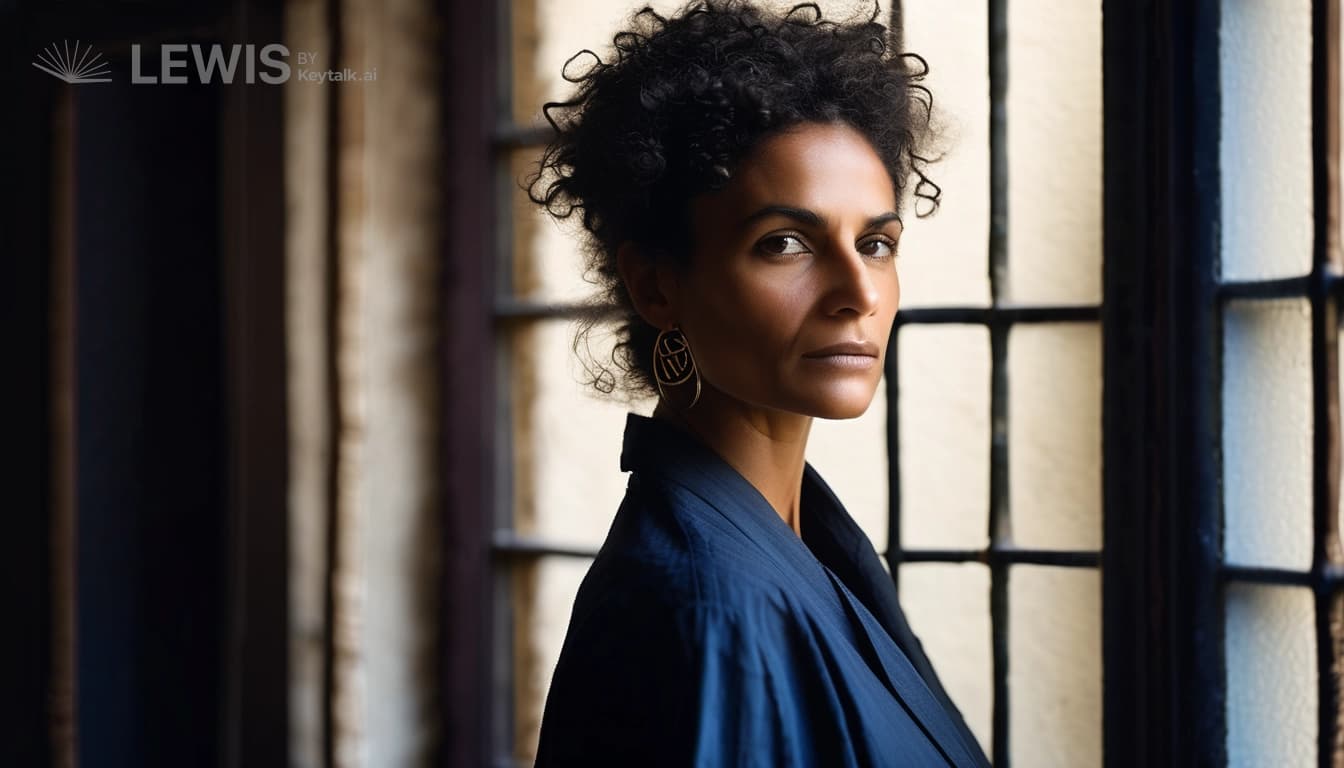
Dr. Evelyn Larkspur stands at a lean five-foot-eight, her posture both precise and slightly hunched from years spent bending over equations and blueprints in the cobalt glow of her laboratory. Born in Vienna to a Jewish mother and British father, Evelyn’s accent is a curious blend of clipped Oxford consonants and lyrical Viennese inflections, her speech peppered with mathematical analogies and darkly whimsical jokes that often bewilder her colleagues. At thirty-four, she’s distinguished by angular cheekbones, restless blue eyes flecked with gray, and a shock of unruly black hair she pins back with whatever’s at hand—usually a pencil or copper wire. Her wardrobe is a deliberate collage of men’s tailored trousers, threadbare cardigans, and stained lab coats over faded silk blouses, all chosen for utility rather than style, yet somehow carrying an eccentric elegance. Evelyn’s hands are perpetually ink-stained, her fingers marked by tiny burns from failed experiments, and she wears a battered silver ring on her left index finger—a relic from her mentor, lost to war. Driven by a conviction that logic and art are twin mirrors of the soul, Evelyn’s worldview is rooted in paradox; she thrives on contradiction, believing beauty emerges from chaos and meaning from uncertainty. Her brilliance is matched by a bristling impatience with academic bureaucracy and a tendency toward obsessive rumination, which isolates her socially but magnetizes those few who glimpse her visionary spark. Haunted by the memory of her brother’s unexplained disappearance, Evelyn channels her longing for connection into her work, hoping to bridge the chasm between intellect and emotion. She is fiercely protective of her invention, viewing it as both salvation and curse, and her conversations oscillate between rapid-fire insight and abrupt, vulnerable silences. With a reputation as both a genius and a madwoman, Evelyn’s greatest challenge is reconciling her desire to inspire others with the creeping suspicion that her mind may be fracturing under the strain—a tension visible in her nervous habit of tracing invisible fractals on any surface, and in the way she stares at her own reflection, searching for patterns in the chaos.
Antagonist Character

Professor Anton Gedeon

GenderMale
OccupationDirector of Ethical Sciences, Research Institute

Profile

Professor Anton Gedeon, aged 56, stands at a formidable six foot two with a lean, almost ascetic build that belies the iron discipline honed over decades. His pale, Central European skin is mapped with the fine lines of perpetual tension, and his deep-set hazel eyes—hooded by bristling, silver-flecked brows—regard the world with a clinical detachment that chills colleagues. Gedeon’s hair, once jet-black, is now a steel-gray crown swept back with military precision, exposing a broad, intelligent forehead and a nose slightly crooked from a youthful duel. Raised in Budapest’s intellectual circles and shaped by the moral ambiguities of postwar academia, Anton’s worldview is rooted in a rationalist humanism, yet hardened by his experience of ideological betrayals and the collapse of faith in progress. His tailored charcoal suits, always immaculate, are paired with bespoke leather gloves—a quirk that conceals the tremor in his left hand, a remnant of chemical exposure during early experiments. As Director of Ethical Sciences, Gedeon commands the institute’s moral compass, wielding policy as both shield and weapon; his speech is clipped and formal, laced with Hungarian idioms and a biting wit that brooks no dissent. Beneath his rigor lies a gnawing frustration: decades of safeguarding scientific integrity have left him isolated, suspicious of brilliance untethered by ethics, and haunted by the memory of a brother lost to reckless innovation. His relationships are transactional, marked by mentorships that turn to rivalry, and his core aspiration is to anchor the institute’s legacy in responsible discovery—even if it means suppressing radical genius. Yet, his principled stance is tinged with envy and a secret yearning for transcendence, making him both a natural adversary and a reluctant admirer of those who challenge the boundaries he fights to uphold.
Sidekick Character

Asha Mukherjee

GenderFemale
OccupationLaboratory Technician and Amateur Poet

Profile

Asha Mukherjee, a 28-year-old Bengali laboratory technician and amateur poet, stands at 5'3", her slight frame belied by an energy that seems to vibrate through her every gesture. Her skin, a warm bronze, is marked by a constellation of pale burn scars along her left forearm—remnants of a childhood spent tinkering with her father’s failed electrical inventions in Calcutta. Asha’s almond-shaped eyes, deep and dark as midnight tea, rarely settle for long; they flicker with curiosity and a restless empathy that often draws her into the emotional undertow of others. Her black hair, cropped chin-length and perpetually tousled, frames a face whose sharp cheekbones and full lips are nearly always set in a contemplative half-smile, as if she’s quietly amused by the world’s contradictions. She dresses in practical, ink-stained linen trousers and oversized cotton shirts, usually borrowed from her brother’s trunk, accessorized with a single silver earring—a family relic she twists absently when anxious. Fluent in Bengali and English, her speech is rapid, unguarded, and peppered with literary references; she’s prone to quoting Tagore when challenged, and her accent is soft but insistent, colored by Calcutta’s rhythms. Asha’s worldview is shaped by the collision of colonial science and Bengali mysticism: she believes data and dreams are equally valid, and her approach to problems is intuitive, improvisational, and often at odds with the institute’s rigid protocols. Though fiercely loyal to Evelyn, whom she regards as both mentor and muse, Asha is motivated by her own longing to transmute personal suffering into beauty—a desire that drives her secret poetry and her willingness to challenge Professor Gedeon’s moral absolutism. Her greatest strengths are her emotional intelligence and poetic imagination, but she struggles with self-doubt, especially when her ideas are dismissed as “unscientific” by her superiors. Asha’s presence disrupts the protagonist’s isolation, offering warmth and interpretive insight where Evelyn’s logic falters, while her open defiance of bureaucratic authority quietly undermines the antagonist’s control. She is haunted by the fear that her creative impulses will be crushed by institutional conformity, yet she yearns to prove that art and science, pain and beauty, can coexist in a world obsessed with order.
Model Used
GPT-4.1
text
Stable Diffusion
image

World

Location/Time, Era:
Perched atop the storm-battered cliffs of the English coast, the Institute for Advanced Psychometrics stands as a fortress of intellect and isolation in 1937—a year suspended between wars, where the air crackles with both dread and restless possibility. The institute itself is an austere labyrinth, its corridors veined with cobalt-blue light that never quite warms the stone, and laboratories humming with the secretive energies of minds desperate to outrun the darkness encroaching on Europe. The wind shrieks through salt-stained windows, and the sea below serves as both moat and symbol—an ever-changing boundary between the known and the unknowable. Outside, the world stumbles in the aftermath of one great cataclysm and the shadow of another; within, the researchers, refugees and radicals alike, chase salvation through science, haunted by the ghosts of lost ideals and familial absences. Time here feels oddly elastic, as if the institute itself is suspended between epochs, its inhabitants half-exiles, half-oracles, clinging to the hope that discovery can still defy despair.

Key rules of the world and their impact on the story and beyond:
The institute is governed by a strict yet brittle code of ethical oversight—codified by Professor Gedeon and enforced through a labyrinthine review board, where radical ideas are alternately smothered or permitted to flourish in carefully controlled shadows. Scientific inquiry is both weapon and shield; every innovation must justify itself as a bulwark against human suffering, yet the definition of “suffering” is hotly contested, and bureaucratic power struggles turn each breakthrough into a political gamble. The personal is inextricable from the scientific: researchers are evaluated not only for their results, but for the psychological toll their work exacts, leading to clandestine experiments, blackmail, and alliances forged in desperation. The fate of any invention—particularly Evelyn’s Synesthetic Translator—hinges on its ability to survive both the scrutiny of the Ethics Directorate and the whispered intrigues of rival factions. This world’s rules force every character to weigh genius against responsibility, and to confront the harrowing question: What price is worth paying for revelation?

Visual depiction of the world and its unique features:
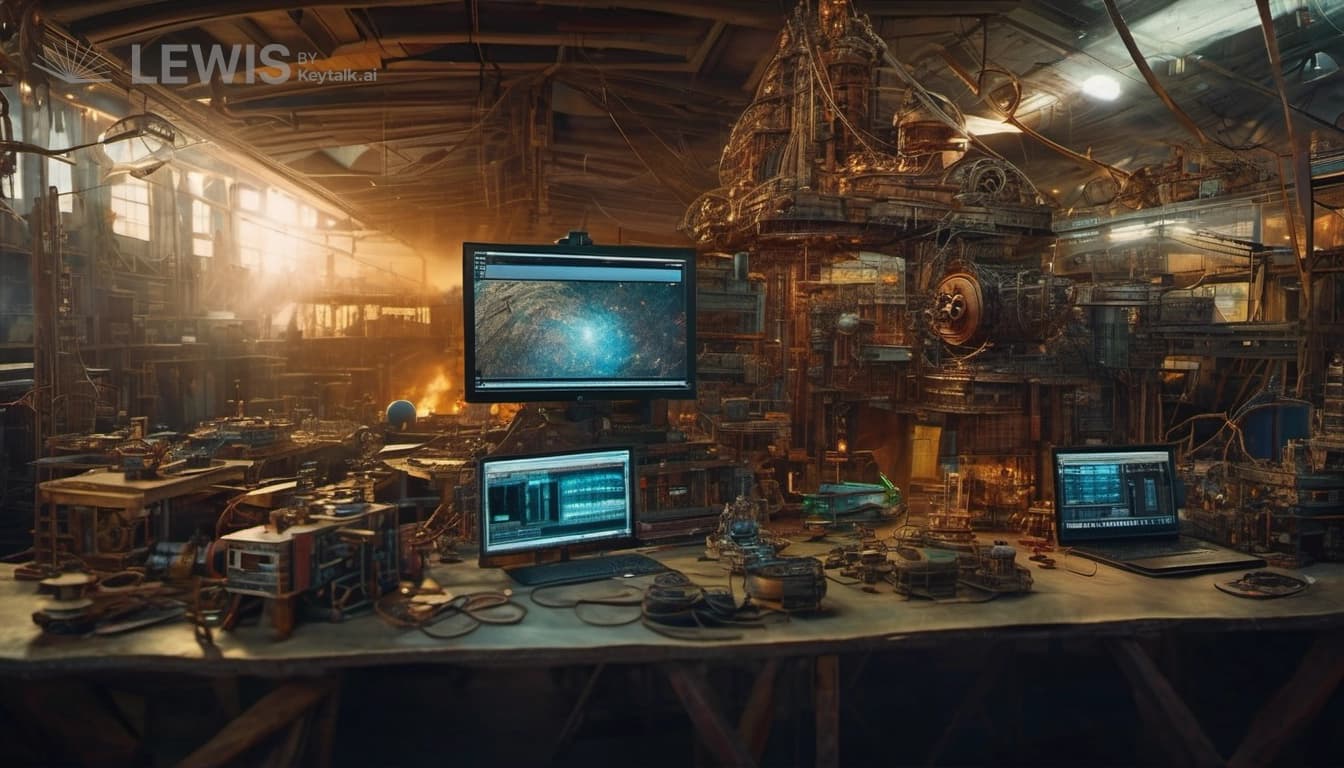
Cobalt light spills from beneath laboratory doors, painting the corridors in bruised blue shadows; the walls are lined with brass switchboards, battered blackboards crammed with looping equations, and faded propaganda posters urging “Progress With Prudence.” In the heart of Evelyn’s lab, fractal diagrams spiral across every surface, ink-stained notes intermingle with charred circuitry and glass vials swirling with phosphorescent liquids. The air tastes of ozone and old paper, and the hum of experimental machinery is punctuated by the distant roar of the sea. In hidden chambers, forbidden devices glow like fallen stars—magnetrons, cathode-ray projectors, and the Synesthetic Translator itself: a monstrous, beautiful assemblage of lenses, copper coils, and translucent screens that flicker with the pain of the soul. The institute’s exterior is all gothic stone and steel, but inside, it’s a fever dream of invention—a place where beauty and terror bloom in tandem.

Notable technology, philosophy, or cultural elements influencing the world and narrative:
This is a world where the scars of war have bred both technological audacity and philosophical uncertainty. The Synesthetic Translator is the apex of a movement obsessed with mapping the invisible—pain, memory, genius—onto the physical world, a heretical fusion of mathematics, psychoanalysis, and avant-garde art. The institute’s culture is an uneasy marriage of British empiricism and Continental mysticism, shaped by émigré scientists fleeing fascism, colonial technicians with hybrid worldviews, and a generation of thinkers who no longer trust progress to save them. Poetry and paradox are as valued as data and diagrams; the boundary between madness and genius is not just thin, but actively cultivated. In this crucible, every act of creation risks unleashing chaos, and every attempt to suppress the strange only makes it more dangerous—forcing all who dwell here to choose, again and again, between safety and transcendence.
representative image
location 1 image

Location 1

Title : The Mirror Archive Beneath St. Ethelred’s Orphanage
Description : Buried beneath the orphanage’s cold flagstones, the Mirror Archive sprawls—a vault of warped glass panels and moth-eaten ledgers cataloguing every vanished child since the Great War. Flickering candlelight fractures across the mirrors, casting fractured reflections that seem to whisper lost names and memories; here, Evelyn first glimpsed her brother’s face dissolving into a mosaic of sorrow, the air thick with dust, secrets, and the electric promise of revelation. Each step echoes with the weight of history and the ache of unsolved disappearances, making the Archive not just a repository, but a living wound at the heart of Evelyn’s obsession.
location 2 image

Location 2

Title: The Nightingale Salon of Exiled Minds
Description: Hidden behind velvet blackout curtains in a forgotten wing of the Institute, the Nightingale Salon thrums with the feverish hush of forbidden conversation. Its walls, painted midnight blue and stitched with constellations of pinned sketches and fevered manifestos, pulse with the raw energy of those banished for thinking too much or too strangely. Here, amid mismatched settees and the scent of burnt coffee, Evelyn’s clandestine demonstration explodes into riotous color—anguish and genius projected in spectral light, transforming the room into a cathedral where suffering becomes art and exile, for one night, feels like belonging.
location 3 image

Location 3

Title: The Ruined Semaphore Gardens of Brighton’s Forgotten Front

Description: Once a proud parade of manicured hedges and semaphore towers signaling secrets to the Channel, the Gardens now sprawl in wild disarray—iron arms rusted to prayer, flowerbeds tangled with salt-thick brambles, and marble benches pitted by decades of Atlantic wind. Here, beneath a sky bruised violet by dusk and war, Evelyn’s demonstration erupts: pain and memory bloom in spectral color across shattered flagstones, the Translator’s projections flickering against the mossy ruins like ghosts desperate to be seen. The Gardens, half-memorial, half-battleground, swallow every scream and sob, their forgotten machinery echoing Evelyn’s final gamble—beauty torn from the wreckage of suffering, unreconciled and unstoppable.
Model Used
GPT-4.1
text
Stable Diffusion
image

Scenes

scene 1 image
Scene 1
The Arrival of the Night Patient
[Place] - Institute for Advanced Psychometrics, main laboratory—its cobalt glow fractured by storm shadows at the window
[Time] - Late evening, as the sea lashes the cliffs and the Institute’s corridors empty into silence

[Action]
The scene opens with Evelyn hunched over her workbench, hands stained with graphite, as Asha quietly slips in, her eyes tired but alert. The two exchange a silent acknowledgment—the rhythm of their partnership established in the hush before midnight. The Institute feels like a fortress and a prison, every tick of the clock amplifying Evelyn’s anxiety as she awaits the arrival of a war-traumatized patient, the first volunteer for their secret Synesthetic Translator trial. The storm outside is more than background noise; it mirrors the turmoil brewing inside Evelyn, whose thoughts spiral between scientific ambition and the ache of her brother’s absence. Asha prepares the equipment with a reverence bordering on ritual, coaxing Evelyn toward vulnerability with a mixture of wit and gentle provocation. The suspense builds as the patient, shrouded in a hospital blanket and accompanied by a skeptical nurse, is wheeled in. The air thickens with the collision of hope, fear, and ethical uncertainty. Evelyn masks her desperation behind clinical precision, but her hands tremble as she adjusts the device. Asha senses her mentor’s fragility and offers a fleeting touch, grounding Evelyn in the present. The scene closes on the threshold of the experiment, the patient’s haunted eyes meeting Evelyn’s—two strangers bound by suffering, about to step into the unknown.

[Impact on the story]
This scene forges the emotional stakes that will drive the narrative: Evelyn’s fear of failure and her longing for redemption, Asha’s faith in art’s power to heal, and the Institute’s oppressive atmosphere. The introduction of the night patient crystallizes Evelyn’s internal conflict between scientific detachment and personal anguish, while the charged silence between her and Asha hints at their deep, complicated bond. The arrival of the patient marks the point of no return for both women, setting in motion the ethical and psychological unraveling that will define the rest of the story.

[Description]
Evelyn and Asha prepare for their first forbidden trial as a war-scarred patient arrives under cover of night. The tense atmosphere exposes the raw hopes and fears beneath Evelyn’s scientific ambition, while Asha’s quiet support anchors her mentor in the storm. The experiment’s imminent beginning signals the start of the story’s central conflict: the cost of making pain visible.
scene 2 image
Scene 2
[Title] - Fractals and Fault Lines: Evelyn and Asha’s Midnight Bargain
[Place] - Institute basement laboratory, the private corner where forbidden experiments are staged, lit only by the phosphorescent blue of the Synesthetic Translator and scattered lamplight
[Time] - Midnight, immediately following the arrival of the night patient, as rain hammers the old stone above

[Action]
The laboratory is cloaked in uneasy quiet after the patient’s arrival. Asha double-checks the wiring, her movements precise but tense, while Evelyn paces, consumed by the gravity of what they’re about to attempt. The patient’s presence lingers like a ghost—he waits in the adjacent room, his trauma palpable even through closed doors. Evelyn’s nerves fray as she obsesses over the algorithm’s calibration, haunted by flashes of her brother’s face in the glass. Asha senses Evelyn’s unraveling and pushes her to articulate what she’s truly afraid of: failure, exposure, or the possibility that the Translator will reveal more than pain—perhaps even beauty, or madness, that can’t be controlled.

Their partnership teeters on a knife-edge. Asha, emboldened by her own scars, insists on moving forward, arguing that their work is a lifeline for both of them. She shares a fragment of her past—a moment of violence transformed into poetry—forcing Evelyn to confront the difference between understanding pain intellectually and living it. As the storm outside intensifies, so does the storm within. Evelyn hesitates, considering abandoning the test, but Asha’s conviction anchors her. Together, they strike a midnight bargain: Asha will run the Translator, risking her own mind if something goes wrong, while Evelyn will document the results and, if necessary, shut everything down. In this moment, their fates entwine—not just as scientist and assistant, but as wounded souls daring to transmute pain into art.

[Impact on the story]
This scene cements the fragile trust and tension at the heart of Evelyn and Asha’s relationship, deepening their personal stakes and exposing the philosophical rift between them: is pain meant to be solved, or shared? The midnight bargain ensures that both women are equally invested and vulnerable, setting the tone for their shared rebellion. Evelyn’s internal fractures are brought to the surface, while Asha’s resolve and empathy become the glue holding the project—and Evelyn—together. The scene also lays the groundwork for the emotional and ethical chaos to come, foreshadowing the costs of their ambition.

[Description]
In the aftermath of the patient’s arrival, Evelyn and Asha confront their fears and motivations in the shadowed laboratory. Their midnight bargain binds them together, with Asha risking herself for the experiment and Evelyn forced to face her own unraveling. This scene forges their alliance in secrecy and sets the stage for the Translator’s first, fateful trial.
scene 3 image
Scene 3
[Title] - The Ethics Committee Masquerade: Gedeon’s Ultimatum and Hidden Longings
[Place] - The Institute’s grand boardroom, its panelled walls hung with somber portraits of departed directors, flickering with the ghostly blue of filtered moonlight through rain-streaked glass
[Time] - Early morning, hours after the clandestine trial, while the laboratory is still heavy with the memory of forbidden miracles

[Action]
The scene opens on the aftermath of the midnight experiment. Evelyn and Asha, still raw from what they’ve witnessed, are summoned to a hastily convened emergency meeting of the Institute’s Ethics Committee, presided over by Professor Gedeon. The room feels like a theater—every committee member masked by professional detachment, yet the tension is animal, palpable. Gedeon’s presence dominates: he alternates between icy authority and flashes of genuine fascination with Evelyn’s work. He demands an account of the night’s activities, forcing Evelyn and Asha to navigate a minefield of half-truths and omissions, knowing that full disclosure could mean the end of the Translator—and their careers.

As the questioning intensifies, Evelyn’s internal conflict simmers. She’s torn between defiance and guilt, her mind replaying the night’s kaleidoscopic images. Gedeon, sensing her vulnerability, pivots from interrogation to temptation: he offers her a devil’s bargain—submit the Translator for a formal ethical review, risking bureaucratic suffocation and possible confiscation, or destroy it herself before it spirals out of control. The committee fractures along ideological lines, some members whispering about the device’s revolutionary promise, others recoiling in fear. Asha, excluded from the official conversation but watching from the sidelines, catches Gedeon’s gaze—a moment charged with recognition between two outsiders who crave transcendence but fear madness.

The emotional stakes escalate as Evelyn realizes Gedeon’s opposition is deeply personal. Beneath his rhetoric, she glimpses envy and longing: a man who once dreamed of changing the world and now polices its boundaries. Their confrontation becomes intimate, almost confessional, as Gedeon challenges her to consider the cost of her obsession—not just to herself, but to everyone the Translator touches. The masquerade of objectivity collapses; the scene ends with Gedeon issuing his ultimatum, Asha pressing Evelyn to fight for their vision, and the committee left in uneasy deadlock, the future of the Translator hanging by a thread.

[Impact on the story]
This scene thrusts Evelyn and Asha’s rebellion into the open, escalating their conflict with the Institute’s power structure and exposing the personal stakes for Gedeon. The ultimatum forces Evelyn to confront the ethical and emotional consequences of her work, while Asha’s loyalty and vision become her anchor. The fractured committee foreshadows the coming institutional chaos, and the charged exchanges between Evelyn and Gedeon deepen the story’s exploration of ambition, envy, and the cost of genius.

[Description]
In the Institute’s boardroom, Evelyn and Asha face a hostile Ethics Committee and Gedeon’s ultimatum: surrender the Translator for review or destroy it. The encounter lays bare hidden motivations and fractures the Institute, forcing Evelyn to weigh the price of her obsession against the promise of transformation. The stage is set for open rebellion and personal reckoning.
scene 4 image
Scene 4
[Title] - Bleeding Images: Evelyn Faces Her Brother’s Ghost
[Place] - Evelyn’s private laboratory, cluttered with blueprints and half-assembled machinery, phosphorescent screens flickering in the dim predawn
[Time] - The hour before sunrise, immediately following the Ethics Committee showdown

[Action]
Evelyn, shaken by the committee’s ultimatum, retreats to her sanctuary—the lab that has become both her refuge and her prison. She’s desperate for clarity, driven by a gnawing need to prove the Translator’s potential before it’s stripped from her hands. Ignoring Asha’s pleas to rest, Evelyn powers up the Synesthetic Translator one last time, intending to refine its algorithms by feeding it her own memories. As the machine hums to life, the lines between experiment and confession blur; the room fills with shifting, spectral images that bleed across every surface, each one a fragment of her brother’s face, his voice echoing through the static. Evelyn is forced into a hallucinatory confrontation with her past—her guilt, longing, and the unresolved trauma of her brother’s disappearance materialize in visceral, impossible detail.

Meanwhile, Asha, unable to watch her mentor unravel alone, slips back into the lab. She witnesses Evelyn’s collapse into the machine’s grip and is torn between rescuing her or letting the process run its course, believing that only by facing her pain can Evelyn break free. As the projections spiral into chaos, Asha tries to anchor Evelyn with reminders of their shared vision, but the machine feeds on Evelyn’s unraveling mind, warping memory and reality together. The emotional intensity peaks as Evelyn, hovering on the edge of madness, must choose whether to sever the connection or surrender entirely to the Translator’s logic. The scene ends with Evelyn sprawled on the laboratory floor, the machine still casting fractured images, while Asha cradles her, both women irrevocably changed by what they have seen.

[Impact on the story]
This scene marks the point where Evelyn’s internal struggle becomes externalized and inescapable. Her confrontation with her brother’s ghost—literal and metaphorical—forces her to reckon with the personal cost of her obsession. The Translator’s power is revealed as both miraculous and monstrous, deepening the stakes for both women. Asha’s role as Evelyn’s emotional anchor is cemented, but her faith in the device is shaken, setting up the coming crisis. The boundary between invention and inventor blurs, foreshadowing the catastrophic demonstration to come.

[Description]
In the sanctuary of her lab, Evelyn tests the Translator on her own memories, unleashing a torrent of images tied to her brother’s disappearance. Overwhelmed by guilt and longing, she teeters on the edge of madness as Asha intervenes, leaving both women transformed. The device’s dangers become undeniable, pushing the story toward its critical breaking point.
scene 5 image
Scene 5
[Title] - Riot in the Gallery of Suffering
[Place] - The Institute’s hidden lower gallery, a vaulted chamber lined with phosphorescent screens and scattered canvases, repurposed for a clandestine midnight gathering
[Time] - Late at night, hours after Evelyn’s collapse in the lab; the Institute is shrouded in silence except for distant waves crashing against the cliff

[Action]
Asha, energized by the seismic intensity of the last experiment and desperate to salvage Evelyn’s vision from oblivion, orchestrates a forbidden demonstration. She secretly invites a ragged circle of avant-garde artists, disillusioned philosophers, and a few wounded veterans—souls aching for catharsis and forbidden knowledge. The gallery, usually a mausoleum for failed experiments, becomes a makeshift sanctuary; candles flicker, shadows merge with the whirring blue of the Synesthetic Translator. Evelyn, pale and shaken but unwilling to relinquish control, is coaxed from her fugue by Asha’s insistence and the gathering’s urgent anticipation.

As the demonstration begins, Asha and Evelyn guide the group through the ritual of the Translator. Each participant submits a memory or pain, while the device translates their anguish into riotous, living color—images that leap and writhe across every surface, igniting gasps, sobs, and wild laughter. The boundaries between observer and subject dissolve; the audience, swept up in collective vulnerability, descends into chaos—some are moved to violence, others to embrace, a few collapse in wordless awe. Evelyn, standing in the eye of this storm, feels her own mind buckling as fragments of her brother’s ghost flicker in the projections, threatening to drag her under. The device, overwhelmed by the torrent of shared suffering, begins to spark and pulse erratically.

Professor Gedeon, alerted by the commotion and driven by a mix of dread and desire, bursts into the gallery. He is confronted by the raw, unfiltered communion taking place—both beautiful and terrifying. He tries to assert control, but the crowd ignores him, swept up in the Translator’s spell. As the machine teeters on the brink of destruction, Evelyn collapses, and Asha rushes to her side, torn between saving her mentor and saving the vision they’ve unleashed.

[Impact on the story]
This scene is the story’s explosive climax: the Translator’s potential—and its danger—are exposed not in isolation, but in the crucible of collective experience. Evelyn’s unraveling becomes public, shattering the Institute’s boundaries and leaving Gedeon powerless to contain the fallout. The demonstration galvanizes Asha’s sense of mission but forces her to confront the cost of the vision she’s championed. The riot severs Evelyn’s last hold on sanity and sets the stage for the final reckoning: destruction or release.

[Description]
In a secret midnight gathering, Asha and Evelyn stage a demonstration of the Translator for a crowd of artists and outcasts. The device transforms their pain into overwhelming art, unleashing chaos and revelation. The riot leaves Evelyn shattered and forces everyone to reckon with the true power—and peril—of making suffering visible.
scene 6 image
Scene 6
[Title] - The Last Equation: Evelyn’s Surrender, Asha’s Inheritance
[Place] - Evelyn’s private workshop, overlooking the storm-swept cliffs; later, the Institute’s shadowy archives
[Time] - Early dawn, hours after the gallery riot; the Institute is hushed, the world outside gray and trembling with the aftermath of the night’s chaos

[Action]
The scene opens in Evelyn’s workshop, the night’s wild energy replaced by a charged stillness. Evelyn sits amidst the ruins of her notebooks and shattered glass, the Synesthetic Translator inert beside her, its glow faded to a sullen ember. She is physically spent and emotionally fractured—her mind haunted by the riot’s visions, her brother’s face still burning behind her eyes. Asha arrives, bearing the weight of the gallery’s aftermath: the Institute is in uproar, security prowling the halls, the boundary between science and madness now irrevocably breached.

Asha, shaken but resolute, pleads with Evelyn to see what they have accomplished: they have torn the veil from suffering, made it beautiful, communal, real. But Evelyn, teetering on the edge of psychosis and clarity, sees only the cost—her own unraveling, the risk of unleashing something uncontrollable on a world that may not survive it. The two women clash, their final confrontation raw with grief, love, and the ache of impossible choices. Asha confesses her own transformation; the Translator has given her a kind of wholeness she never thought possible, and she cannot let it be buried.

As dawn breaks, Professor Gedeon arrives, bearing the Institute’s verdict: the Translator must be destroyed, its research sealed away. He offers Evelyn a last chance—her sanity, in exchange for her life’s work. Evelyn, realizing she can no longer bear the burden, makes her decision. She entrusts the Translator and her research to Asha, knowing the younger woman can walk the line between chaos and meaning with a grace Evelyn no longer possesses. Gedeon witnesses this handover, torn by admiration and fear; he promises to protect Asha, but the threat of retribution lingers.

Evelyn, exhausted and transformed, leaves the Institute for the final time. She vanishes into obscurity, her legacy uncertain but indelible. Asha, left behind, becomes the Translator’s new guardian, determined to use its power to heal, not destroy. The scene ends with Asha hiding the device and notes in the Institute’s archives, her resolve hardened by loss and possibility, as rumors of what happened in the gallery begin to spread beyond the Institute’s walls.

[Impact on the story]
This scene cements the transfer of the Translator’s legacy from Evelyn to Asha, marking the end of one era and the beginning of another. Evelyn’s surrender is both a personal tragedy and an act of hope—she lets go to save herself, but also to give the world a chance at transformation. Asha’s ascension as the device’s steward sets the stage for a future where pain and beauty can coexist, while Gedeon’s ambiguous role leaves the future uncertain and charged with possibility.

[Description]
In the quiet wreckage after the riot, Evelyn must choose between sanity and her invention. She gives the Translator to Asha, retreating into obscurity while her protégé becomes the device’s new guardian. The scene closes on a note of loss, hope, and the dangerous promise of a legacy unbound.
'Beauty Engineered from Pain'Story Chat

Want to chat with the characters from this story?

'Beauty Engineered from Pain'Story Chat

Want to chat with the characters from this story?

story image
story image
story image

You might also like

Comments0

rank icon image
#6 inConcept
rank icon image
#7 inConcept
rank icon image
#9 inConcept
theme music