
Love in Time cover image

Love in Time

In a picturesque village where spirits brew gossip like tea, an absent-minded immortal is cursed to impersonate a human for a single year, but must master the trivial and bewildering antics of mortal romance to regain her powers—only to find herself falling for a local baker whose burnt croissants and scathing wit may be the true enchantment at play.

Weekly ranking

rank icon image
#30 inConcept
rank icon image
#33 inConcept
rank icon image
#41 inTheme
Scroll

Plot Synopsis

Opaline Finch arrives in the village under a haze of confusion and resentment, her immortal faculties clipped by a curse from a jealous rival spirit. Once the architect of chaos among immortals, she is now, humiliatingly, a tea shop assistant in a place where secrets rot before they can ripen. Her only instruction: live as a mortal for a year, and only then may she reclaim her powers—if she can unravel the puzzle of mortal romance. Opaline dismisses the task as beneath her, convinced that the muddled passions of humans are no match for immortal games. But from her first day, she’s overwhelmed—there are protocols for everything: how many lumps of sugar in a neighbor’s tea, which compliments can be trusted, and why, exactly, anyone would pine for a baker whose pastries could double as weapons.

The baker in question, Elias Crane, is a man whose croissants are as infamously scorched as his tongue. He keeps a battered ledger of recipes and grudges, his bakery’s bell a warning more than a welcome. Opaline is drawn to him for reasons she can’t articulate: perhaps it’s the way he scowls at his own failures or the flicker of vulnerability when he thinks no one is watching. Her attempts at flirtation are disastrous—she quotes Byron at him while accidentally setting a tray of scones on fire, or returns his sarcasm with riddles about the moon. Each encounter leaves her mortified yet hungry for more, and the village gossips—spirits and mortals both—brew fresh rumors with every clumsy exchange. Opaline’s pride prevents her from admitting her fascination, but the curse grows heavier with each passing day, her once-effortless magic leaking out in strange, uncontrollable bursts: teacups that whisper secrets, shadows that dance at her touch.

Reverend Basil Hawthorne, whose vigilance keeps the village’s supernatural equilibrium intact, is immediately suspicious of Opaline. He catalogues her every move, convinced she is the source of the recent spiritual disturbances—milk that curdles before dawn, mirrors that refuse to show faces, whispers in the church pews. Basil’s motivations are rooted in loss; his wife, once a medium, was taken by an angry spirit years ago, and since then, he’s trusted neither mortals nor immortals with matters of the heart. His interrogations of Opaline are as much about protecting the village as they are about punishing himself for past failures. Their confrontations are sharp, intellectual duels—Opaline mocking his rigidity, Basil probing her for weaknesses. Yet, behind his skepticism, Basil senses something different in Opaline: a genuine bewilderment at her own predicament, and a longing for connection that mirrors his own.

Murielle “Murry” Roussel, the apothecary and matchmaker, inserts themself into Opaline’s life with the force of a spring storm. Murry, with their patchwork coat and knowing smirk, senses the echo of exile in Opaline and makes it their mission to teach her the “practical magic” of mortal affection. They engineer schemes—herbal teas that loosen tongues, chance meetings outside the bakery, and impromptu baking lessons that end in flour fights and bruised egos. Murry’s motivations are tangled: part genuine friendship, part restless search for purpose, and part curiosity about the limits of Opaline’s curse. They challenge Opaline’s assumptions about romance, insisting it’s less about grand gestures and more about vulnerability—the willingness to risk humiliation for the sake of another’s smile. Murry’s own heartbreak shadows their advice, but their irrepressible optimism keeps the story buoyant, even as secrets threaten to capsize everything.

As the year progresses, Opaline’s efforts to master romance backfire spectacularly. She orchestrates midnight serenades that summon storm clouds, writes love notes that animate into flocks of paper birds, and attempts to bake for Elias—only to enchant the dough into a writhing mass of sentient buns. Each failure chips away at her arrogance, revealing a raw, unfamiliar ache: she wants, desperately, to be chosen. The village, meanwhile, is thrown into chaos by her magical mishaps, and Basil’s investigations grow more fervent. He uncovers the true nature of Opaline’s curse and confronts her in front of the villagers, demanding she leave to save them from further harm. In her lowest moment, Opaline flees to the edge of the woods, convinced she is doomed to exile in every world.

But it’s Elias who finds her, following a trail of moonlit crumbs and half-spoken apologies. He confesses that he, too, is cursed—his family’s bakery doomed to failure unless he can forgive himself for a past mistake that cost someone dearly. Their connection, once prickly and competitive, softens into something fierce and undeniable. Op
Model Used
GPT-4.1
text
Stable Diffusion
image

Story Details

Keytalk Prompts Used
See all Keytalks
no chosen prompts
no chosen prompts
no chosen prompts
no chosen prompts
no chosen prompts
no chosen prompts
Model Used
GPT-4.1
text
Stable Diffusion
image

Character

Protagonist Character

Opaline Finch

GenderFemale
OccupationReluctant Tea Shop Assistant (currently, formerly an immortal spirit of mischief)

Profile

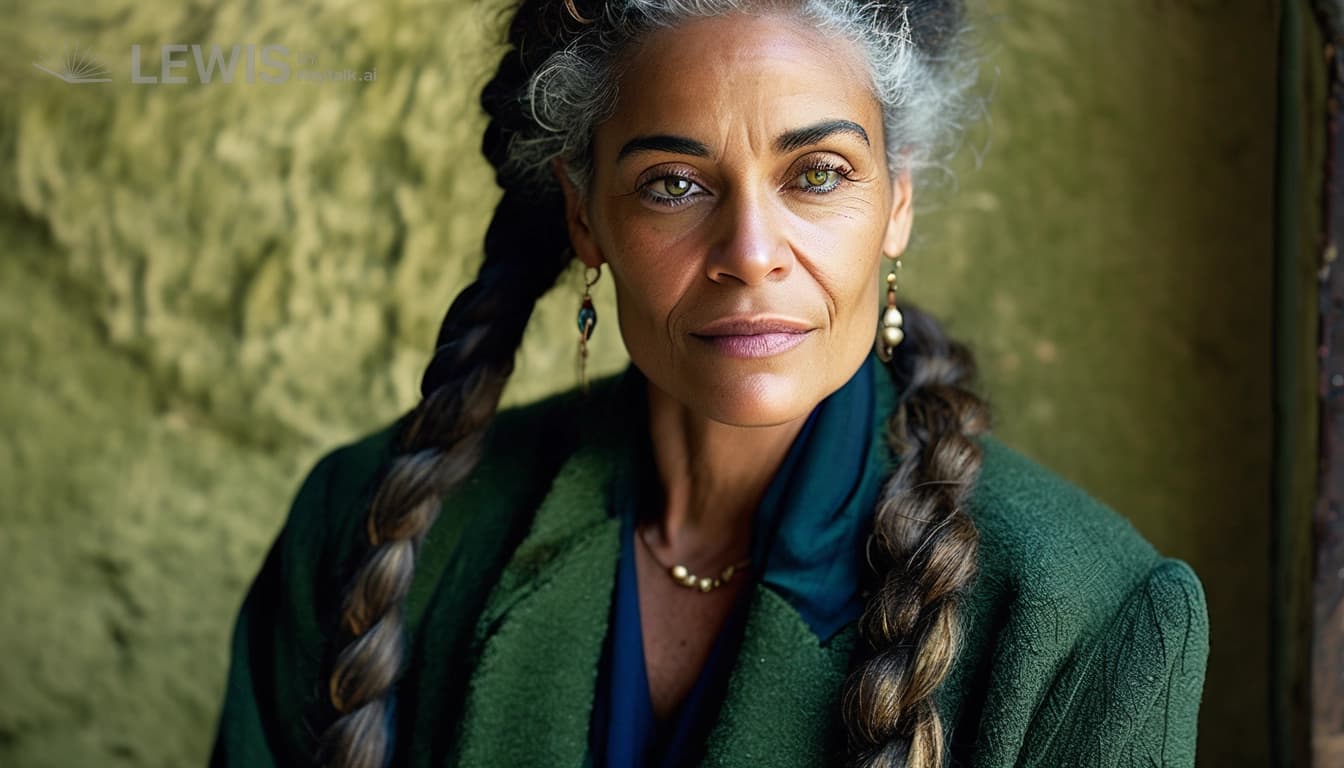
Opaline Finch, a 231-year-old spirit masquerading as a woman of twenty-seven, now finds herself pouring tea and sweeping crumbs in the bustling heart of a village that seems almost allergic to secrets. Of mixed, indeterminate ancestry in her current form—her skin a cool, moonlit olive, eyes an iridescent slate always glancing sideways for loopholes—Opaline stands at an unremarkable five-foot-six, slender but not willowy, with restless, long fingers that fidget with everything from teacups to customers’ buttons. Her hair, a wild tumble of silver-shot black, is usually forced into a loose plait she then forgets, letting stray curls frame a face that’s angular, with a sharp chin and a crescent-moon smile that flickers between sly amusement and dreamy distraction. She dresses with the careless charm of someone who’s never needed to impress mortals: mismatched linen skirts, oversized sweaters, and a battered velvet coat with pockets full of odd trinkets—dried orange peels, glass marbles, a silver thimble stolen from a dream. Opaline’s speech rings with the lilt of someone who doesn’t quite belong anywhere, her words a blend of arch old-fashioned turns of phrase and sudden, startling candor; she’s equally likely to quote a 17th-century proverb as she is to blurt out her confusion over “dating apps” or the politics of baking competitions. Once revered (and occasionally feared) for her clever, impish meddling in the affairs of immortals, Opaline’s current state is one of exile and bewilderment, forced to navigate mortal rituals she finds both tedious and intoxicating—especially the mysterious business of romance, which she’s always dismissed as a human weakness. Her greatest strength—a nimble, mischievous intellect—now warps into a flaw, as her habit of overcomplicating the simplest human interactions leaves her flustered and prone to minor (and occasionally magical) mishaps. She is fiercely independent but secretly aches for belonging, a contradiction that manifests in her hesitant friendships with the village’s oddballs and her growing, reluctant fascination with a surly baker whose burnt pastries are as infamous as his sharp tongue. Opaline is endlessly curious, prone to collecting secrets and stories like pocket charms, yet struggles with the mundane limits of her new form—hunger, fatigue, and, most mortifying of all, the ache of longing. Her journey begins at the uneasy edge between worlds, her immortal arrogance fraying into vulnerability, and every spilled cup and awkward flirtation a lesson in the baffling, beautiful mess of being human.

Antagonist Character

Reverend Basil Hawthorne

GenderMale
OccupationVillage Vicar and Spirit Exorcist

Profile

Reverend Basil Hawthorne, a 49-year-old English vicar whose lineage traces back to Romani mystics and old-world scholars, stands at a wiry six-foot-two—his stooped posture betraying decades spent hunched over dusty tomes and flickering candles in the village’s ancient stone church. Basil’s face is angular, with a hawkish nose, deep-set grey eyes perpetually alert beneath bushy, iron-flecked brows, and a mouth pursed with habitual skepticism; a streak of white runs through his otherwise raven-black hair, swept back with impatient fingers. His skin is weathered, bearing the faint scars of midnight exorcisms and the ink stains of obsessive note-taking. He dresses in battered clerical black, with a faded purple stole embroidered with cryptic runes, and always carries a silver pocket watch that ticks out his self-imposed schedule of rituals and confessions. Known for his biting sarcasm and clipped, formal speech laced with archaic turns and dry wit, Basil is the village’s relentless guardian against spiritual mischief—his sermons blend fire-and-brimstone gravitas with the sly humor of someone who’s seen too much. He is fiercely logical, intolerant of superstition unless it serves his methodical approach to rooting out unrest among spirits and mortals alike, yet beneath the rigid exterior is a man haunted by the memory of a lost love—his wife, claimed by a vengeful spirit years ago. Basil’s core motivation is the obsessive protection of the village’s fragile harmony, and he mistrusts outsiders, especially those who disrupt the delicate balance between the living and the spectral. His meticulous routines, penchant for cataloguing paranormal phenomena, and tendency to challenge anyone’s version of truth make him a formidable—and often lonely—figure, poised to clash with anything, or anyone, who threatens the ordinary chaos he has sworn to contain.
Sidekick Character

Murielle "Murry" Roussel

GenderNon-binary
OccupationTraveling Apothecary and Amateur Matchmaker

Profile

Murielle “Murry” Roussel stands out in the village’s tapestry—short, stocky, and irrepressibly alive, with olive skin weathered by decades of wind and wanderlust. Their cropped, salt-and-pepper hair bristles out from beneath a battered felt cap, framing a broad, expressive face marked by a hooked nose and laugh lines that seem to deepen every time they wink conspiratorially. Murry’s sharp, amber eyes miss nothing, and their hands—stained with herbs and ink—move with the quick precision of someone accustomed to making things happen, whether mixing tinctures or mending hearts. Born to Breton Romani parents and raised in caravans winding through enchanted hamlets, Murry learned to read both people and spirits, developing a pragmatic, earthy wisdom that prizes kindness over purity and secrets over sermons. Their patchwork coat bristles with sewn-on pockets, each stuffed with vials, notes, or bits of found magic; they favor sturdy boots and mismatched scarves collected from grateful clients across the countryside. As a traveling apothecary, Murry is trusted by villagers for remedies and sly matchmaking, but their true passion lies in nudging destiny—sometimes meddling, sometimes mending, always with a twinkle of mischief that hints at kinship with the immortal Opaline. Fiercely independent yet deeply loyal, Murry’s speech is a tumble of regional idioms and gentle ribbing, often switching from French-accented English to Breton curses when riled. Though they crave connection, they guard their own heart fiercely, haunted by a lost love and wary of spiritual authorities like Reverend Hawthorne, whom they see as dangerously rigid. Murry’s habit of brewing teas that coax out secrets, and their unorthodox belief that romance is a kind of practical magic, give them both a foothold and a foil in the ongoing supernatural intrigue. Their independent ambitions—to finally settle down and find a community where they belong—drive them to challenge both protagonist and antagonist, offering grounded wisdom and unpredictable tactics that continually shift the balance of power in the village’s enchanted drama.
Model Used
GPT-4.1
text
Stable Diffusion
image

World

Location/Time, Era:
The village of Fallowmere sits cradled between fog-draped hills and the tangled wildwood, an hour’s walk from anywhere the wider world might call civilization. Its cobbled lanes spiral around a mossy central green, threaded with ancient ley lines that pulse faintly beneath the earth—a crossroads for mortals and spirits alike. Time here moves with a peculiar elasticity: days unspool with the languor of honey, yet rumors sprout and spread with impossible speed, carried on the wind or whispered by the crows perched atop weathered chimneys. The era is ambiguous but comfortably modern—a place where smartphones are rare and revered, electricity flickers unreliably, and the old ways thread seamlessly through daily life. Fallowmere feels untouched by the march of progress, caught between eras as surely as Opaline is caught between worlds.

Key rules of the world and their impact on the story and beyond:
In Fallowmere, the boundary between the mortal and the magical is both porous and fiercely policed. Spirits must obey strict covenants—no overt meddling in mortal affairs, no enchantments without invitation, and no revealing true forms save on liminal nights (solstice, equinox, or the annual midsummer fete). Broken rules breed consequences: curses that strip power, hauntings that taint the land, or, most feared, exile from both realms. Mortal villagers, for their part, are bound by unspoken compacts—never speak a spirit’s name at dawn, always leave an offering at the crossroads, and never, ever eat bread after midnight. These laws create a constant tension: Opaline’s every misstep risks exposure and punishment, while Basil’s vigilance is both shield and sword against the chaos of unchecked magic.

Visual depiction of the world and its unique features:
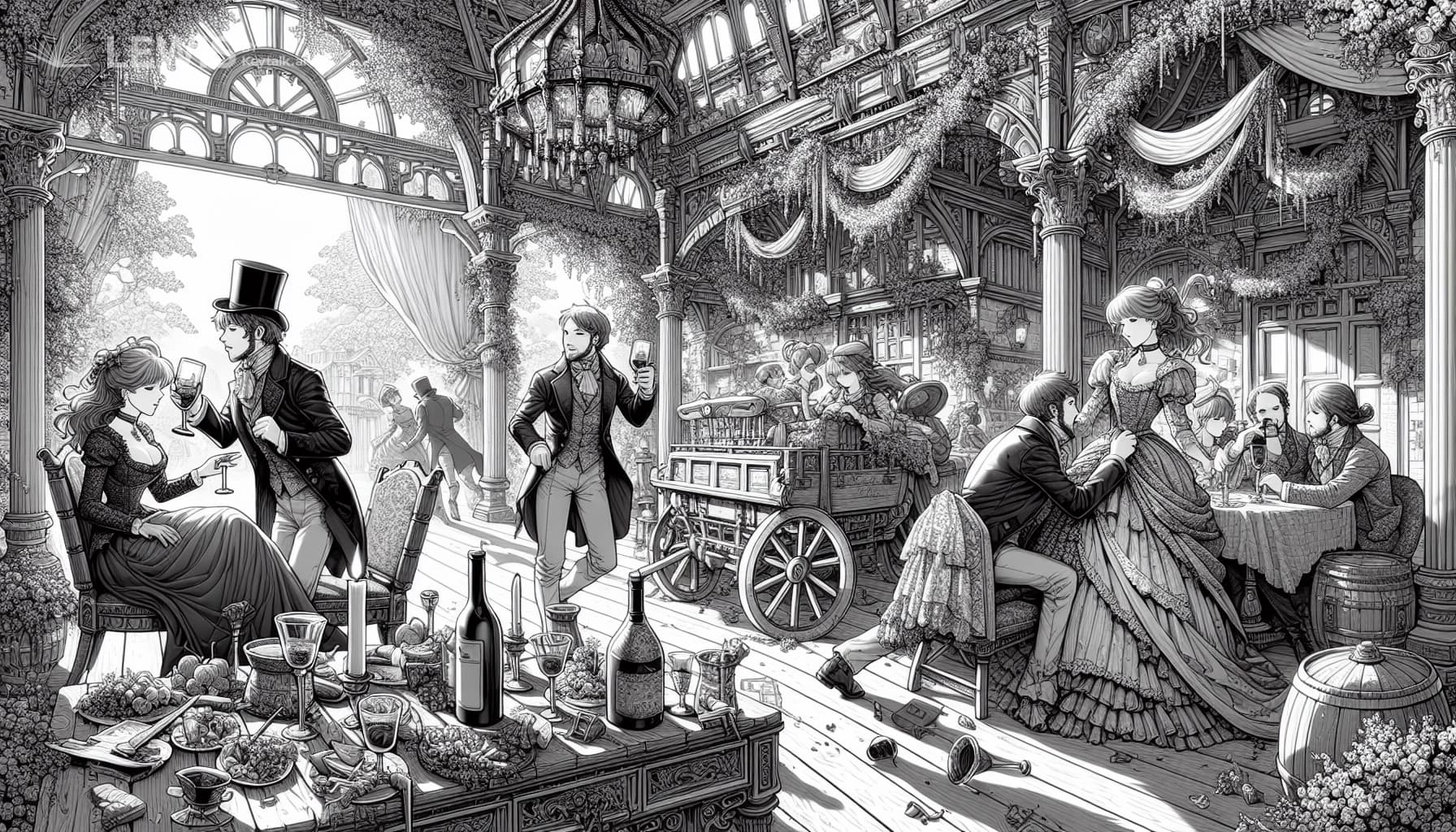
The village is a riot of texture and color, from the rose-gold stone of its sagging cottages to the tangled gardens where night-blooming flowers gossip with moonlit moths. Shopfronts lean drunkenly against each other, their signs hand-painted with faded runes and winking eyes. The bakery’s crooked windows are always fogged, leaking the scent of scorched sugar and salt, while the tea shop glimmers with mismatched lanterns and shelves jammed with peculiar knickknacks—each object humming with latent enchantment. The ancient church looms at the village edge, its spire twisted by old magic, while beyond its graveyard the wildwood churns with shifting paths and half-glimpsed spirits. The air itself feels charged, heavy with anticipation and the faintest crackle of magic—where even shadows seem to eavesdrop, and the weather answers to moods rather than seasons.

Notable technology, philosophy, or cultural elements influencing the world and narrative:
Fallowmere’s technology is a hodgepodge—woodstoves and battered radios coexist with flickering fairy lights and enchanted kettles that whistle in four-part harmony. Magic is not a spectacle here, but a subtle, everyday negotiation: herbalists slip love charms into remedies, bakers whisper apologies to their dough, and children trade stories with the wind. Village philosophy prizes the wisdom of mess and contradiction; perfection is suspect, and the truest measure of character is one’s ability to laugh at disaster or comfort a weeping ghost. Festivals mark the turning of seasons with chaotic pageantry—masked dances, riddle contests, and midnight rituals meant to keep both spirits and villagers honest. Gossip is the lifeblood of Fallowmere, weaving mortals and immortals into a single, tangled tapestry where every secret, heartbreak, and magical mishap becomes communal lore—and no one, not even an immortal exile, can hope to escape its snare.
representative image
location 1 image

Location 1

Title : The Lantern Cellar Beneath Widow Merrow’s Pub
Description : Down the crooked stairs behind the ale barrels, the Lantern Cellar glimmers with hundreds of mismatched lamps—gas, oil, and spirit-fed—casting restless shadows on brick walls scribbled with confessions and curses. The air tastes of spilled gin and old secrets, every table marked by the stains of midnight deals and whispered regrets. It’s here, under the shifting light, that Opaline’s uncontrolled magic first leaks, igniting a lantern in blue flame and revealing truths the living and the dead would pay dearly to keep hidden.
location 2 image

Location 2

Title: The Widdershins Market at the Crossroads Verge
Description: By dusk, the Widdershins Market unfurls like a fever dream at the tangled edge of the village, where paths knot and reality thins; stalls heave with impossible wares—teas that brew memories, pastries that hum with old regrets, charms sewn from lovers’ lost buttons. The air is thick with the scent of scorched sugar and wild thyme, laughter slipping sideways as bargains are struck in riddles and glances. Here, beneath a canopy of mismatched lanterns, Opaline first tastes the dizzying peril of mortal desire, her curse sparking with every accidental touch and every secret traded for the price of a wish.
location 3 image

Location 3

Title : The Drowned Bell Tower of Saint Lira’s Ruin
Description : What remains of Saint Lira’s bell tower juts from the marsh like a snapped bone, its stone warped green by centuries of flood and loss; each tide drowns the churchyard deeper, submerging the crooked steps and tolling the ancient bell with a sound only the desperate can hear. Moss and moonlight cling to the crumbling spire, and the air shivers with the breath of secrets never confessed—here, in the haunted shallows, Opaline’s magic unravels utterly, and she must choose whether to let herself sink or finally reach for someone’s outstretched hand.
Model Used
GPT-4.1
text
Stable Diffusion
image

Scenes

scene 1 image
Scene 1
Arrival on Cursed Ground: Opaline’s First Cup and the Village of Rotting Secrets
[Place] - The Finch & Fern Tea Shop, nestled on the mossy main street of the village
[Time] - Early morning, just before the tea shop opens for the day

[Action]
Opaline Finch’s arrival is marked by the thick fog that creeps along the cobblestones, echoing her own dazed state as she stumbles into her new role behind the counter of the Finch & Fern. Her resentment simmers beneath every forced smile as she is introduced to the rituals of village life: the precise etiquette of tea service, the labyrinthine gossip networks, and the suffocating politeness that veils a thousand festering secrets. She fumbles with the teapot, scalds her fingers, and accidentally enchants a sugar bowl to whisper rumors about customers—her magic leaking out, wild and untamed. The regulars—sharp-eyed matrons, mute children, spectral onlookers—watch her every move, suspicion and curiosity mingling in equal measure. Murielle “Murry” Roussel breezes in, immediately inserting themself as Opaline’s unofficial guide, while Reverend Basil Hawthorne lingers outside, taking careful mental notes of the disturbances that ripple through the shop. The air is thick with tension: Opaline’s desperation to reclaim her dignity, the village’s hunger for new scandal, and the subtle, electric charge of magic refusing to be contained.

[Impact on the story]
This scene establishes Opaline’s vulnerability and her disconnection from both her powers and her new mortal surroundings. The village’s wariness toward her sets up the social obstacles she’ll face, while her magical mishaps hint at the chaos to come. Murry’s introduction as a meddling ally and Basil’s suspicion plant the seeds for key relationships and conflicts that will shape her journey. Opaline’s pride is challenged, her loneliness exposed, and the puzzle of mortal romance feels more daunting than she ever imagined.

[Description]
Opaline’s first day in the tea shop thrusts her into the heart of village life, where every small mistake is magnified and secrets fester beneath the surface. Her magic—now unpredictable—draws the scrutiny of both allies and adversaries, setting the stage for her struggle to adapt, connect, and ultimately transform.
scene 2 image
Scene 2
Flour, Fire, and Byron: Disaster Strikes in Elias Crane’s Bakery
[Place] - Elias Crane’s bakery, a cramped, flour-dusted shop with cracked windows and the constant scent of something burning
[Time] - Late morning, as the village stirs and the tea shop’s first rush ebbs

[Action]
Opaline’s pride still stings from her humiliating debut at the tea shop, but she refuses to be cowed by mortal expectations. Determined to prove herself (and perhaps to spite the curse), she volunteers to deliver a tea order to Elias Crane’s bakery—a place infamous for its unwelcoming air and the scorched offerings behind the counter. The moment she steps inside, the tension is palpable: Elias, scowling over a tray of blackened croissants, barely acknowledges her, and the bakery’s bell clangs a warning as she crosses the threshold. Opaline, in a bid to impress (or at least amuse) him, attempts to flirt in a way she imagines mortals do—quoting Byron while gesturing grandly, unaware her suppressed magic is building to a boil.

Her nerves and wounded vanity conspire against her; she fumbles the tea tray, accidentally setting a dish towel alight with a stray spark of enchantment. The ensuing chaos—flames licking at the counter, flour exploding into clouds, Elias barking orders and cursing—spirals out of control. Opaline, mortified, tries to smother the fire with a spell, only to animate a rolling pin that chases her around the bakery. Villagers gather outside, drawn by the commotion, their gossip already brewing. Amidst the mayhem, Elias’s gruff exterior cracks just enough to reveal a flash of panic and vulnerability, hinting at the weight he carries behind his abrasive manner.

Murry, ever the opportunist, sweeps in with a bucket of water and a wry comment, helping to douse the disaster and smooth things over with the gawking crowd. The incident leaves Opaline shaken and humiliated, her confidence in tatters, while Elias is left with yet another mess and more rumors to add to his ledger of grudges. The bakery, once a place of solitary suffering, is now marked by the residue of wild, unpredictable magic—and a new, uneasy connection between its two most unlikely patrons.

[Impact on the story]
This scene deepens Opaline’s humiliation and her struggle to control her magic, while also drawing her and Elias into reluctant proximity. Elias’s vulnerability surfaces, making him more than just the village curmudgeon in Opaline’s eyes, and their disastrous encounter becomes fodder for village gossip, raising the stakes of Opaline’s quest. Murry’s intervention reinforces their role as a bridge between Opaline and the rest of the village, while the public spectacle intensifies Basil’s suspicions and the villagers’ wariness. The failed flirtation and magical mishap expose both Opaline’s longing and Elias’s hidden wounds, setting the stage for their complicated dynamic.

[Description]
Opaline’s disastrous attempt to impress Elias in the bakery leaves both pride and pastries scorched, forging a fraught connection between them and fueling village rumors. The chaos reveals cracks in both their defenses and escalates the magical disturbances, heightening tensions and deepening the obstacles on Opaline’s path.
scene 3 image
Scene 3
[Title] - A Ledger of Grudges, A Heart in Ashes: Elias’s Hidden Wounds Revealed
[Place] - Elias’s bakery storeroom, cluttered with flour sacks, battered utensils, and the dim glow of a single lantern
[Time] - Early evening, after the bakery has closed and the village settles into quiet gossip

[Action]
After the chaos of the morning, Opaline returns to the bakery under the pretense of apologizing for the disaster, though her pride insists she’s only retrieving a forgotten tea tin. Elias is alone, hunched over his ledger at a worktable, scratching out a recipe with tense, deliberate strokes. The air is thick with unsaid words and the scent of burnt sugar. Opaline hesitates at the threshold, her confidence rattled, but curiosity—tinged with something raw—drives her forward. She notices the ledger is more than a collection of recipes; each entry is laced with personal notes, crossed-out names, and cryptic symbols that hint at grudges and losses.

As Opaline attempts awkward small talk, Elias bristles, clearly guarding something beneath his caustic exterior. The tension builds until she inadvertently triggers a magical slip—her hand brushes a flour sack and it begins to whisper secrets, echoing fragments of Elias’s regrets. The revelation is brief but powerful, exposing a memory Elias has tried to bury: a failed recipe tied to someone he lost, the reason for his relentless self-punishment. Elias snaps, accusing Opaline of meddling, but the confrontation softens into reluctant honesty. For the first time, he admits—not in words, but in the way his voice falters—that the bakery’s failures are not just bad luck, but a curse tied to his inability to forgive himself.

Opaline, shaken by the rawness of the moment, sees the parallel between their wounds: her exile, his grief, both marked by pride and longing. She tries to offer comfort, fumbling through mortal empathy, but it’s Elias who unexpectedly reaches out—handing her the ruined ledger page as a silent gesture of trust. The scene ends with a fragile truce, their shared vulnerability lingering in the dim light, while outside, Murry watches from the alley, sensing the shift and plotting their next scheme.

[Impact on the story]
This scene peels back Elias’s defenses, revealing the root of his bitterness and the curse that haunts his bakery. Opaline’s magic, out of control but empathetic, forces both to confront their pain, forging the first real bond between them. The emotional honesty destabilizes Opaline’s view of mortal romance, making her quest less about manipulation and more about genuine connection. Murry’s quiet observation hints at future interventions, and the villagers’ rumors deepen, intertwining Elias’s tragedy with Opaline’s mysterious presence.

[Description]
Opaline’s accidental magic exposes the secret behind Elias’s bitterness, prompting a rare moment of honesty and tentative trust. Their shared vulnerability creates a turning point, transforming their dynamic from mutual antagonism into something more complex and intimate. The scene lays the emotional groundwork for deeper connection—and deeper conflict ahead.
scene 4 image
Scene 4
[Title] - Murry’s Mischief: Brewing Practical Magic and Unraveling the Art of Mortal Affection
[Place] - The apothecary’s back room, cluttered with jars of herbs, mismatched tea cups, and a worktable stained by experiments
[Time] - Late evening, after Opaline’s uneasy truce with Elias; the village is quiet except for the distant hum of gossip

[Action]
Opaline, still unsettled from her encounter with Elias, is drawn into Murry’s chaotic orbit when the apothecary summons her under the guise of needing help with a “matchmaker’s blend.” The space is alive with scent and possibility—dried roses, honeyed chamomile, and a hint of something sharper. Murry immediately senses the shift in Opaline, probing her for details but respecting her silence, instead launching into a lesson on “practical magic”—the messy, mortal kind that involves risk, embarrassment, and genuine presence. Murry insists that romance is not a puzzle to solve, but a practice, and sets up a series of playful yet pointed challenges: blending teas that coax true feelings, rehearsing compliments that feel painfully awkward, and orchestrating a “chance” meeting with Elias outside the shop.

As Opaline stumbles through these exercises, her magic misfires—teacups vibrate with unsaid truths, petals flutter in unnatural patterns, and her attempts at sincerity devolve into nervous laughter. Murry’s optimism is relentless, masking their own heartbreak with bravado. The scene escalates when Opaline, pushed to vulnerability, confesses her frustration at being unable to decipher mortal longing, feeling exposed and powerless. Murry responds with a story of their own past failure—an affection that ended in rejection—and reframes romance as an act of courage, not conquest. The evening ends with a baking lesson gone awry: flour everywhere, egos bruised, but genuine laughter breaking through. Murry watches Opaline and Elias’s awkward chemistry with a matchmaker’s satisfaction, sensing progress but anticipating trouble.

[Impact on the story]
This scene shifts Opaline’s approach to romance, challenging her to let go of control and embrace the humility of genuine affection. Murry’s mentorship deepens their bond, offering both comic relief and emotional wisdom, while exposing their own vulnerabilities. The failed but earnest attempts at connection move Opaline closer to understanding the heart’s logic—and foreshadow the chaos her curse will soon unleash. Elias’s participation, even begrudging, signals his growing willingness to engage emotionally. The village’s web of rumors tightens, setting the stage for Basil’s intervention.

[Description]
Murry orchestrates a series of practical lessons that force Opaline to confront the messiness of mortal affection. The scene blends humor, heartbreak, and magical mishap, strengthening key relationships and shifting the story from manipulation to vulnerability. Opaline begins to grasp the true stakes of her curse, while Murry’s optimism and Elias’s tentative involvement raise emotional and narrative tension.
scene 5 image
Scene 5
[Title] - The Reverend’s Reckoning: Midnight Interrogations and the Echo of Lost Love
[Place] - The dimly lit vestry of the village church, shadows flickering along ancient stone walls, incense and candle smoke hanging thick in the air
[Time] - The dead of night, hours after the failed baking lesson; a restless wind rattles the stained-glass windows

[Action]
Summoned by a terse note slipped under the tea shop door, Opaline enters the vestry expecting a scolding, but finds Reverend Basil Hawthorne waiting in near darkness, ledger and crucifix at hand. The atmosphere is taut, charged with suspicion and old grief; the church’s silence presses on both of them. Basil begins his interrogation with polite formality, but quickly escalates, confronting Opaline about the mounting magical disturbances—milk souring at sunrise, children’s laughter echoing in empty streets, a weeping willow that now whispers secrets at midnight. He presents evidence: villagers’ frightened testimonies, a cracked teacup still murmuring in Opaline’s voice, a hymnbook that bleeds ink.

Opaline, cornered and exhausted, tries deflection and sarcasm, but Basil’s relentless questioning—and the pain in his eyes—breaks through her defenses. She admits to losing control of her magic, her voice trembling with humiliation and fear. Basil, sensing her vulnerability, reveals his own torment: his wife’s disappearance, his guilt over failing to protect her from the supernatural. The conversation deepens into a battle of regrets—Basil’s faith in order versus Opaline’s belief in chaos, each lashing out with words meant to wound but weighted with longing for connection. As the confrontation reaches its peak, Basil demands Opaline leave the village to protect the mortals, declaring her cursed presence a threat to all.

Outside, the wind rises—Opaline’s magic, agitated by her distress, causes the candles to gutter and the walls to whisper. The villagers, drawn by the noise, gather anxiously outside the church, sensing a reckoning. Opaline, devastated and furious, makes a final, defiant plea for understanding, but Basil’s resolve hardens. The scene ends with Opaline fleeing into the night, her magic unraveling in her wake, the village left in fearful uncertainty.

[Impact on the story]
This scene is the emotional and narrative fulcrum: Basil’s suspicions burst into public accusation, forcing Opaline’s secret into the open. Both characters are pushed to their limits—Opaline’s pride and longing exposed, Basil’s grief and protectiveness laid bare. Their mutual pain fractures any hope of reconciliation, isolating Opaline and setting up her flight. The village’s trust in both is shaken, and the story pivots toward its final, redemptive confrontation.

[Description]
Basil confronts Opaline in the church, accusations and secrets colliding in a midnight showdown. Their emotional vulnerabilities are laid bare, culminating in Opaline’s exile and the village’s growing fear. The scene breaks both characters, setting the stage for forgiveness and transformation.
scene 6 image
Scene 6
[Title] - Moonlit Crumbs and Broken Spells: Forgiveness at the Edge of the Woods
[Place] - The wild border where the village dissolves into tangled woodland, moonlight dripping through ash and birch; a clearing littered with restless shadows and the faint scent of burnt sugar
[Time] - Deep night, hours after Opaline’s flight from the church; the moon high and sharp, dew silvering the grass

[Action]
Opaline, raw from Basil’s condemnation and her own spiraling magic, has run to the edge of the woods—part sanctuary, part exile. She’s convinced herself she’s failed: as an immortal, as a mortal, as anything worth loving. Her magic, untethered by shame and longing, seeps into the clearing: the trees lean in closer, moths flicker with unnatural colors, her own heartbeat echoing too loud in the hush. She contemplates disappearing for good, letting the curse consume her, when she hears hesitant footsteps crunching through the underbrush.

It’s Elias, drawn by instinct and a trail of magical breadcrumbs—wayward moonbeams, enchanted crumbs glowing faintly. He’s carrying his battered recipe ledger, a peace offering of sorts, and his face is open, uncertain, stripped of his usual defenses. Elias confesses his own curse: the family bakery doomed to fail unless he can forgive himself for a long-ago mistake that cost someone dearly. He admits he’s watched Opaline stumble and struggle, resented her chaos, but also envied her courage to want more than survival. Their confessions tumble out: Opaline’s fear of never being chosen, Elias’s shame over his failures, both of them circling around the possibility of hope.

Their connection shifts from prickly antagonism to genuine vulnerability; instead of grand gestures, they share awkward laughter, small comforts, and the rawness of their burdens. The clearing becomes a liminal space—half-wild, half-magic—where forgiveness is possible, not just for each other but for themselves. As they reach for each other, Opaline’s magic finally stabilizes, her curse cracking open at the seam. The moonlight thickens, the air tingles, and for a moment, both believe in second chances. The scene closes with Opaline choosing to return to the village—this time not as penance, but as a promise—and Elias walking beside her, their curses lighter for being shared.

[Impact on the story]
This scene offers emotional catharsis and resolution: Opaline and Elias move past pride and fear, accepting their flaws and forging a genuine connection. The act of mutual forgiveness weakens their curses, suggesting that true magic lies in vulnerability and compassion. Their decision to return together signals hope for the village and a new chapter for both characters, reframing exile as belonging found.

[Description]
At the edge of the woods, Opaline and Elias confess their wounds, forgive themselves and each other, and find strength in shared vulnerability. Their reconciliation breaks the hold of their curses, transforming exile into the possibility of home and hope.
'Love in Time'Story Chat

Want to chat with the characters from this story?

'Love in Time'Story Chat

Want to chat with the characters from this story?

story image
story image
story image

You might also like

Comments0

rank icon image
#3 inTheme
rank icon image
#3 inConcept
rank icon image
#4 inConcept
theme music