The Shadow Archivist cover image

The Shadow Archivist

After a grieving father invents an online urban legend to expose the negligence of a pharmaceutical company that caused his daughter's death, his fabricated tale begins manifesting inexplicable real-world consequences, forcing him to confront the ethical limits of his vengeance as his creation spirals beyond his control.

Weekly ranking

rank icon image
#2 inCharacter
rank icon image
#2 inCharacter
rank icon image
#7 inConcept
Scroll

Plot Synopsis

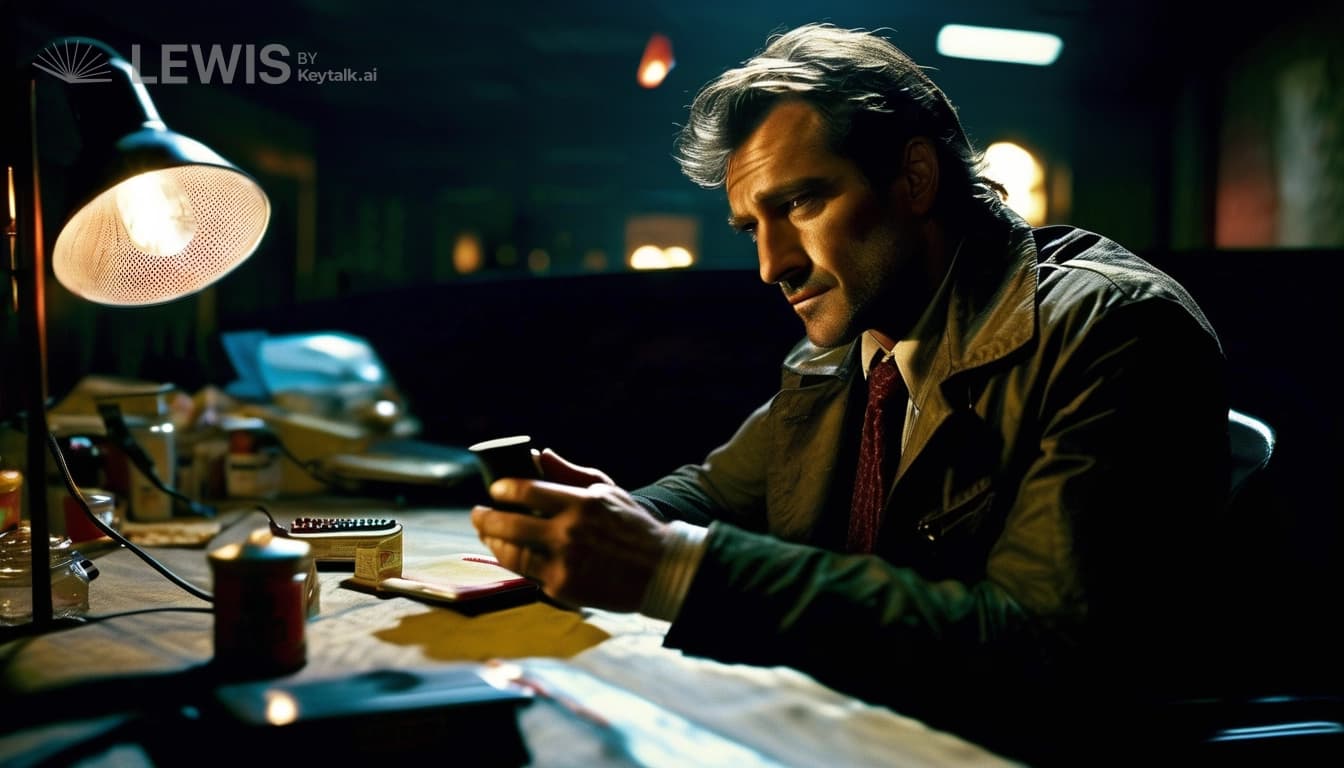
Viktor Mirov had always believed in the power of truth. For years, his investigative journalism had unmasked corporate corruption and political deceit, but nothing could prepare him for the tragedy that shattered his world. His ten-year-old daughter, Anya, had died after taking a medication that was later revealed to have been rushed through development by a pharmaceutical giant, Novalyte, in their pursuit of profit. The company’s negligence was clear, but their labyrinthine web of legal defenses ensured they evaded accountability. Viktor, hollowed out by grief and guilt, left his career behind, retreating to the confines of his cluttered apartment. There, he found himself consumed by a single, burning question: if truth couldn’t hold the guilty accountable, what could?

Late one night, staring at his computer screen, Viktor was struck by a dangerous idea. He began crafting an elaborate urban legend, one designed to prey on fear and uncertainty. He called it "The Shadow Archivist," a spectral figure that supposedly haunted those who buried the truth for personal gain, leaving cryptic warnings in digital and physical forms before their lives unraveled in inexplicable ways. Using his storytelling prowess, Viktor seeded the tale across obscure forums and social media, embedding just enough detail to make it feel real. It wasn’t long before the legend took hold, spreading like wildfire among conspiracy theorists and digital sleuths. Viktor’s goal was simple: to draw attention to Novalyte’s corruption by creating a myth so compelling that people would start investigating the company’s misdeeds themselves. But as the legend gained traction, strange things began to happen.

People claiming to encounter "The Shadow Archivist" surfaced online, posting chilling photos and stories that Viktor knew he hadn’t created. At first, he dismissed them as hoaxes or overactive imaginations. But when Andrei Volkov, a disgraced former Novalyte executive, contacted him claiming to have received one of the Archivist’s warnings—a meticulously detailed message that Viktor had never written—he began to question the boundaries of his fabrication. Andrei, a man teetering between genius and paranoia, was convinced that the Archivist was more than a myth. He believed it was the manifestation of something larger, something Viktor might have inadvertently unleashed. Skeptical but intrigued, Viktor agreed to meet with Andrei, whose insights into Novalyte’s inner workings proved invaluable but whose erratic behavior made him both an ally and a liability.

As the two delved deeper, they uncovered a disturbing pattern: every person implicated in Novalyte’s cover-up had experienced inexplicable incidents eerily aligned with the Archivist’s supposed modus operandi. Viktor’s carefully constructed narrative was no longer under his control. Desperate for answers, he sought out Layla Al-Fahmi, an ethical hacker with a reputation for exposing corruption in the digital world. Layla, though wary of Viktor’s motives, agreed to help, drawn by the challenge and her own frustrations with systemic injustice. Together, the trio began piecing together a puzzle that seemed to defy logic, even as Layla’s sharp, no-nonsense demeanor clashed with Viktor’s obsessive tendencies and Andrei’s conspiratorial fervor. Their investigation revealed a startling truth: Viktor’s urban legend had somehow tapped into a collective fear so potent that it seemed to be manifesting in reality—or at least, in a way that blurred the lines between perception and fact.

The deeper they dug, the more Viktor was forced to confront the consequences of his actions. Layla’s probing questions about the ethics of his deception and Andrei’s increasingly volatile behavior pushed him to the brink. Was the Archivist’s growing influence a coincidence, an elaborate scam, or something truly supernatural? And more importantly, was Viktor prepared to face the fallout of what he had created? When Layla uncovered evidence that Novalyte had been monitoring the Archivist phenomenon and using it to quietly discredit whistleblowers, Viktor realized his plan had backfired in ways he couldn’t have anticipated. The company was exploiting his creation to further bury the truth, turning his weapon of justice into a tool of suppression.

In the climax, Viktor, Layla, and Andrei broke into a Novalyte data center, hoping to expose the company’s role in manipulating the Archivist narrative. The confrontation forced Viktor to face his own motivations: was this about justice for Anya, or had his grief turned into a need for vengeance at any cost? When the team uncovered damning evidence of Novalyte’s corruption, they also found something else—a file suggesting that the Archivist’s manifestations might have been influenced by an experimental algorithm Novalyte had abandoned years ago, one designed to manipulate public sentiment through targeted fear. Viktor realized that his urban legend had inadvertently merged with this dormant technology, creating a feedback loop of belief and terror that no one could control.

The story closed on a bittersweet note. Viktor
Model Used
GPT-4o
text
Stable Diffusion
image

Story Details

Keytalk Prompts Used
See all Keytalks
no chosen prompts
no chosen prompts
no chosen prompts
no chosen prompts
Model Used
GPT-4o
text
Stable Diffusion
image

Character

Protagonist Character

Viktor Mirov

GenderMale
OccupationInvestigative Journalist

Profile

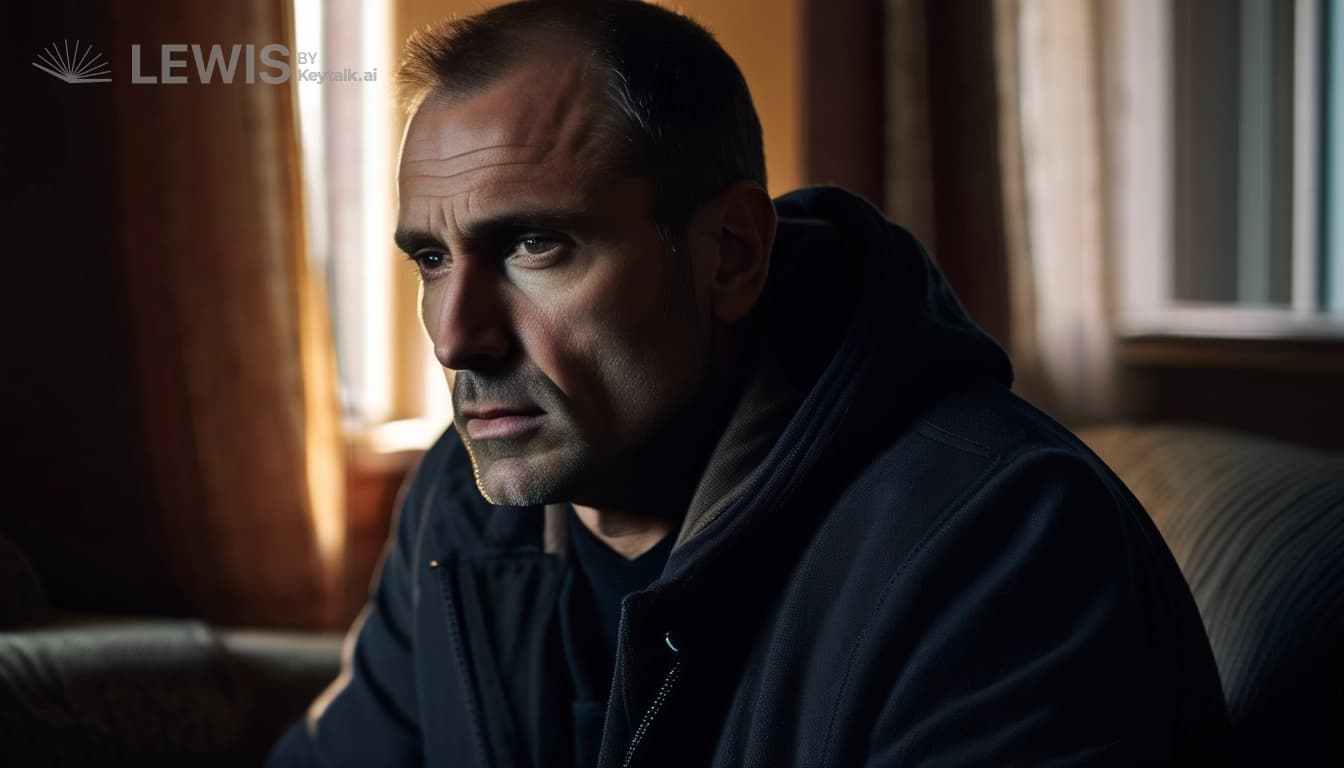
Viktor Mirov carried himself like a man perpetually braced against a storm, his sharp hazel eyes scanning the world with a mixture of suspicion and determination. At 38, he had the weathered look of someone who had spent years chasing truths others preferred buried, his once-dark hair now streaked with silver at the temples. A seasoned investigative journalist, he thrived on peeling back the layers of corporate deception and political corruption, but the work had left scars—both visible and unseen. His voice, low and deliberate, bore traces of his Eastern European heritage, every word chosen with surgical precision, though he wasn’t above a biting remark when his frustrations boiled over. Viktor lived alone in a cramped, book-lined apartment in the heart of the city, a space that smelled faintly of coffee and printer ink, where his late-night scribblings often blurred the line between obsession and dedication. Though his professional accolades spoke of a man with unrelenting focus, he was still haunted by the quiet moments: the hollow ache of grief and the weight of guilt he carried like an old companion. He had a meticulous mind, often losing himself in the details of his investigations, but this perfectionism also made him impatient with those who couldn’t keep up. Viktor had a knack for storytelling, an almost hypnotic ability to weave narratives that lingered with his audience, a talent that had both elevated his career and deepened his cynicism about the world. A faint, sardonic humor occasionally surfaced, particularly when discussing the absurdity of modern life, but beneath his guarded exterior lay a man who still believed—perhaps foolishly—in the power of truth to make a difference. His moral compass, though strong, had grown bent under the strain of years spent fighting battles against faceless entities, and he often wrestled with the boundaries of his own righteousness. A creature of habit, he found solace in the methodical act of building model ships—an odd yet calming pastime that reminded him of the order he craved in a chaotic world. Viktor was a man teetering on the edge of something profound, his resilience both his greatest asset and his most precarious flaw.
Antagonist Character

Andrei Volkov

GenderMale
OccupationEx-pharmaceutical executive turned conspiracy theorist

Profile

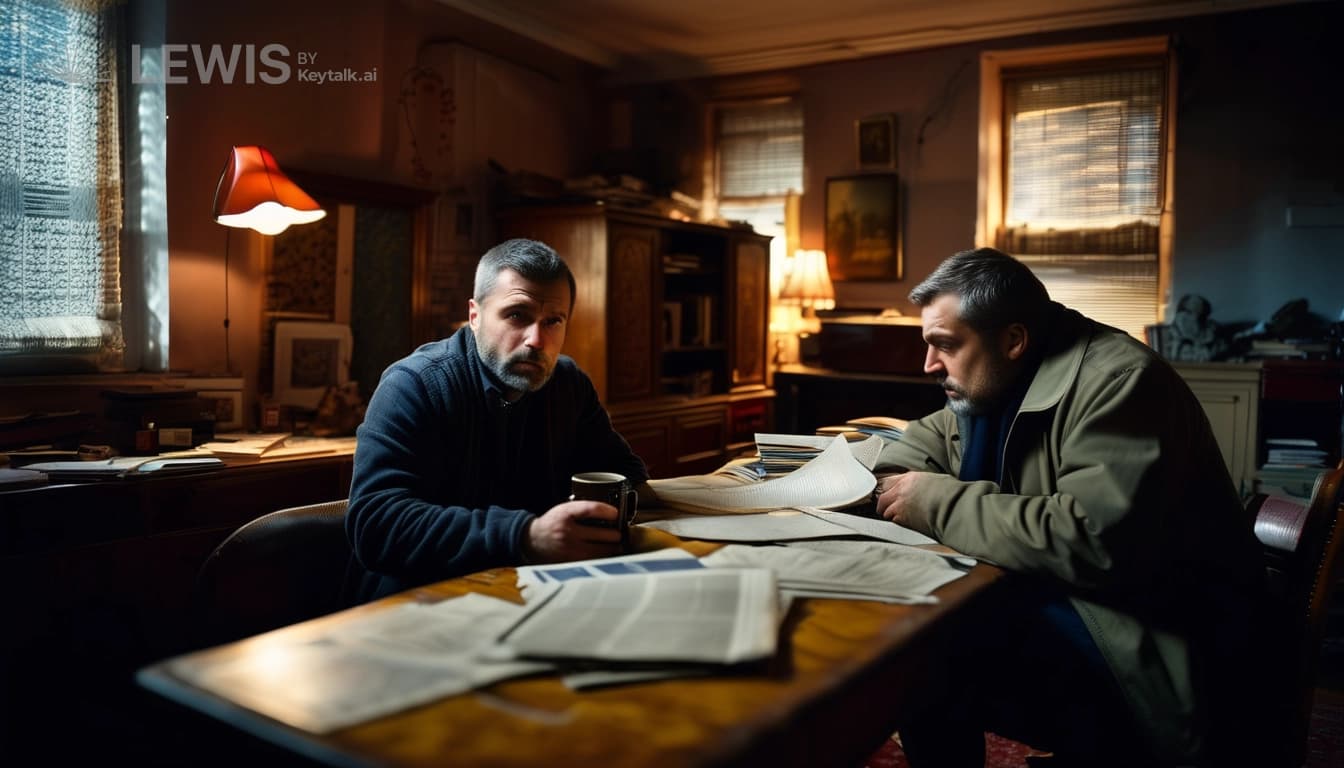
Andrei Volkov, at 42, is a man defined by the duality of brilliance and bitterness. Once a sharp, ambitious pharmaceutical executive with a knack for finding patterns others missed, he now spends his days holed up in a dimly lit apartment littered with stacks of newspapers, half-empty coffee cups, and scribbled notes connecting dots only he seems to understand. His fall from grace—resigning under the shadow of a scandal that may or may not have been entirely his fault—has left him deeply disillusioned, both with the corporate world and himself. Andrei speaks with a clipped, almost clinical precision, though his words often drip with cynicism, giving the impression of a man who’s both weary of the world and utterly obsessed with uncovering its hidden truths. His mind is a storm of ideas and paranoia, and he spends hours on obscure forums, crafting essays that straddle the line between genius and conspiracy. Despite this, there’s a quiet vulnerability beneath his gruff exterior, a man grappling with the shame of his past decisions and the nagging fear that his best years are behind him. He has no close relationships to speak of, having pushed away most of his friends and family with his increasingly erratic behavior, but he clings to a faint hope of redemption—though he’d never admit it aloud. Andrei’s humor is dark, his hobbies eccentric—he collects vintage medical equipment as a grim reminder of the industry he once served. As a supporting character in the story, Andrei’s deep well of knowledge and his ability to see through facades make him invaluable, but his mistrustful nature and tendency to alienate others create as many obstacles as insights. He’s a man teetering on the edge of irrelevance, desperate to matter again, and that desperation makes him both dangerous and compelling.
Sidekick Character

Layla Al-Fahmi

GenderFemale
OccupationEthical Hacker

Profile

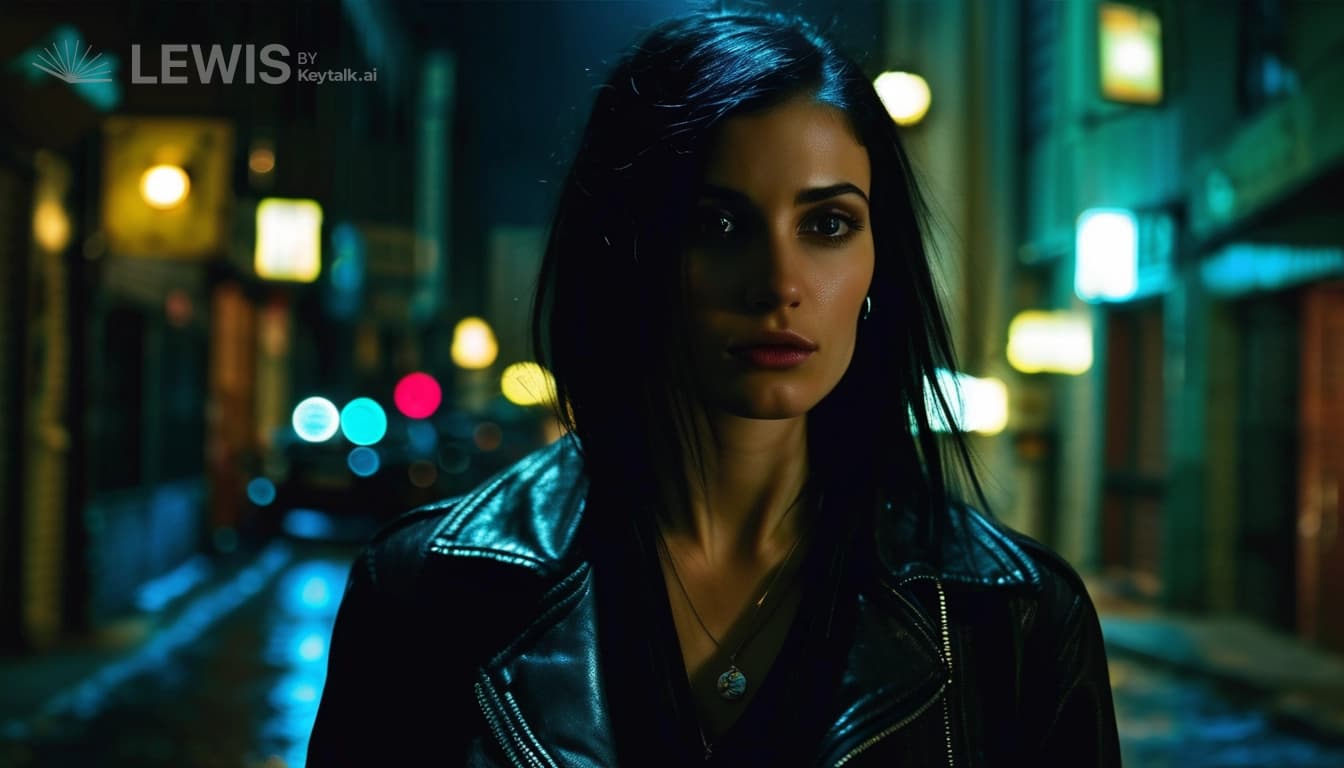
Layla Al-Fahmi, a 36-year-old ethical hacker, stands at the intersection of brilliance and weariness, embodying a life marked by quiet resilience and profound inner conflict. As a supporting character in this story, Layla acts as both a catalyst and a mirror, challenging the protagonist’s choices while wrestling with her own fractured existence. Her intelligence is razor-sharp, honed by years of self-taught coding and an innate knack for deciphering the digital world's labyrinthine systems. Yet beneath her skill lies a restless dissatisfaction, stemming from a string of personal and professional disappointments that have left her feeling like a misfit in a society that prizes conformity.

Layla’s backstory is steeped in complexity. Born into a working-class family in Jordan, she was always the "problem solver," the one who fixed broken radios and later hacked into her school’s outdated computer system just to see if she could. Her early promise led her to a scholarship abroad, but her life took a sharp turn when a toxic workplace drove her to whistleblow on a major corporation. The fallout left her blacklisted from most tech firms, forcing her into a shadowy freelance career. Now she lives in a cramped studio apartment in Berlin, her walls adorned with sticky notes of cryptic algorithms and half-built drones on every surface. Her work oscillates between corporate security contracts and pro bono projects for activists, feeding both her bank account and her moral compass, though neither feels truly fulfilled.

Layla is deeply likable and relatable, not because she fits a mold but because her flaws feel so achingly human. She’s sarcastic but not unkind, using humor as a shield against the world’s harshness. Her speech is a mixture of informal tech jargon and a subtle Middle Eastern lilt, and she has a habit of tapping her temple with a pen when deep in thought. Her ethics are her anchor, but they are also her torment; she often questions whether her actions truly make a difference or merely scratch the surface of systemic rot. This self-doubt is compounded by the loneliness that has crept into her life. While she’s fiercely independent, she secretly yearns for deeper connections, though her trust issues often sabotage her attempts to forge them.

Her personal challenges are manifold. Layla struggles with insomnia, spending sleepless nights lost in a haze of coding or staring at her ceiling, wondering if her life has any direction. She’s haunted by the fear that her skills, which she once believed could change the world, have become tools for survival rather than revolution. Her one escape is her love of photography, a hobby she picked up during her university years. She has an eye for capturing fleeting, imperfect moments—scratched park benches, graffiti-covered walls, a child laughing in the rain—though she rarely shares her work with anyone.

As the story begins, Layla is at a tipping point. Her moral clarity, while admirable, is beginning to crack under the weight of her discontent, leaving her vulnerable to manipulation and ethical missteps. Despite her misery, there’s an undeniable strength in her—a quiet determination that hints at the potential for growth, even redemption. Layla’s role in the narrative is to act as a sounding board and occasional foil to the protagonist, her own struggles with integrity and purpose amplifying the story’s central themes. She is a woman caught between the person she is and the one she hopes to become, her journey as layered and compelling as the digital codes she so deftly unravels.

Keytalk Prompts Used

Sidekick Character
Model Used
GPT-4o
text
Stable Diffusion
image

World

1. **Where/When**:
The story is set in a sprawling, unnamed modern metropolis in the present day, though its atmosphere feels a shade darker than the world we know. The city is an amalgamation of urban decay and high-tech innovation, where gleaming skyscrapers cast long shadows over crumbling, graffiti-covered backstreets. It is a place of contrasts: corporate headquarters with glass facades rise above neighborhoods plagued by neglect. The events unfold over several months, with the seasons subtly reflecting the story's progression—beginning in the cold, isolating grip of late winter and ending in the hesitant bloom of early spring, symbolizing both the desolation of grief and the potential for renewal.

---

2. **Important rules of the universe and how it impacts the story**:
- **Belief as Power**: In this world, collective belief has the potential to shape reality, though this remains a subtle, unspoken rule rather than overt magic. Viktor’s urban legend gains traction not because of supernatural forces, but because people’s shared fears and anxieties give it weight, blurring the line between perception and reality. This phenomenon, while extraordinary, is grounded in the psychological and social power of mass belief, amplifying the story’s themes of manipulation and unintended consequences.
- **The Fragility of Truth**: Truth is depicted as a malleable, fragile concept, easily distorted by those with influence. Novalyte’s ability to twist Viktor’s creation into a tool for discrediting whistleblowers underscores the idea that truth is not an absolute but a battleground, shaped by narratives and power structures.
- **Digital Permanence and Vulnerability**: The internet in this universe functions much like our own—a chaotic, sprawling space where information spreads uncontrollably, but where every action leaves a trace. Viktor’s use of online platforms to propagate his urban legend highlights both the power and the dangers of the digital age, where ideas can spiral out of control and take on lives of their own.

---

3. **The visual description of the universe**:
The city is a character in itself, a moody, oppressive backdrop that mirrors the internal struggles of the protagonists. Its skyline is dominated by imposing corporate towers—cold, reflective monoliths that seem to watch over the city like silent sentinels. Below, the streets are a labyrinth of narrow alleys, flickering neon signs, and billboards advertising hollow promises of happiness through consumerism. The air hums with the distant buzz of drones and the faint echoes of street vendors hawking their wares.
Viktor’s apartment is a microcosm of the city’s duality. It’s cluttered with stacks of newspapers, books, and half-drunk coffee cups, the walls lined with corkboards covered in pinned notes and red string connecting various conspiracy threads. Andrei’s space, by contrast, is darker and more chaotic, a dimly lit room with scattered medical equipment, peeling wallpaper, and a single desk lamp illuminating his manic scribblings. Layla’s studio apartment is a stark, utilitarian space filled with technology—monitors casting a faint blue glow, circuit boards strewn across a workbench, and a camera perched on a tripod by the window, capturing the city’s raw, unfiltered essence.

---

4. **Notable technologies or philosophies of the universe that impact the story**:
- **Experimental Algorithms and Digital Manipulation**: Novalyte’s abandoned algorithm, designed to exploit public sentiment through fear, is a pivotal element. Though initially dormant, its unintended interaction with Viktor’s urban legend creates a feedback loop of belief and anxiety, illustrating how technology can have unpredictable and far-reaching consequences when paired with human emotion.
- **Surveillance Culture**: The city operates under a near-ubiquitous surveillance system, a blend of corporate and governmental oversight. Cameras are mounted on every corner, and digital activity is constantly monitored, creating an atmosphere of paranoia. This impacts the characters’ actions, particularly Layla, whose hacking exploits must navigate this ever-watchful environment.
- **Philosophy of Justice vs. Vengeance**: The story grapples with the ethical dilemmas of justice and revenge. Viktor’s actions, initially motivated by a desire for accountability, become increasingly murky as his grief and guilt drive him to manipulate public perception. Layla’s ethical struggles and Andrei’s obsession with redemption further explore the boundaries of morality in a world where truth is both weaponized and obscured.
- **The Power of Narrative**: Viktor’s storytelling ability underscores the universe’s central philosophy: that narratives shape reality. Whether through media, digital myths, or personal beliefs, the act of storytelling has the power to expose, manipulate, or even create truths, making it both a tool and a weapon in the hands of those who wield it.
representative image
location 1 image

Location 1

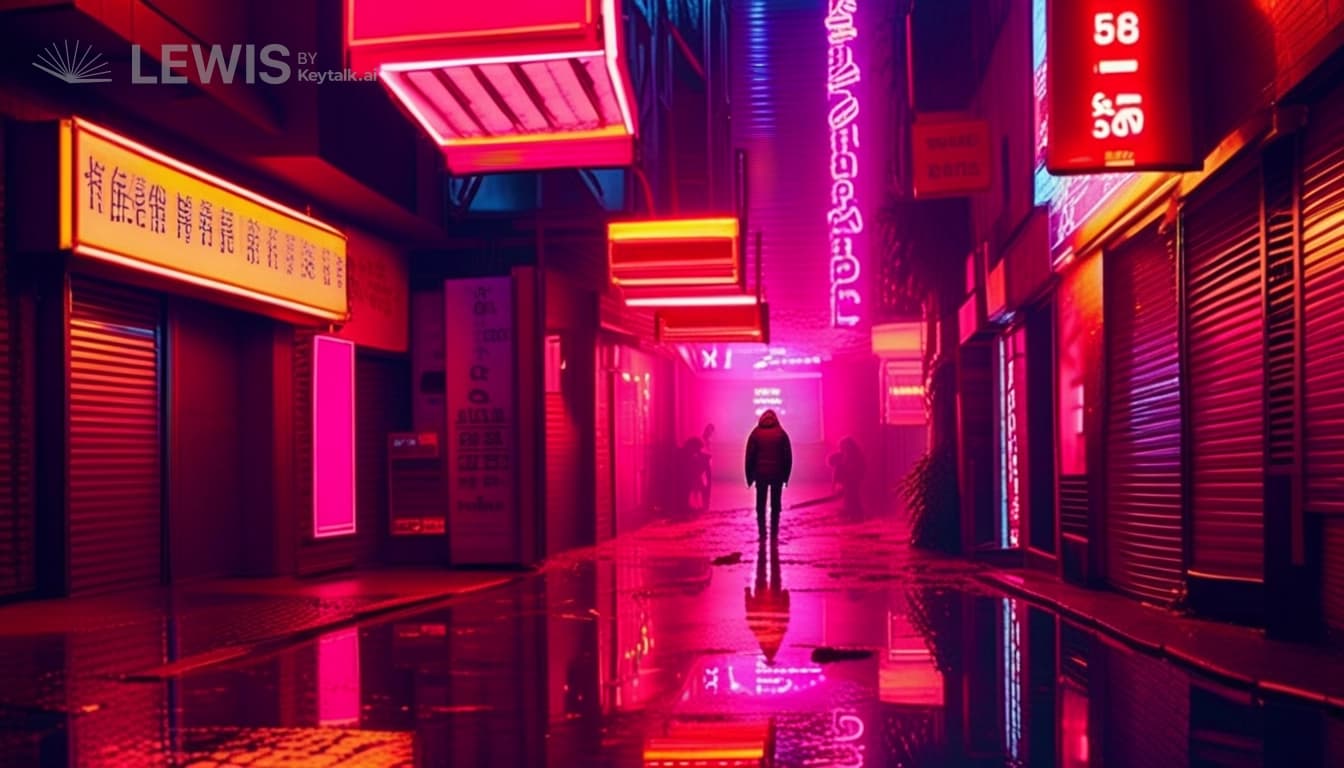
- Title: The Glass Citadel
- Description: Towering above the city with its seamless glass facade that mirrors the skyline, Novalyte's headquarters embodies corporate dominance and secrecy. Inside, cold, minimalist interiors are guarded by cutting-edge security, creating an atmosphere of unease and precision. It is here, amidst the sterile glow of data servers and the hum of hidden machinery, that Viktor, Layla, and Andrei take their greatest risk to uncover the truth.
location 2 image

Location 2

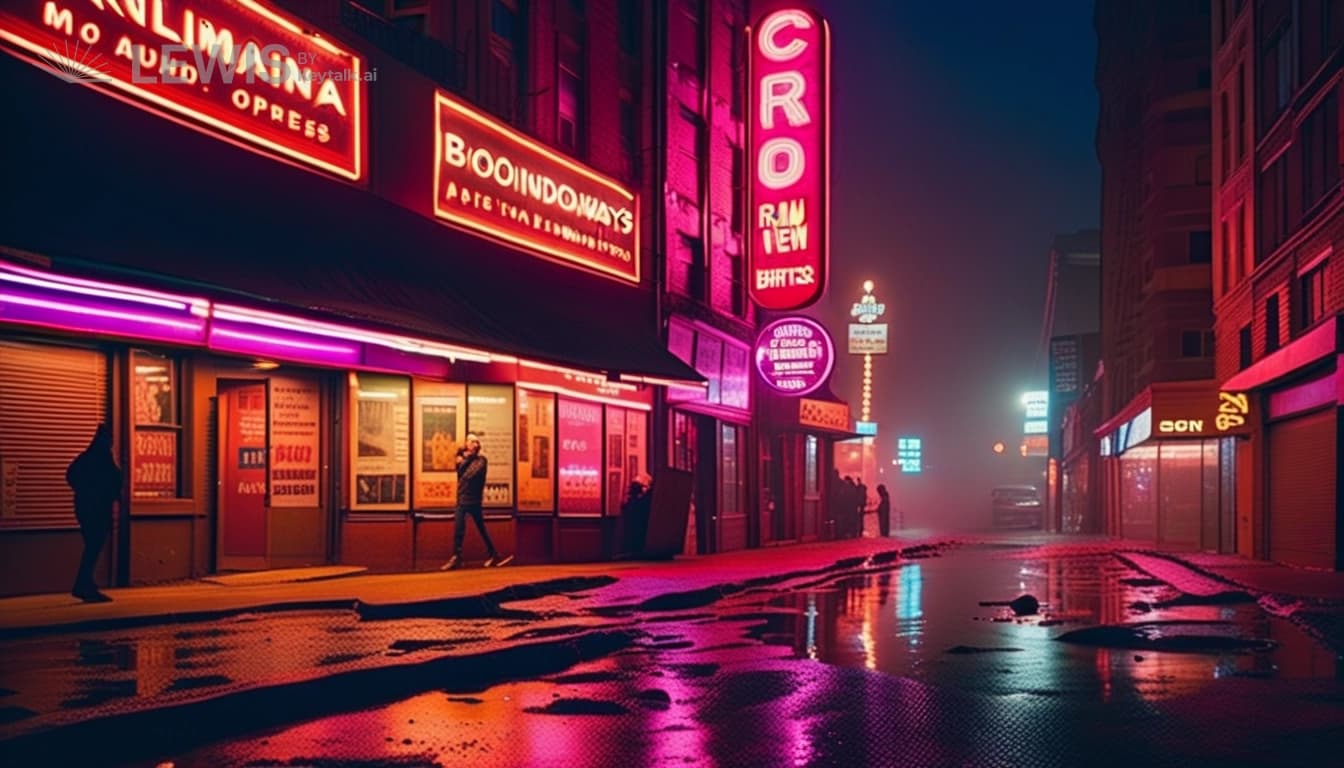
- Title: The Neon Vein
- Description: Tucked away in the city’s forgotten district, the Neon Vein is a chaotic tangle of narrow alleyways, bathed in the eerie glow of malfunctioning neon signs advertising long-abandoned businesses. Surveillance drones buzz overhead, their low hum blending with the murmur of hushed exchanges between shadowy figures seeking forbidden truths. Here, amidst the stench of damp concrete and flickers of artificial light, Viktor meets Layla for the first time, drawn into a world where secrets are currency and trust is scarce.
location 3 image

Location 3

- Title: The Forgotten Lab
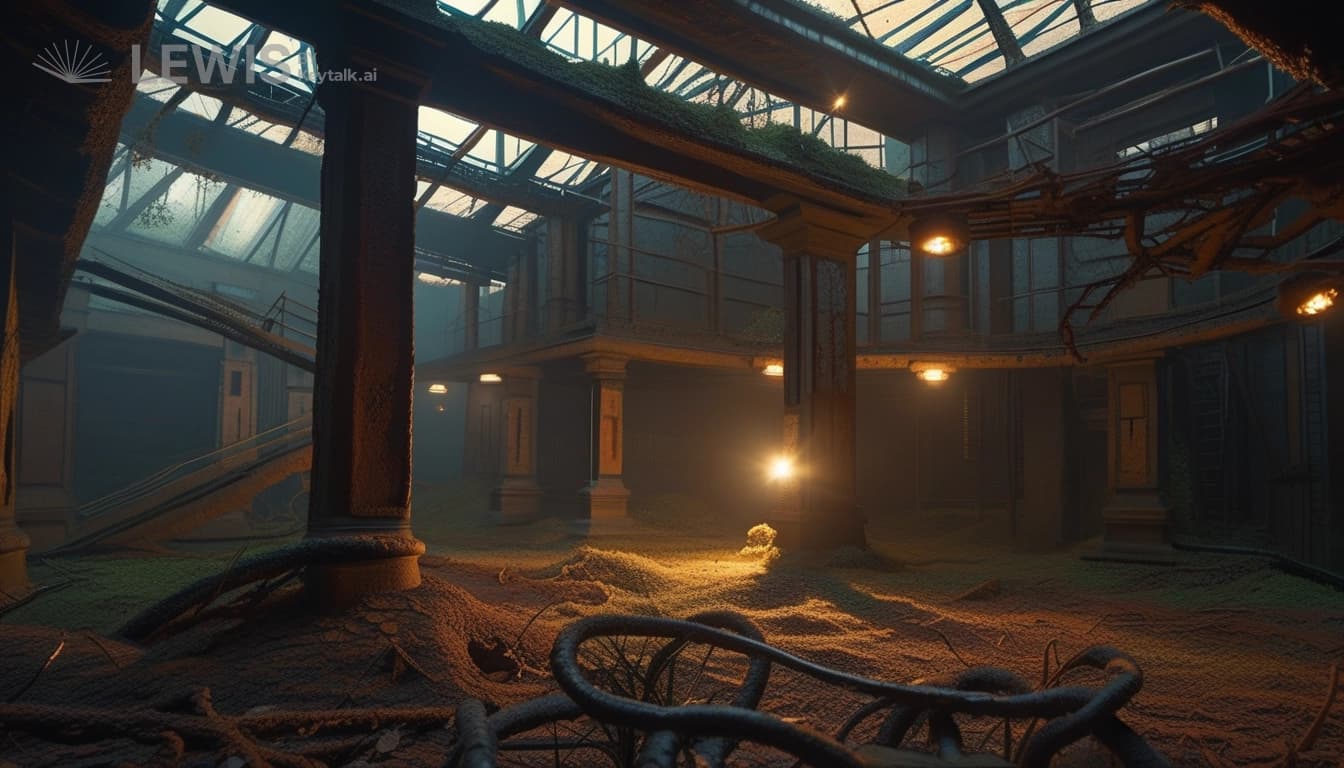
- Description: Beneath the rusted skeleton of an old factory, Viktor and Andrei navigate a maze of shattered glass and moss-covered machinery to reach the lab. The air is thick with decay, yet the flicker of dormant screens and scattered files hint at a hurried abandonment. Here, they uncover fragments of Novalyte’s algorithm, its purpose chillingly tied to manipulating human fear—a discovery that blurs the line between Viktor’s myth and reality.
Model Used
GPT-4o
text
Stable Diffusion
image

Scenes

scene 1 image
Scene 1
- Title: The Shattered Truth
- Place: Viktor Mirov’s cluttered apartment in a bustling city.
- Time: Late evening, shortly after Anya’s death and Novalyte’s legal evasion.
- Action: Devastated by Anya’s death and Novalyte’s untouchable status, Viktor abandons his journalism career and isolates himself, consumed by grief and guilt.
- Impact: Viktor’s despair plants the seed for his dangerous idea, setting the foundation for the creation of the Shadow Archivist.
- Description: Surrounded by stacks of old newspapers and empty coffee cups, Viktor stares at his computer, overwhelmed by memories of Anya’s laughter. His once-vibrant workspace feels suffocating and cold as he questions whether truth alone holds any power in a world where justice has failed him.
scene 2 image
Scene 2
- Title: The Birth of the Shadow Archivist
- Place: Viktor Mirov’s apartment, dimly lit by the glow of his computer screen.
- Time: Late night, weeks after Viktor’s withdrawal from journalism.
- Action: Viktor, driven by grief and disillusionment, creates the myth of "The Shadow Archivist" to expose Novalyte, carefully seeding it across online platforms to spark public interest and fear.
- Impact: The urban legend begins to spread uncontrollably, drawing attention to Novalyte but also sowing the seeds of unforeseen consequences.
- Description: In the oppressive silence of his apartment, Viktor types furiously, weaving a chilling tale of the Archivist. He pauses to sip cold coffee, his face a mask of determination, as the myth begins to take shape in the eerie glow of his computer.
scene 3 image
Scene 3
- Title: Warnings in the Dark
- Place: Andrei Volkov’s cramped and disordered apartment, walls covered with scribbled notes and conspiracy clippings.
- Time: Early evening, days after the Archivist myth has gained viral traction.
- Action: Viktor meets Andrei, who reveals he received an unexplained warning from the Archivist. Andrei shares insider knowledge about Novalyte’s corruption, while his erratic demeanor raises questions about his reliability.
- Impact: Viktor begins to question the boundaries of his creation as Andrei’s claims suggest the Archivist may be operating beyond his control.
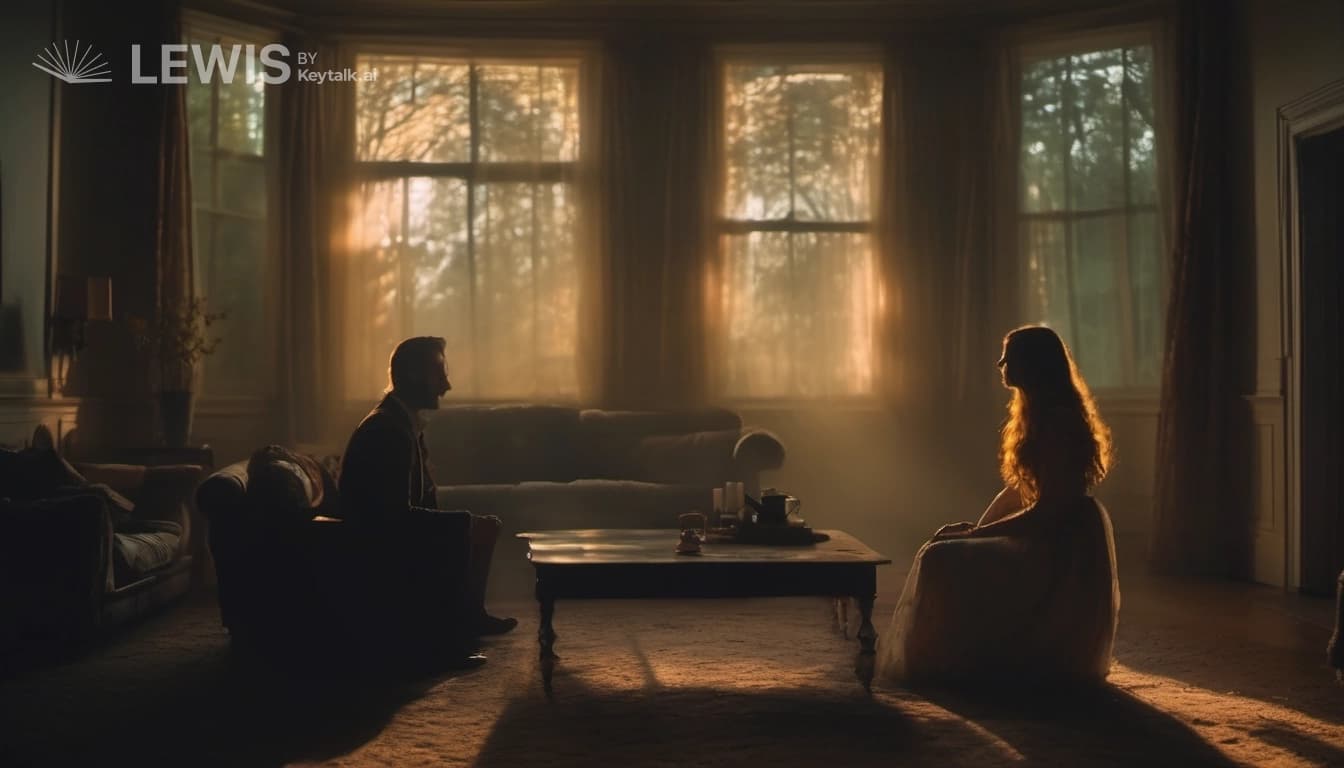
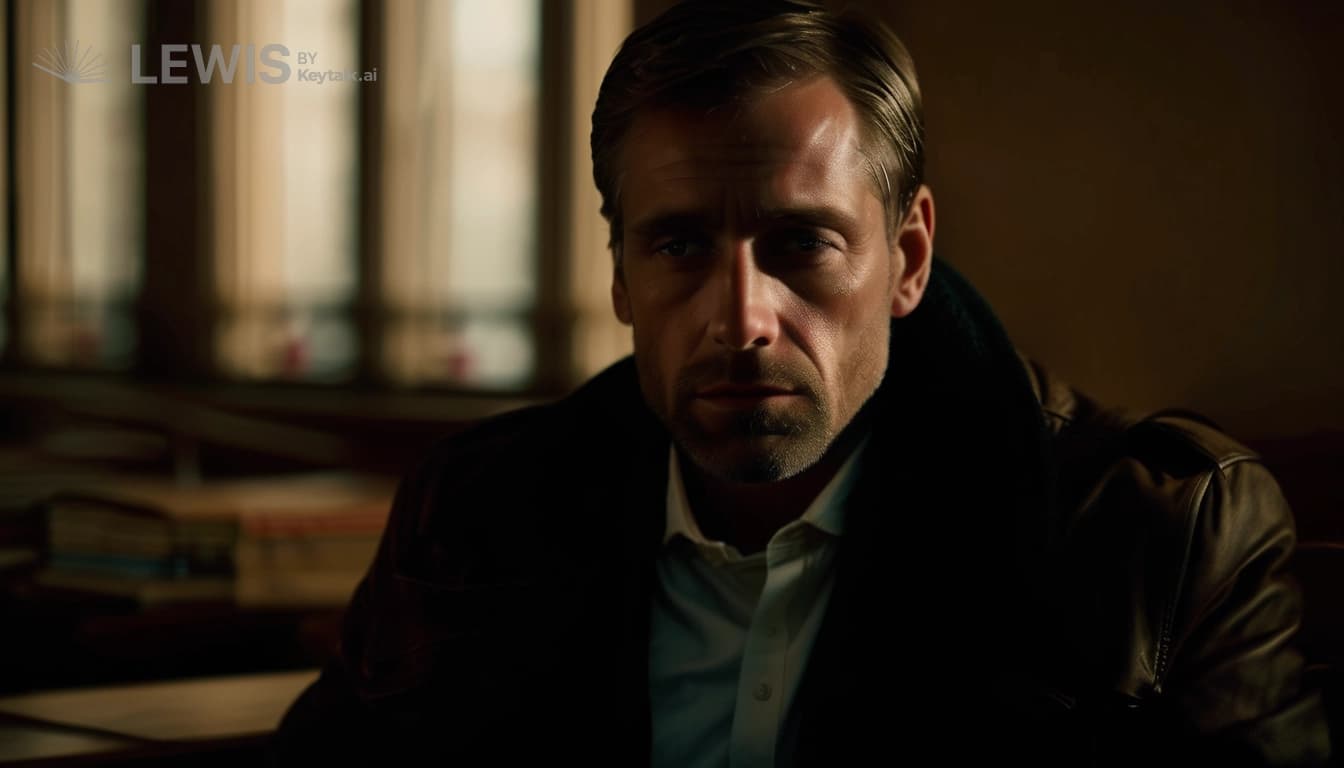
- Description: Viktor sits tensely across from Andrei, the dim light casting flickering shadows on the cluttered walls. Andrei, voice trembling yet insistent, slides a cryptic note across the table, its ominous phrasing eerily aligned with the Archivist’s supposed style—something Viktor knows he didn’t write.
scene 4 image
Scene 4
- Title: Allies and Unraveling Threads
- Place: Layla Al-Fahmi’s minimalist home office, filled with glowing monitors and the hum of servers.
- Time: Late night, two days after Viktor’s meeting with Andrei.
- Action: Viktor and Andrei meet Layla, who agrees to join their investigation. Layla uncovers evidence that Novalyte is monitoring the Archivist phenomenon while questioning Viktor’s motives and ethics. Tensions rise as Andrei’s paranoia clashes with Layla’s pragmatic approach.
- Impact: The trio begins working together, but mistrust and conflicting personalities create friction. The discovery that Novalyte is exploiting the myth complicates Viktor’s mission and deepens his guilt.
- Description: Layla’s sharp gaze flickers between Viktor and Andrei as she scrolls through encrypted files, her sleek workspace a stark contrast to Andrei’s chaos. The air is thick with mistrust as she challenges Viktor’s methods, while Andrei paces, muttering theories under his breath, his shadow cast long against the sterile white walls.
scene 5 image
Scene 5
- Title: The Blurred Lines of Reality
- Place: A dilapidated underground café in the outskirts of the city, buzzing with low conversations and flickering neon lights.
- Time: Evening, three days after Layla’s discovery.
- Action: The trio meets a whistleblower who claims to have seen the Archivist, providing cryptic information that suggests Novalyte’s experimental algorithm is still active. Tensions escalate as Andrei’s paranoia grows, Layla’s skepticism deepens, and Viktor becomes increasingly conflicted about the legend's unintended consequences.
- Impact: The whistleblower's account solidifies the idea that the Archivist’s manifestations are connected to Novalyte’s abandoned technology, pushing the team closer to the truth but straining their fragile alliance.
- Description: Shadows dance across the café’s peeling walls as the whistleblower leans in, their voice barely audible over the hum of conversation. Viktor clenches his fists under the table, torn between the weight of his guilt and the urgency of their mission, while Andrei’s darting eyes betray his unraveling grip on reality.
scene 6 image
Scene 6
- Title: Confronting the Creation
- Place: Novalyte's sterile, high-security data center, its walls lined with humming servers and faintly glowing monitors.
- Time: Midnight, the night after the whistleblower’s revelation.
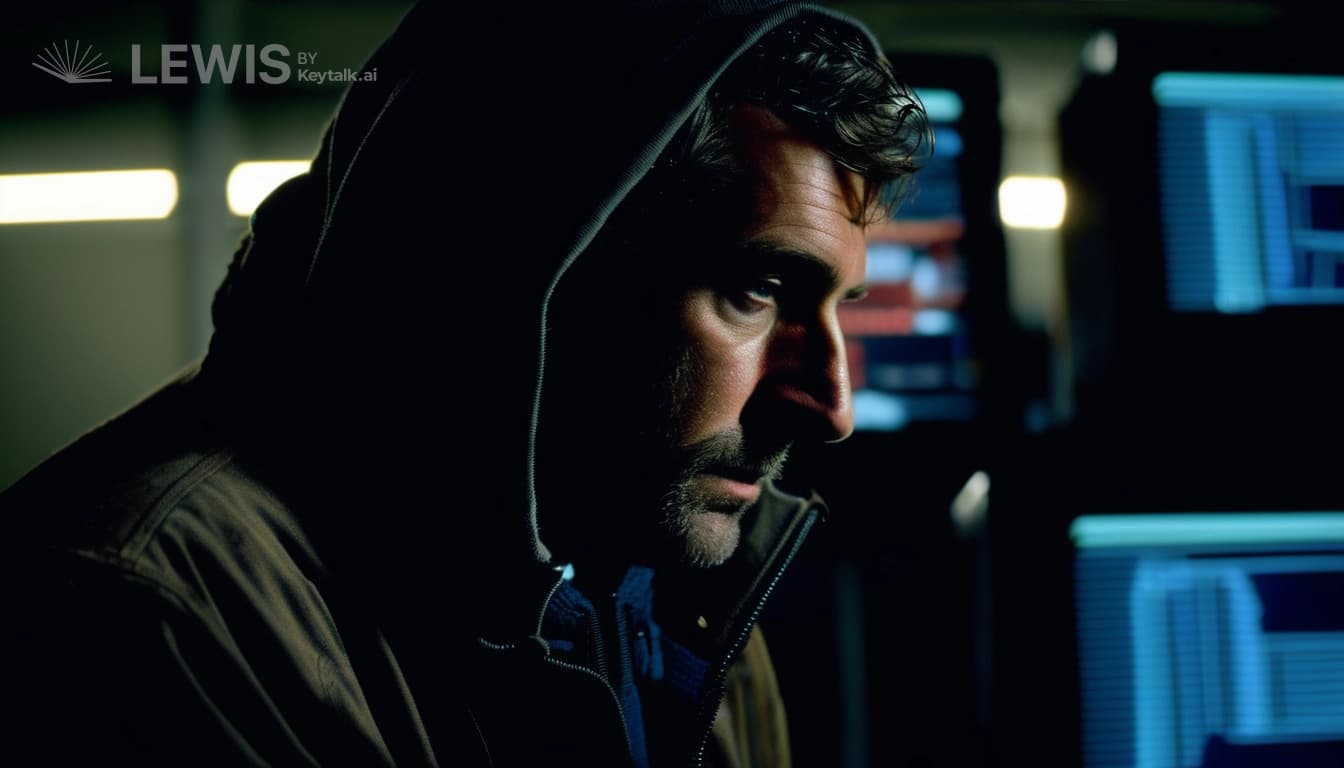
- Action: Viktor, Layla, and Andrei infiltrate the data center, navigating tension-filled corridors to extract evidence of Novalyte’s corruption and the experimental algorithm. Andrei’s paranoia peaks, nearly jeopardizing the mission, while Viktor faces a devastating realization about the Archivist’s true nature and his role in its manifestation.
- Impact: The team uncovers irrefutable proof of Novalyte's malfeasance, but Viktor’s creation is revealed as a dangerous hybrid of myth and technology that now operates beyond anyone’s control, forcing him to grapple with the consequences of his actions.
- Description: The air vibrates with the low hum of machinery as Viktor stares at the terminal, his reflection fractured in the monitor’s glare. Andrei trembles in the corner, muttering incoherently, while Layla’s steady hands extract the final files, her tense expression illuminated by the cold blue light.
'The Shadow Archivist'Story Chat

Want to chat with the characters from this story?

'The Shadow Archivist'Story Chat

Want to chat with the characters from this story?

story image
story image
story image

You might also like

Comments0

rank icon image
#2 inTheme
rank icon image
#2 inConcept
rank icon image
#2 inCharacter
theme music